Sümela's Cliff Face
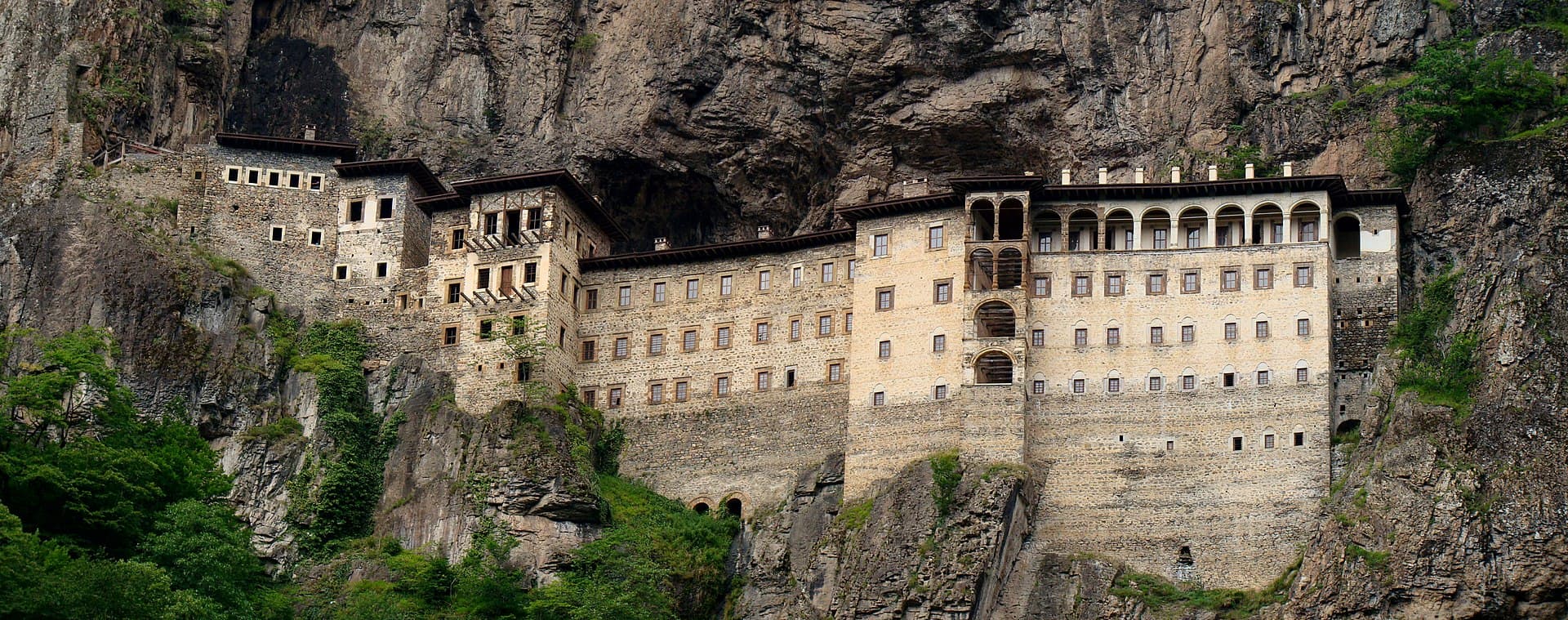
The building doesn't sit on the cliff, it grows out of it — floor after floor stacked roughly 300 metres up a sheer rock face.
Enough context, no spoilers
Why it matters
Tradition holds the monastery was founded around AD 386 by two Athenian monks seeking an icon of the Virgin attributed to the Apostle Luke. Belisarius enlarged it under Justinian in the sixth century; it reached its present form in the 13th–14th century under Trebizond, whose emperor Alexios III granted it tax-exempt land by an imperial 1365 charter. Rockfall risk shut it from September 2015 to July 2021.
What to know before you go
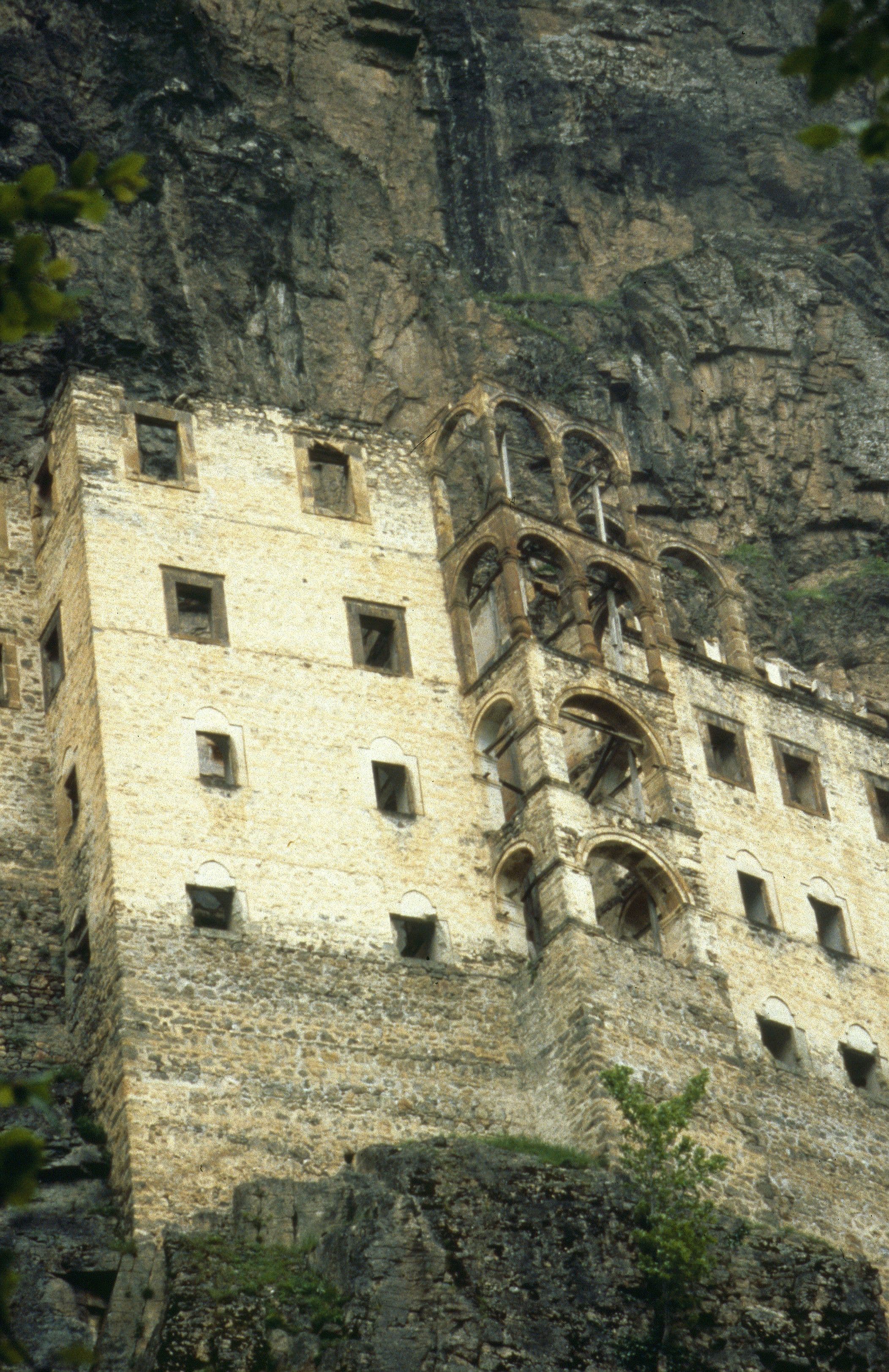
Every photograph of Sümela is taken from a distance, and every one of them undersells the moment of standing underneath it. The building does not sit on the cliff so much as grow out of it — floor after floor of masonry stacked into a cavity roughly three hundred metres up a sheer face of Karadağ, the black mountain that most accounts say gave the monastery its name (Sümela is generally traced to the Greek melas, black). Nothing about the site is convenient, and nothing about it was meant to be. Tradition holds it was founded around AD 386 by two monks from Athens, Barnabas and Sophronios, who came looking for an icon of the Virgin — one tradition holds was painted by the Apostle Luke himself, and that a vision led them to this exact cliff. Whatever you make of the legend, the practical logic holds up: a site this remote, this hard to reach, was exactly the point for a community built around guarding something. What you're looking at today is not one building but roughly fifteen centuries of additions. The Byzantine general Belisarius enlarged it under Justinian in the sixth century; it reached something like its present footprint in the thirteenth and fourteenth centuries under the Christian Empire of Trebizond, whose last emperors endowed it with tax-exempt land by imperial decree; the balconied guesthouse wing at the front was added only in 1840. The aqueduct striding across the approach on stone arches is the detail everyone photographs and few people are told about — it carried water into a complex with no other reliable source, on a cliff where digging a well was never an option. The closure most worth knowing about here isn't cosmetic. Rockfall risk shut the whole site from September 2015 until July 2021 — real structural stabilisation, not fresco cleaning, and the reason a lot of writing about this place published in those years describes a monastery you could not actually enter. That work is finished. What continues now, on the paintings inside, is a slower and less disruptive kind of restoration (see the Rock Church). One more thread worth knowing before you go in: when the monastic community left in 1923, under the population exchange, they buried the monastery's founding icon under a side chapel floor rather than abandon it. A monk returned for it in secret in 1930. It has stood in a monastery of the same name in Greece since 1952. Sümela kept the building. It did not keep the icon.