TurQuosian

Black Sea

Safranbolu

Timber houses, saffron, and slow time

Safranbolu is a UNESCO-listed Ottoman town of red-roofed, timber-framed houses climbing two ravines around a still-working bazaar — one of Türkiye's most complete historic townscapes, and small enough to see well in a day. Go on a weekday if you can: weekends fill the lanes fast. Saffron, the namesake spice, is still genuinely grown and sold nearby — not just branding.

Stay
1 day
UNESCO since
1994
Best months
Apr–Jun, Sep–Nov
Nearest airport
Ankara ESB, ~200km
Population
~53,000
Elevation
508m

Every published place in one city guide

What to see in Safranbolu.

Start with the essentials, add what genuinely interests you, and leave the rest for another visit. Every place includes a concise story, practical timing, a Maps link, and a one-tap route planner action.

Make the route work

Anticipate the practical details.

Getting there

No airport in Safranbolu itself. The realistic option is Ankara Esenboğa (ESB), about 200km / roughly 3 hours by road; Istanbul's airports are about 400km, 6–7 hours by intercity bus. Small regional airports at Zonguldak and Kastamonu exist but with limited scheduled service — check current routes before relying on either. Intercity buses run directly from Istanbul (about 7 hours) and Ankara (about 2h45) to Safranbolu's otogar. The alternative is taking a train or bus to Karabük, about 9km away, then a short dolmuş or taxi into the old town — Karabük has its own station on the Ankara–Zonguldak line, though journey times are slow compared to the bus.
Getting around

The old town (Çarşı) is entirely walkable, and walking is genuinely the best way to see it — most lanes are too narrow and steep for comfortable driving anyway. Tokatlı Canyon (about 8km north) and Yörük Village (about 6km east) sit outside town in different directions, with no reliable frequent public transport to either — a rental car, taxi, or half-day tour covers both efficiently; if you're genuinely doing this in one day, pick one rather than rushing both. A thin minibus service runs to Yörük Village (out in the morning, back in the evening), which works for a determined budget traveller but not a tight schedule.

Money

Carry Turkish lira and a card. Entrance fees at the house-museums and Tokatlı Canyon are inexpensive but change yearly, and current sources disagree on exact figures — confirm at the door rather than trusting an older article. MüzeKart, the Turkish resident museum pass, is confirmed not valid at Tokatlı Canyon; confirm separately for any other state-run site you plan to visit.

Connectivity

Mobile coverage is reliable in the old town and central Safranbolu. Expect it to weaken in Yörük Village and in the lower sections of Tokatlı Canyon, as is typical for rural parts of this region — download offline maps before either trip.

Etiquette

Safranbolu is a conservative, family-oriented small town, and one of Türkiye's Cittaslow-certified 'slow cities' since 2023 — the whole point of the place is unhurried. Dress modestly at the Old Mosque and any other active place of worship, especially around prayer times. Many historic houses are still lived in or run as small family hotels, not museum exhibits — be respectful with cameras on residential streets.

Safety and comfort

A genuinely safe small town by any normal measure. The real hazard is underfoot: old town streets are steep cobblestone, uneven, and can be slippery when wet or icy — Safranbolu's winters are cold and snowy, so good shoes matter more here than the town's postcard prettiness suggests. Tokatlı Canyon's paths and viewing structures require normal caution around edges and steps, and heavy rain can raise water levels in the lower canyon.

Essential

Don’t leave without

If you only have one day, this is the day.

Rank1
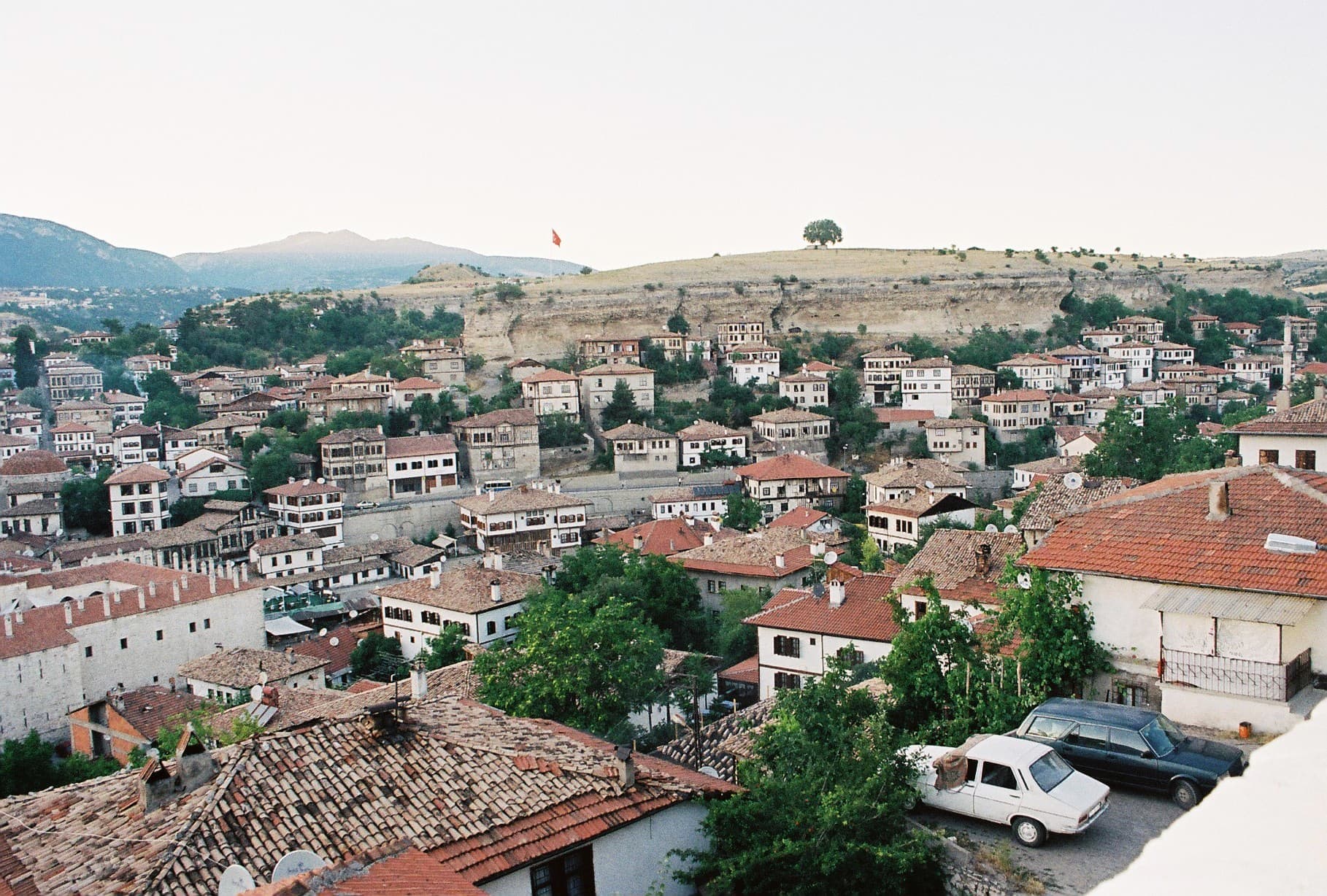
Elevated view of Safranbolu's Ottoman old town, red-tiled roofs filling a wooded valley.

Türkiye's most complete Ottoman townscape — red-tiled roofs and timber houses filling two ravines around a bazaar that still works.

Grew wealthy from the 13th century as a caravan station on the trade route linking Anatolia to the Black Sea coast, peaking in the 17th–18th centuries when merchants and officials competed to build the timber-and-stucco mansions that still line its lanes. UNESCO inscribed the town in 1994, citing its influence on Ottoman domestic architecture across a wide region and the unusual completeness of its survival.

150 minCobblestone streets are steep and uneven, and slippery when wet or icy in winter.Weekends and summer (July–August) bring heavy day-tripper crowds, especially mid-morning to mid-afternoon — a weekday visit, or an evening walk after the tour buses leave, is a genuinely different experience from the same streets at midday.Many houses are private homes or small family-run hotels, not museum exhibits — ask before photographing residents or private interiors.
Look for: Overhanging cumba floors wider than the ground floor; whitewashed mud-brick infill between timber frames; the Saat Kulesi clock tower. Hıdırlık Tepesi, south of the bazaar, is the classic sunset viewpoint — just a climb and a tea garden.
Verified · · 6 min to Cinci Han · 9 min to Kaymakamlar Museum House
Rank2
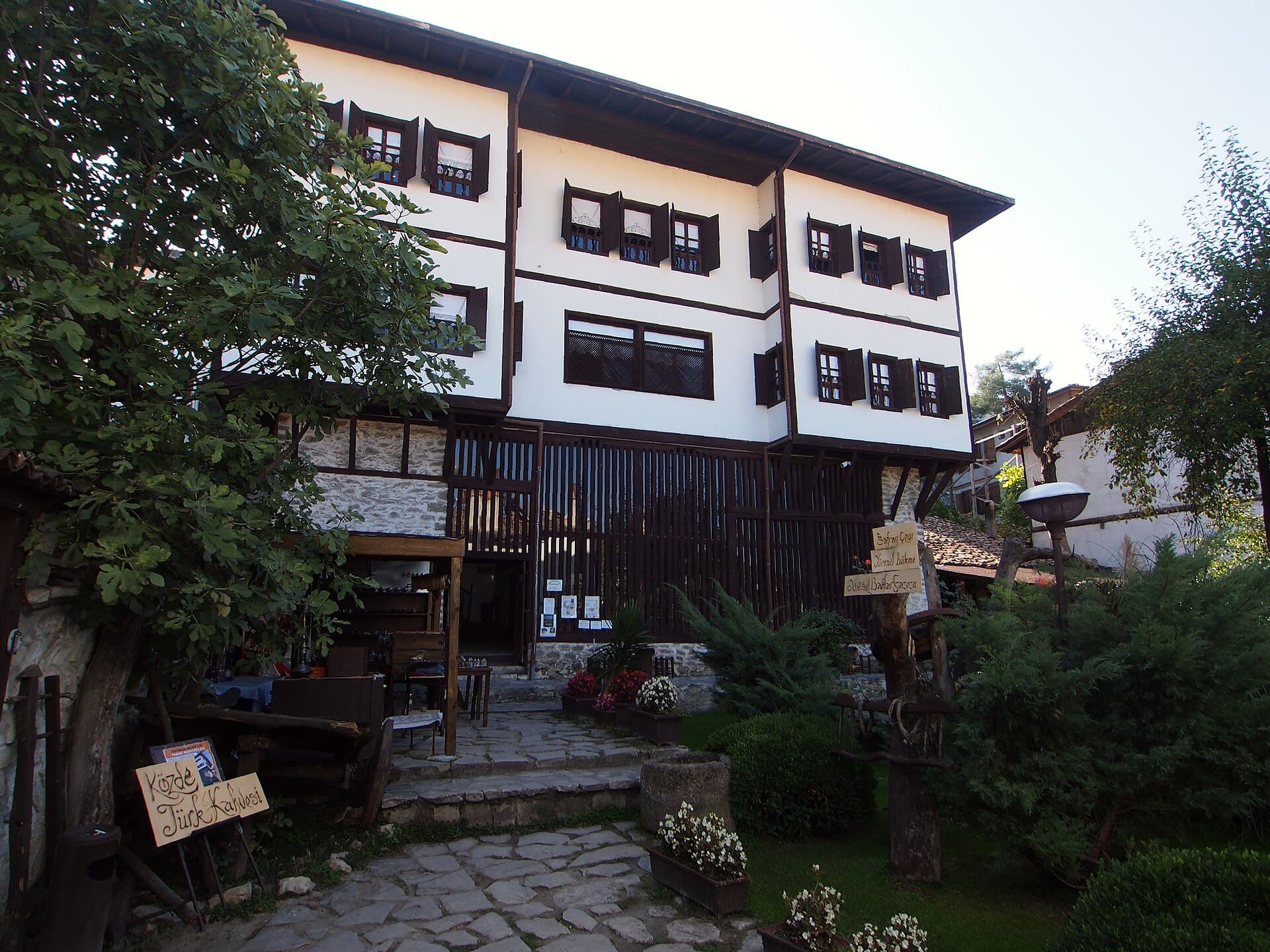
Timber-framed Ottoman house exterior of the Kaymakamlar Museum House in Safranbolu.

Safranbolu's best furnished interior — a revolving servants' cupboard and a full bath hidden inside another cupboard.

Built in the early 19th century for Hacı Mehmet Efendi, a local military commander whose rank of kaymakam gave the house its name. Expropriated and restored by the Ministry of Culture in 1979, it opened as an education centre in 1981 and later became a museum house. Closed for restoration in 2020, it reopened in 2021.

Exact current entrance fee not independently confirmed — sources conflict or are clearly dated. Confirm at the door.

30 minReported closed on Mondays by multiple sources, but confirm before a Monday visit.Self-guided with a booklet rather than a staffed tour — a genuine visit runs 15–20 minutes, not longer.Busiest first stop for tour groups once they enter the old town — arrive at opening for anything close to an empty room.
Look for: The dönme dolap, a revolving cupboard that let servants pass food in unseen; a full bath concealed inside a cabinet; separate men's (selamlık) and women's (haremlik) reception rooms; winter and summer rooms positioned for the sun.
Verified · · 1 min to Cinci Han · 9 min to Safranbolu Old Town (Çarşı)
Rank3
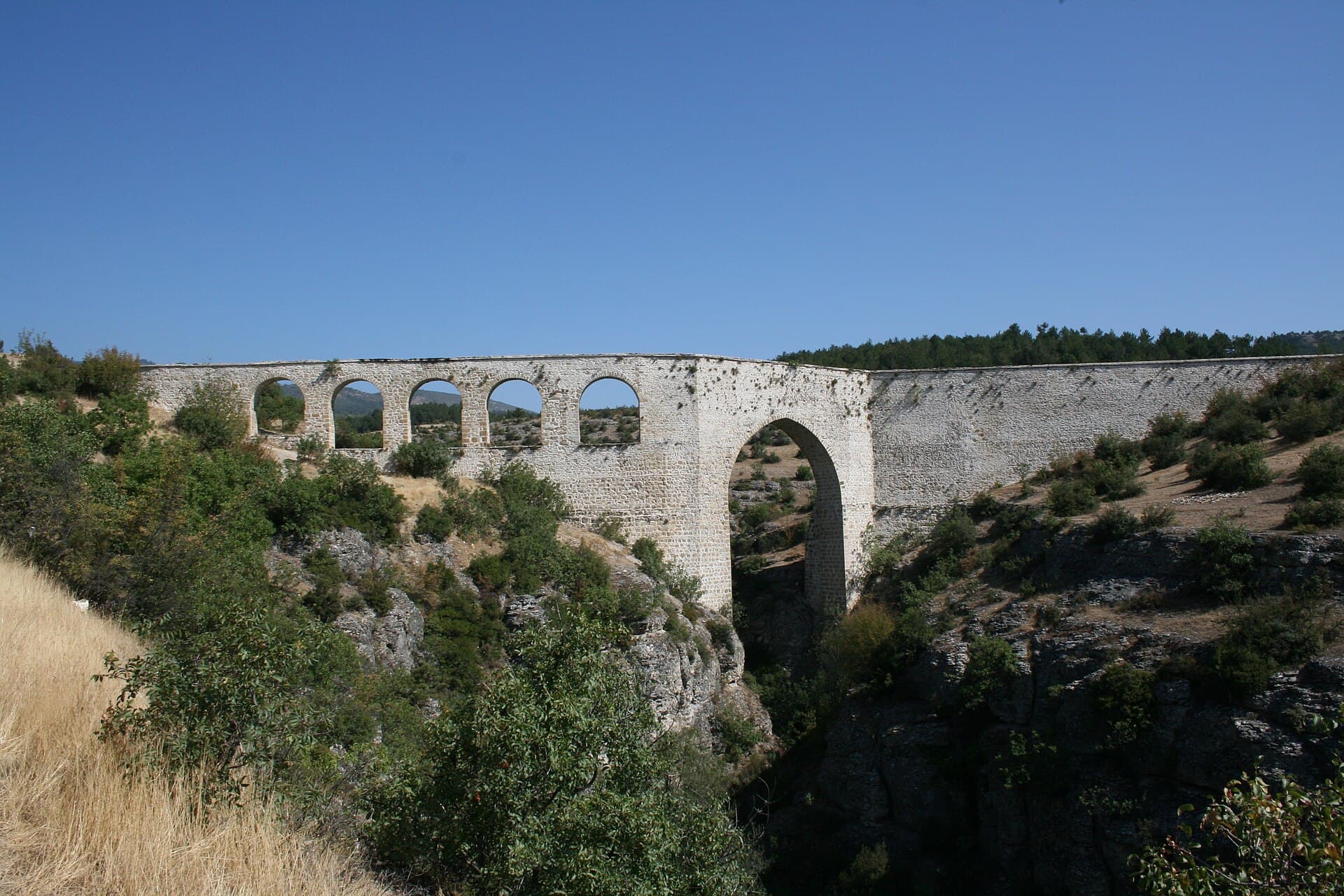
Stone-arched İncekaya Aqueduct spanning the deep Tokatlı Canyon near Safranbolu.

An 80-metre glass platform over a limestone gorge, and — more impressive — a 1790s stone aqueduct that still carries a footpath across it.

Formed as the Hızar Çayı stream cut through limestone over millennia, at the point where three canyons meet, about 8km north of the old town. The İncekaya Aqueduct spanning it was built in the 1790s by Safranbolu-born grand vizier İzzet Mehmed Pasha to carry water to the town: roughly 110–116m long, up to 60m above the canyon floor, on six stone arches.

Entrance fee figures found in current research are inconsistent and likely stale given inflation — confirm the current price locally. The glass terrace is charged separately from the base entrance fee.

120 minThe glass terrace and other add-on attractions are charged separately from the base entrance fee.MüzeKart (the Turkish resident museum pass) is confirmed not valid here.Check weather before visiting — rain can raise water levels and make the lower canyon paths hazardous.
+1 more to know
Entrance fee figures found in current research are inconsistent and likely stale given inflation — confirm the current price locally rather than trusting an older article.
Look for: The İncekaya Aqueduct's arches, still walkable across the top; the glass-floored viewing terrace over the gorge; layered limestone cliffs where the three canyons converge; the marked trail into the canyon for those with more time.
Rank4
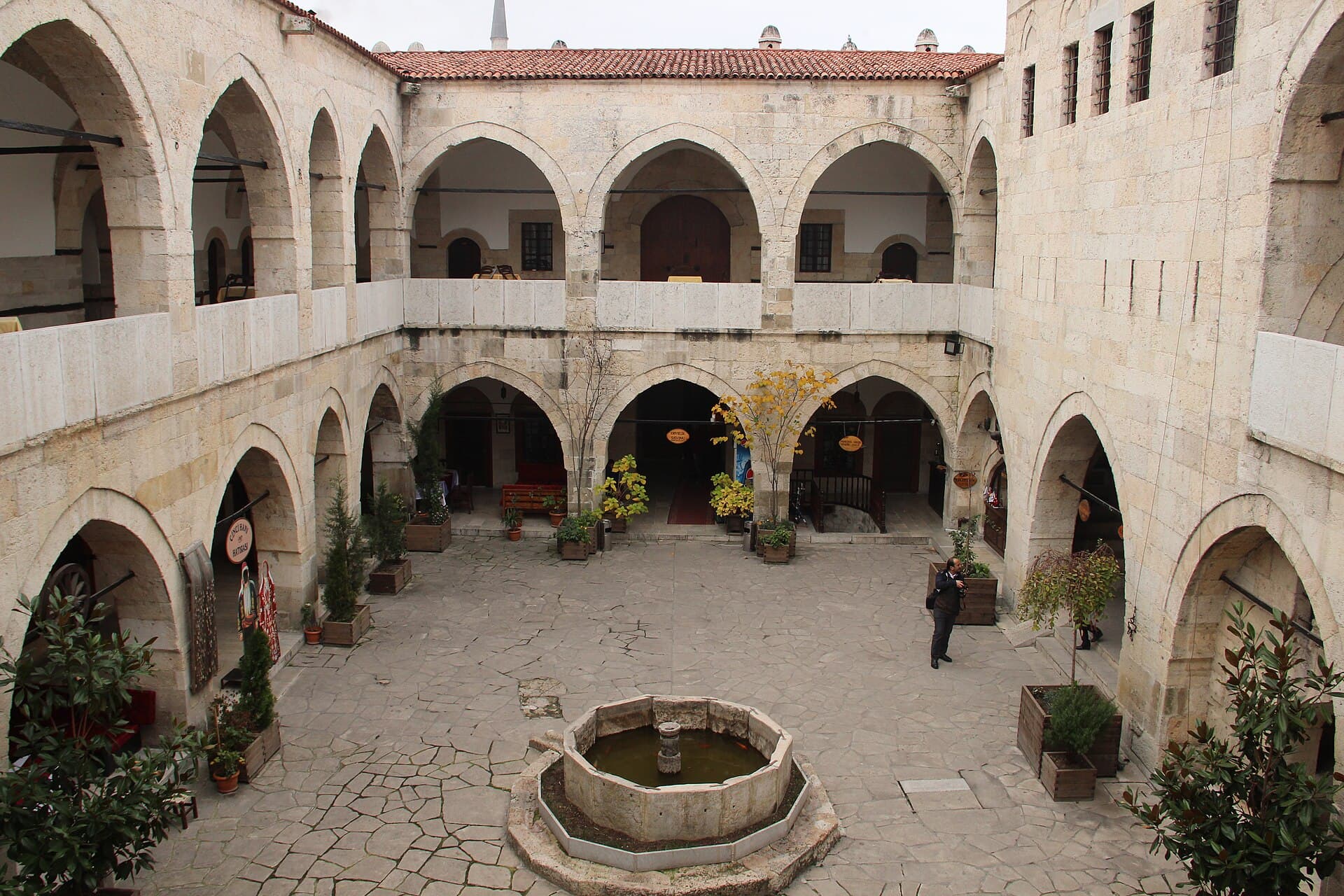
Two-storey stone-arched courtyard of Cinci Han caravanserai with a central well.

Cinci Han

Historic site

A 1645 caravanserai built by a sultan's exorcist-turned-power-broker — now a hotel where you can still take tea in the same stone courtyard.

Built in 1645 by Karabaşzade Hüseyin Efendi, known as Cinci Hoca ("the exorcist hodja"), a local mystic-healer who won Sultan İbrahim I's favour in 1642, rose to become a powerful judge, and spent his fortune on his hometown. It served caravan traders on the Anatolian trade routes until the early 20th century, then stood as a merchants' warehouse before restoration turned it into a hotel.

30 minIt operates today as a working hotel and café — the courtyard is open to non-guests for tea, but the upper floors are only seen if you're staying or on a paid look-around.No fixed "ticket" or opening hours in the way a museum has — treat it as a café with historic rooms attached, and expect it to run on hotel hours.
Look for: The stone-arched courtyard with its old well; vaulted ground-floor storerooms, once for goods and horses, now hotel spaces; the plain, defensible exterior typical of a caravanserai built to be secured at night.
Verified · · 1 min to Kaymakamlar Museum House · 6 min to Safranbolu Old Town (Çarşı)
Rank5
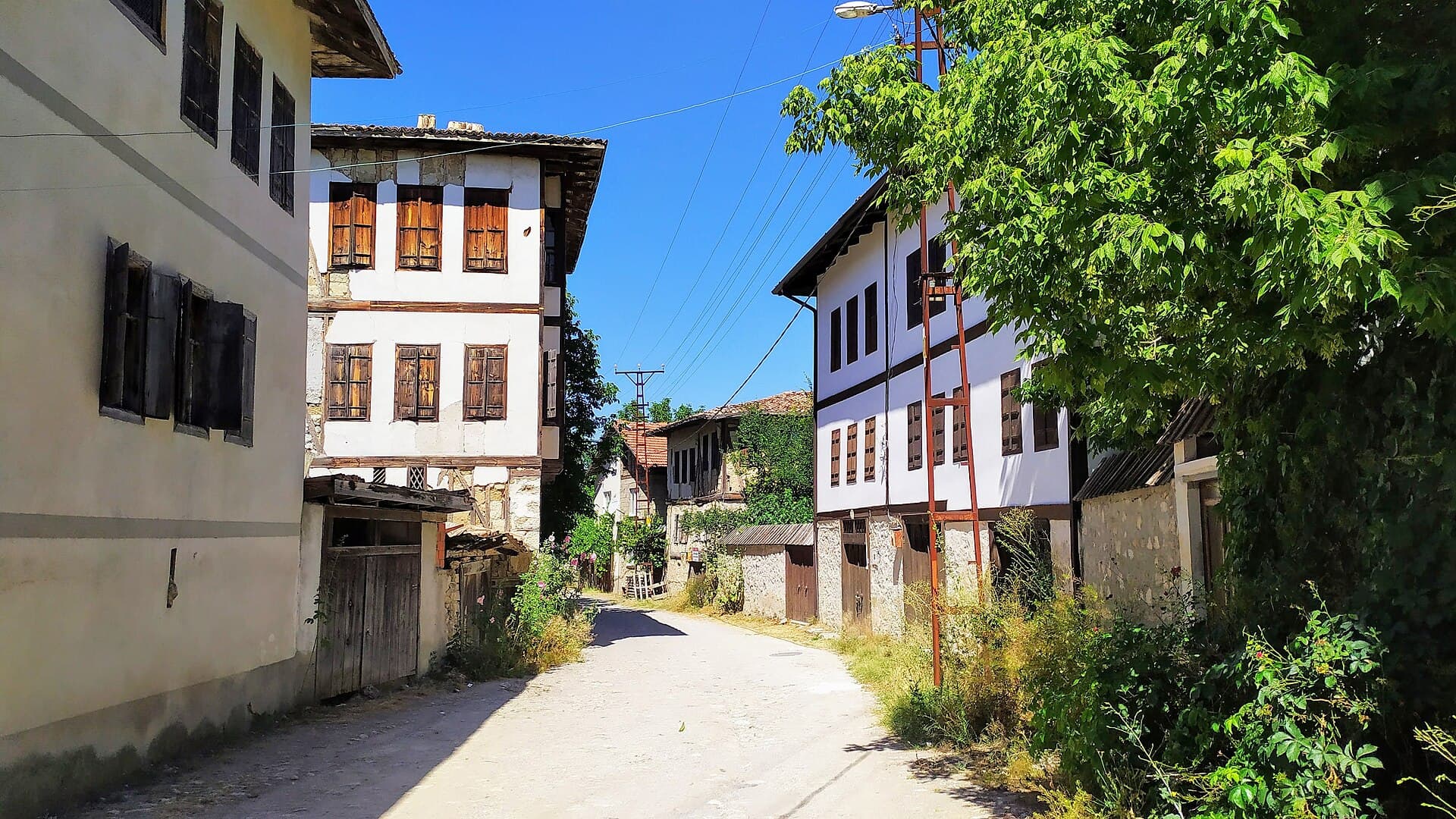
Wide sunlit view of the protected Yörük Köyü village near Safranbolu, Türkiye.

A real, still-shrinking Turkmen village with the same timber architecture as Safranbolu and almost none of its crowds.

Settled, by local tradition, by Yörük (Turkmen nomad) clans in the 14th–15th centuries and continuously inhabited since. Placed under Ministry of Culture protection in 1997 for its 93 registered historic structures. Population has fallen sharply, from 267 residents in 1985 to around 93 by 2021, as younger generations left for Karabük and beyond.

90 minNo reliable frequent public transport — a car, taxi, or tour is the practical way to get here; the minibus service is thin (roughly one run out in the morning, one back in the evening).Reported distance from Safranbolu varies by source (6–11km) depending on the road and reference point used — budget accordingly.A real, still-inhabited village, not a staffed attraction — some houses are private homes; be respectful with cameras.
Look for: Sipahioğlu Konağı and Muratoğlu Mansion, two of the village's grander restored houses; the old communal çamaşırhane (laundry house); stone garden walls and narrow lanes built to the same pattern as Çarşı, on a fraction of the scale.

Worth your time

Worth your time

A second day earns you these.

Rank1

Cinci Hamam

Experience

The 1645 bath Cinci Hoca built beside his caravanserai — still a working hamam today, not a museum piece.

Built in 1645 alongside Cinci Han by the same patron, Karabaşzade Hüseyin Efendi (Cinci Hoca), during the reign of Sultan İbrahim I. Also known locally as Yeni Hamam ("new bath"). Restored by the General Directorate of Foundations (Vakıflar) and still operating as a working Turkish bath, with separate sections and hours for men and women.

One source cites roughly 35 TL for a basic soak-and-scrub, with full treatments (massage, peeling) extra. Treat as directional, not current — confirm locally.

90 minMen's and women's sections keep different hours (men roughly 06:00–23:00; women's hours less consistently reported) — confirm current times before planning around it.
Look for: The domed steam room and marble göbek taşı (heated central platform); separate street entrances for the men's and women's sections.
Open in Maps
Rank2

Old Mosque (Eski Cami)

Religious site

Built in 1322, among Safranbolu's oldest structures — a plain prayer hall that predates its famous timber houses by centuries.

Also known as Gazi Süleyman Paşa Camii, built in 1322 alongside the adjoining Süleyman Paşa Medresesi, from the period before the Ottomans absorbed this part of the Black Sea region. It is one of Safranbolu's earliest surviving structures, centuries older than the timber mansions the town is best known for.

Free, as a working mosque.

15 minAn active place of worship — avoid visiting during the five daily prayers, especially Friday midday, and dress modestly.
Look for: The plain stone construction and restrained interior, a deliberate contrast with Safranbolu's later, more ornate domestic architecture; the adjoining Süleyman Paşa Medresesi building next door, from the same 1322 complex.
Open in Maps

If you have longer

If you have longer

Keep these compact stops in mind when you build your trip.

Built 1904–1906 as the district government mansion (hükümet konağı) on a hill known locally as "kale." Gutted by fire on 19 January 1976 and left derelict for over two decades before the Ministry of Culture restored it between 2000 and 2006 as, by its own account, Türkiye's first city history museum.

Historically a very low entrance fee — one source cites 3 TL, another 12 TL, both clearly dated. Confirm current price locally.

45 minOpen in Maps

Saffron (Crocus sativus) cultivation supported Safranbolu's Ottoman-era wealth and gave the town its name. Production nearly disappeared after the First World War and only began reviving in the early 2000s with Ministry of Agriculture support, now covering a few hectares across several villages. This working farm, in the village of Yukarıçiftlik, is part of that small-scale revival, offering tours and direct sales.

Farm and shop visits are generally free; any guided or hands-on harvest experience is not independently price-confirmed. Products are sold at shop prices on-site.

The flowers bloom and are harvested in a short window, roughly mid-October to mid-November — outside that window there's a shop and fields to look at, not an active harvest.A small working farm, not a formal attraction with posted fixed hours — calling ahead before visiting is the sensible approach.Located in Yukarıçiftlik village, a real drive from the old town — combine with other errands rather than a dedicated special trip unless visiting in harvest season.
60 minOpen in Maps

Getting there and away

Verified routes from Safranbolu.

Door-to-door times and fare ranges, checked leg by leg. Only routes where every leg verified are listed.

Getting around

Türkiye, for scale

Where it sits

See this city in the wider shape of Türkiye.

The map will load as it approaches the viewport.