Kaleiçi
The old town inside the vanished walls: one Ottoman mosque, a grid of cobbled lanes, and the hardest sell on the Turkish Aegean.
Enough context, no spoilers
Why it matters
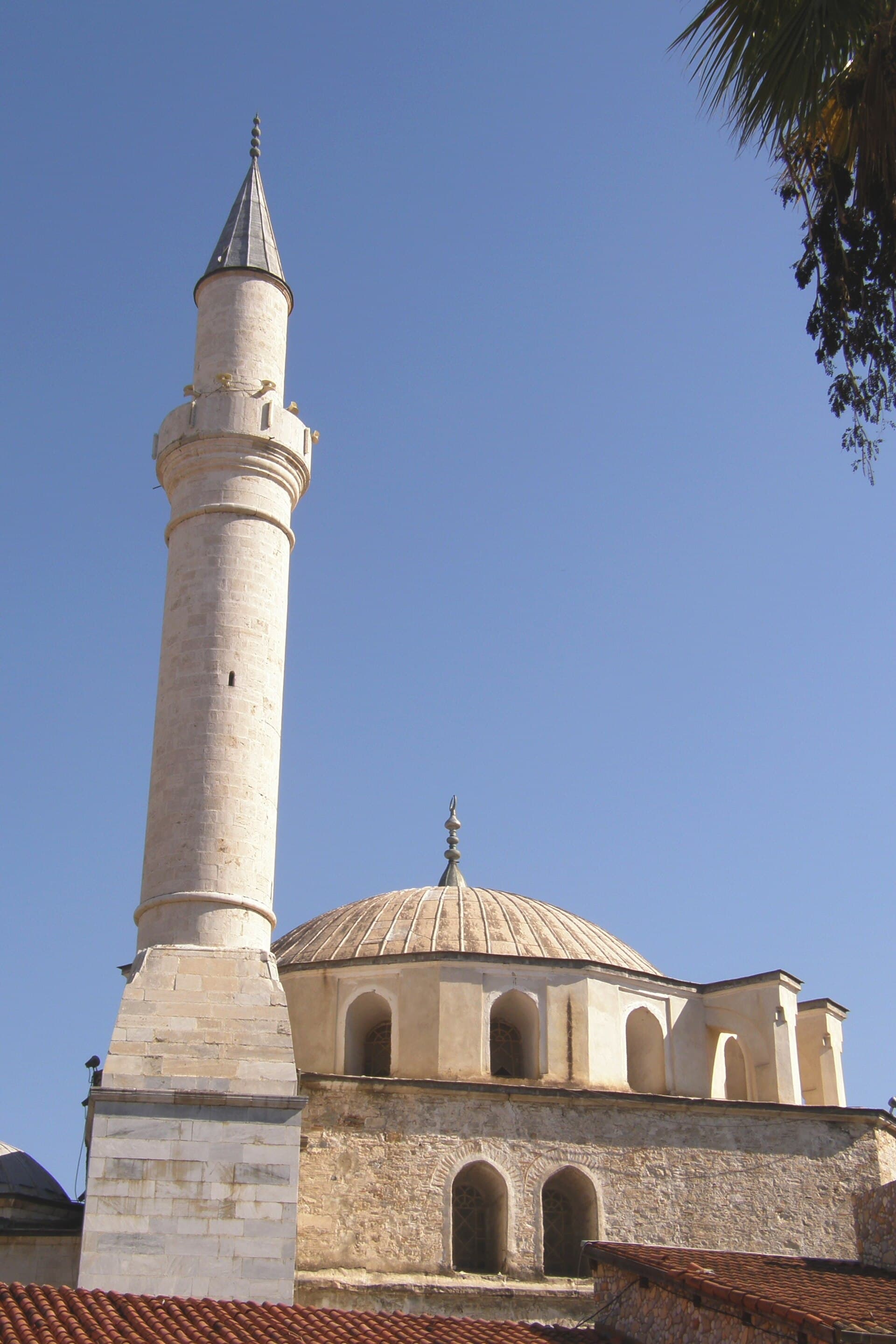
Kuşadası was Scala Nova to the Genoese and Venetians who traded here after Ephesus's harbour silted up, and Ephesus Neopolis to the Byzantines before them. The quarter took its present shape around 1618, when Grand Vizier Öküz Mehmet Paşa endowed a mosque, a hamam, a caravanserai and a circuit of walls in one programme. Most of the walls have gone; the street plan they enclosed has not.
What to know before you go
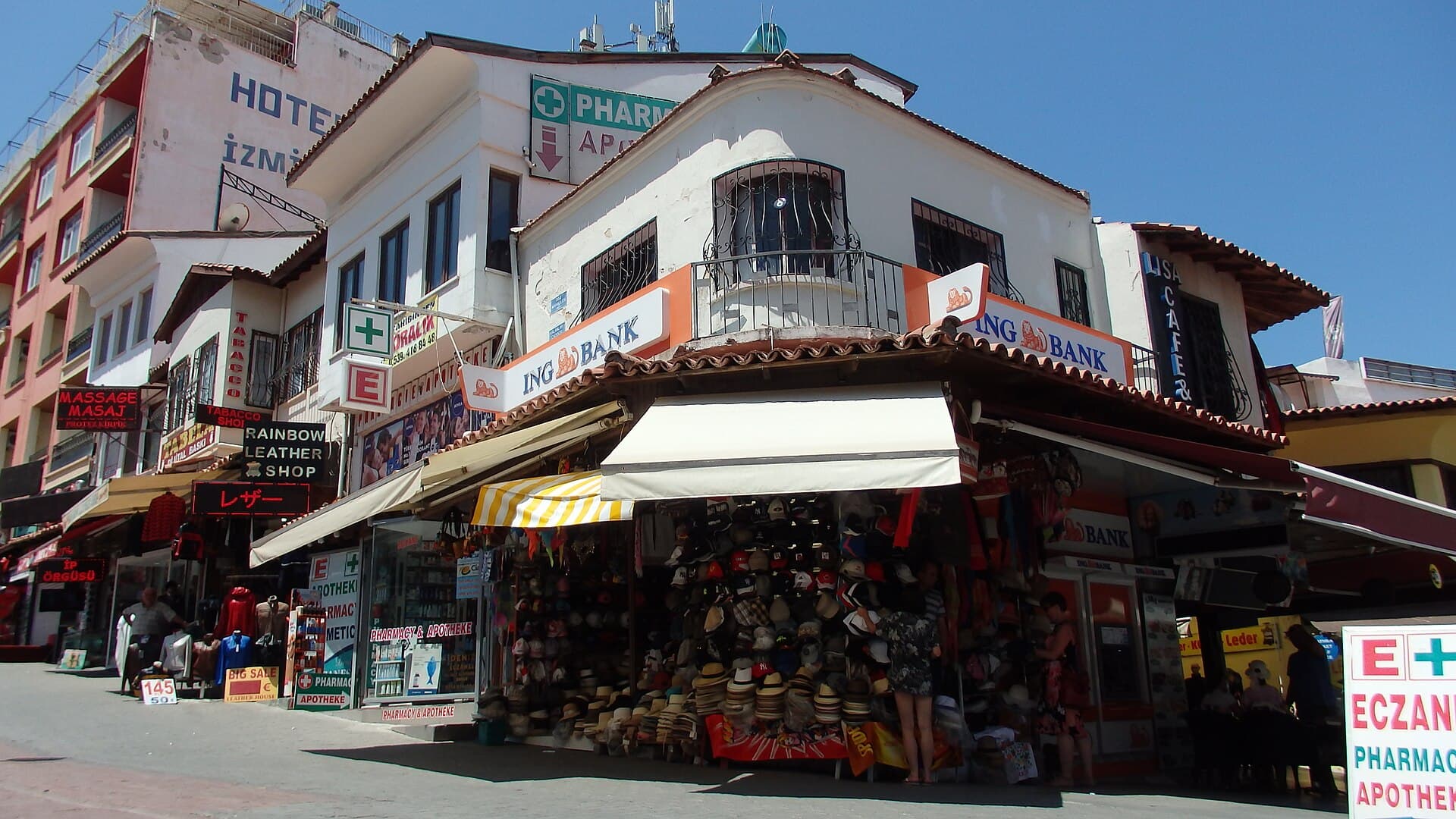
Kaleiçi is small — you can cross it in ten minutes — and it carries two things at once that visitors rarely separate. It is the physical remains of a planned Ottoman port town, laid out in a single act of patronage around 1618. It is also the most commercially aggressive few hundred metres on the Turkish Aegean, because it sits between a cruise berth and the only thing most passengers will walk to. Barbaros Hayrettin Bulvarı is the spine, and it is where the pressure concentrates. The approach is practised: an opening question in your own language, then a redirect into a carpet or leather showroom. Complaints on cruise forums are consistent and long-running. Treat any invitation to "just look" as a twenty-minute commitment, and note that shops endorsed by cruise lines are not automatically cheaper. The historic fabric is genuinely there under the trade. The 1618 mosque sits in the middle of the bazaar. Kale Kapısı still spans the street. And the single most useful thing to know is that two blocks and a change of hour transform the place: the quarter is worked hardest roughly between 10:00 and 14:00 while ships are alongside, and once they sail it empties into an ordinary Turkish small-town evening. If your only impression of Kaleiçi is the middle of the day, you have seen the trade rather than the town.