Citadel Mound (Yassıhöyük)
The palace mound where Alexander is said to have cut the Gordian knot — and, provably, Anatolia's best-preserved Iron Age citadel gate.
Enough context, no spoilers
Why it matters
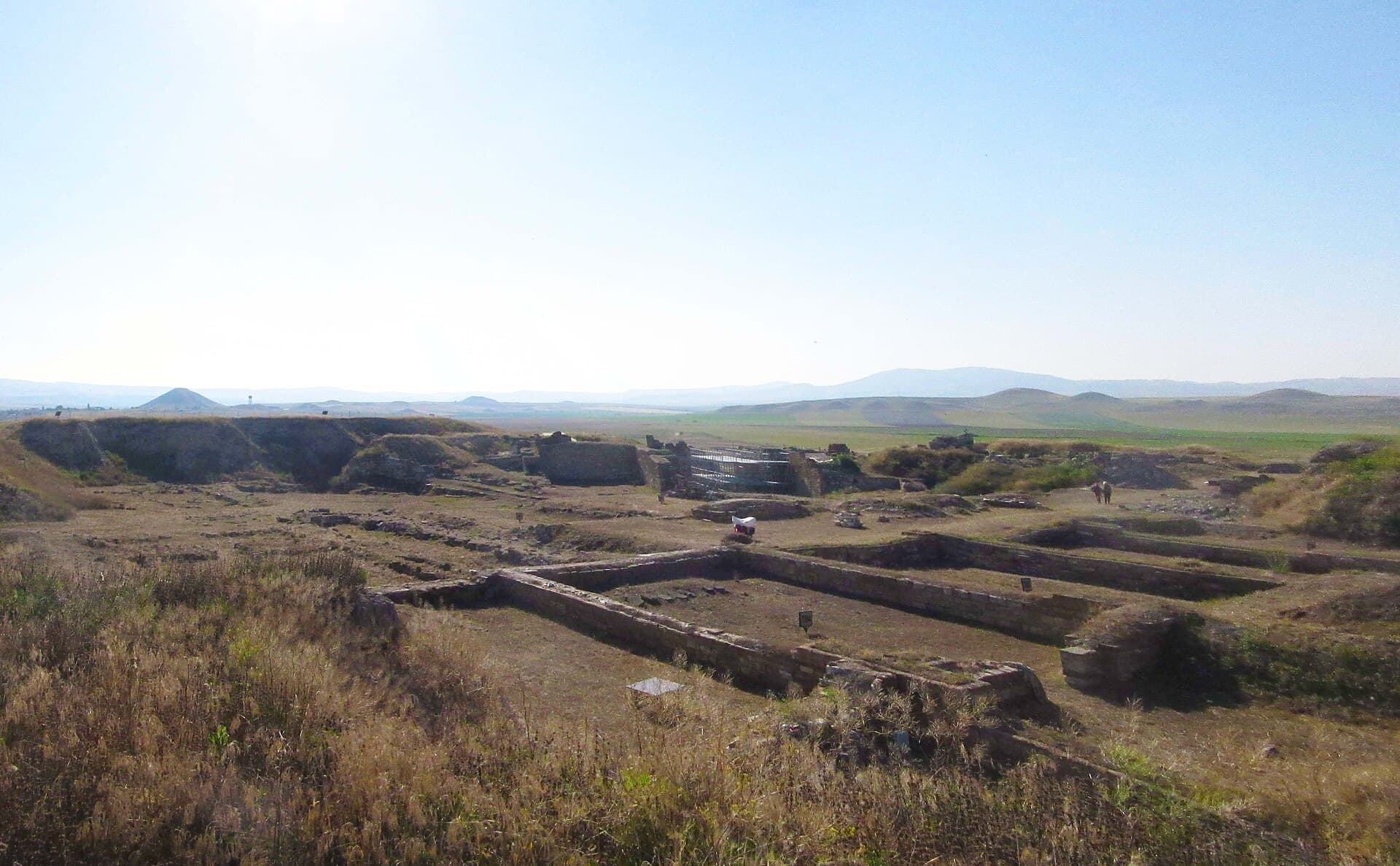
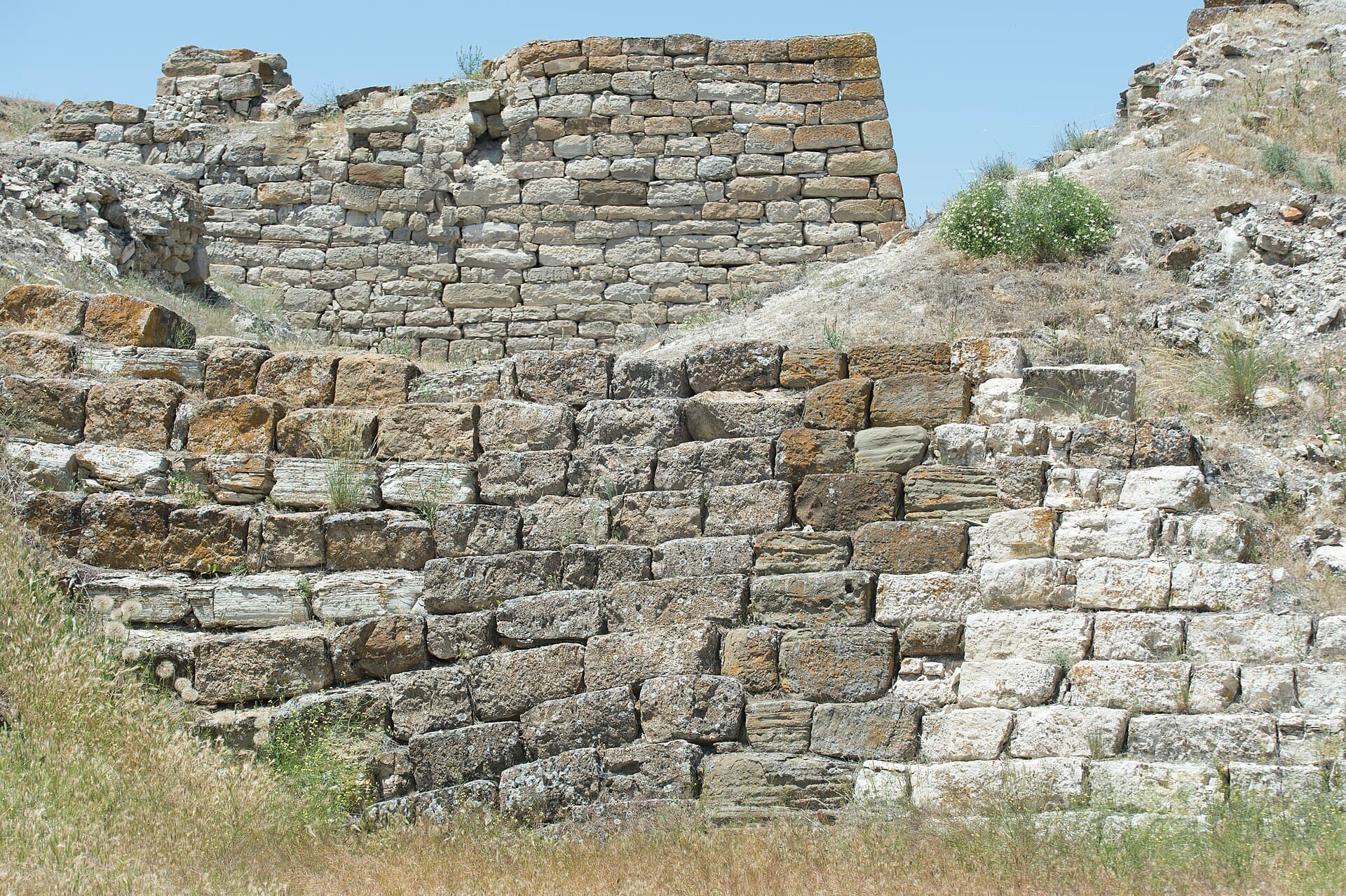
Occupied from the Early Bronze Age (c. 2400 BCE) into medieval times, peaking as the Phrygian royal capital roughly 900–600 BCE. The Early Phrygian Gate, built around 850 BCE, is Asia Minor's best-preserved Iron Age citadel gate. Beside it, the Terrace Building — over 100m long, eight workshop rooms — ranks among Anatolia's largest structures; its floor held the earliest known pebble mosaic, now in the Museum.
What to know before you go
Two things happened on this low mound above the Sakarya river, and only one of them definitely happened. The definite one: for something like six centuries, from roughly 900 to 300 BCE, this was a working Phrygian, then Persian, then Hellenistic citadel, walled and gated, with a stone-and-mudbrick gateway — built around 850 BCE — that's the best-preserved Iron Age citadel gate anywhere in Asia Minor. Beside it ran the Terrace Building, a single structure over a hundred metres long divided into eight workshop rooms where Phrygian households processed grain and wove cloth at an industrial scale, one of the largest buildings anywhere in ancient Anatolia when it went up in the ninth century BCE. Under one of its floors excavators found the earliest known pebble mosaic in the world — geometric, coloured stone set by hand — since lifted and rehoused at the museum a short walk from here. That's the archaeology, and it's genuinely enough to justify the visit on its own: a marked, roughly kilometre-long circuit with about ten information boards leads counter-clockwise past excavated wall lines, the gate towers, and the long footprint of the Terrace Building. The other thing, the one that isn't definite: this is where the palace is thought to have stood that, in Greek historical writing, held an ox-cart tied to its post with an intricately knotted cord of cornel bark — the cart of Gordias, or of Midas; ancient sources disagree on whose it was — with a prophecy attached that whoever untied it would rule Asia. Alexander the Great is supposed to have reached it in 333 BCE, three centuries after the wagon would have been dedicated, and either cut it with his sword or worked the pin free from the pole, depending on which Greek historian you trust — Arrian and Plutarch don't even agree with each other. No trace of the cart, the post, or the knot survives, and nothing here is excavated evidence of the story; it's a piece of Greek writing about a Macedonian king passing through, set on ground you're now standing on. Say that plainly rather than pointing at a stone and calling it the spot. The mound earns the visit on the gate and the workshop alone; the knot is the reason most people have heard of this place at all, and it's worth knowing exactly how much of it you can actually see, which is none of it — only where it was supposed to have happened.