Gordion was the Phrygian capital: the "Gordian knot" Alexander is said to have cut in 333 BCE, King Midas's dynasty, and — under a 53m earthen mound — the oldest standing wooden building on Earth. It's a day trip, not a base: the only realistic gateway is Ankara, about 90km and 1h15–1h30 away, with no lodging at the site itself. UNESCO World Heritage since 2023.
Start with the essentials, add what genuinely interests you, and leave the rest for another visit. Every place includes a concise story, practical timing, a Maps link, and a one-tap route planner action.
Make the route work
Anticipate the practical details.
Getting there
Gordion has no airport and no city of its own to fly into — the only realistic gateway is Ankara, whose Esenboğa Airport (ESB) handles domestic and international routes. From central Ankara it's roughly 90km southwest to Yassıhöyük village, about 1h15–1h30 by car via the Ankara–Eskişehir highway through Polatlı. Public transport covers the first leg well — frequent intercity bus or train service reaches Polatlı in just over an hour — but the last 18km from Polatlı to the site has no reliable scheduled service. Budget a taxi for that stretch, drive the whole way, or join a day tour from Ankara that handles it for you.
Getting around
Everything here sits within about 1.5km of the car park at the eastern edge of Yassıhöyük village: the Gordion Museum and the tunnel into the Midas Tümülüsü face each other across the main road, and the Citadel Mound's marked walking circuit is a short walk or drive further on. There's no public transport between these points and none is needed — this is a single, compact, walkable archaeological park, not a spread-out city. Most visitors do the whole thing as one day trip from Ankara.
Money
Carry cash — card machines are unreliable this far from central Ankara. Reported pricing puts a combined ticket for the Midas Tümülüsü and the Gordion Museum at around €3, among the cheapest state sites in the country, though confirm the current figure locally rather than trusting an older listing. Museum Pass Türkiye (Müzekart) is confirmed valid for Turkish citizens; foreign-visitor pass coverage wasn't independently confirmed.
Connectivity
Mobile coverage is a short, paved distance from a capital-city network and should be reliable, though this wasn't independently tested for this page. Polatlı has full services; Yassıhöyük itself is a small farming village with limited amenities beyond the site café.
Etiquette
This is an active UNESCO World Heritage site and a working excavation, not a reconstructed tourist attraction — stay on the marked paths on the Citadel Mound, don't enter fenced or backfilled excavation trenches. Yassıhöyük is a small, conservative farming village; modest dress is appreciated even though there's no religious site on the visitor route here.
Safety and comfort
A low-risk area close to the capital, with entirely environmental hazards: no shade anywhere on the Citadel Mound circuit or the walk between the tumulus and museum, so summer visits need water, a hat, and ideally a morning start. The ground on the mound is genuinely uneven, with excavated trenches and loose stone underfoot. The tumulus tunnel is enclosed and unlit beyond its fitted lighting — fine for most visitors, worth knowing if anyone in your group is claustrophobic.
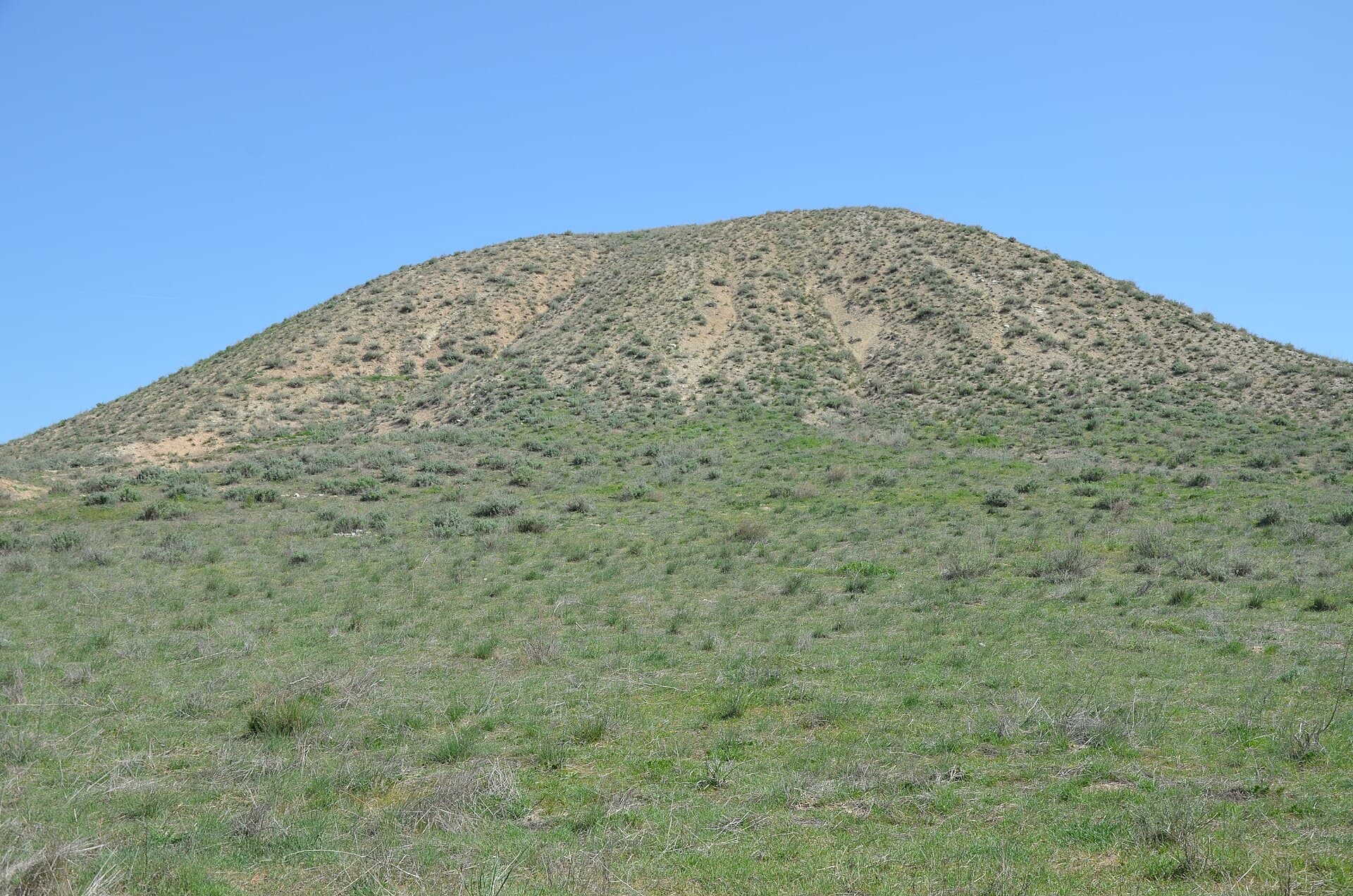
A man-made mountain of earth hides the oldest standing wooden room on the planet — and probably not the king it's named for.
Raised around 740 BCE to bury a Phrygian ruler, the mound stands roughly 53m high and 300m across — Anatolia's second-largest tumulus, after Lydian king Alyattes's tomb at Sardis. Excavated in 1957 by Rodney Young's Penn Museum team, who tunnelled in and found a log-built chamber untouched by looters. Current scholarship identifies the occupant as Midas's father Gordias, not Midas himself, despite the popular name.
Reported combined ticket with the Gordion Museum around €3 (single aggregator source lineage); confirm locally.
40 minThe only way in is a single 70m tunnel with fitted lighting but no natural light and no wide chamber to move around in — worth knowing in advance if anyone in your group is claustrophobic.The tunnel floor and entrance steps are uneven; the walk to and from the entrance across the mound's base is on unshaded open ground.Most of the tomb's actual contents — the wooden furniture and large bronze vessels — are displayed in Ankara, not here; this stop is the chamber itself, not the finds.+1 more to know
The tomb's popular name follows Turkish and English tradition rather than current scholarship, which identifies the occupant as Midas's father, Gordias.
Look for: The 70m tunnel entrance, cut by miners in 1957 and still the only way in. Inside: the horizontal juniper and pine log walls and roof of the burial chamber itself, cool and dim year-round, seen from a viewing point rather than walked into.
Verified · · 1 min to Gordion Museum · 26 min to Citadel Mound (Yassıhöyük)
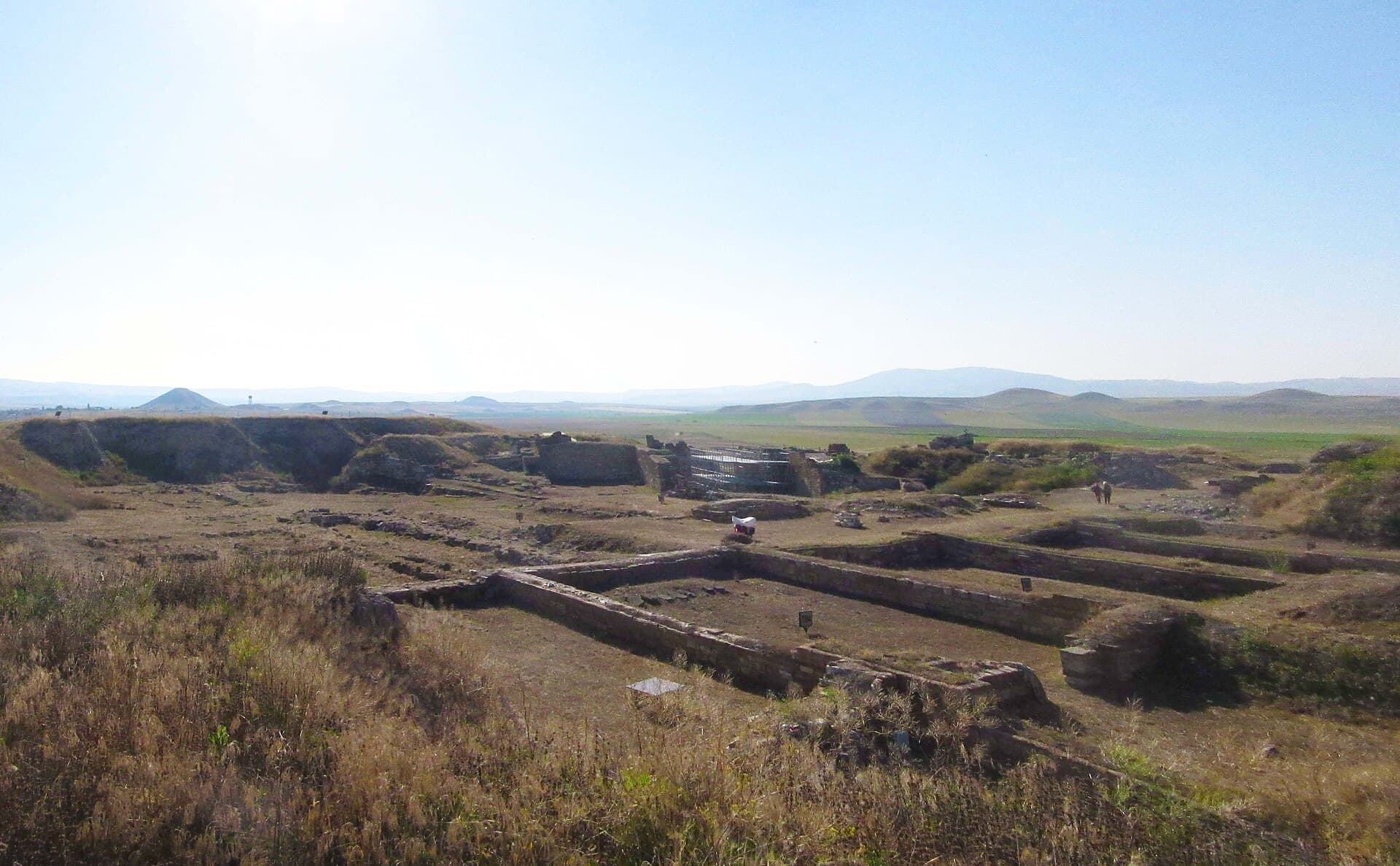
The palace mound where Alexander is said to have cut the Gordian knot — and, provably, Anatolia's best-preserved Iron Age citadel gate.
Occupied from the Early Bronze Age (c. 2400 BCE) into medieval times, peaking as the Phrygian royal capital roughly 900–600 BCE. The Early Phrygian Gate, built around 850 BCE, is Asia Minor's best-preserved Iron Age citadel gate. Beside it, the Terrace Building — over 100m long, eight workshop rooms — ranks among Anatolia's largest structures; its floor held the earliest known pebble mosaic, now in the Museum.
Whether separately ticketed, free, or bundled with the tumulus/museum ticket is unclear from sourcing; confirm locally.
50 minNo shade anywhere on the circuit — carry water and go early, especially between June and August.Ground underfoot is genuinely uneven: excavated trenches, loose stone, and a few paved steps on an otherwise dirt path.There is nothing to physically see of the "Gordian knot" itself — no surviving object, post, or marked spot. The connection is historical and locational, not a preserved exhibit.+1 more to know
This is an active excavation area, not a finished monument — expect fenced-off trenches and, in season, working archaeologists.
Look for: The stone-and-mudbrick gate towers, the long footprint of the Terrace Building's eight rooms, and views north to the bulk of the Midas Tümülüsü and south toward the smaller Küçük Höyük fortress mound.
Verified · · 26 min to Midas Tümülüsü (Midas Mound / Tumulus MM) · 26 min to Gordion Museum
The Phrygian collection that stayed local — plus the oldest pebble mosaic in the world, under an open-air shelter across the courtyard.
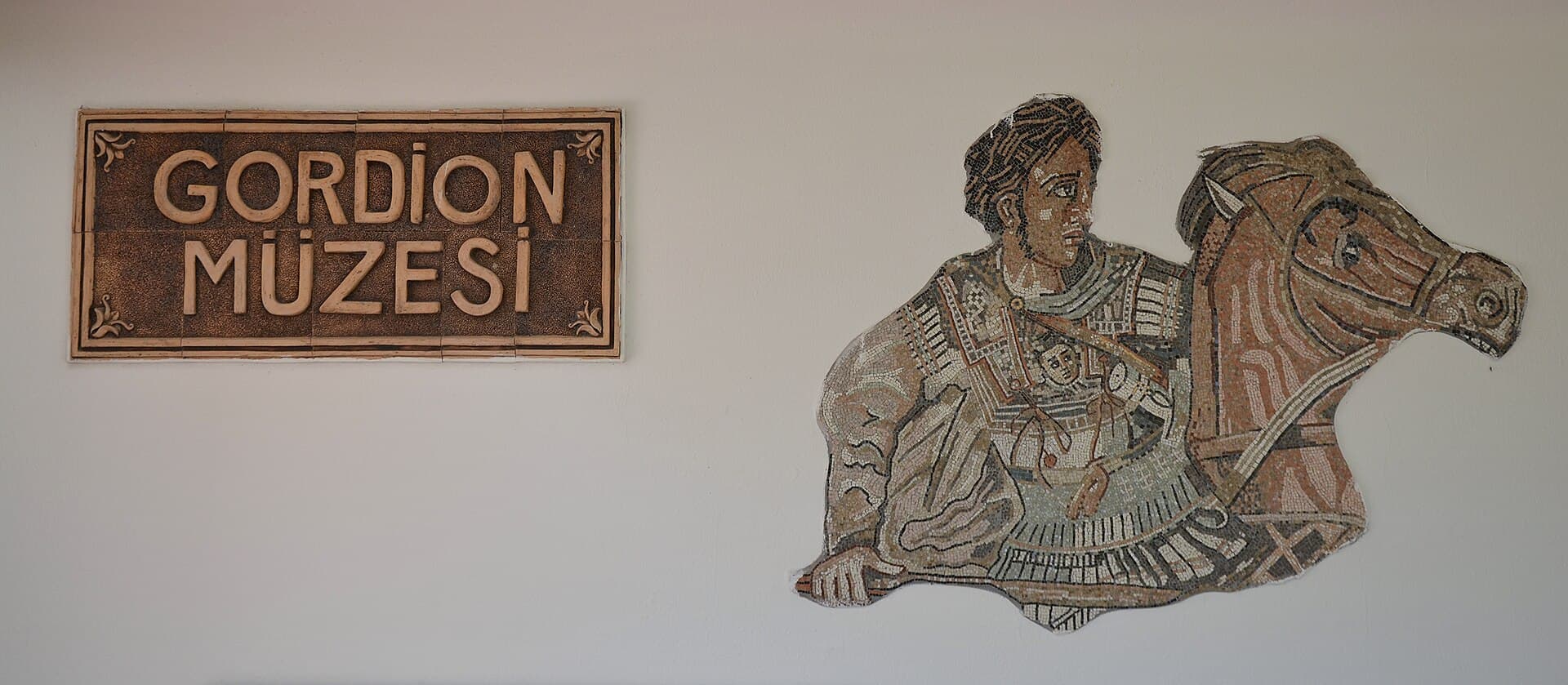
Founded 1963 as an outstation of Ankara's Museum of Anatolian Civilizations, expanded since with added galleries, a lab and conference facilities. Holds Gordion's Phrygian pottery, small bronze and ivory finds, and Hellenistic-Roman material, plus the relocated Megaron 2 mosaic. The Gordion Foundation, set up 27 December 2023 after the UNESCO listing, now runs events from an on-site reception building.
Reported combined ticket with the Midas Tümülüsü around €3 (single aggregator source lineage); confirm locally.
50 minThe site's most famous single objects — the wooden furniture and large bronze cauldrons from the Midas Tümülüsü — are displayed in Ankara's Museum of Anatolian Civilizations, not here.A small, village-scale museum rather than a major national collection — set expectations accordingly.Card payment is unreliable this far from central Ankara; carry cash for tickets.
Look for: The Megaron 2 pebble mosaic under its open-air shelter — geometric, hand-set stone from the 9th century BCE, the earliest known example anywhere. Phrygian pottery and small bronzes; a reconstructed Hellenistic-Roman tomb chamber.
Verified · · 1 min to Midas Tümülüsü (Midas Mound / Tumulus MM) · 26 min to Citadel Mound (Yassıhöyük)
A fortified mound at the southern edge of ancient Gordion's Lower Town, garrisoned with Lydian troops. Destroyed by fire during Cyrus the Great's Persian conquest of the region in the 540s BCE — excavation recovered hundreds of arrowheads, some still embedded in the fortification walls, plus a monumental earthen assault ramp the attackers built against it, and the remains of defenders who died in the fighting.
No confirmed dedicated visitor path, signage, or ticketing found for this mound specifically — treat it as a feature you identify and view from the Citadel Mound, not a separate stop with its own entrance.Open, unshaded ground with no visitor facilities of any kind.
A royal burial mound built around 760 BCE for a child of roughly four or five years old, part of the same necropolis as the Midas Tümülüsü and among the earliest of Gordion's excavated tumuli. Alongside the body, excavators found carved wooden toy animals and painted Phrygian pottery — among the finds now held at the Gordion Museum rather than displayed at the mound itself.
Not open for entry and has no confirmed dedicated visitor path — this is a mound you identify and view, most easily from the Tumulus MM circuit, not a stop with its own entrance.