Terrace Houses of Ephesus
Roofed, shaded and comparatively empty — the only part of Ephesus with a ceiling, and the only part behind a second ticket.
Enough context, no spoilers
Why it matters
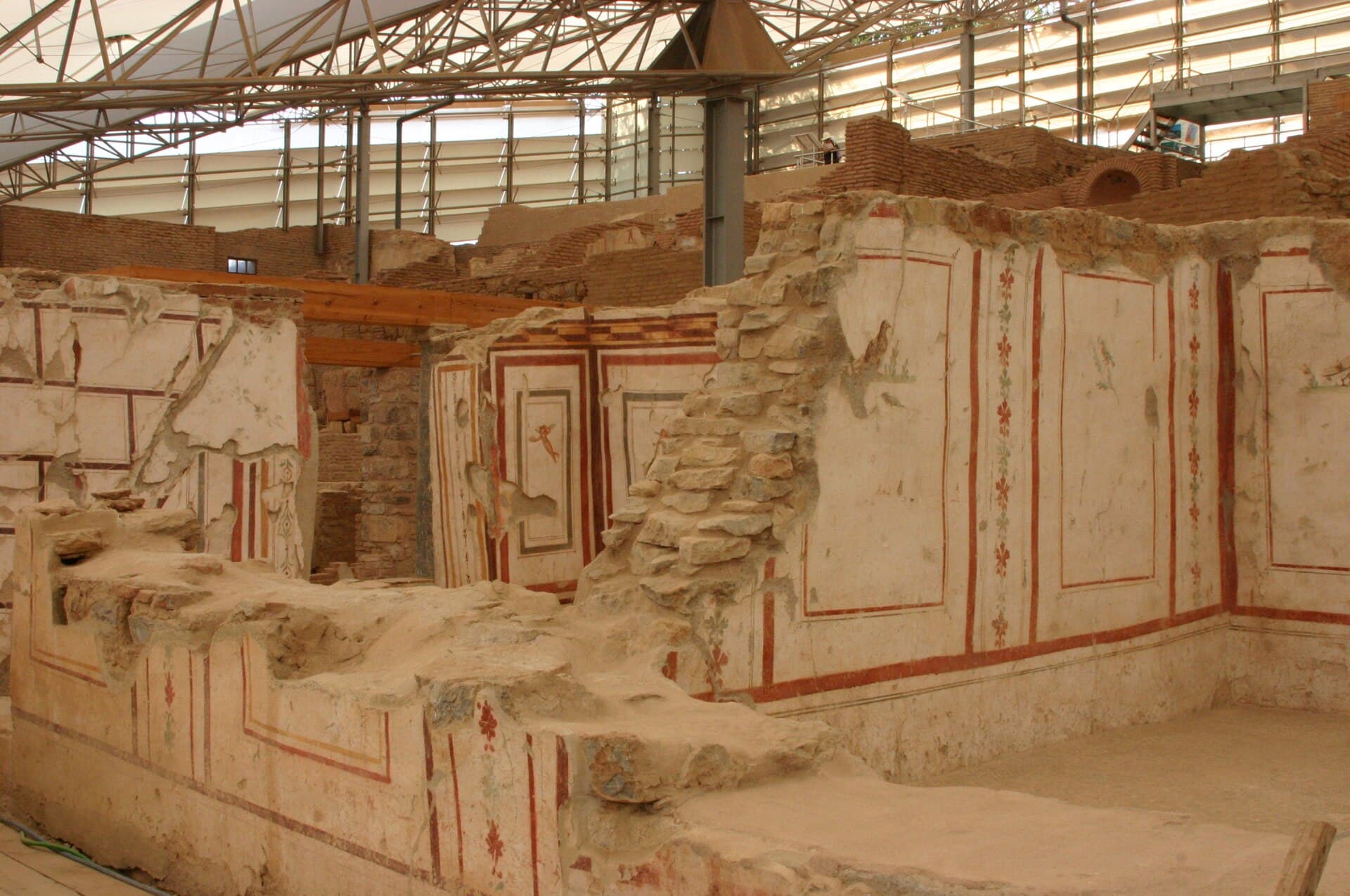
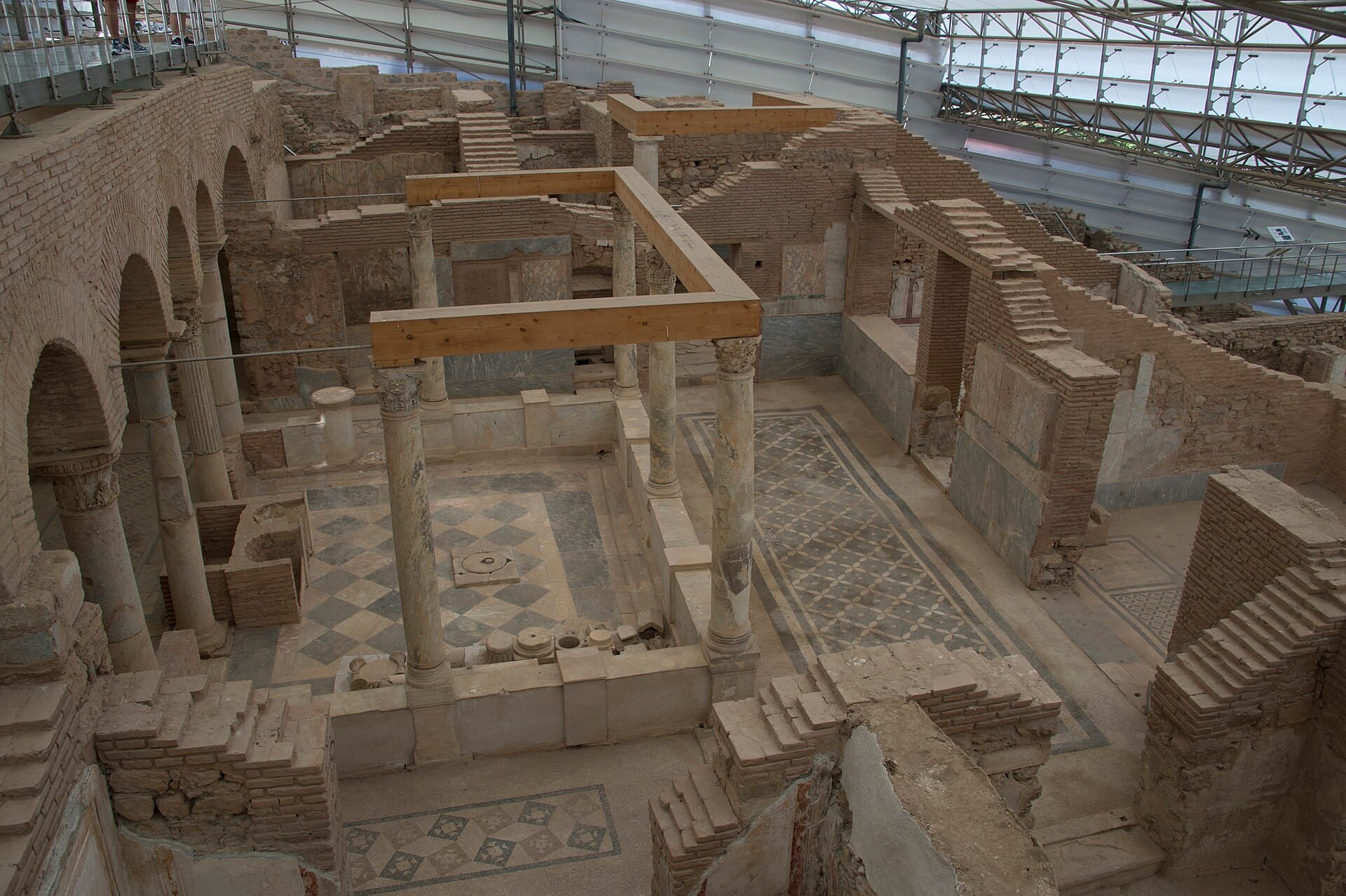
Six terraced houses on the slope facing the Temple of Hadrian, built from about 200 BC on Hellenistic terracing and occupied by wealthy Ephesians from the first century BC into the seventh AD. Two blocks have been excavated. They hold the largest body of Roman floor mosaic in western Türkiye, and frescoes of Apollo, the Muses and Socrates painted directly onto the plaster of ordinary rooms.
What to know before you go
This is the part of Ephesus people skip because it costs extra, and it is the part that most changes what the rest of the site means. Everything else at Ephesus is civic: a library, a theatre, a council chamber, a street of monuments — buildings put up by rich men so that other people would look at them. The Terrace Houses are the opposite. Six houses on the slope facing the Temple of Hadrian, lived in continuously from the first century BC to the seventh AD, buried by collapse and dug out with their floors, walls and colour still on them. You are not looking at civic ambition. You are looking at where the people who paid for it slept. The mosaics are the largest Roman collection of their kind in western Türkiye, and there are frescoes — Apollo, the Muses, Socrates — painted onto the plaster of rooms that were nobody's monument. There is a hall lined in marble panels. There is under-floor heating. There is graffiti. The modern engineering is worth noticing too. The whole complex sits under a single enormous roof, and you move through it on glass and steel walkways suspended above the floors, so you look down into the rooms through the stratigraphy rather than walking across it. On a working day you will see conservators at tables, fitting fragments of painted wall plaster back together by hand. The practical case, said plainly: it is the only roofed space inside the archaeological site. On a July afternoon that is not a footnote, it is the difference between finishing the visit and abandoning it. Budget forty-five minutes, and know that the extra ticket is charged separately even if you hold a museum pass, that it closes earlier than the main site, and that it is not part of the summer night visits.