Curetes Street
The 210-metre marble spine of the city. Walk it downhill and Ephesus makes sense; walk it uphill and it is just a slog.
Enough context, no spoilers
Why it matters
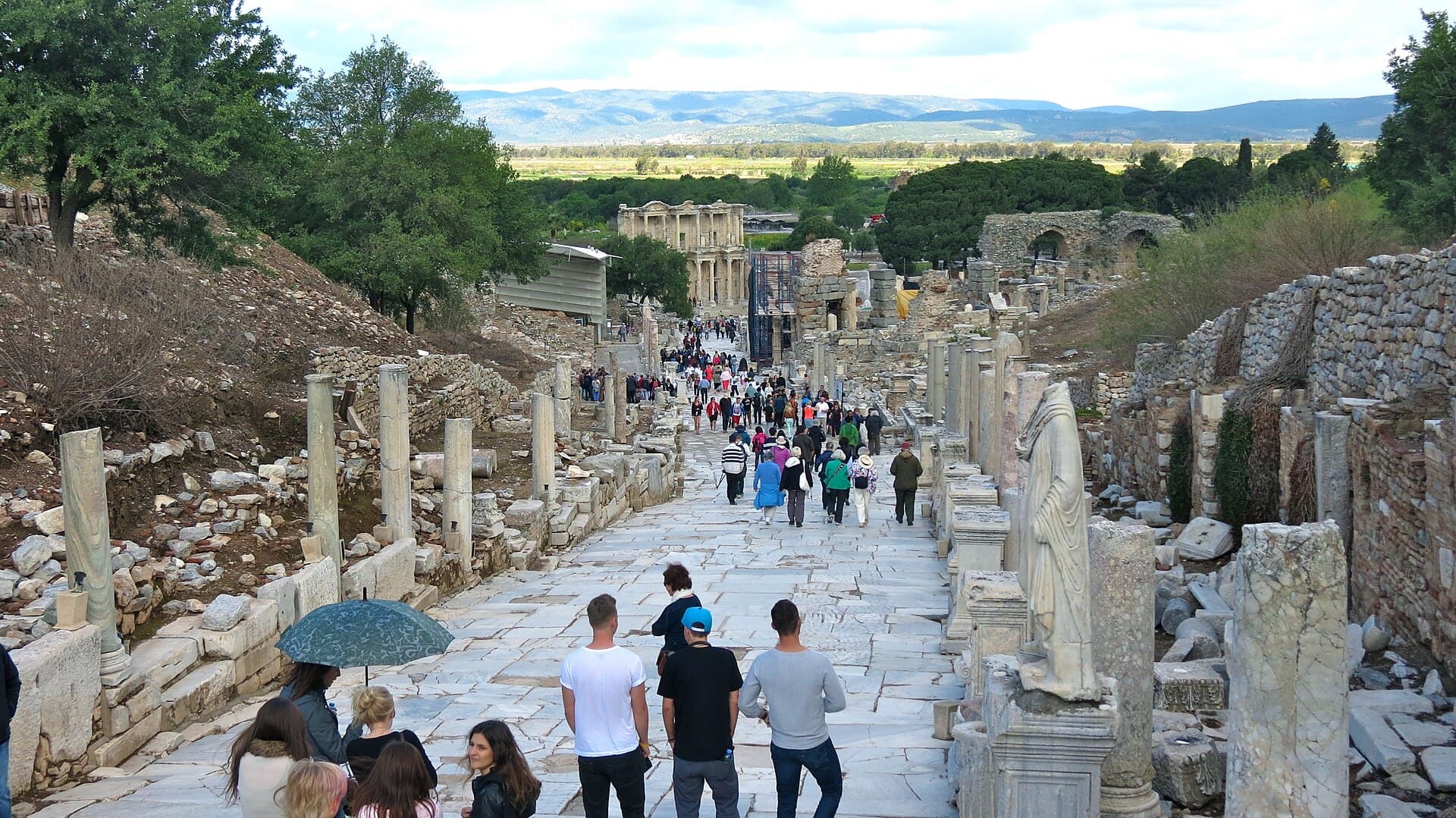
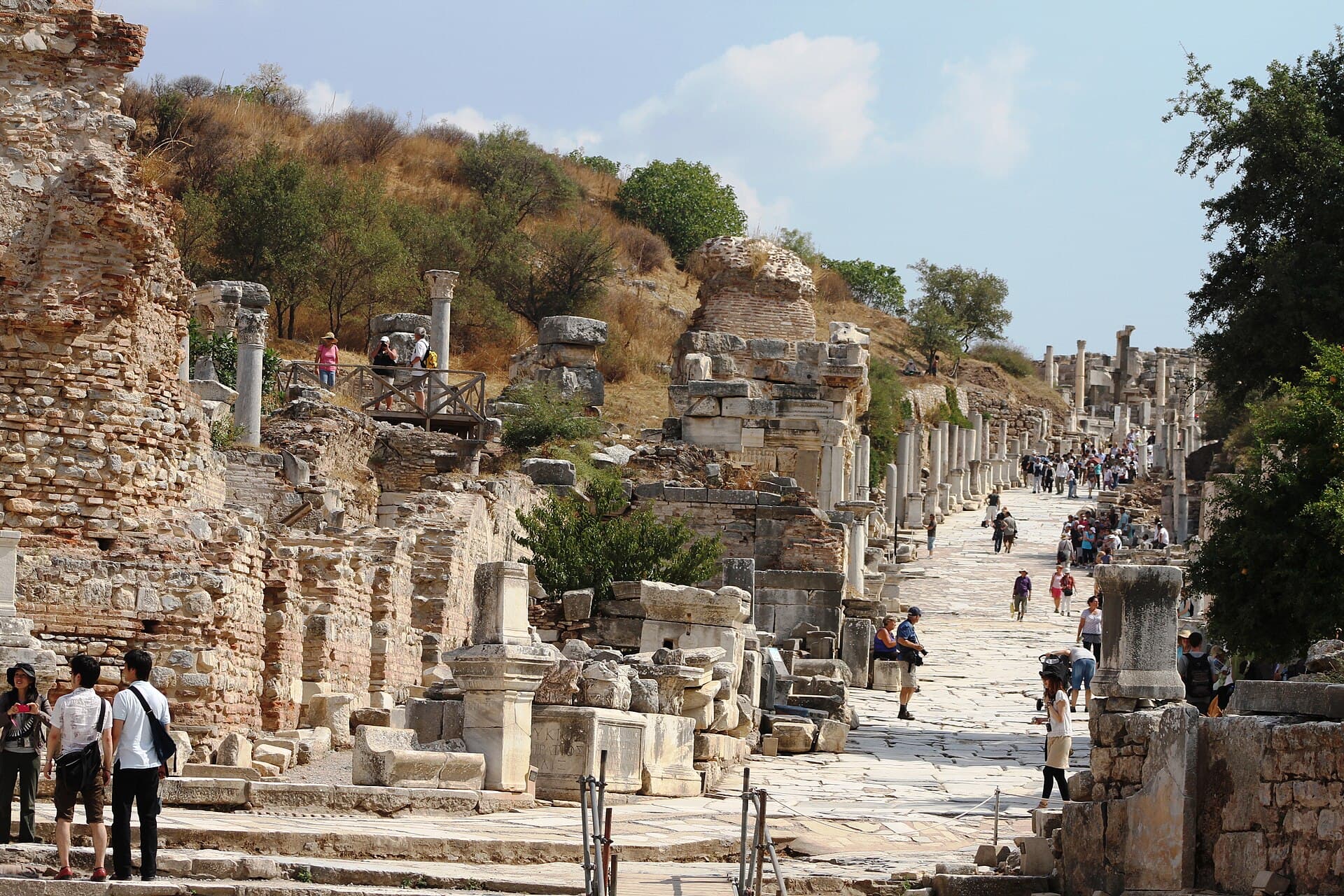
The processional street between the Hercules Gate and Triodos Square by the library, 210 metres long and 6.8 to 10 metres wide, dropping about 20 metres. Paved in marble in the Roman period over the city's drainage system. From the fourth century AD the Hercules Gate narrowed the top end so that wheeled traffic could no longer pass, and the street became a pedestrian promenade.
What to know before you go
Ephesus is not a collection of monuments. It is a street, and the monuments are what happen along it. Curetes Street runs 210 metres from the Hercules Gate down to the small square in front of the library, dropping about twenty metres on the way. It was the processional route and the shopping street at once: marble paved, six to ten metres wide, colonnaded, with mosaic sidewalks under cover on both sides and shops behind them. The Temple of Hadrian is on it. The latrines are on it. The entrance to the Terrace Houses is on it. Fountains, statue bases, inscriptions honouring men who paid for things — all of it strung along this one descent. Which is why the direction you walk it is the single most consequential decision of the visit. Downhill, entering at the upper gate, the street delivers the city to you in the order it was built to be experienced: through the ceremonial gate, past the civic monuments, gathering shops and crowds and noise, until the library rises at the bottom of the slope exactly as its architect intended. Uphill, from the lower gate, you get the same stones in reverse, against the grade, with the sun in your face and the best building behind you. Look down while you walk. The marble is scored with circular hollows and shallow grooves, cut deliberately to stop people slipping — on winter rain, and on stone polished by feet and baked hard in summer. It is the most direct physical evidence at Ephesus that this was a place where large numbers of ordinary people walked every day. From the fourth century the Hercules Gate at the top was narrowed so carts could not get through. The city had decided this street was for walking. It still is, and it still rewards being walked in the right direction.