Library of Celsus
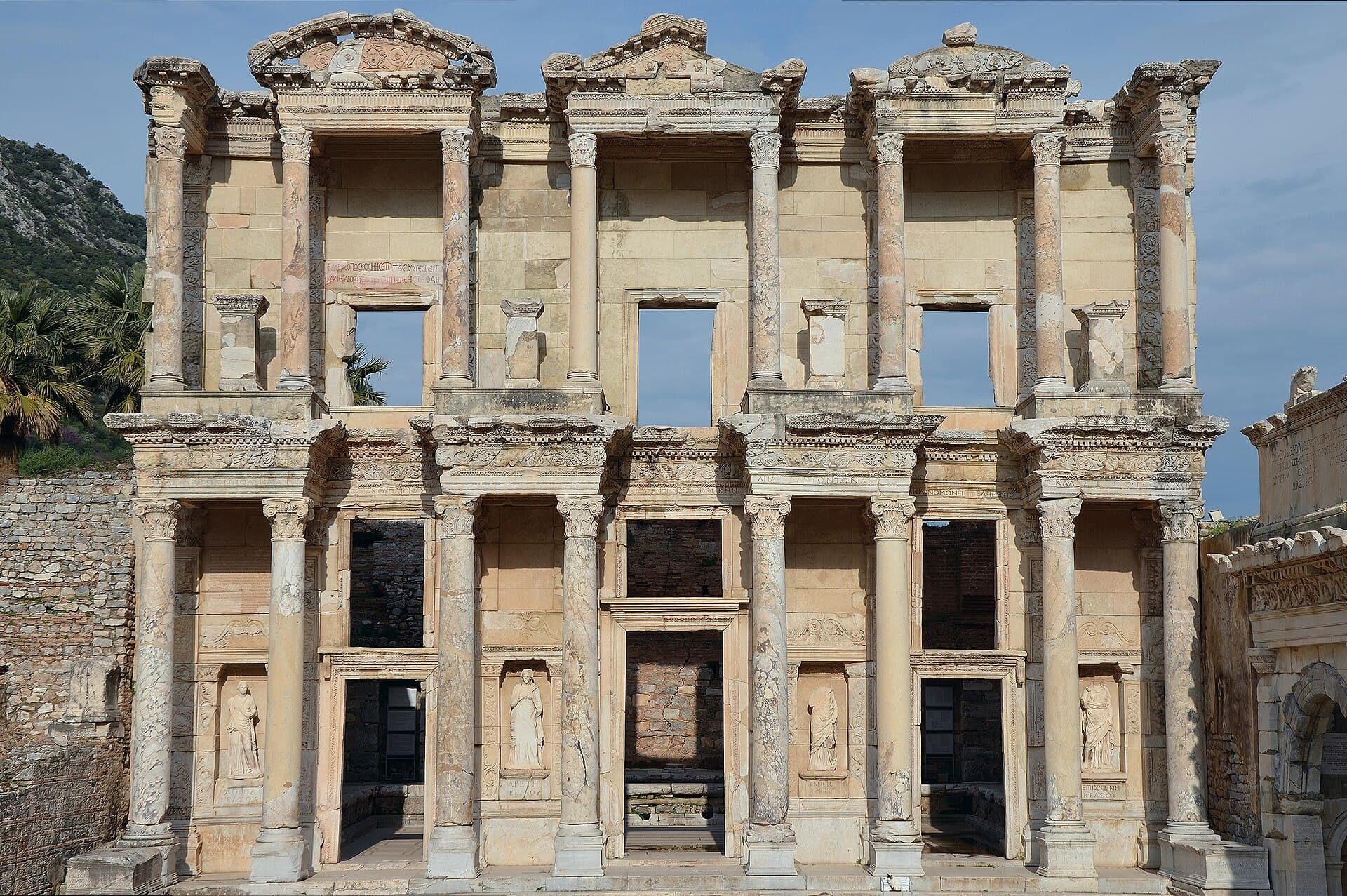
The facade is real stone, reassembled from its own fallen fragments in the 1970s. Everything behind it is still ruin.
Enough context, no spoilers
Why it matters
Begun about AD 110 by Tiberius Julius Aquila as a monument and tomb for his father, the proconsul Celsus Polemaeanus, whose sarcophagus still lies in a vault beneath the reading room. It held some twelve thousand scrolls. Fire gutted the interior in AD 262 and an earthquake felled the front. Volker Michael Strocka rebuilt the facade between 1970 and 1978 from fragments Austrian excavators recovered in 1903–04.
What to know before you go
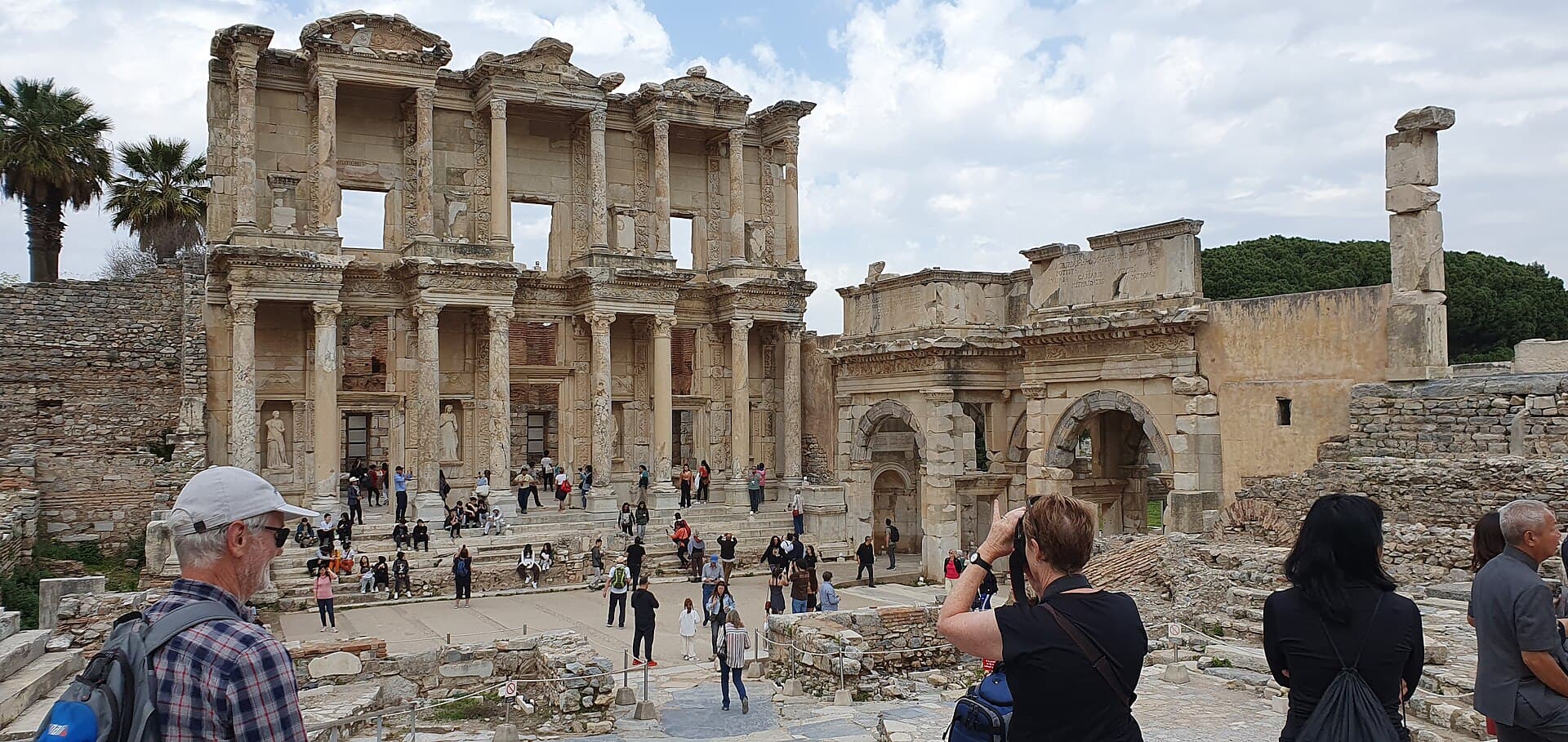
Everyone photographs it, and almost nobody is told what they are photographing. The Library of Celsus is not a surviving building. It is a facade — one wall, two storeys of it — that Austrian excavators found lying in pieces where an earthquake had dropped it, and that a German-led team spent eight years from 1970 fitting back together like a puzzle whose box had been lost. The stone is genuine. The arrangement is a twentieth-century argument about how it once stood. That is not a criticism, and it is not a reason to be disappointed. It is the thing that makes the building legible. The alternating pediments, the columns set on a curved base so the whole front reads wider than it is, the play of light across niches designed to be seen from below at the bottom of a hill — none of that survives as rubble. It survives as this. Behind the facade there is nothing. The reading room burned in AD 262 and was never rebuilt. What you can walk into is an empty rectangle. Which means the honest way to visit is to treat it as a face, not a room: arrive down Curetes Street so it rises at you the way it was meant to, stand well back, and give it ten minutes before you go looking for the detail. Two details are worth the walk. The four women in the niches — Wisdom, Knowledge, Thought, Virtue — are casts; the originals were carried to Vienna in 1910 and are still there. And beneath the reading room floor, in a vault, is a marble sarcophagus holding Celsus himself. Burial inside the city walls was extraordinary. His son built his father a library and put him in the basement of it. Come early. This plaza is where the cruise groups converge, and between mid-morning and mid-afternoon in season you will be photographing the back of someone's head.