Temple of Artemis
One of the Seven Wonders of the Ancient World is now one column in a wet field. Go anyway, but go knowing that.
Enough context, no spoilers
Why it matters
Antipater of Sidon ranked it above every other wonder he had seen. Rebuilt three times, the last version begun about 323 BC and standing some six centuries before it was destroyed in AD 401. Its stone was quarried away for later buildings. The best surviving sculpture was carried to the British Museum in the nineteenth century and sits in its Ephesus room.
What to know before you go
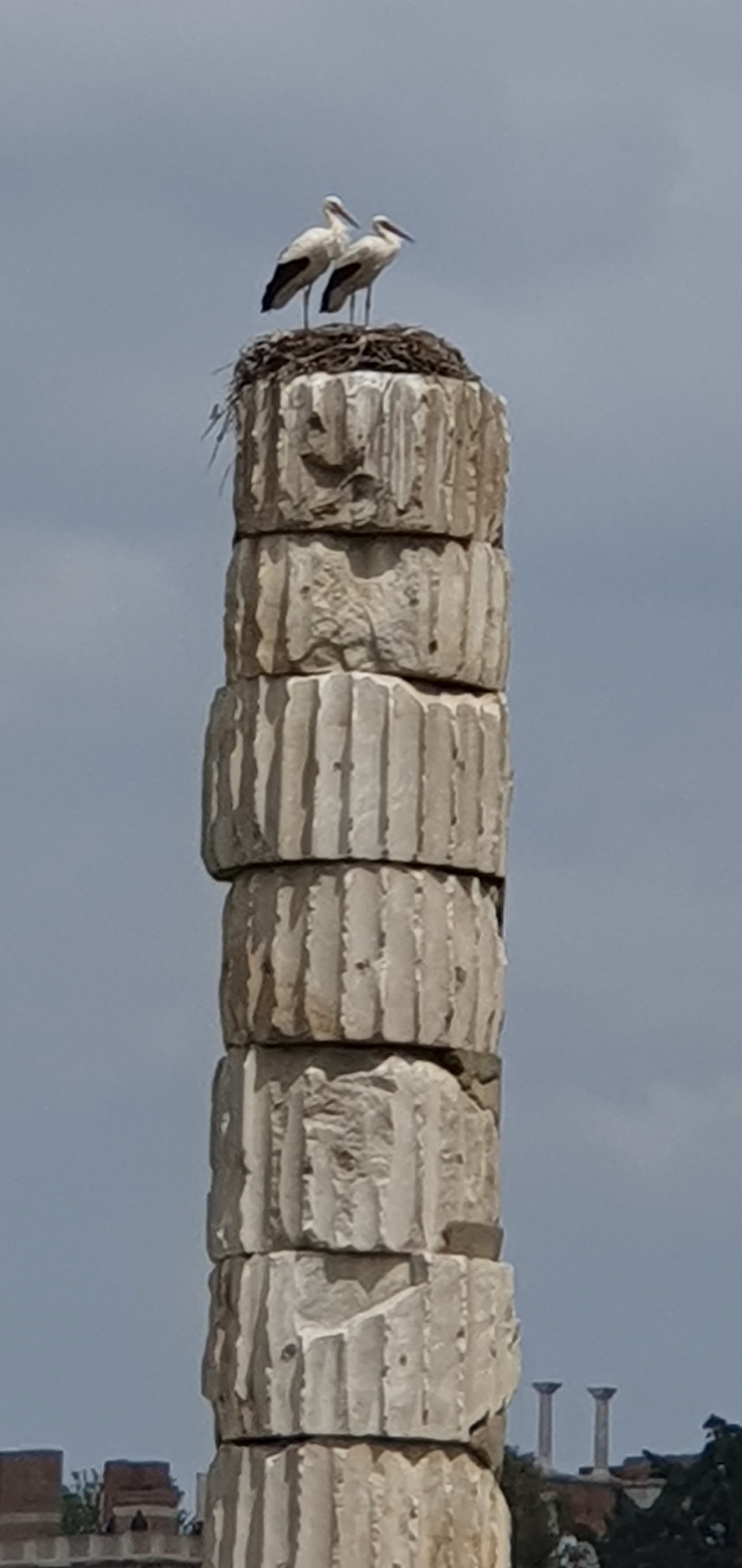
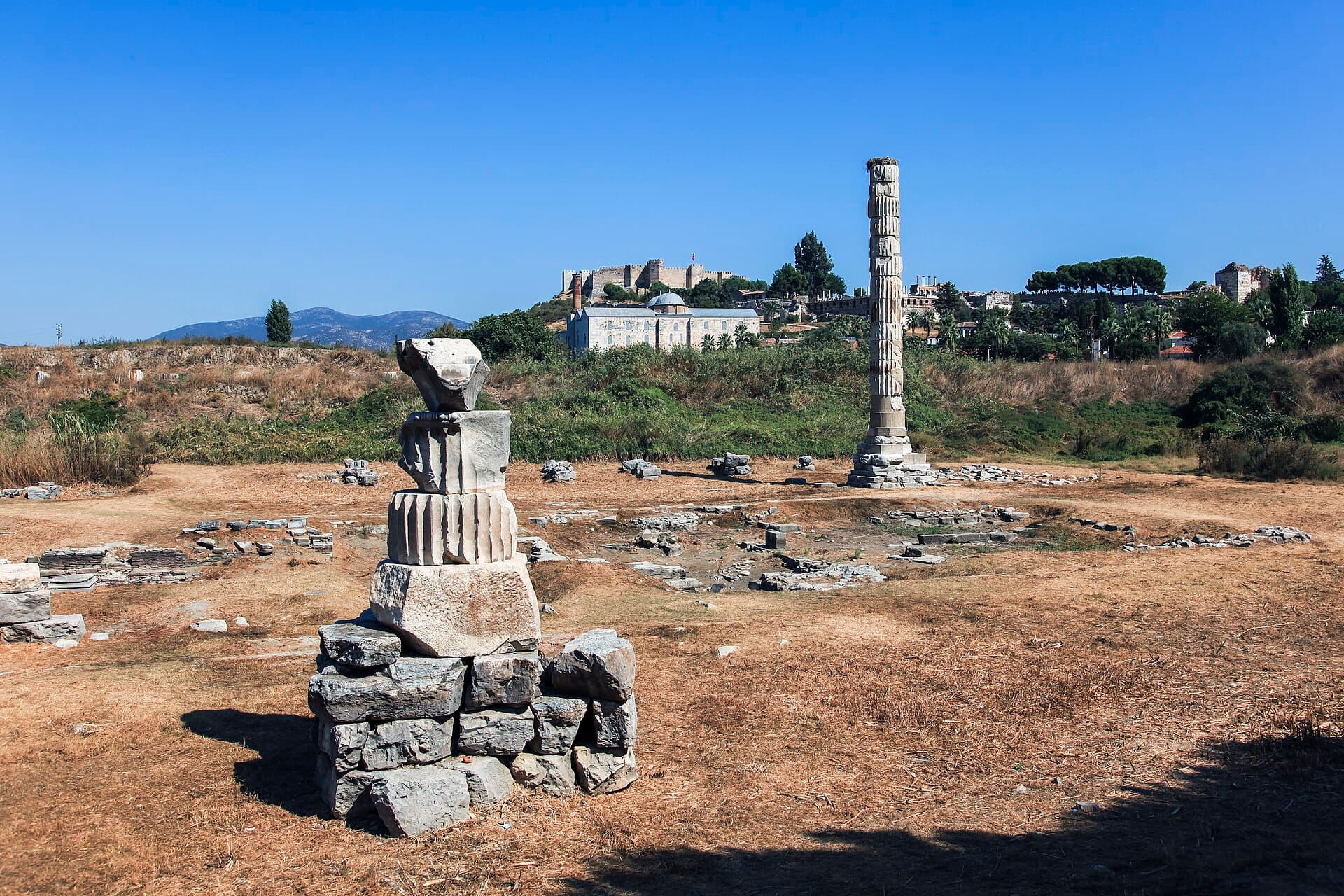
Be clear about what is here before you come, because this is where Ephesus most often disappoints people, and the disappointment is avoidable. There is a field. In the field there is one column, and the column is a modern assembly of unmatched drums picked up off the ground and stacked. Around it, low marble blocks trace a foundation that is often under water. There is a board with a reconstruction drawing. That is the whole site, and fifteen minutes is enough. Now the other half. The building that stood here was, by the reckoning of the ancient world, the finest thing built by human beings. Antipater of Sidon had seen the Pyramids, the Colossus and the Hanging Gardens, and wrote that when he saw the house of Artemis the others lost their brilliance. It was rebuilt three times; the last version was begun around 323 BC and stood for roughly six hundred years. It was four times the footprint of the Parthenon. It was a bank, an asylum and the reason the city existed — the silversmiths who rioted against Paul in the theatre made their living from it. It was destroyed in AD 401, and then it was mined. The marble went into churches, into the basilica up the hill, into İsa Bey Mosque, into the fortress on Ayasuluk. The best of the carved fragments left in the nineteenth century and are in the British Museum. The site was not abandoned. It was consumed. That is the visit: standing in a wet field for a quarter of an hour, understanding that everything around you was built out of what used to be here. Go after the museum in Selçuk, where the two Artemis statues are, rather than before. The order changes what the field means.