Basilica of St John
Justinian built a cathedral over what Ephesus believed was the grave of John the Evangelist. The grave was empty.
Enough context, no spoilers
Why it matters
A domed cruciform basilica raised by Justinian from about 535 over an earlier shrine on Ayasuluk Hill, and among the largest churches of its age. Its scale drew pilgrims for centuries. It fell into ruin after earthquakes and the Turkish conquest; partial rebuilding of the walls and columns was funded from the United States after 1923.
What to know before you go
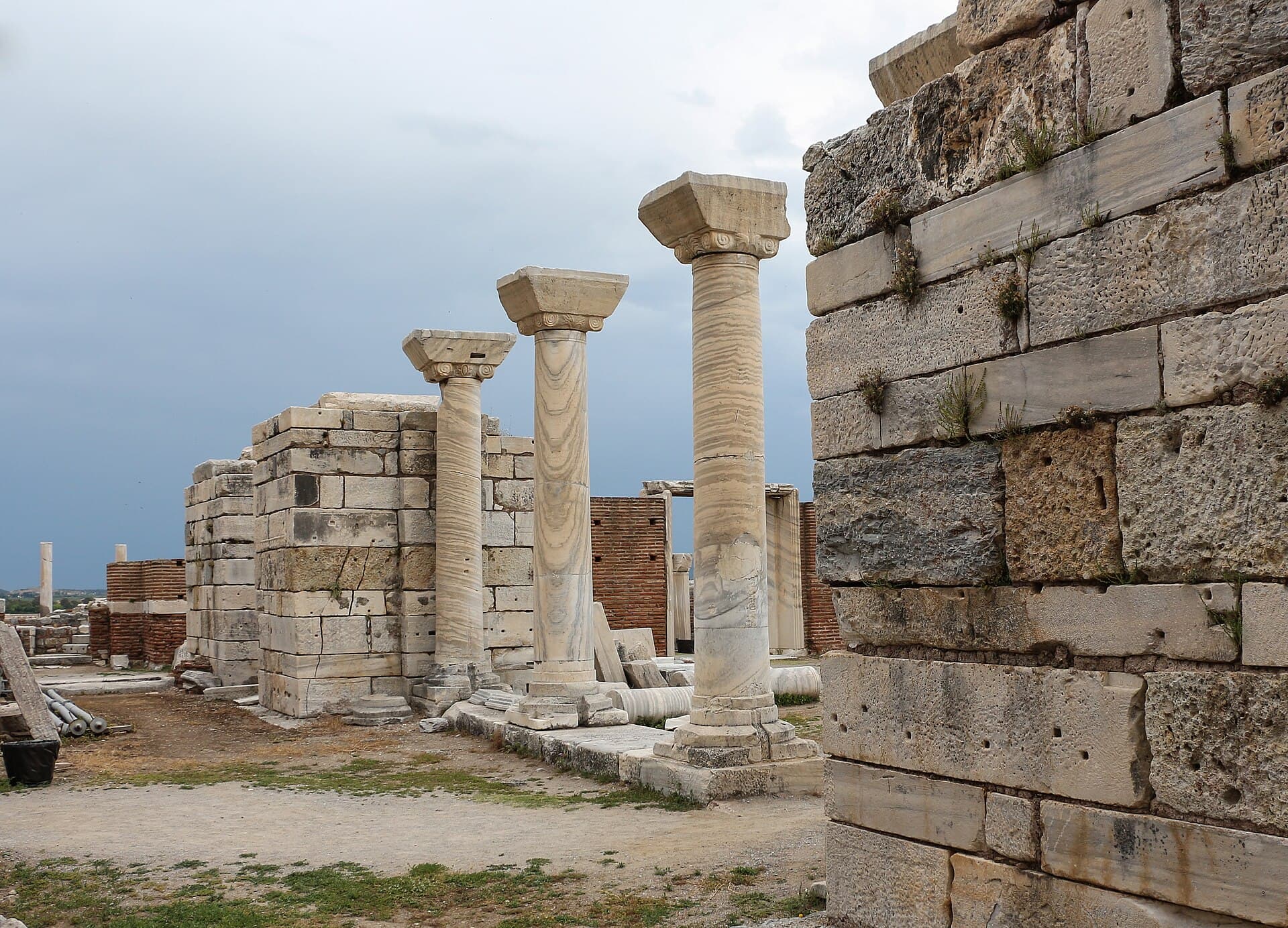
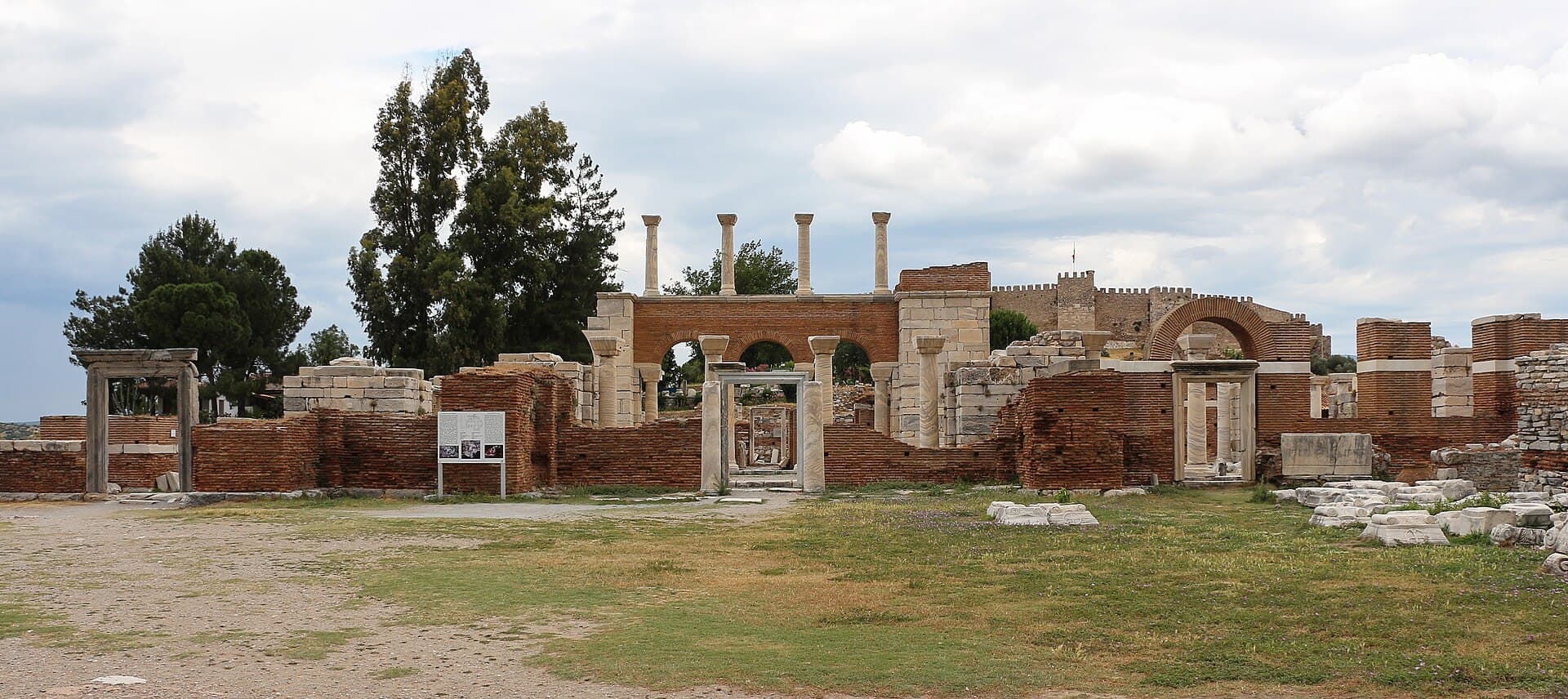
Ephesus has two ruined cities, and the second one is in the middle of the modern town. When the harbour silted and the ancient city died, Ephesus moved uphill to Ayasuluk, and the reason it moved was this building. Christian tradition placed the grave of John the Evangelist on this hill. A shrine grew over it, and around 535 Justinian replaced the shrine with a domed cruciform basilica on a scale meant to compete with anything in the empire — one of the largest churches of its age, and a pilgrimage engine that supported the town for centuries. The story attached to the tomb is worth knowing before you stand over it. When it was opened, there was nothing inside. No body, no relics. In an age when the bones of saints were currency — bought, stolen, fought over, split between cities — John is among the very few whose remains nobody anywhere claims. Believers took the emptiness as confirmation of his assumption. Whatever you make of it, the marble slab in the raised chancel is the only apostolic tomb in the world with that particular absence at the centre of it. What survives is a plan rather than a building. Earthquakes and centuries brought it down, and much of its marble went into İsa Bey Mosque at the foot of the hill and the fortress above. After 1923 American funding re-erected some walls and a group of columns, enough that you can read the cross-shaped footprint from ground level and see how vast it was. The octagonal baptistery on the north side survives well. You come in through the Gate of Persecution, the old approach from the town. Go late in the day. It is completely unshaded, the light on the hill is best in the last hours, and the same ticket takes you further up to the castle — which almost nobody bothers with, and which is where the view is.