Great Theatre of Ephesus
The largest theatre of the ancient world — and since April 2025 you have been looking at it from the agora, not sitting in it.
Enough context, no spoilers
Why it matters
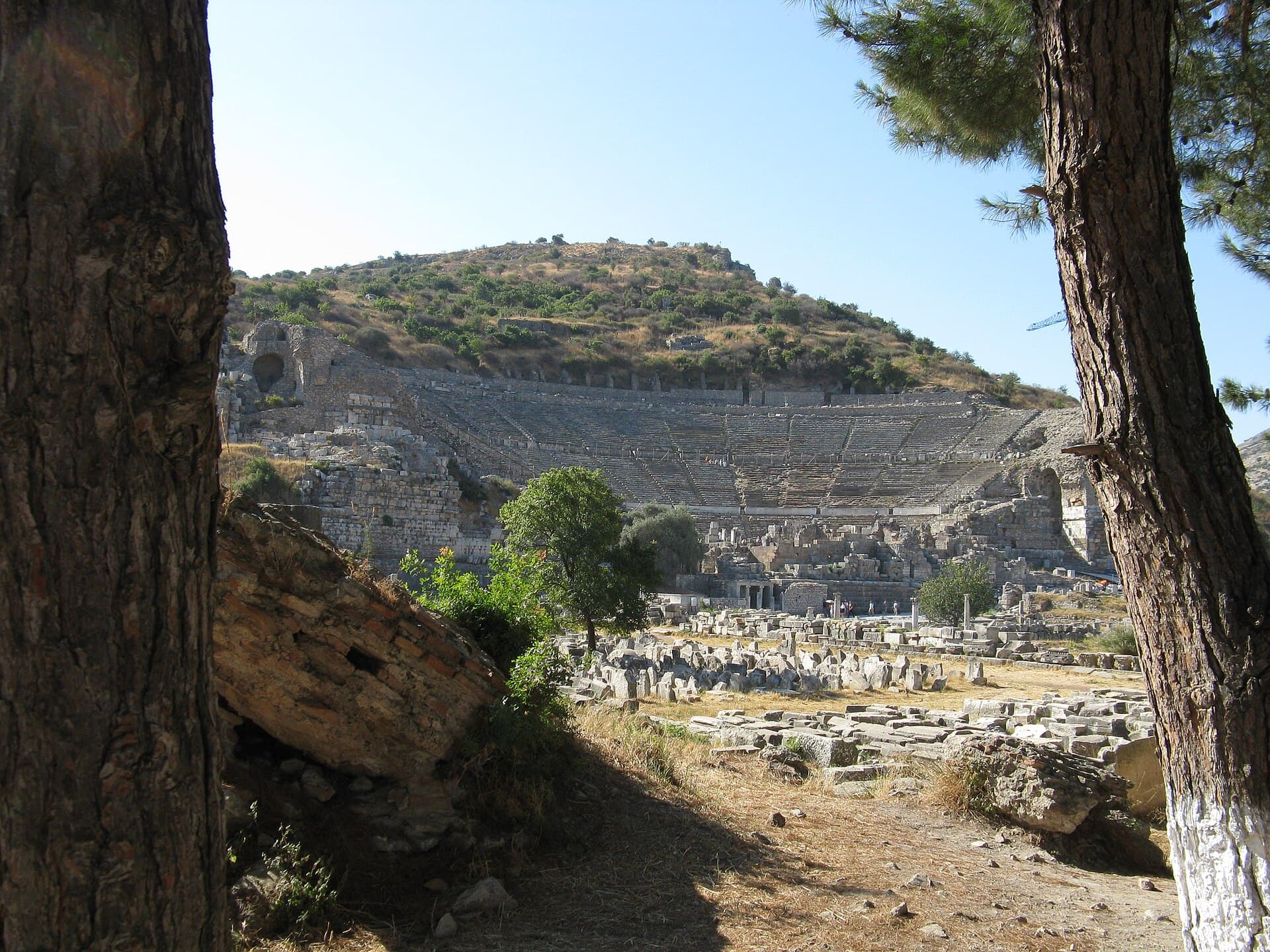
Cut into the slope of Panayır Dağı in the Hellenistic period and enlarged under the Romans into a bowl of sixty-six rows in three tiers, fronted by a stage building three storeys and eighteen metres high. In Acts 19 the silversmith Demetrius, whose trade was shrines of Artemis, drove a mob here chanting against Paul until the town clerk broke it up.
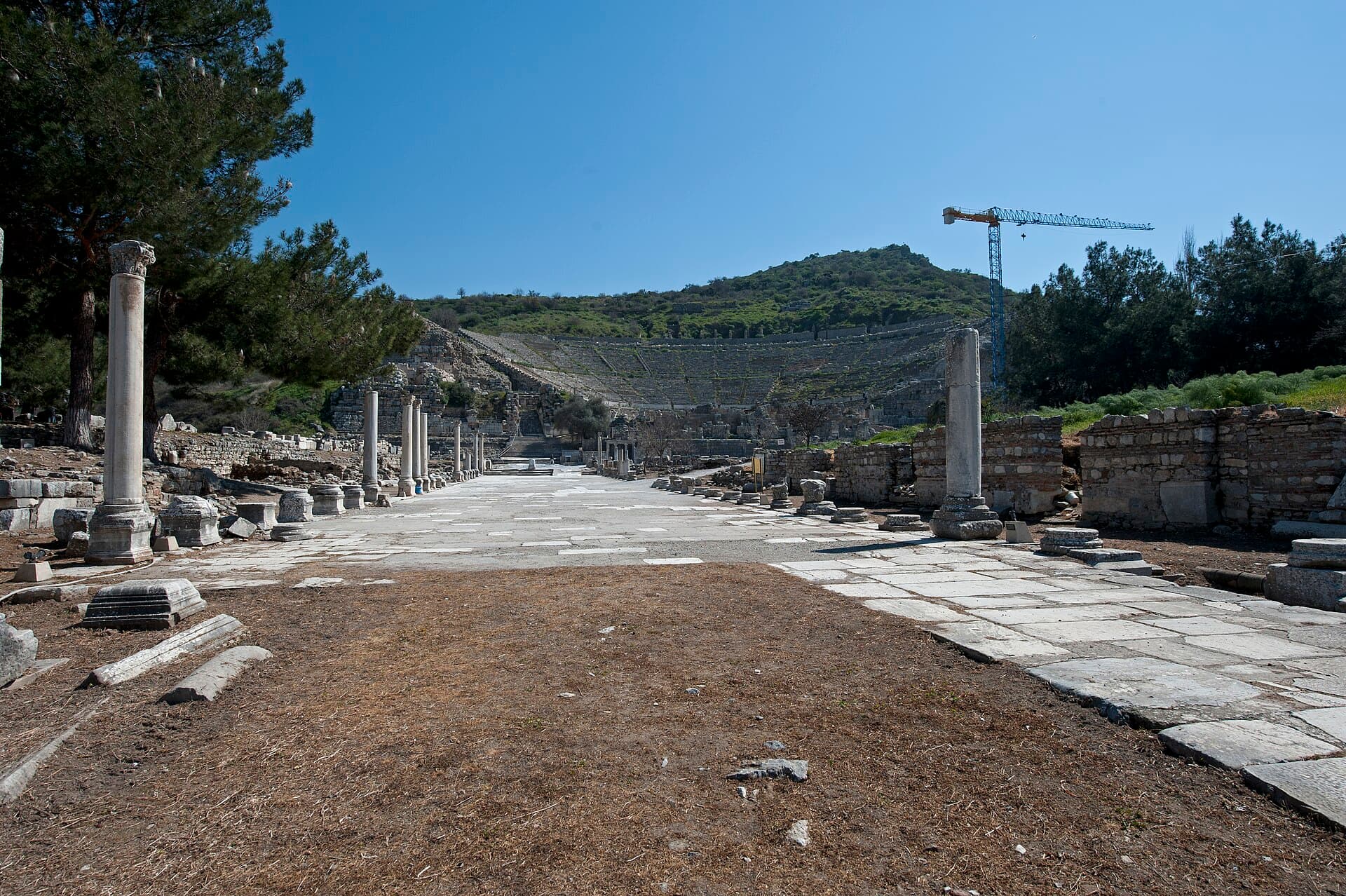
What to know before you go
Twenty-five thousand seats, sixty-six rows in three tiers, carved into the side of a hill, fronted by a stage building that once stood eighteen metres high. It is thought to be the largest theatre of the ancient world. And at the moment you cannot go into it. Interior access has been closed since April 2025 under a restoration programme, with cranes working over the cavea and no reopening date announced; a visitor report from June 2026 found it still shut. The road that used to run directly from the Library of Celsus to the theatre is closed with it, so you arrive instead by looping through the Commercial Agora and see the structure from the front and outside. Every other guide will tell you to climb to the upper rows. For now you cannot, and it is worth knowing that before you plan around it. What you can still do from ground level is the thing that actually matters. Stand in front of the stage building and look along Harbour Street — dead straight, paved, running away to the northwest toward a flat green agricultural plain. That avenue ended at the quays. Ephesus was a port, and the harbour is now three to four kilometres inland, silted up by the Küçük Menderes. The wealth that paid for the library, the Temple of Artemis and a theatre this size all came up that street from the water. No single view in Türkiye explains a dead city faster, and you do not need to be in the seats to see it. The other reason to stand here is Acts 19. A silversmith named Demetrius, who made souvenir shrines of Artemis, worked out that a preacher saying gods made with hands are not gods was a threat to his trade, and got a crowd into this bowl chanting for two hours. Paul wanted to go in; his companions stopped him. Whatever you make of the source, the shape of the argument — a pilgrimage economy against a new religion — is the shape of the whole city.