Didim is two places sharing one headland: Altinkum, a golden-sand resort with a British accent, and Didyma, the oracle sanctuary of ancient Miletus, whose colossal unfinished temple rises straight out of the street grid. Base yourself by the beach, give the temple the slow morning it deserves, then use the town as base for the classical triangle - Miletus and Priene make an easy day's loop north.
Start with the essentials, add what genuinely interests you, and leave the rest for another visit. Every place includes a concise story, practical timing, a Maps link, and a one-tap route planner action.
Make the route work
Anticipate the practical details.
Getting there
Fly to İzmir Adnan Menderes (ADB), which has far more flights: direct İzmir–Didim buses take 2.5–3 hours, or take any coach to Söke and switch to the Didim minibus, every 25 minutes or so, 45–60 minutes down. Bodrum-Milas (BJV) is closer at about 70km/1h15 by pre-booked transfer or taxi, with a budget route via the Bodrum otogar and an onward intercity coach (about 2 hours, twice daily). Aydın province has no scheduled passenger flights of its own. In summer a Didim–Kos ferry links Greece from D-Marin, Fridays and Saturdays direct in 2026.
Getting around
Dolmuş minibuses run constantly along the Altınkum seafront–otogar–temple corridor and out to Akbük and Mavişehir; flag them down anywhere. The temple is a 40-minute walk or a short dolmuş hop from central Altınkum. For Miletus and Priene there is no useful public transport — rent a car (the triangle is an easy self-drive on quiet roads), agree a half-day taxi fare, or join a Priene–Miletus–Didyma tour from Altınkum.
Money
State-run sites price foreigners in euro (€4–6 here) but the gates take Turkish lira and cards. Everything else is lira: carry small notes for dolmuş rides, market stalls and sunbeds. ATMs cluster on Atatürk Boulevard and the Altınkum front. Some tourist menus quote pounds for the British crowd — ask for lira prices.
Connectivity
Strong 4G/5G across town, the beaches and all three archaeological sites; buy a Turkish eSIM before landing or a local SIM in town. Café and hotel wifi is universal on the Altınkum strip. Signal only thins on the back roads toward Priene.
Etiquette
Beachwear stays on the beach — cover up for the market, the otogar and any mosque, including İlyas Bey at Miletus. Didim is probably Türkiye's most Anglophone resort, but a few words of Turkish go a long way in Akköy's lokantas. At the Saturday market, produce prices are fixed; haggling belongs at the textile stalls.
Safety and comfort
One of coastal Türkiye's safest, most family-oriented resorts. The real hazards are sun and heat — Didyma and Miletus are shadeless at noon in July and August, so carry water and go early. Altınkum's sea is shallow and calm, ideal for children; watch for urchins at the rocky ends of smaller bays. Drive the D525 Söke road with care in summer traffic.
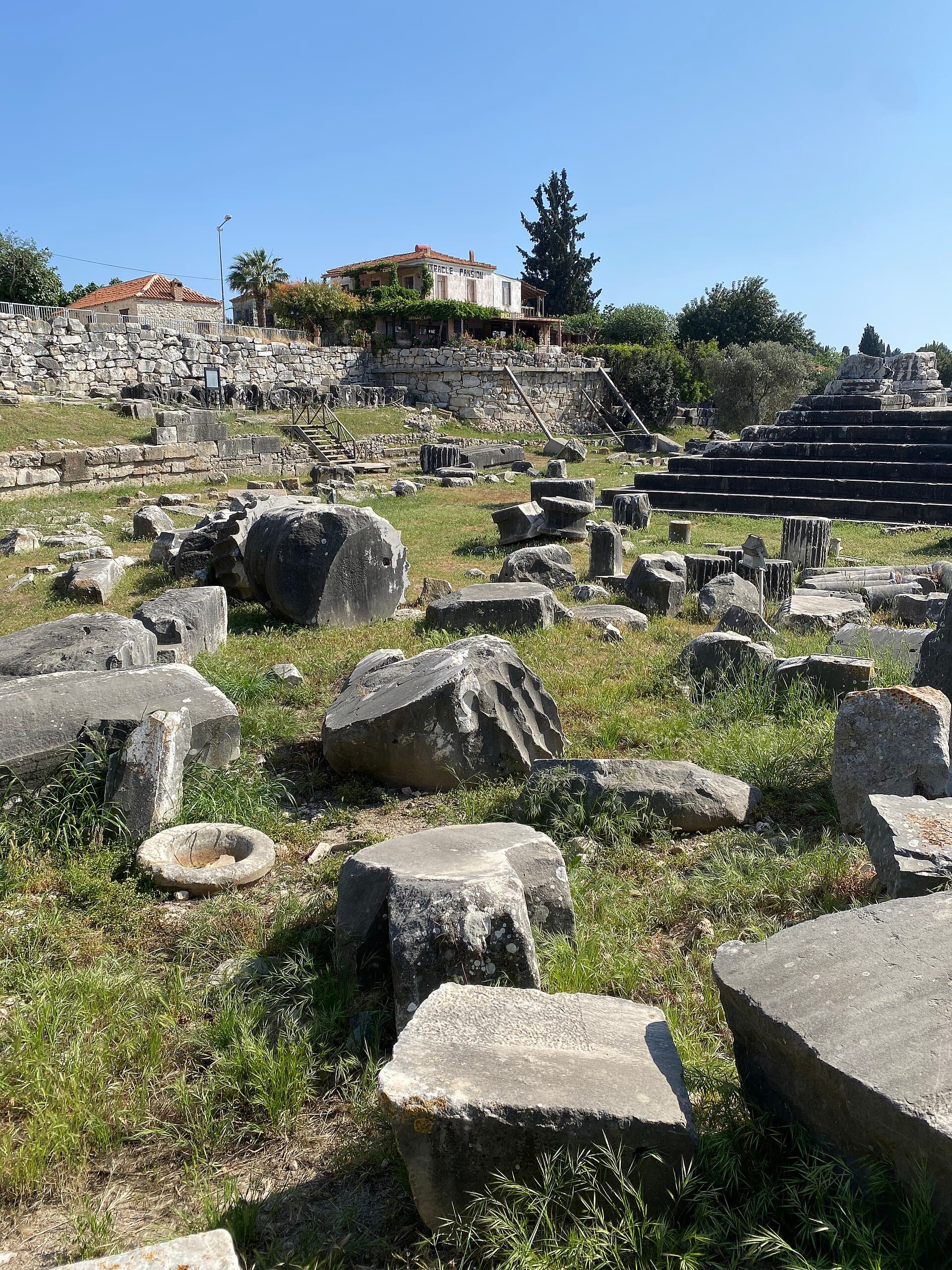
Second only to Delphi among oracles, never finished in 600 years of building - its three standing columns still tower over the modern town.
A sacred spring and oracle predate the Greeks here; Herodotus records gifts from pharaoh Necho II and Croesus of Lydia. Persia razed the archaic temple in 494 BC after crushing Miletus. From about 300 BC the Milesians rebuilt at colossal scale - 109 by 51m, planned for over 100 columns - and six centuries of work never finished it. Earthquakes, the last in 1493, felled all but three columns, still 19.7m tall.
€6, foreigners priced in euro (Sept 2025 tariff, still current Aug 2026); payable in TL/card at the gate. MüzeKart (residents) and Museum Pass the Aegean (€95/7 days) valid. Summer night visits (19:00–22:00) ticketed separately.
75 minShadeless site — carry water and go early or late in summer.The tomb's popular name follows tradition, but the occupant's precise identity across ancient sources isn't fully settled — treated plainly in this entry rather than asserted.
Look for: The fallen Medusa block from the 2nd-century frieze; masons' full-scale blueprints scratched into the adyton walls; the dark twin tunnels to the oracle court; unfinished column stubs. The Sacred Way statues are in the British Museum.
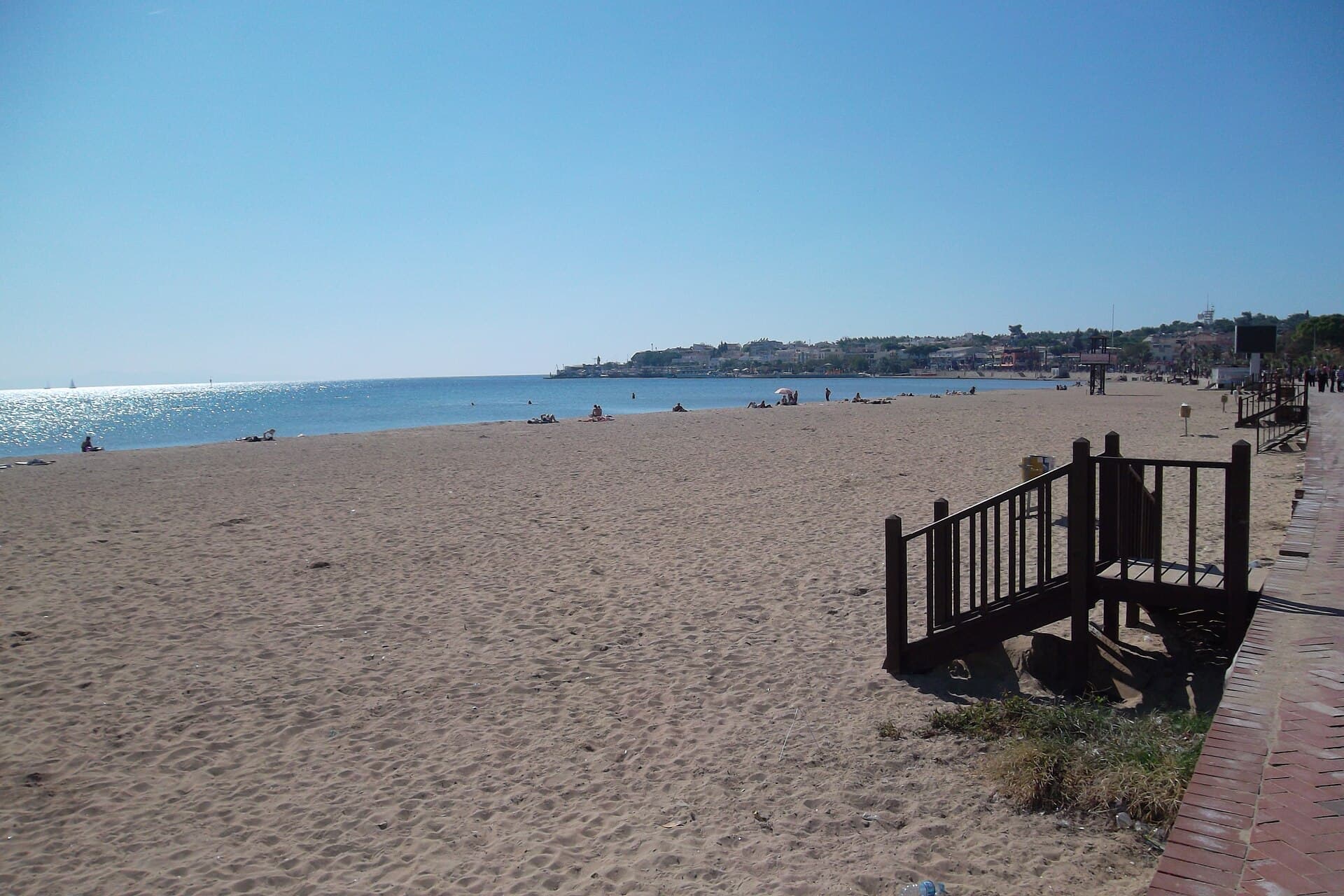
Golden, shallow, warm and Blue-Flagged - the family beach that built modern Didim, backed by a promenade that hums from May to October.
Altinkum - 'golden sand' - turned the farming town of Yenihisar into one of the Aegean's fastest-growing resorts, renamed Didim after the oracle next door. From the mid-2000s British buyers settled in the thousands, and the seafront still answers in English. The beach earns the fuss: a long, gently shelving crescent of fine sand with calm, reliably warm water and a working town behind it.
Free public beach; sunbed/umbrella hire from seafront cafés, paid in TL.
180 minThe sea and beach quiet substantially November–March; this is a summer destination first.
Look for: The Blue Flag on the mast - water rated 'excellent' in 2026 testing; sunset from the pier; the eastern çay bahçesi end where Turkish families outnumber tourists; dolmuş along the front every few minutes.
One of the eastern Mediterranean's biggest marinas is Didim's smartest evening out - and the summer ferry to Kos sails from here.
D-Marin Didim opened the town to yachting on a scale nothing else local matches: around 580 wet berths taking hulls up to 70m, a vast boatyard with a 400-tonne travel lift, and a service economy that winters foreign boats by the hundred. For non-sailors it works as a polished promenade quarter - restaurants, cafés and the seasonal Greek-island ferry.
Free to walk in; restaurants at resort prices. Kos ferry from roughly €60 (Didim Sea Lines); passport needed, book ahead in August.
60 minThe Kos ferry runs June–September only, not year-round.
Look for: Superyacht row at dusk; the Didim–Kos ferry (June–September; Fridays and Saturdays direct in 2026); winter lay-up yards stacked with hulls; the openest sunset horizon in town.
A vast covered bazaar fires up every Saturday - produce mountains, bolts of cloth and gözleme smoke, villagers and expats side by side.
Didim's Saturday market grew with the town: field produce from Söke's plain and the Milesian villages meets a resort's appetite, all under one huge space-frame roof near the otogar. It runs year-round in any weather and doubles as the week's social fixture for the district's Turkish, British and Irish households alike. Summer evenings add a nightly bazaar out at Mavişehir.
Free entry; cash (small TL notes) strongly preferred at stalls.
90 minHeld Saturdays only — don't plan a visit on any other day.
Look for: August figs and peaches from the Meander plain; the olive, cheese and spice rows; hand-embroidered linens; the gözleme griddles at lunch. Produce prices are fixed - haggle only over textiles.
A pine-and-olive bay 25 minutes east of town where Didim goes quiet - Blue Flag water and fish lunches, no ruins at all.
Akbük stayed an olive-pressing and fishing hamlet while Altınkum boomed, and its late, low-rise growth kept the bay's forested slopes intact. The 3km beach has flown a Blue Flag since 2020, and the sheltered, east-facing water is often glass-calm at morning. It is where Aegean Turkish families summer; foreign visitors are still the minority here.
Free public beach; sunbeds from cafés in TL. Dolmuş from Didim otogar.
180 min
Look for: Morning swims before the breeze rises; waterfront fish restaurants; the olive groves and pines pressing right down to the shore; Saturday-night promenade crowds in August.
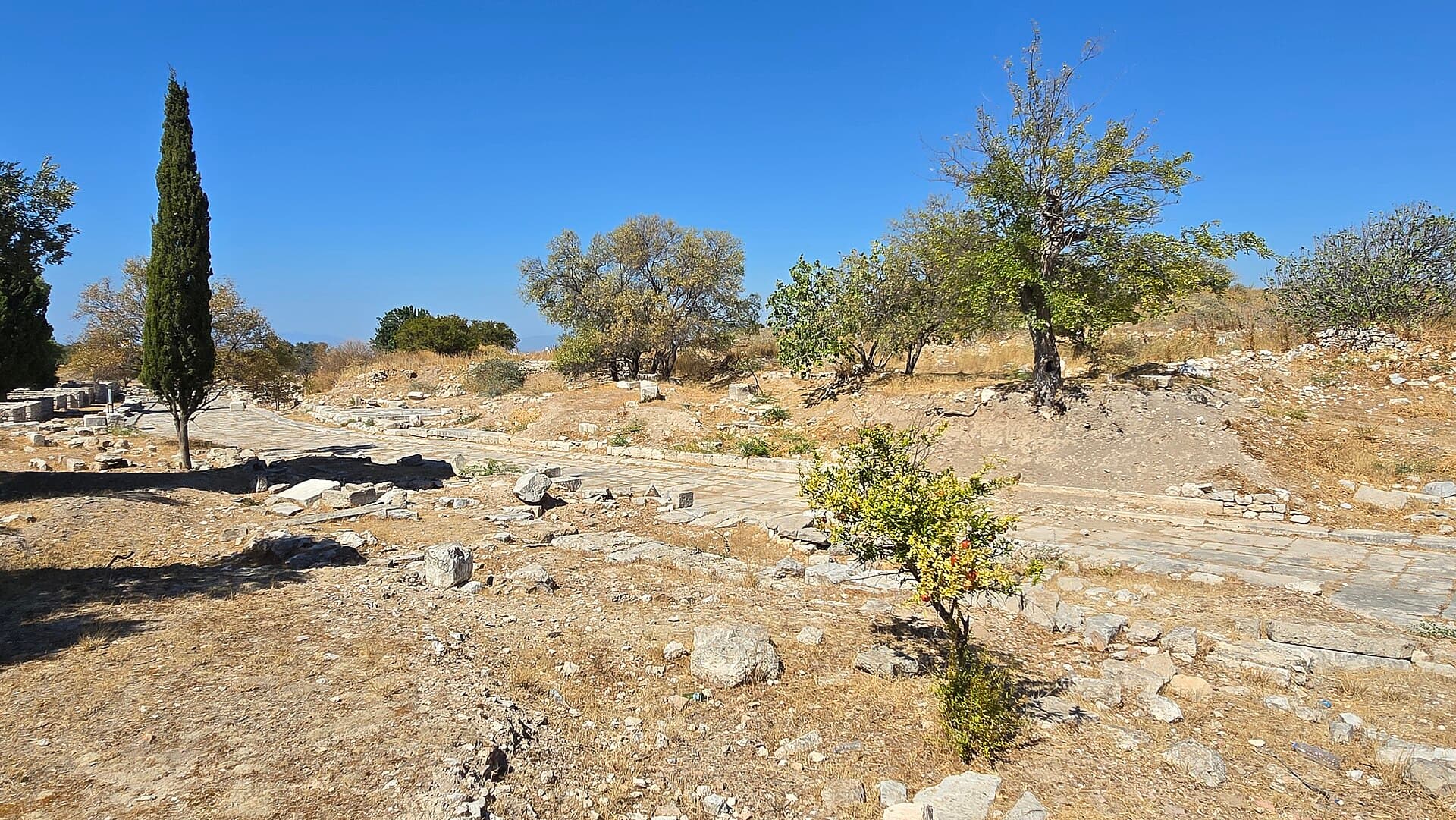
Pilgrims landed at Panormos and walked the final hour to the oracle between marble ancestors - the last leg is still traceable on foot.
A 17km processional road linked Miletus's Delphinion to Didyma; the annual procession renewed the alliance between city and oracle for centuries, and an inscription records repairs under Trajan. Archaic seated statues of the Branchidai priestly clan lined the final stretch from Panormos harbour - Charles Newton shipped them to London in 1858. Panormos is today's Mavişehir bay, 4km northwest of the temple.
Free; the route crosses public roads and open ground. Temple entry at the end is the €6 ticket.
120 minShadeless walking — go at first light or in the evening, especially at the Mavişehir end.This is a documented route, not a waymarked hiking trail — don't expect trail signage.The full 17km route isn't a realistic single walk; the meaningful, walkable fragment is Panormos (Mavişehir) to the temple, about 4.5km.
Look for: The excavated paved stretch and Roman fountain just north of the temple; Mavişehir's crescent bay, the pilgrims' landing; empty statue bases by the road. The statues are in the British Museum, Room 13.
Miletus was the great port of archaic Greece - home of Thales, Anaximander and Anaximenes, mother of some ninety colonies, and origin of the grid plan via Hippodamos. Persia destroyed it in 494 BC; it rebuilt, prospered under Rome, then lost its four harbours as the Meander silted the bay - the sea now lies nearly 10km away. The Menteşe emirs left the fine İlyas Bey Mosque (1404) among the ruins.
€6 includes the on-site Milet Museum (same ticket). Foreigners priced in euro; MüzeKart and Museum Pass the Aegean valid.
About 22km / ~30 minutes from Didim; no useful public transport — rent a car, taxi, or join a tour.The site's Market Gate is displayed in Berlin's Pergamonmuseum, not here.
Refounded on this terraced site in the 4th century BC, Priene is the textbook Hippodamian grid city - streets crossing at right angles on a steep slope, built for maybe 5,000 citizens. Alexander paid for the Temple of Athena Polias in 334 BC; its architect Pytheos also designed the Mausoleum of Halicarnassus. The harbour silted early, so no Roman rebuild ever buried the Hellenistic town.
€4, foreigners priced in euro; MüzeKart and Museum Pass the Aegean valid. The Aegean pass is not sold at Priene's gate — buy it online or at Didyma/Miletus first.
About 55km / ~1 hour from Didim — plan it earlier in a day trip since the ticket office closes at 17:00, the earliest of the triangle.A genuine stepped climb from the car park; wear real shoes.
Tavşanburnu - 'rabbit cape' - is a protected nature park on the coast northwest of town, run by the municipality as Didim's tent-and-caravan retreat. It is the counter-programme to Altınkum: pine shade instead of promenade, picnic tables instead of beach bars, and a calm, shallow cove that suits families who bring everything with them.
Small TL entry/vehicle fee at the gate (municipal tariff changes yearly).
Camping facilities are effectively dormant off-season.
Akköy - 'white village' - was built in pale local stone by its Ottoman-era Greek Orthodox community, who left with the 1923 population exchange; Aegean farming families settled in behind them. Bypassed by the beach boom 10km south, it kept its cobbles, courtyards and quiet, and now draws a trickle of slow-travel visitors en route to Miletus.
Didim's town beaches are numbered westward from the main Altınkum strand, and Third Beach, tucked against the small harbour, is where the promenade energy finally drops. Greenery comes down close to the sand, the water shelves as gently as the main beach, and the cafés behind it serve neighbourhoods more than package crowds.