Temple of Apollo, Didyma
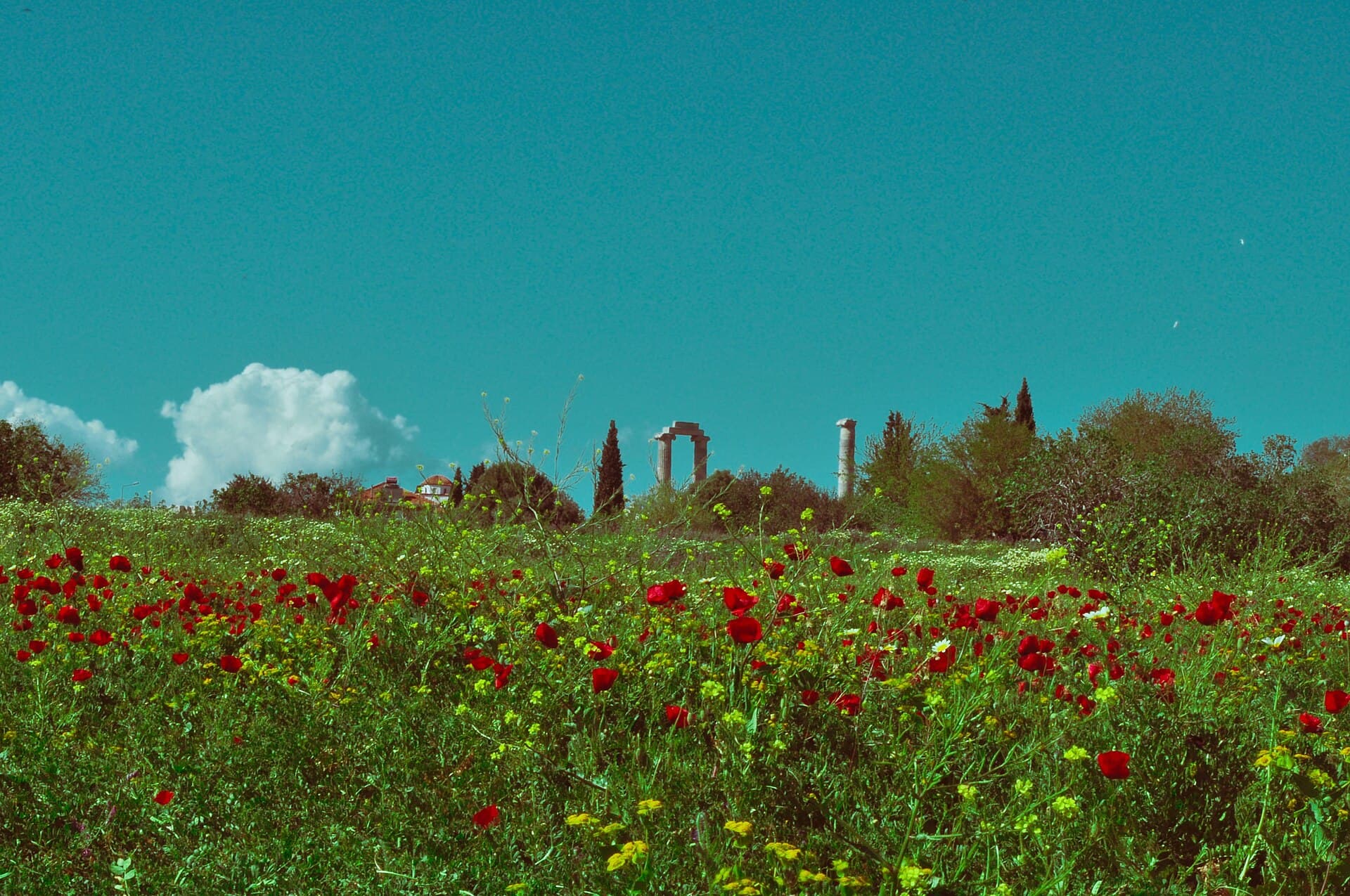
Second only to Delphi among oracles, never finished in 600 years of building - its three standing columns still tower over the modern town.
Enough context, no spoilers
Why it matters
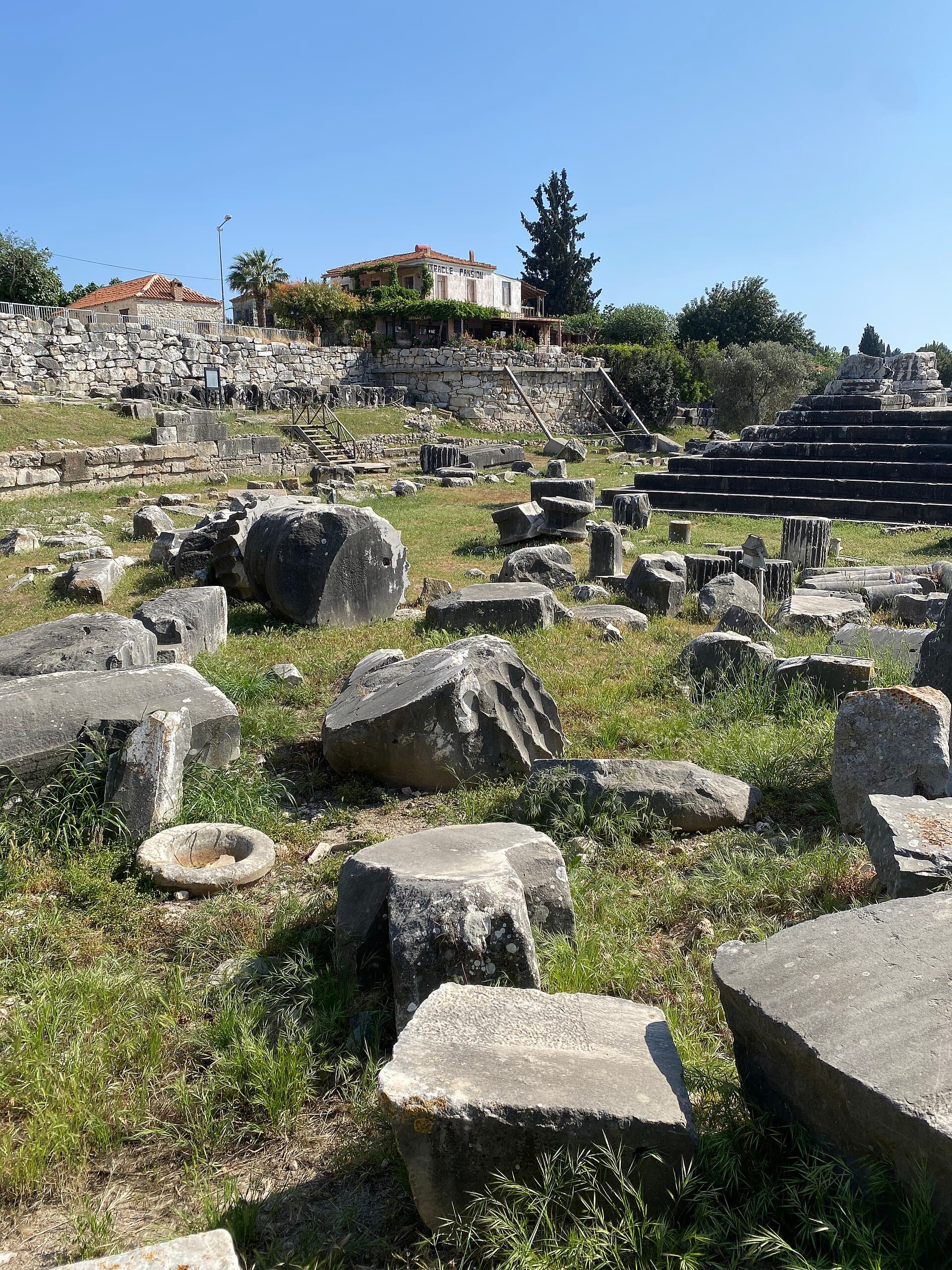
A sacred spring and oracle predate the Greeks here; Herodotus records gifts from pharaoh Necho II and Croesus of Lydia. Persia razed the archaic temple in 494 BC after crushing Miletus. From about 300 BC the Milesians rebuilt at colossal scale - 109 by 51m, planned for over 100 columns - and six centuries of work never finished it. Earthquakes, the last in 1493, felled all but three columns, still 19.7m tall.
What to know before you go
Didyma's temple is the rare ancient ruin that gets more impressive the more carefully you look at what it never became. Work started around 300 BC, after the Milesians decided to rebuild the archaic sanctuary Persia had razed in 494 BC, and they didn't build modestly: 109 by 51 metres, planned for well over a hundred Ionic columns, ranked among the largest temples anywhere in the Greek world. Six centuries of continuous construction followed, funded across generations, and it was still unfinished when late antiquity's priorities moved on. What earthquakes have left standing — three columns, 19.7 metres tall, the last major collapse in 1493 — gives you an honest sense of scale that a fully reconstructed monument couldn't. This was never a minor oracle. Ancient writers rank it second only to Delphi, and the pharaoh Necho II and the Lydian king Croesus are both recorded, by Herodotus, as having sent gifts here — a sacred spring and prophetic tradition that predates the Greek temple itself by centuries. Walk into the site with an eye for the unfinished parts specifically: masons left full-scale technical drawings scratched directly into the adyton's interior walls, working blueprints that somehow survived as construction documents rather than art, the closest thing to an ancient architect's actual notebook that exists anywhere. Two dark, narrow tunnels lead down from the pronaos to the oracle chamber itself, deliberately unlit and disorienting — this is where the Pythia-equivalent priestess delivered prophecies, and walking the same passage in the same darkness is about as close as a modern visitor gets to the sanctuary's original theatrical effect. Look too for the fallen Medusa block, a fragment of the temple's second-century frieze, powerful enough on its own that it's become one of the site's most photographed single stones. What you won't see here: the archaic Sacred Way statues that once lined the processional route from the coast — Charles Newton shipped the seated figures of the Branchidai priestly clan to London in 1858, and they're now in the British Museum, not on site. Go early or late; the temple sits shadeless in a compact area, so the heat, not the distance, is what limits a comfortable visit in summer.