The Sacred Way & Panormos
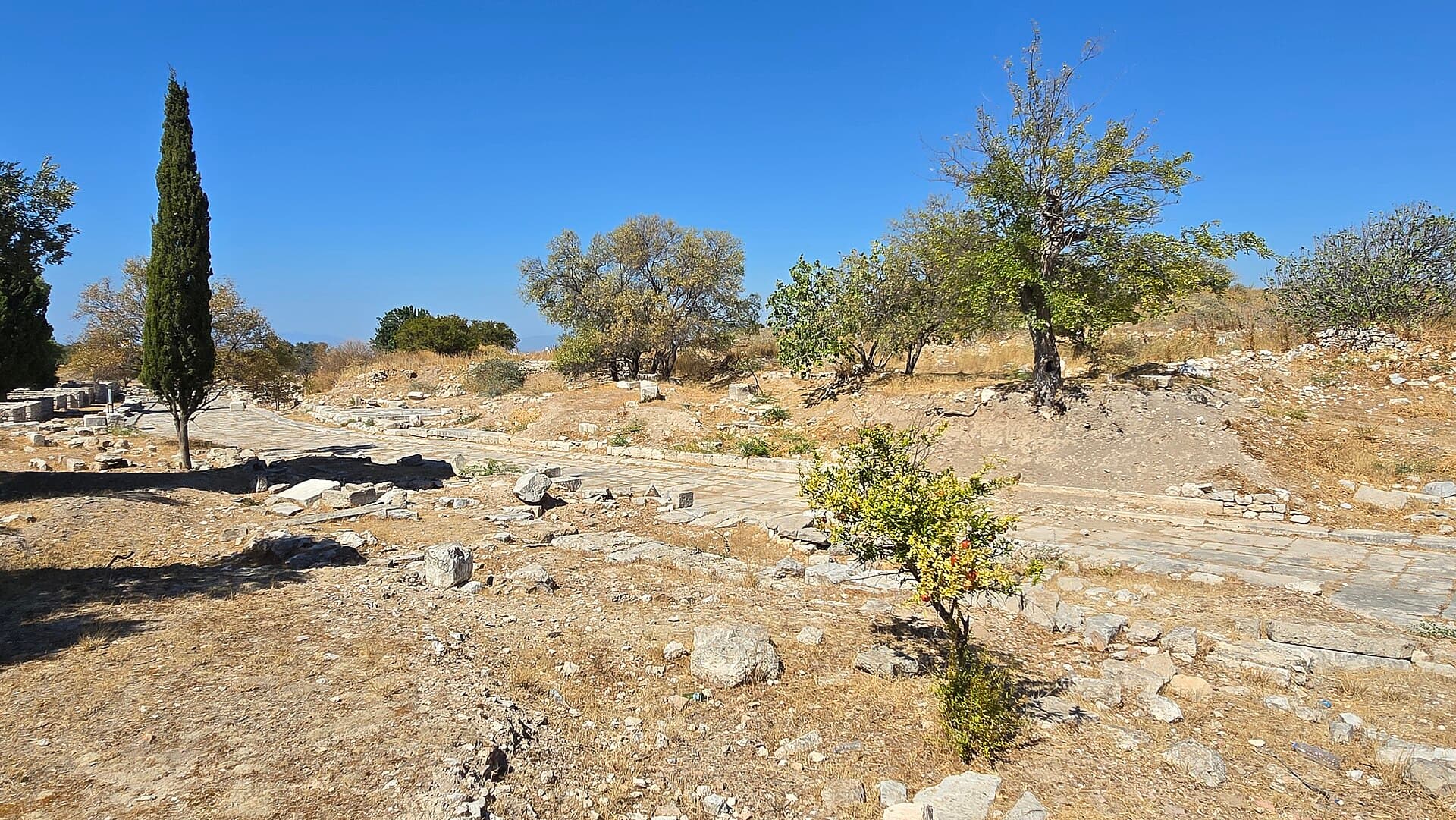
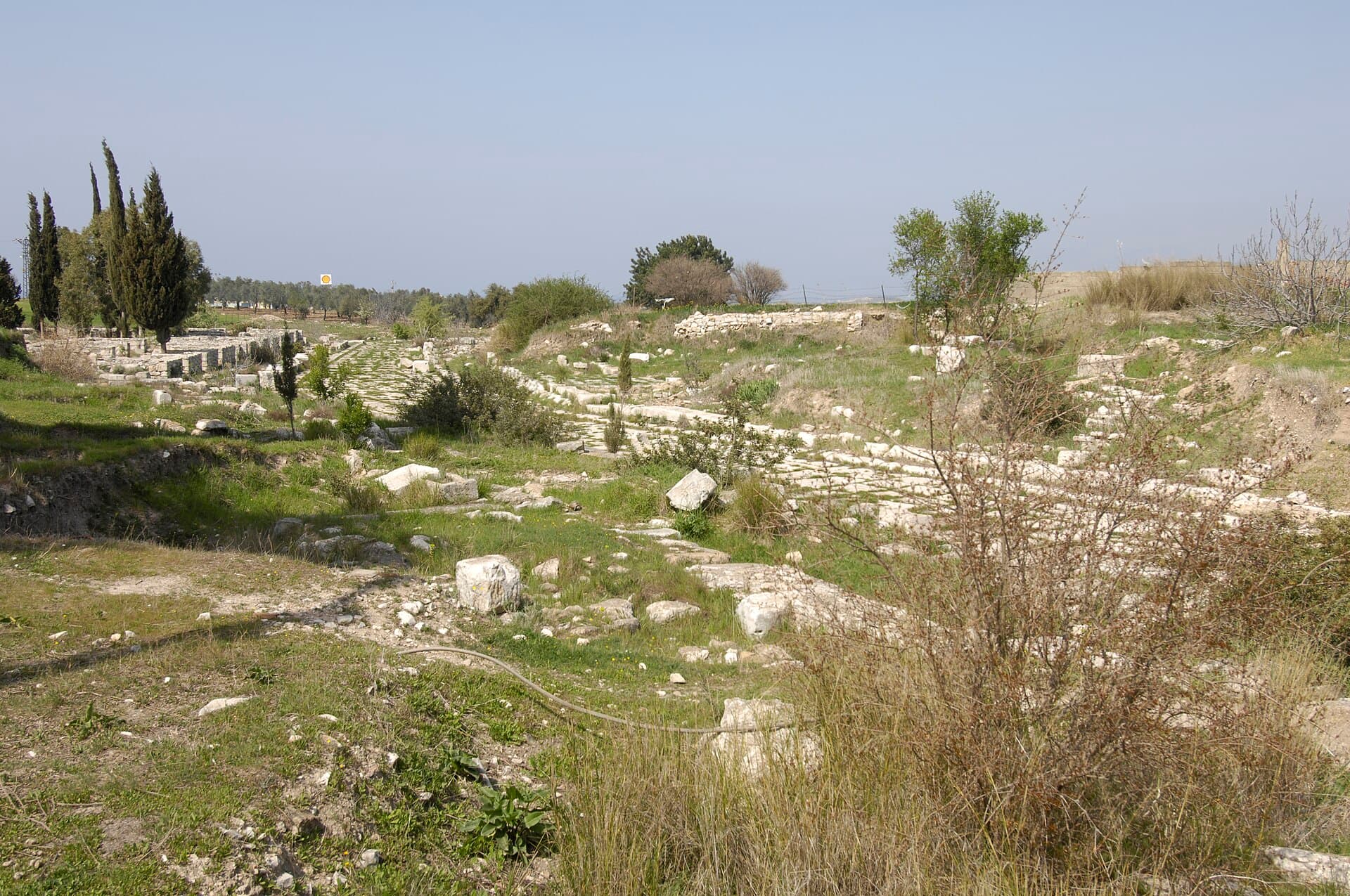
Pilgrims landed at Panormos and walked the final hour to the oracle between marble ancestors - the last leg is still traceable on foot.
Enough context, no spoilers
Why it matters
A 17km processional road linked Miletus's Delphinion to Didyma; the annual procession renewed the alliance between city and oracle for centuries, and an inscription records repairs under Trajan. Archaic seated statues of the Branchidai priestly clan lined the final stretch from Panormos harbour - Charles Newton shipped them to London in 1858. Panormos is today's Mavişehir bay, 4km northwest of the temple.
What to know before you go
Most visitors reach Didyma's temple by road and never notice that a second, older way of arriving still exists, traceable on foot for its final stretch. For centuries, pilgrims bound for the oracle didn't simply walk out from Miletus overland — they made the approach a ritual in itself, following a formal processional road that ran roughly 17 kilometres from Miletus's Delphinion sanctuary to the temple gates at Didyma, renewing an annual alliance between city and oracle that Greek civic life took seriously enough to fund its upkeep across generations. An inscription records the road being repaired under the Roman emperor Trajan, centuries after it was first laid out — genuine, ongoing infrastructure investment in a religious route, not a one-time gesture. The most evocative version of that pilgrimage didn't start on foot at all: many arrived by sea at Panormos, a sheltered harbour that survives today as Mavişehir bay, a crescent-shaped inlet about four kilometres northwest of the temple. From there, the final stretch to the oracle ran between a lined avenue of archaic marble statues — seated figures of the Branchidai, the priestly family that served the sanctuary, carved with an almost startling directness that made them instantly recognisable even out of context. They didn't survive the journey to the present in place: the British archaeologist Charles Newton shipped the entire group to London in 1858, and they now stand in the British Museum's Room 13, a removal this project's own Türkiye history coverage treats with the weight it deserves rather than glossing over. What remains walkable today is honest about its own limits. Near the temple itself, an excavated stretch of the original paving survives alongside a Roman-era fountain, genuinely underfoot rather than reconstructed. The full 17-kilometre route isn't a maintained hiking trail — don't arrive expecting waymarked signage or a groomed path — but the meaningful fragment, Panormos at Mavişehir down to the temple, roughly four and a half kilometres, is a real, walkable piece of ancient ritual geography, with empty statue bases still marking where the Branchidai once stood along the way.