Altınkum Beach
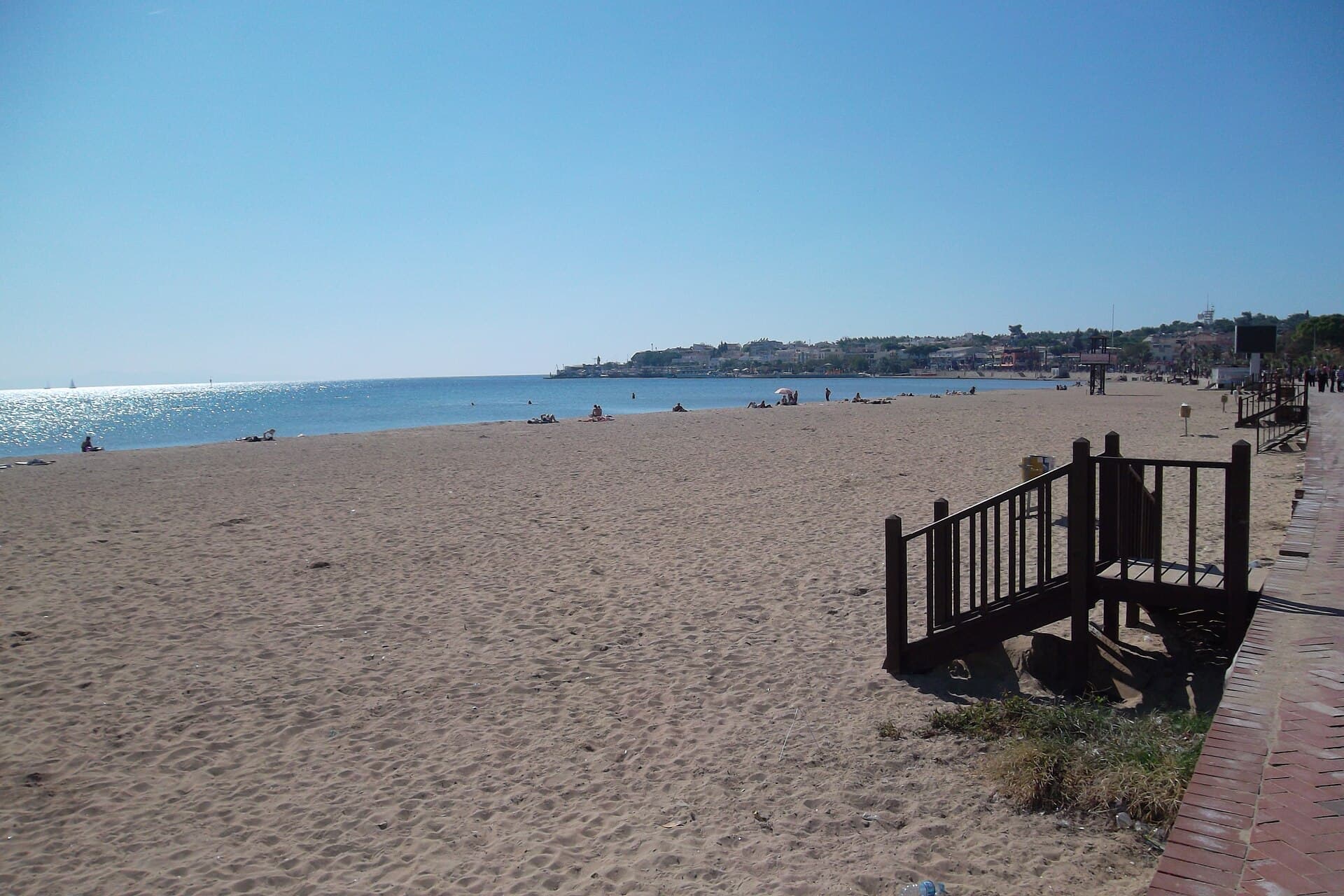
Golden, shallow, warm and Blue-Flagged - the family beach that built modern Didim, backed by a promenade that hums from May to October.
Enough context, no spoilers
Why it matters
Altinkum - 'golden sand' - turned the farming town of Yenihisar into one of the Aegean's fastest-growing resorts, renamed Didim after the oracle next door. From the mid-2000s British buyers settled in the thousands, and the seafront still answers in English. The beach earns the fuss: a long, gently shelving crescent of fine sand with calm, reliably warm water and a working town behind it.
What to know before you go
Altınkum earned its name honestly, and it's worth knowing exactly what that name means before you arrive: "golden sand," and the beach delivers precisely that — a long, gently shelving crescent of fine, pale sand, backed by water that stays shallow and calm far enough out to make this one of the more genuinely child-friendly stretches of coast in Türkiye. What's less obvious from the beach itself is how recently this transformation happened. Through most of the twentieth century this was Yenihisar, a farming town with no particular resort ambitions. The beach's own popularity is what rewrote the map: from the mid-2000s, British buyers arrived in the thousands, drawn by direct flights and property prices, and the town was formally renamed Didim — after the ancient oracle a short drive inland — while the beach itself kept the Altınkum name that made it famous. The seafront still answers in English more readily than almost anywhere else on this coast, menus lead with fish and chips alongside döner, and expat retirees mix easily with Turkish holidaymakers along the same stretch of sand. That duality is worth experiencing rather than avoiding: walk the promenade's full length and you'll find both worlds genuinely coexisting, not just tolerating each other. The water quality isn't just a marketing claim — Altınkum has held Blue Flag status through repeated testing, with 2026 samples rating the sea "excellent," a real, independently verified standard rather than a resort-brochure assertion. For the more local, less tourist-facing version of the same beach, walk east toward the çay bahçesi end, where the promenade's tea gardens fill with Turkish families rather than package tourists, and the pace slows down noticeably. Sunset from the pier is the single best fixed moment to build an evening around — the whole beach turns to face west for it, an informal daily ritual that costs nothing and needs no reservation. Dolmuş minibuses run the seafront corridor every few minutes in season, so there's rarely a reason to walk further than you want to.