Ulu Cami (Grand Mosque)
Twenty domes because a son-in-law talked the sultan out of building twenty separate mosques instead.
Enough context, no spoilers
Why it matters
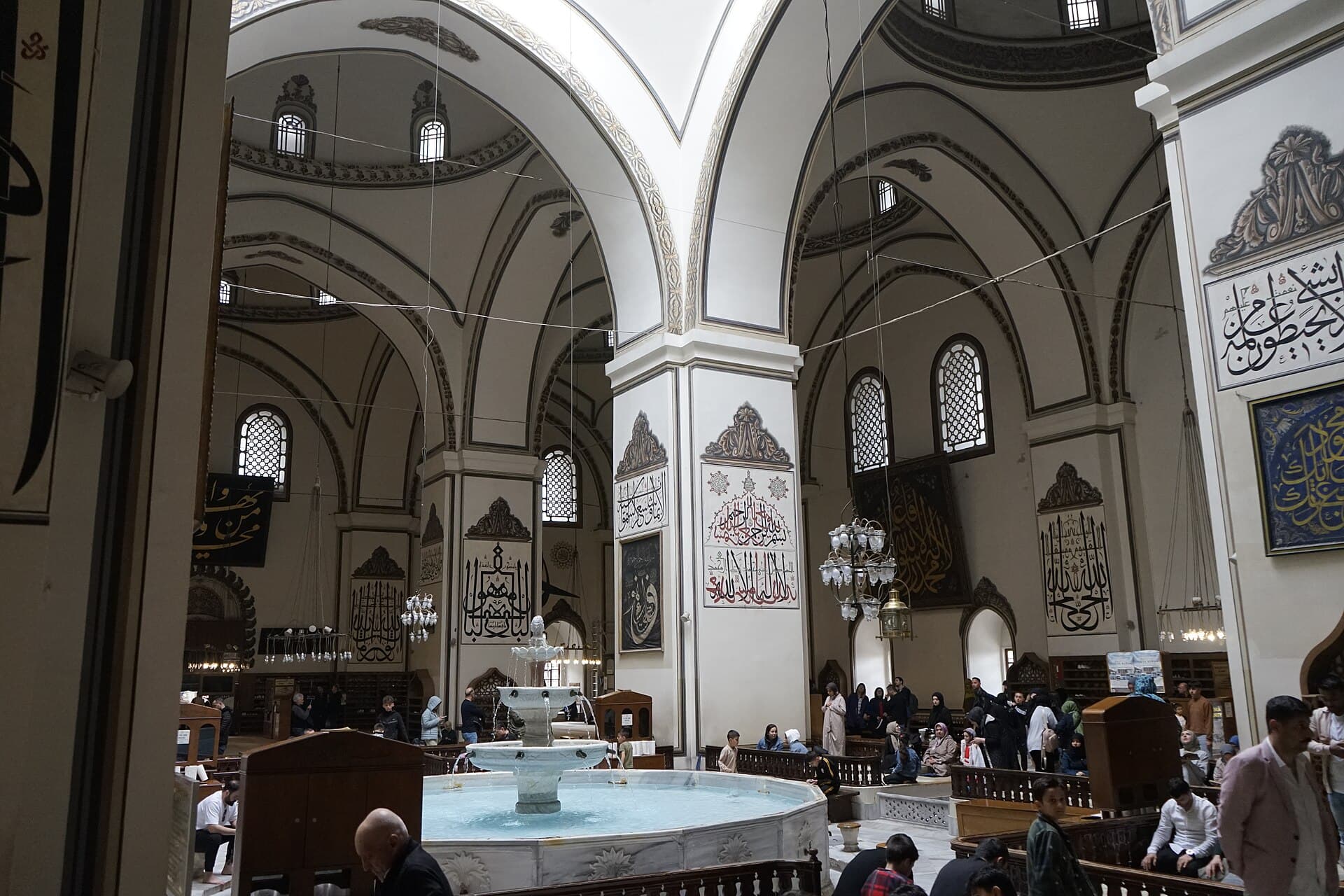
Built for Bayezid I after his victory at the Battle of Nicopolis, raised between 1396 and 1399. Tradition holds Bayezid had vowed twenty mosques in thanks for the win; his son-in-law Emir Sultan is credited with proposing one mosque with twenty domes instead. It set the template multi-domed congregational mosques across Anatolia followed for the next century.
What to know before you go
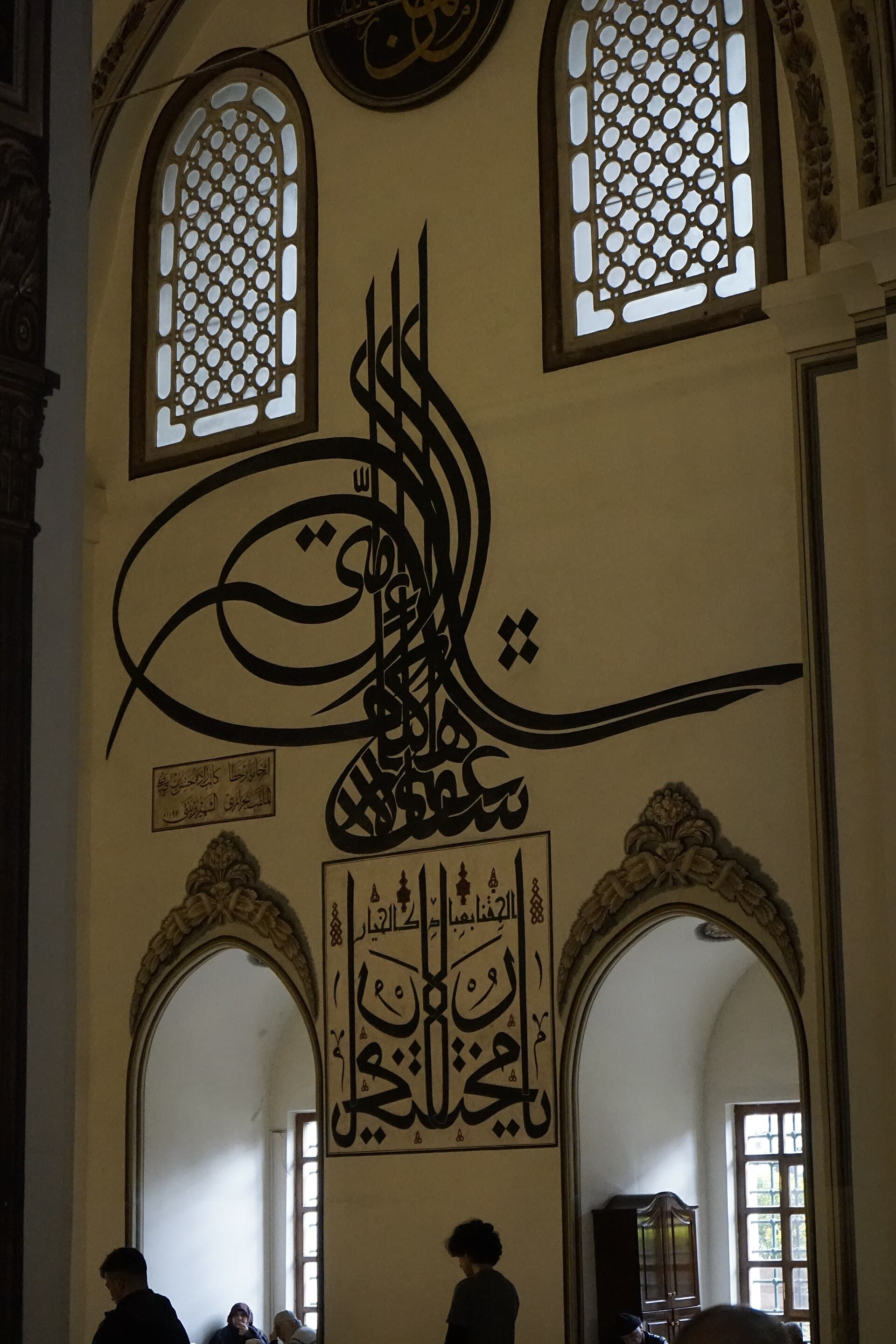
Ulu Cami doesn't photograph as dramatically as the Green Mosque a few streets away, and that's exactly why it rewards a slower visit — this is the mosque that mattered to the people who used it, not the one built to impress visitors. Bayezid I, nicknamed Yıldırım, "the Thunderbolt," for the speed of his campaigns, is said to have vowed twenty mosques if he won at Nicopolis in 1396, a battle that crushed the last major Crusade against the Ottomans. He won. His son-in-law, Emir Sultan, is credited with the practical counter-proposal: don't scatter the piety across twenty buildings, put twenty domes on one and gather the congregation in a single room. Whether the story is literally true or a tidy legend attached after the fact, the mosque that resulted set the template — a rectangular hall of repeated domes on piers — that Ottoman congregational mosques across Anatolia followed for the next hundred years, before the empire's architects moved toward the single great central dome that defines Istanbul's skyline instead. Walk in and the domes explain themselves immediately: twenty squares of vaulted stone in a grid, held up by twelve massive piers, the whole hall lit from above rather than from the sides. The one true surprise is underneath the central dome, where a marble şadırvan — an ablution fountain, normally an outdoor courtyard fixture in a mosque — sits open to the sky through an oculus cut into the dome above it. Pigeons circle through the opening. Worshippers used to perform ablutions here, indoors, under open air at the same time, a detail almost no other major Ottoman mosque repeats. The other thing worth actually looking at, and the thing most visitors walk past, is the calligraphy: monumental Arabic panels cover the walls and piers, the work of generations of Ottoman calligraphers rather than a single commission, added over centuries as the mosque stayed in continuous use. This is Bursa's working mosque in the fullest sense — busy at every prayer time, not staged for tourism — so come mid-morning on a weekday, move along the side aisles rather than the centre where people are praying, and give the şadırvan the few extra minutes it takes to notice the light shift as clouds cross the oculus above it.