Koza Han
A 1491 silk exchange that still auctions raw cocoons every June — the building that explains where the money for Bursa's mosques came from.
Enough context, no spoilers
Why it matters
Built in 1491 for Bayezid II, its rents endowing his mosque complex in Istanbul, on a site between the Orhan Gazi Mosque and Ulu Cami. Two storeys of some 95 rooms around a courtyard functioned as Bursa's silk cocoon exchange — the commodity that made the city rich enough to fund its mosques, tombs and hans. A working cocoon auction is still held in the courtyard each June.
What to know before you go
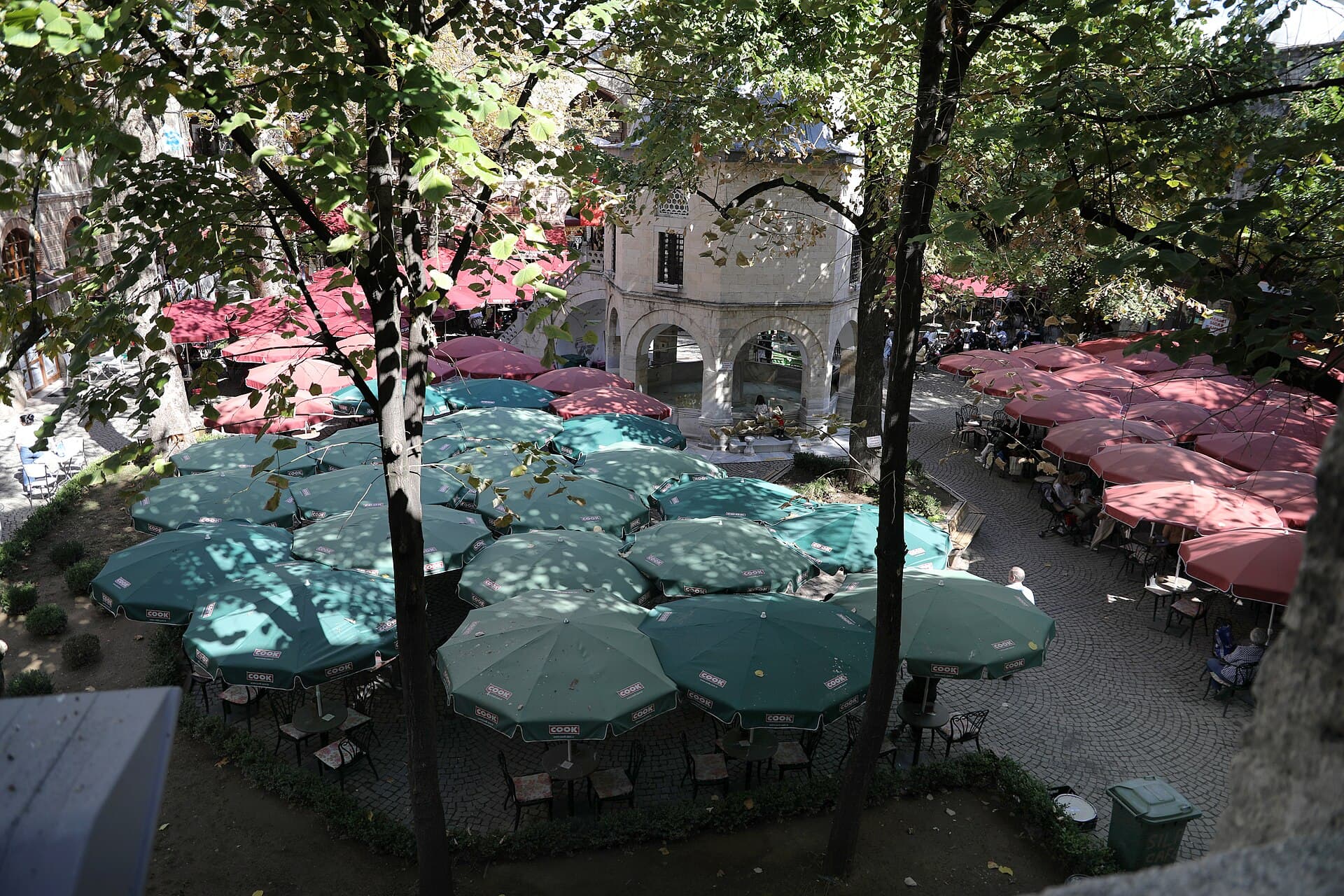
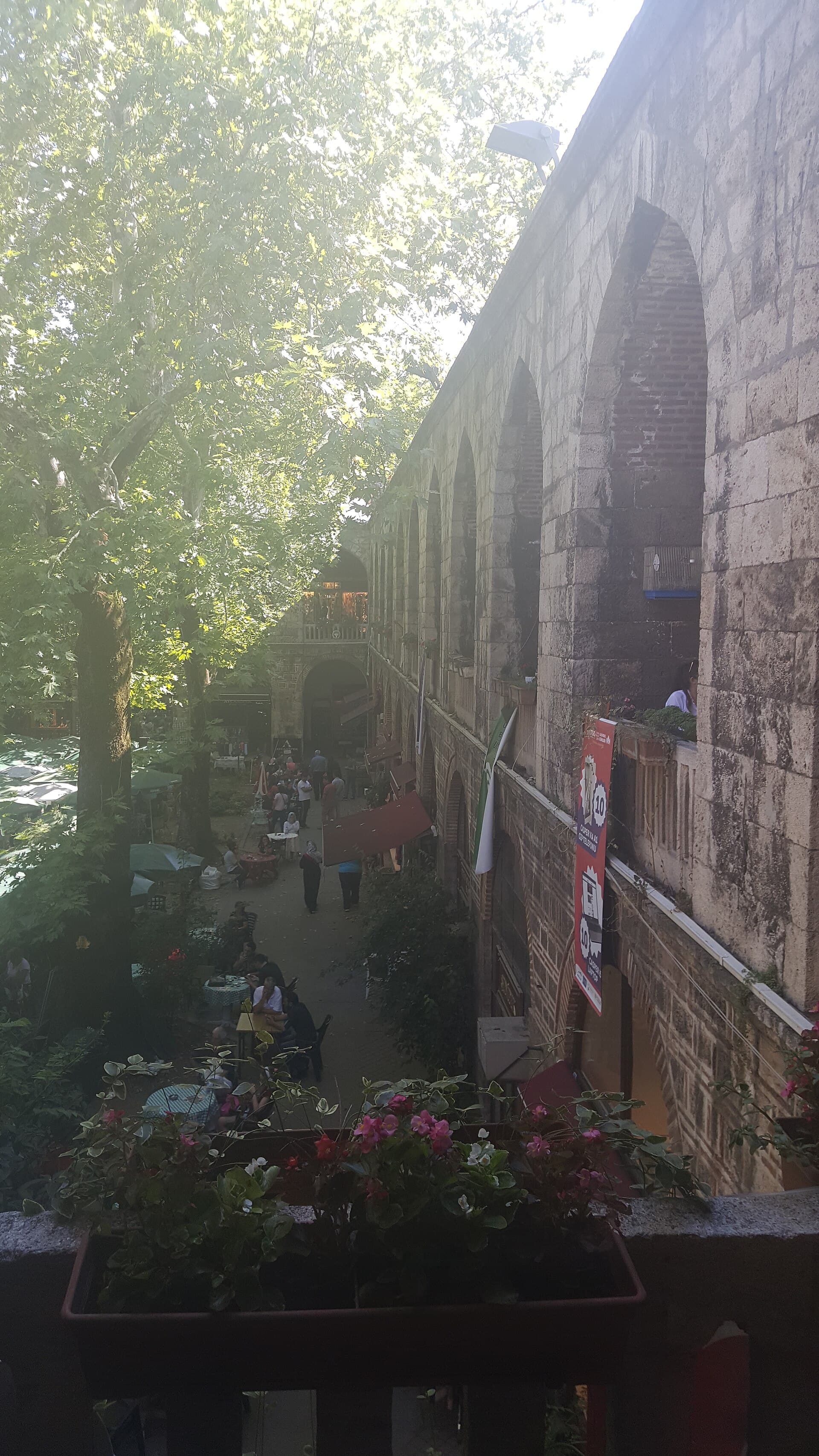
Every mosque, tomb and han in old Bursa was paid for by something, and that something was silk — which makes Koza Han, the "cocoon han," the building that actually explains the rest of the city rather than just another stop on the list. Bayezid II had it built in 1491, its rents endowing a mosque and religious complex he'd built in Istanbul, which tells you plainly how the Ottoman capital's economy worked by then: money made in provincial trade cities like Bursa funded monuments in the new capital. Bursa sat at the western end of the Silk Road proper — not the whole overland route from China, but the final stretch, where Persian and Central Asian silk merchants sold to Genoese and Venetian buyers who shipped it on to Europe. Koza Han was where that handover happened, physically: two storeys of roughly ninety-five rooms around a rectangular courtyard, built for storing, weighing and trading raw silk cocoons. It is still, remarkably, a working silk exchange rather than a preserved shell of one — a cocoon auction is held in the courtyard every June, farmers from the surrounding villages bringing in the season's harvest much as they would have five hundred years ago, though the scale is a fraction of what it once was. The rest of the year, the han runs as Bursa's most atmospheric shopping arcade: a small domed mosque and şadırvan sit at the courtyard's centre, plane trees shade a ring of café tables, and the two storeys of arched rooms hold shops selling scarves, textiles and jewellery. Be honest with yourself about what you're buying, though — most of the silk and pashmina on the upper-floor stalls today is imported stock, not raw Bursa silk processed on site, and a shopkeeper eager to sell you "genuine Bursa silk" at a bargain price is telling you what you want to hear rather than the truth. The real reason to come isn't the shopping, it's the architecture and the courtyard itself: sit down with a tea at one of the café tables mid-morning, before the tour groups arrive from the coaches parked near Ulu Cami next door, and ten minutes of just sitting there will explain why this courtyard has been a meeting place for merchants for five centuries.