TurQuosian

Aegean

Ayvalık

A Greek stone town built on olive oil

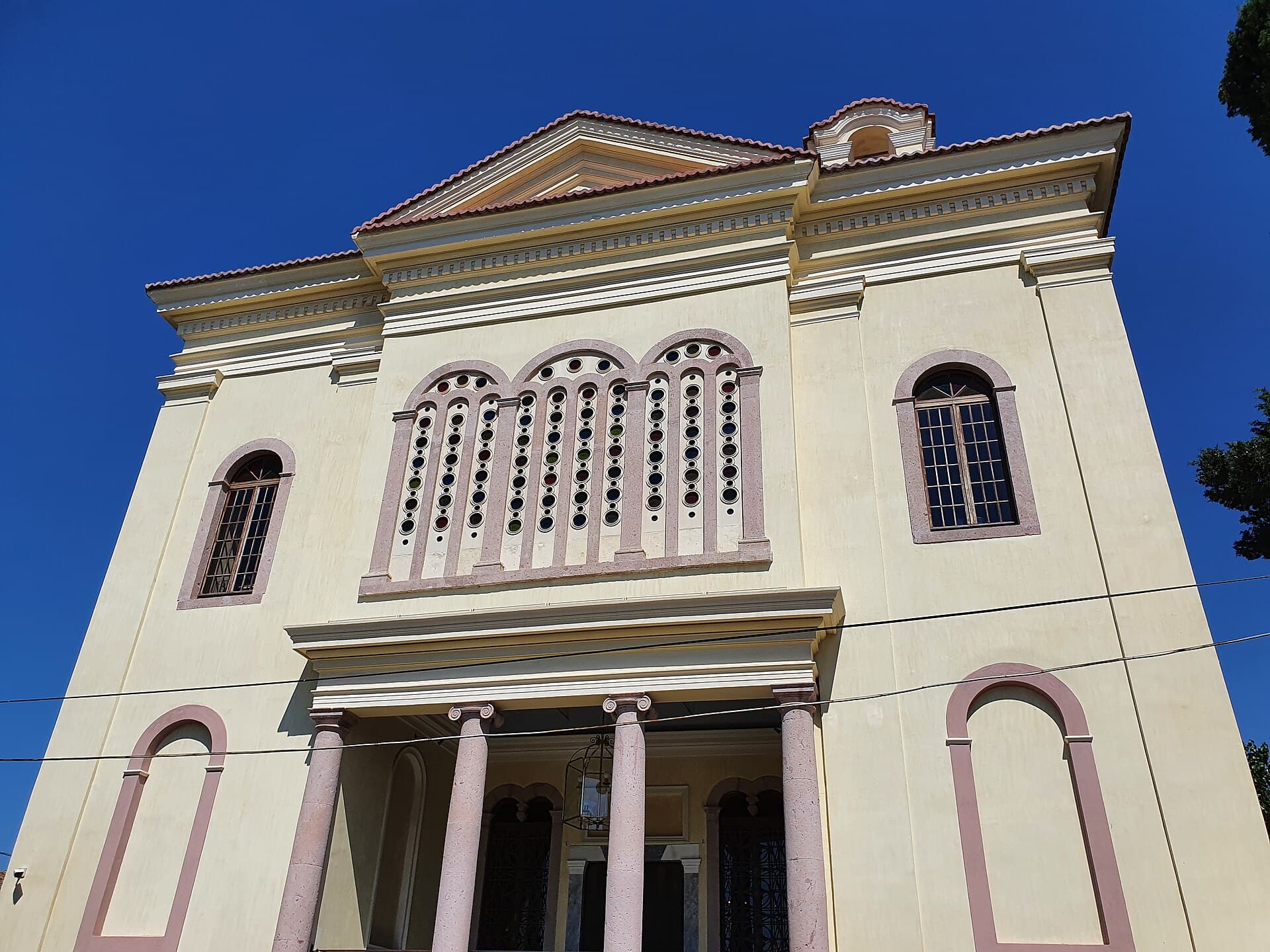
Ayvalık is a working olive-oil town built almost entirely by a Greek Orthodox community that was resettled away in 1923 - the stone houses, the church-turned-mosques and the harbour chimneys are all theirs, inherited rather than restored for show. Base yourself in the old town, walk the causeway to Cunda for its own layered history, and save an evening for Şeytan Sofrası's sunset over the islands.

Stay
2 days
Best months
Apr–May, Sep–Oct
Airport
EDO

Every published place in one city guide

What to see in Ayvalık.

Start with the essentials, add what genuinely interests you, and leave the rest for another visit. Every place includes a concise story, practical timing, a Maps link, and a one-tap route planner action.

Make the route work

Anticipate the practical details.

Getting there

Balıkesir Koca Seyit Airport (EDO — not to be confused with Balıkesir Merkez, code BZI, a separate airport) is roughly 40km from Ayvalık, about 4km from Edremit. Shuttle buses time themselves to flight arrivals for the run into the district; taxis and car rental also cover the route. There is no rail link — most domestic connections are by air via EDO or overland by intercity coach from İzmir or Istanbul.
Getting around

The old town and harbour are walkable from most central hotels. Cunda Island sits across a causeway a short dolmuş or taxi ride north — minibuses run the route constantly in season. Şeytan Sofrası and Sarımsaklı Beach both need a dolmuş, taxi or rental car; neither is a walk from the centre.

Money

Turkish lira is standard; cards are widely accepted in the old town and on Cunda, less reliably at small market stalls, where cash is worth carrying.

Connectivity

Mobile coverage is reliable throughout the old town, Cunda and the main beaches. It can thin out on the boat trips through the outer islands.

Etiquette

Several of the town's historic Greek Orthodox churches now function as mosques — treat them as the active places of worship they are, with modest dress and quiet inside. The old town's residential lanes are lived-in, not a stage set; keep that in mind with cameras.

Safety and comfort

A relaxed, low-crime coastal town. The real hazards are heat on the Şeytan Sofrası hilltop, which has little shade, and uneven cobblestones underfoot in the old town after rain. Check your government's current travel advisory for Türkiye before booking, as with any trip.

Essential

Don’t leave without

If you only have one day, this is the day.

Rank1
Bright daytime view of Cunda Island (Alibey Adası) near Ayvalık, Turkey.

Cunda Island

Neighbourhood

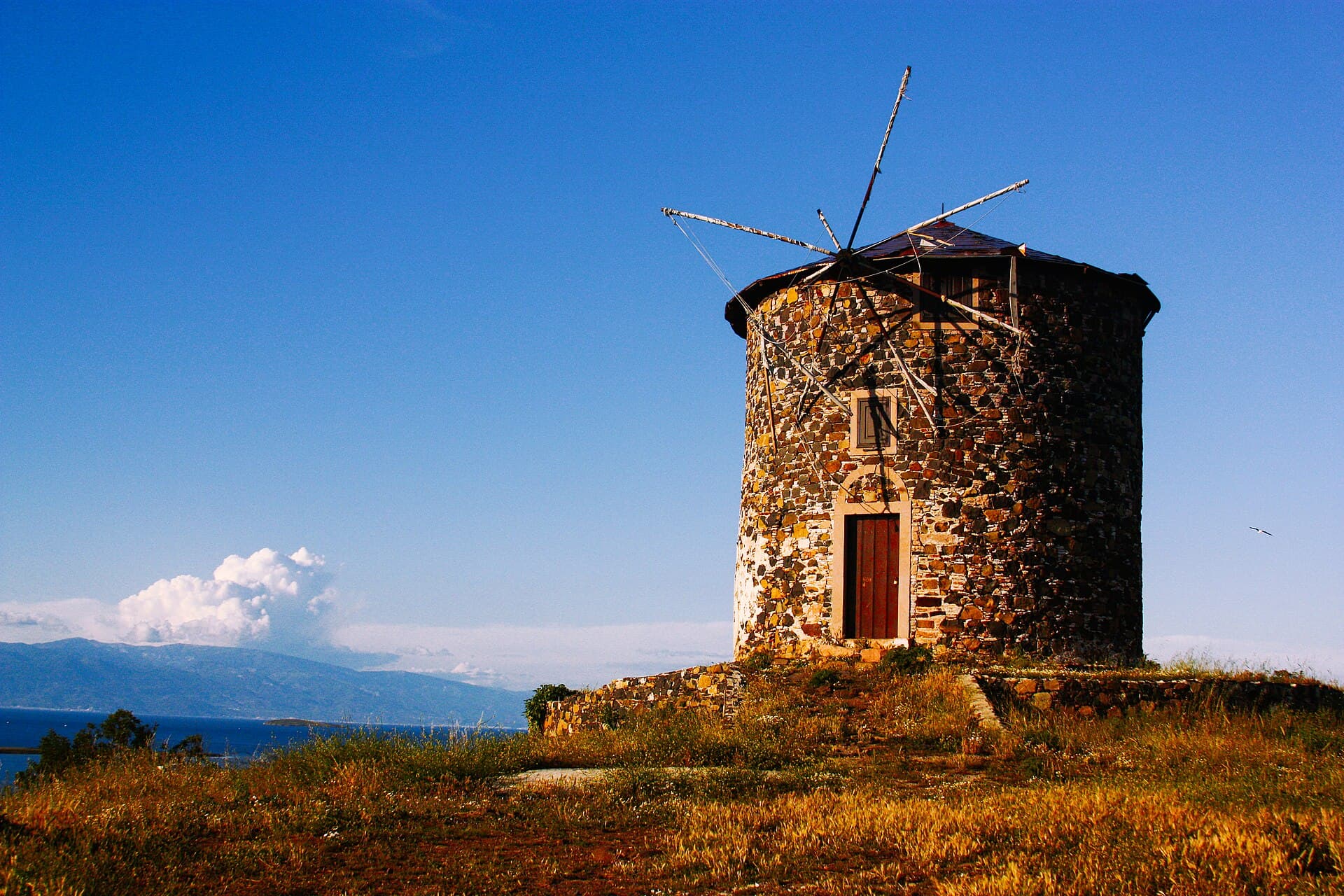
Cross a 1960s causeway to an island wholly Greek until 1923, resettled by Cretan and Lesbos Turks - windmills and waterfront tavernas.

Cunda (Alibey Adası), 26.8km2 and now home to about 3,300 people, was entirely Greek Orthodox before the 1923 population exchange, then resettled by Muslim Turks expelled from Crete and Lesbos. The causeway linking it to the mainland, built in the late 1960s, is often cited as Turkey's first bridge of its kind.

Free to visit; the causeway crossing has no toll. Restaurant prices at the waterfront run a little above central Ayvalık.

180 min
Look for: Whitewashed windmills along the shoreline; seafood restaurants strung along the waterfront; the view back toward Ayvalık and, on clear days, the outline of Lesbos itself.
Verified · · 3 min to Taxiarchis Church / Cunda Rahmi M. Koç Museum
Rank2
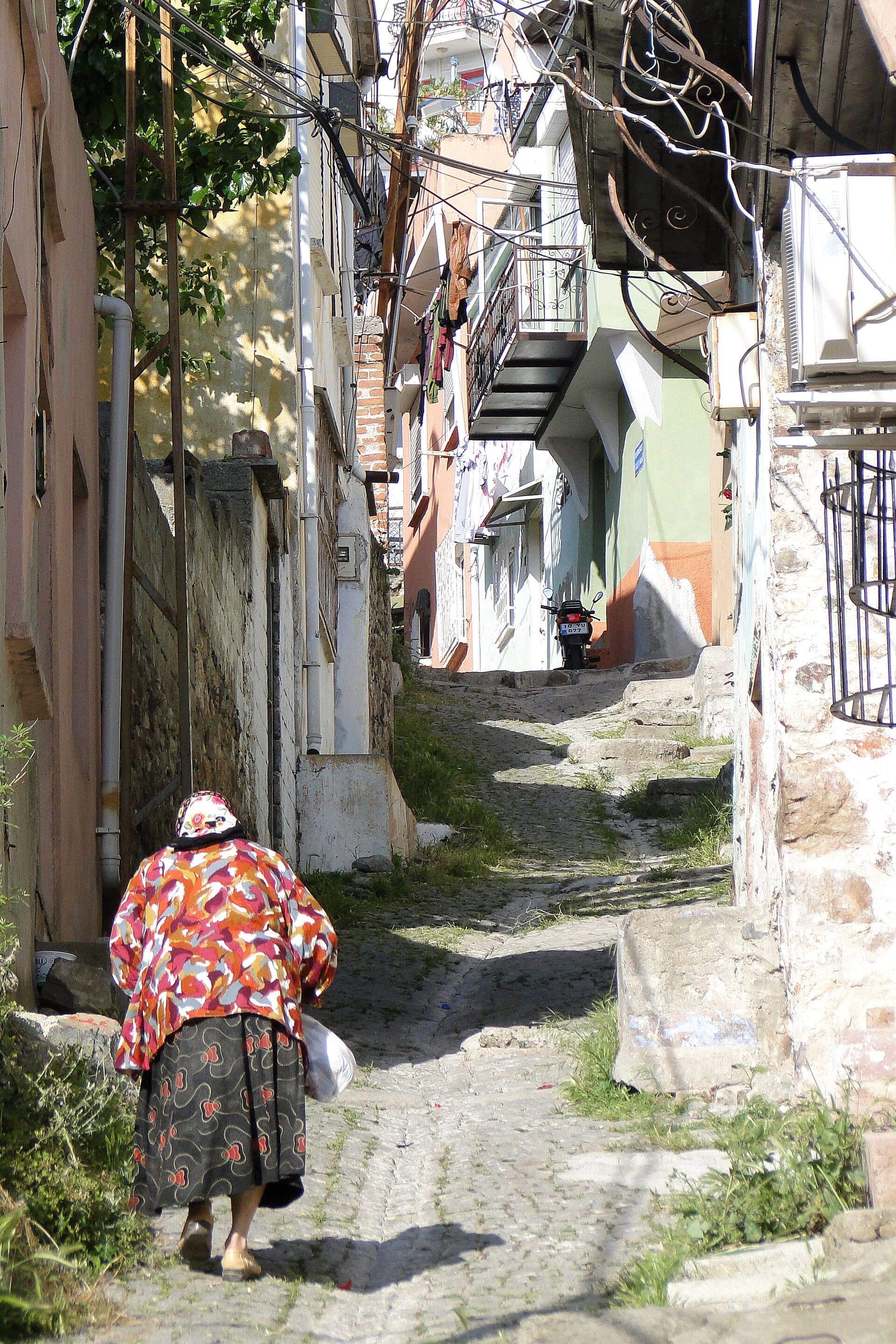
Sunlit cobbled street lined with historic stone houses in Ayvalık's old town.

Ayvalık Old Town

Neighbourhood

Walk streets built by a Greek Orthodox community forced out in 1923 - the stone houses and converted churches still stand untouched.

Ottoman-era Ayvalık (then Kydonies/Aivalık) was an overwhelmingly Greek Orthodox town of some 34,000 people by 1914, its wealth built on olive oil. The 1923 population exchange under the Treaty of Lausanne resettled nearly all of them to Greece within a few years, and Muslim Turks from Lesbos, Crete and Thessaloniki took their place in the same streets and houses.

Free to walk; no ticket for the old town itself.

150 minCobblestones are uneven and can be slippery after rain.
Look for: Şeytan Kahvesi and other historic coffeehouses on Alibey Camii Caddesi; former Orthodox churches converted to mosques, stonework often untouched; olive-oil factory chimneys still standing between the houses.

Worth your time

Worth your time

A second day earns you these.

Rank1

Sarımsaklı Beach

Beach

Ayvalık's real sandy beach — a long, resort-lined strand about 8km south, the counterpoint to the old town's cobblestones.

Located in Küçükköy, roughly 8km from central Ayvalık, Sarımsaklı is the main sandy beach on a stretch of coast that's otherwise mostly rocky — its long, gently sloping strand made it the natural site for the district's beach-resort development, distinct in character from the historic core.

Free public beach; sunbed and umbrella hire from beachfront cafés, paid in lira.

150 min
Look for: The long sand strand backed by hotels and beach clubs; watersports rentals in peak season; a straightforward contrast to the old town's stone-and-history focus.
Open in Maps
Rank2
Exterior of the restored Taxiarchis Church (Cunda Rahmi M. Koç Museum) in daylight.

A Greek cathedral turned mosque turned ruin turned museum — Cunda's clearest record of what 1923 did to a single building.

Built in 1873 as the Metropolitan Church of the Archangels for Cunda's Greek Orthodox community, it was converted to a mosque without a minaret after the 1923 population exchange, its iconostasis dismantled and frescoes painted over. A 1944 earthquake left it badly damaged, standing abandoned for decades before restoration and its May 2014 reopening as a museum under the Rahmi M. Koç Museum and Culture Foundation.

Ticketed; confirm current admission locally — museum pricing across the Rahmi M. Koç network changes periodically.

75 minConfirm current opening days locally — small museums on Cunda sometimes close for slow-season maintenance.
Look for: The restored Byzantine-Orthodox proportions and stonework of the original cathedral; the maritime and industrial exhibits typical of Rahmi Koç Museum branches, now filling a building built for a very different purpose.
Verified · · 3 min to Cunda Island
Rank3
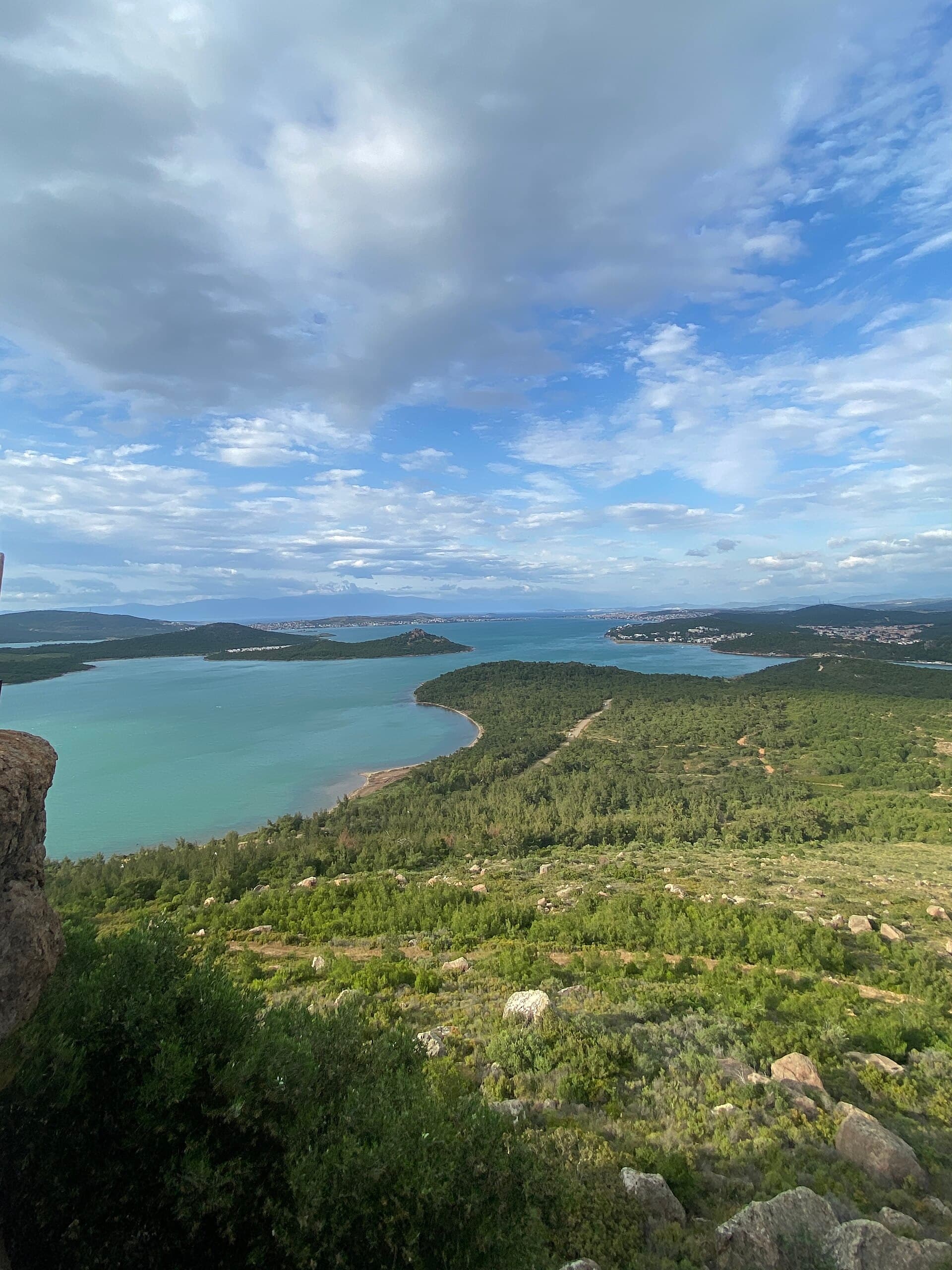
Daytime view of the Ayvalık islands from the Şeytan Sofrası viewpoint.

Climb a bare volcanic hilltop above Ayvalık Bay for the sunset the whole town quietly organises its evening around.

Locally called Çanak Tepe before its current name took hold, this flat-topped hill on the rim of an old lava cone carries a local legend that a three-legged devil, driven from the town, left his footprint in a shallow depression in the rock here - visitors still toss coins into it and make a wish.

Free; small paid parking area at the summit in season.

90 minNo shade at the summit — carry water for a midday visit.The site gets crowded at sunset in peak season; arrive early for a parking spot.
Look for: The coin-filled depression said to be the devil's footprint; the 360° view over Ayvalık Bay and its scattered islands; on the clearest evenings, the silhouette of Lesbos on the horizon.

If you have longer

If you have longer

Keep these compact stops in mind when you build your trip.

The scattered islands facing Lesbos - historically called Hekatonnesoi, the 'Islands of Apollo', or Moschonisia in Greek - are today a protected Nature Park, popular for day-boat tours out of Ayvalık's harbour.

No entry fee; day-boat tours from Ayvalık harbour are priced per boat, typically including lunch — compare a few operators before booking.

This is a boat-tour destination, not a walkable site — coordinates mark the archipelago's general area, not a fixed point.
240 minOpen in Maps

Getting there and away

Verified routes from Ayvalık.

Door-to-door times and fare ranges, checked leg by leg. Only routes where every leg verified are listed.

Getting around

Türkiye, for scale

Where it sits

See this city in the wider shape of Türkiye.

The map will load as it approaches the viewport.