Temple of Athena, Assos
Anatolia's only Archaic Doric temple stands on a crag above the Aegean — startlingly early and alone in its style.
Enough context, no spoilers
Why it matters
Built around 530 BC on Assos's acropolis, the Temple of Athena is the only known Doric-order temple of the Archaic period anywhere in Asia Minor, originally ringed by about 34 columns; surviving carved frieze fragments — rare in figural Doric relief work — are split between the site and museum collections abroad.
What to know before you go
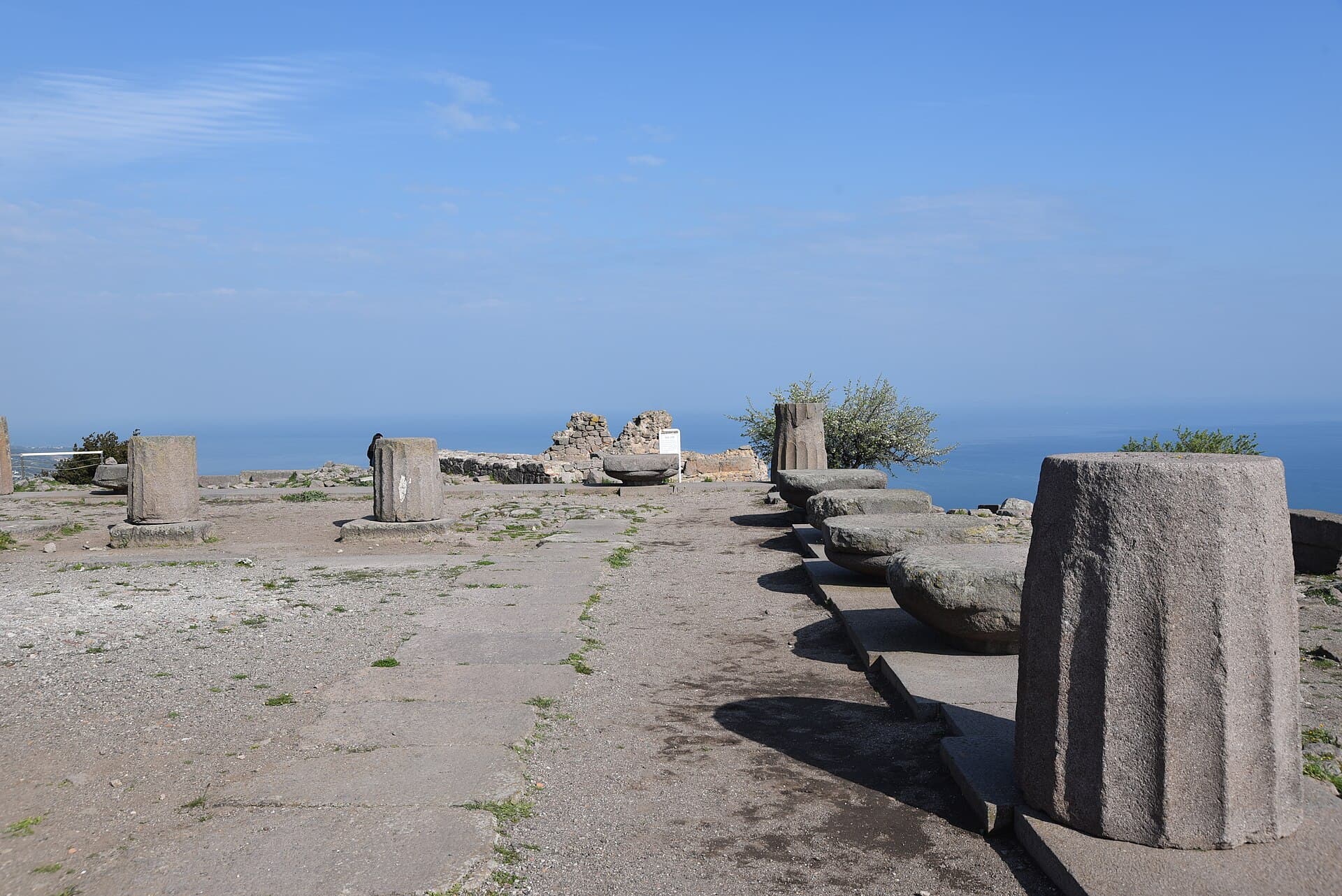
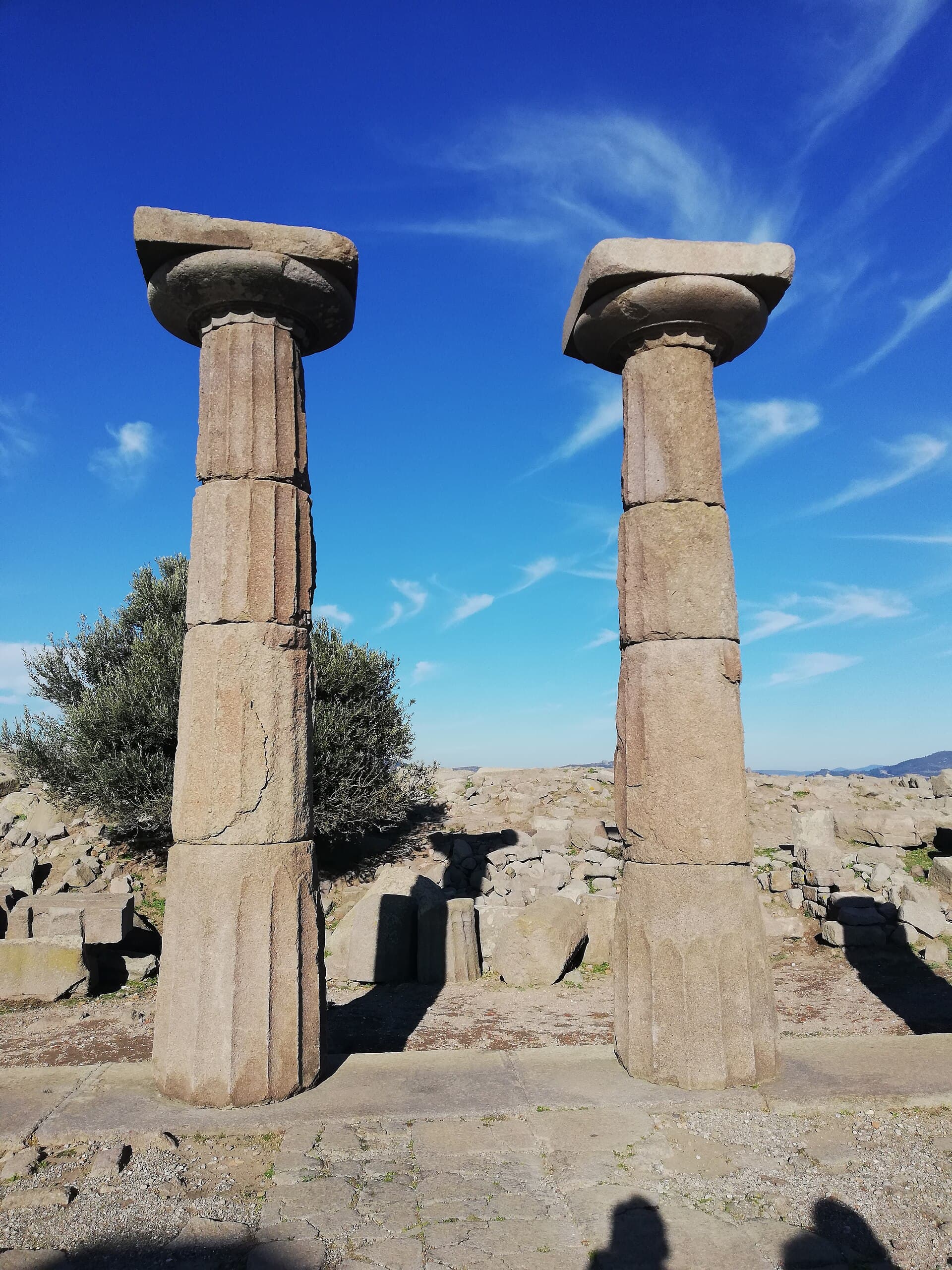
The Temple of Athena at Assos occupies a genuinely unusual place in Greek architectural history: built around 530 BC on the summit of the acropolis, it's the only confirmed Doric-order temple from the Archaic period anywhere in Asia Minor, in a region where Ionic building traditions otherwise dominated almost completely. That alone would justify the climb, but the temple's real distinction is in its decoration. Doric temples of this period, across the Greek world generally, carried plain metopes rather than continuous figural relief - the elaborate frieze sculpture most visitors associate with Greek temples belongs to the Ionic tradition. Assos broke that pattern: fragments recovered here show carved reliefs of symposium scenes, bulls and a triton worked directly into the Doric frieze, a combination rare enough that it's cited specifically in surveys of Archaic Greek sculpture. Some of those fragments remain on or near the site; others were removed by nineteenth-century excavators and are now held in museum collections abroad, a dispersal typical of major sites explored in that era and worth knowing before you go looking for the complete set in one place. The temple originally carried around 34 columns; what survives today is a partial re-erection - enough standing fabric to read the building's proportions clearly against the sky, without pretending to a completeness the ruins don't actually have. None of this happened in isolation from the city's human history, and the temple sits directly above the reason Assos is remembered at all beyond its architecture: in 348 BC, the philosopher-ruler Hermias of Atarneus, a former student of Plato who had built Assos into something close to a satellite Academy, invited Aristotle to the city. Aristotle stayed roughly three years, married Hermias's niece Pythias, and conducted his earliest biological and zoological observations along this coastline before moving on to Lesbos - work that would shape the rest of his career. Stand at the temple platform at the end of a visit rather than the start: the 235-metre elevation gives an open, uninterrupted sweep of the Aegean and, on clear days, Lesbos itself, the same horizon Aristotle would have looked at while he worked.