TurQuosian

Marmara

Assos

Where Aristotle studied on a sea cliff

Assos is a single ancient city around one hill: a Doric temple at the summit - the only one of its kind in Anatolia - a fortified acropolis Hermias held against Persia, and the small stone village of Behramkale below, where Aristotle spent three formative years. Base yourself in Ayvalık, 90 minutes away, or stay the night in Behramkale; this is a half-day site, not a multi-day town.

Stay
Half-day to overnight
From Ayvalık
~90 min by car
Airport
EDO / ÇKZ

Every published place in one city guide

What to see in Assos.

Start with the essentials, add what genuinely interests you, and leave the rest for another visit. Every place includes a concise story, practical timing, a Maps link, and a one-tap route planner action.

Make the route work

Anticipate the practical details.

Getting there

There is no airport at Assos itself. Balıkesir Koca Seyit Airport (EDO) and Çanakkale Airport (ÇKZ) are the nearest options, each roughly 1.5-2 hours by road. Driving is by far the most practical way in: figure on about 1h30 from Ayvalık. Public transport exists but is awkward — Truva-company coaches run Ayvalık to Ayvacık a few times a day, and Assos itself sits a further 17km off that route, needing a local dolmuş or taxi for the last leg. Doing Assos as a same-day round trip from Ayvalık without a car is genuinely impractical.
Getting around

Behramkale village, the acropolis and the harbour below are all within about a kilometre of each other, connected by a steep road — walkable, but a real climb each way. Most visitors park once, at the village or the harbour, and walk the rest.

Money

State-run sites price foreign visitors in euros at the gate, payable in lira or by card. Reported figures for the archaeological site's entry fee vary noticeably between sources (roughly €8-11 equivalent) — confirm the current price at muze.gov.tr or at the gate rather than trusting an older listing.

Connectivity

Mobile coverage reaches the village and acropolis without much trouble, being close to the main coastal route, though this wasn't independently stress-tested for this guide.

Etiquette

Behramkale is a small, still-inhabited village under a roughly 30-year construction-protection order — only restoration of existing stone houses is allowed, so treat it as someone's home, not an open-air museum.

Safety and comfort

The acropolis climb is genuinely steep, over uneven ancient stone, and largely without shade or handrails — wear real shoes and expect a workout, not a stroll. The old harbour below the village has, per some reports, seen access restricted at times for cliff-stability reasons; confirm current access locally before planning around it, since this project could not independently verify its 2026 status.

Essential

Don’t leave without

If you only have one day, this is the day.

Rank1
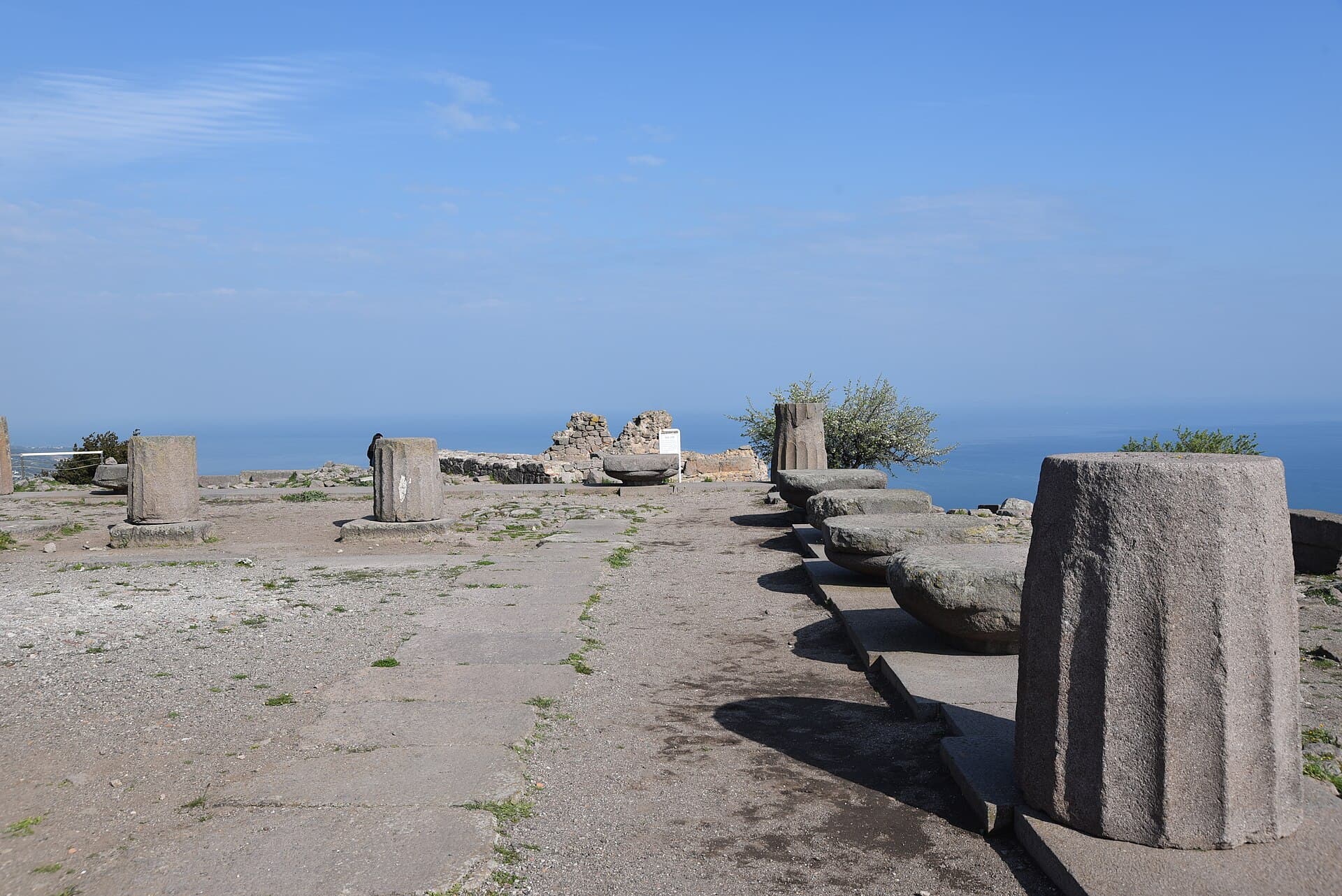
The Doric Temple of Athena at Assos overlooking the Aegean Sea in bright daylight.

Temple of Athena, Assos

Archaeological site

Anatolia's only Archaic Doric temple stands on a crag above the Aegean — startlingly early and alone in its style.

Built around 530 BC on Assos's acropolis, the Temple of Athena is the only known Doric-order temple of the Archaic period anywhere in Asia Minor, originally ringed by about 34 columns; surviving carved frieze fragments — rare in figural Doric relief work — are split between the site and museum collections abroad.

Ticketed; reported foreign-visitor pricing conflicts across sources (roughly €8–11 equivalent) — confirm the current figure at muze.gov.tr or the gate before visiting. MüzeKart valid for Turkish residents.

90 minSteep, uneven climb from the village on ancient stone — wear real shoes; not accessible for mobility-limited visitors.Little shade at the summit; carry water in summer.Reported hours and admission price vary noticeably between sources — confirm locally before planning around a specific figure.
Look for: The re-erected columns against the open sky; carved relief fragments depicting symposium and animal scenes; the sheer drop and open Aegean view toward Lesbos from the temple platform.
Verified · · 6 min to Behramkale Village · 10 min to Assos Ancient Theatre

Worth your time

Worth your time

A second day earns you these.

Rank1

Assos Harbour

Neighbourhood

The working port below Behramkale, seafood tables facing up at the temple on the crag — access reportedly restricted at times for safety.

One of two small artificial harbours built in antiquity to shelter ships along this otherwise exposed stretch of coast, the modern port sits about 2km downhill from Behramkale village and today holds a run of waterfront seafood restaurants and fishing boats.

Free to walk; restaurant prices at the harbour run toward the higher end for the area, reflecting the view.

90 minPort/waterfront access has reportedly been restricted at times in recent years for cliff-stability reasons — confirm current access locally before planning around it; this project could not independently verify 2026 status.
Look for: Fishing boats alongside the restaurant tables; the temple silhouette visible on the crag directly above; the short but genuinely steep walk back up to the village.
Open in Maps
Rank2
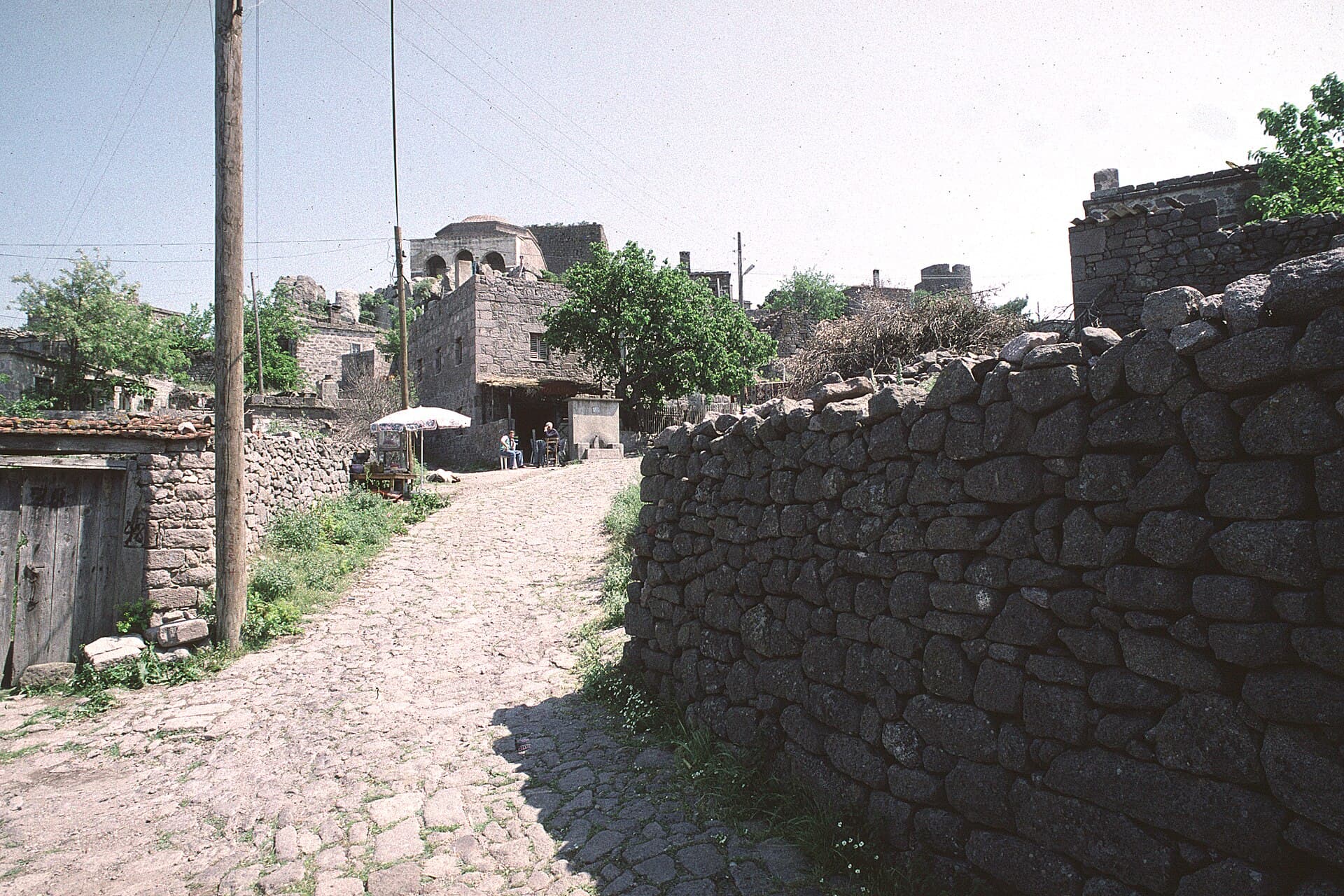
Narrow cobbled lane between stone houses in Behramkale village, Assos.

Behramkale Village

Neighbourhood

A working stone village of some 150 houses below the ruins, protected for three decades so it stayed exactly the size it always was.

Behramkale, the modern village at and below the Assos acropolis, has been under a construction-protection order for roughly 30 years, permitting only restoration of its existing stone houses — a rule that kept it at its historic scale of around 150 buildings while nearby coastal towns grew freely.

Free to walk; no ticket for the village itself. Guesthouse and café prices run moderate for the coast.

90 minSteep lanes throughout — comfortable walking shoes recommended.
Look for: Narrow cobbled lanes between stone houses, several converted into small guesthouses and cafés; plane-tree-shaded tea gardens; the walk down toward the harbour with the temple visible on the crag above.
Verified · · 4 min to Assos Ancient Theatre · 6 min to Temple of Athena, Assos
Rank3
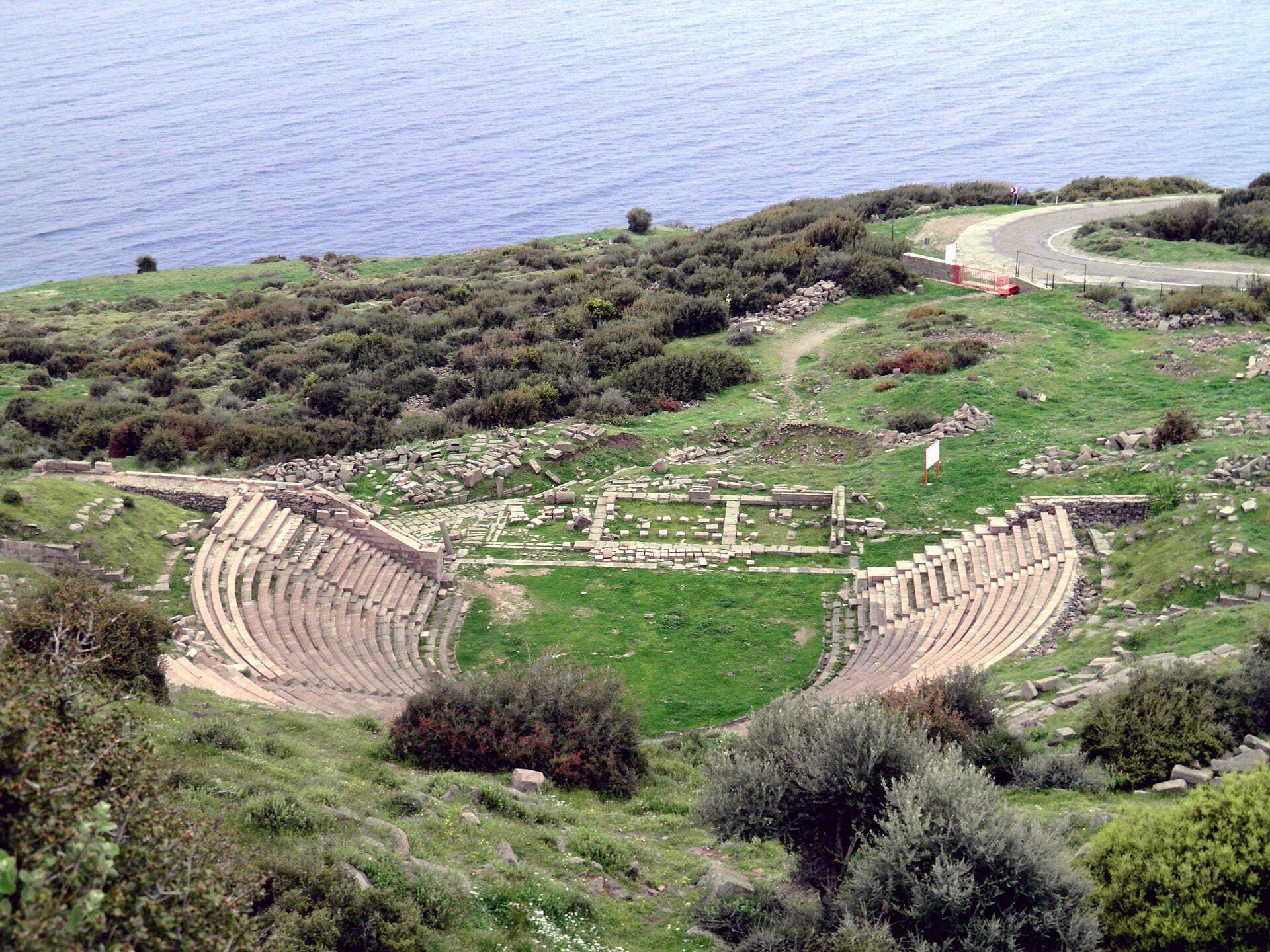
Elevated view of the ancient theatre at Assos with the Aegean Sea behind the seating tiers.

Assos Ancient Theatre

Archaeological site

A 4th-century BC Greek theatre cut into the hillside below the temple, seating 5,000, later handed to Roman gladiator spectacle.

Built in the 4th century BC into the slope below the acropolis, the horseshoe-shaped theatre could seat around 5,000; Roman-era Assos repurposed it for gladiatorial games, a common later adaptation of Greek theatres across Roman Asia.

Covered by the same ticket as the Temple of Athena and the rest of the archaeological site.

45 minCoordinates are an approximate placement within the archaeological site, not survey-grade.
Look for: The seating tiers with an open sea view behind the stage — a rare orientation, since most Greek theatres face inward; the orchestra area at the base of the slope.
Verified · · 4 min to Behramkale Village · 10 min to Temple of Athena, Assos

If you have longer

If you have longer

Keep these compact stops in mind when you build your trip.

A broad shingle (not sand) beach roughly 3km east of Assos's old port, lined with a handful of small hotels and cafés — a low-key counterpoint to the ancient site's crowds.

Free public beach; limited sunbed hire from the small cafés behind it.

Precise coordinates are loosely verified — confirm locally.Shingle, not sand — bring water shoes if needed.
120 minOpen in Maps

Assos Necropolis

Archaeological site

The necropolis lies along the road approaching the ancient city and was used for burials across roughly eight centuries, from the Archaic period into the Roman era — an unusually long continuous span for a single burial ground.

Free; visible from the public approach road outside the ticketed site.

Coordinates are approximate — the necropolis is spread along the access road rather than at a single point.
20 minOpen in Maps

Assos City Walls

Historic site

Largely dating to the mid-4th century BC under Hermias of Atarneus, the walls encircle the acropolis and lower city in massive polygonal masonry and withstood a Persian siege in 366 BC when Assos sheltered the rebel satrap Ariobarzanes.

Covered by the main archaeological site ticket where the walls run through it; some stretches are visible for free from outside the fenced area.

Coordinates mark an approximate point on the circuit, not a single fixed site.
30 minOpen in Maps

Getting there and away

Verified routes from Assos.

Door-to-door times and fare ranges, checked leg by leg. Only routes where every leg verified are listed.

Getting around

Türkiye, for scale

Where it sits

See this city in the wider shape of Türkiye.

The map will load as it approaches the viewport.