Assos Ancient Theatre
A 4th-century BC Greek theatre cut into the hillside below the temple, seating 5,000, later handed to Roman gladiator spectacle.
Enough context, no spoilers
Why it matters
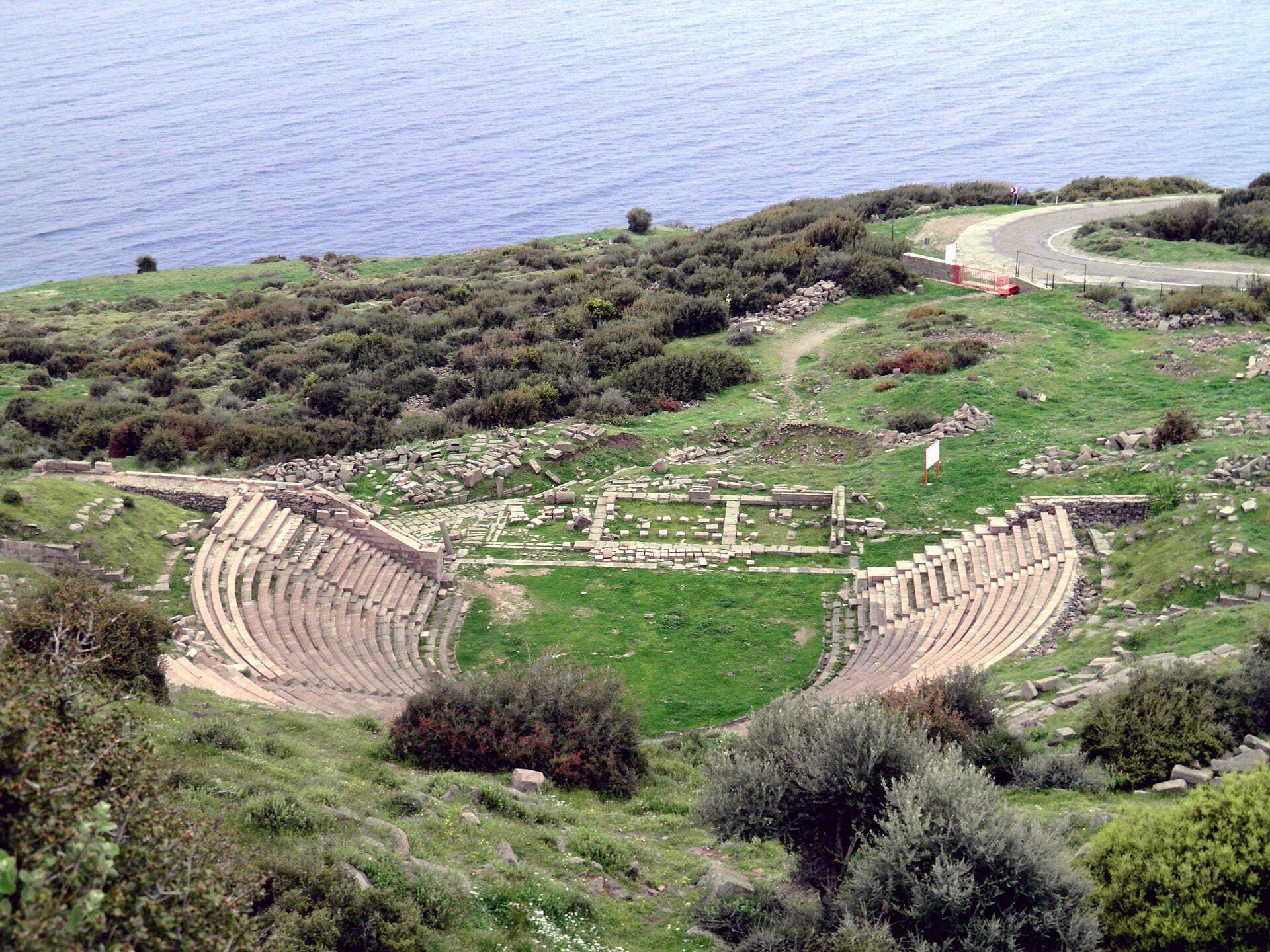
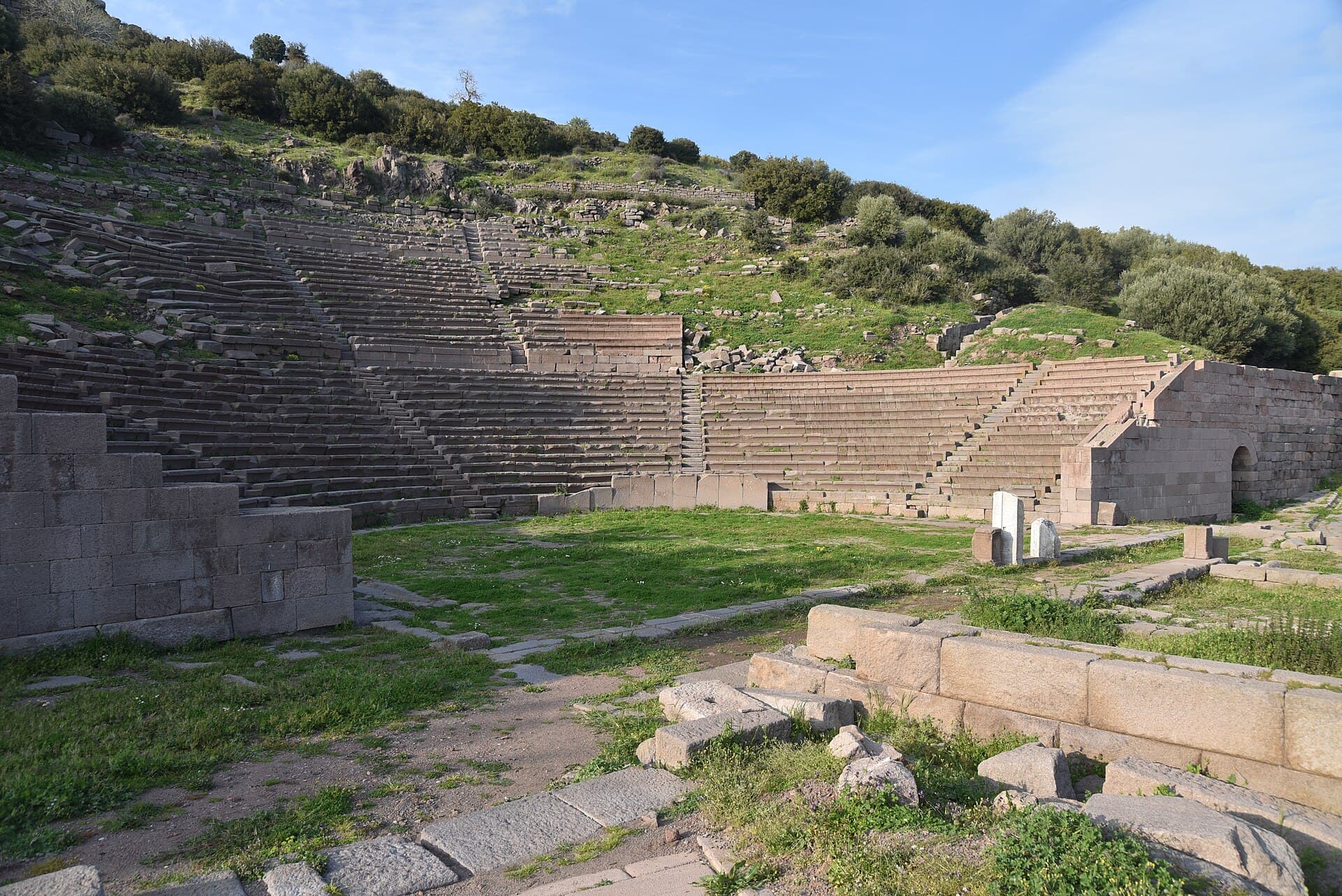
Built in the 4th century BC into the slope below the acropolis, the horseshoe-shaped theatre could seat around 5,000; Roman-era Assos repurposed it for gladiatorial games, a common later adaptation of Greek theatres across Roman Asia.
What to know before you go
Assos's theatre is easy to underrate on a site whose headline monument is a temple, but it's a genuinely significant structure in its own right, and its orientation is the first thing worth noticing. Built in the 4th century BC into the natural slope below the acropolis, the horseshoe-shaped seating could hold roughly 5,000 people - a serious capacity for a city this size, suggesting Assos's civic and cultural life was more substantial in the Hellenistic period than its modest modern footprint implies. What makes the theatre worth the separate stop, though, is what the audience actually looked at: rather than a purely inward-facing bowl focused on the stage building, the theatre's position on the hillside means the seating opens toward the sea, so anyone sitting through a performance here had the Aegean itself as a backdrop behind the actors, not just scenery painted on a wall. That's a rarer arrangement than it might sound - most Greek theatres were sited for acoustics and sightlines toward the stage alone, with the view treated as incidental at best. Assos's builders either got lucky with the terrain or built with the view deliberately in mind; either way, the effect survives today largely unchanged. The theatre's later life adds another layer: Roman-era Assos, absorbed into the province of Asia from 133 BC, repurposed the space for gladiatorial games, a common but still slightly jarring adaptation - a stage built for tragedy and comedy converted to blood sport, physically the same stone bowl serving two very different civic appetites centuries apart. Visit after the temple rather than before; the theatre sits lower on the slope, so approaching it on the way back down means less climbing overall, and the sea-facing seats are worth sitting in for a few minutes rather than photographing and moving on - it's one of the few ancient theatres anywhere where you can actually reconstruct, by sitting where the audience sat, exactly what made this particular building unusual.