Church of St Gregory of Tigran Honents
The best-preserved building at Ani, and the only one where the paint survived, not just the stone.
Enough context, no spoilers
Why it matters
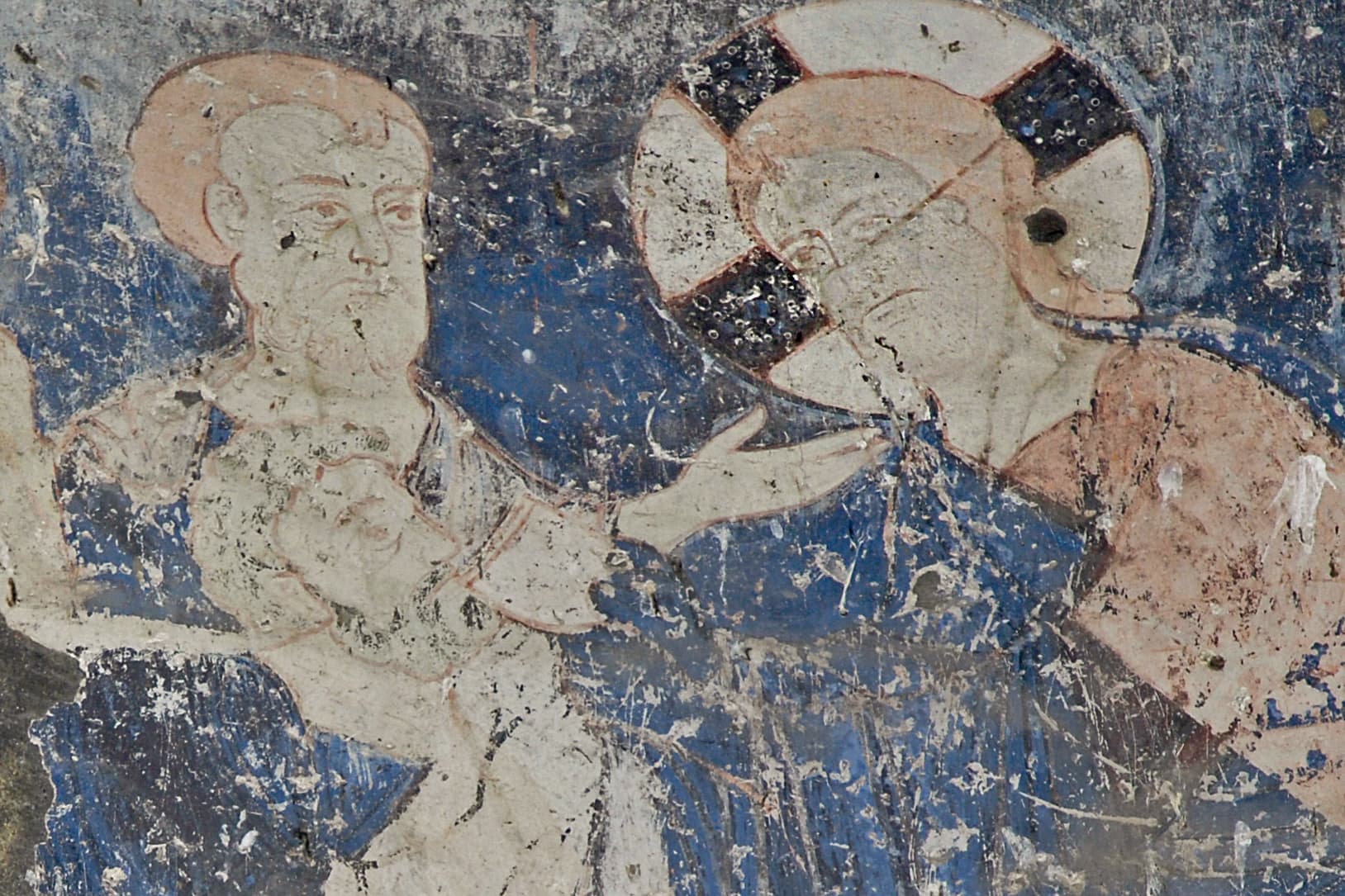
Completed in 1215, per an inscription on the south façade, funded by Tigran Honents, a wealthy Armenian merchant who had already paid for restoration work at the cathedral. The best-preserved structure at Ani, notable for an extensive interior fresco cycle — believed painted by Georgian artists working for an Armenian patron — depicting Christ's life, the conversion of Armenia, and saints.
What to know before you go
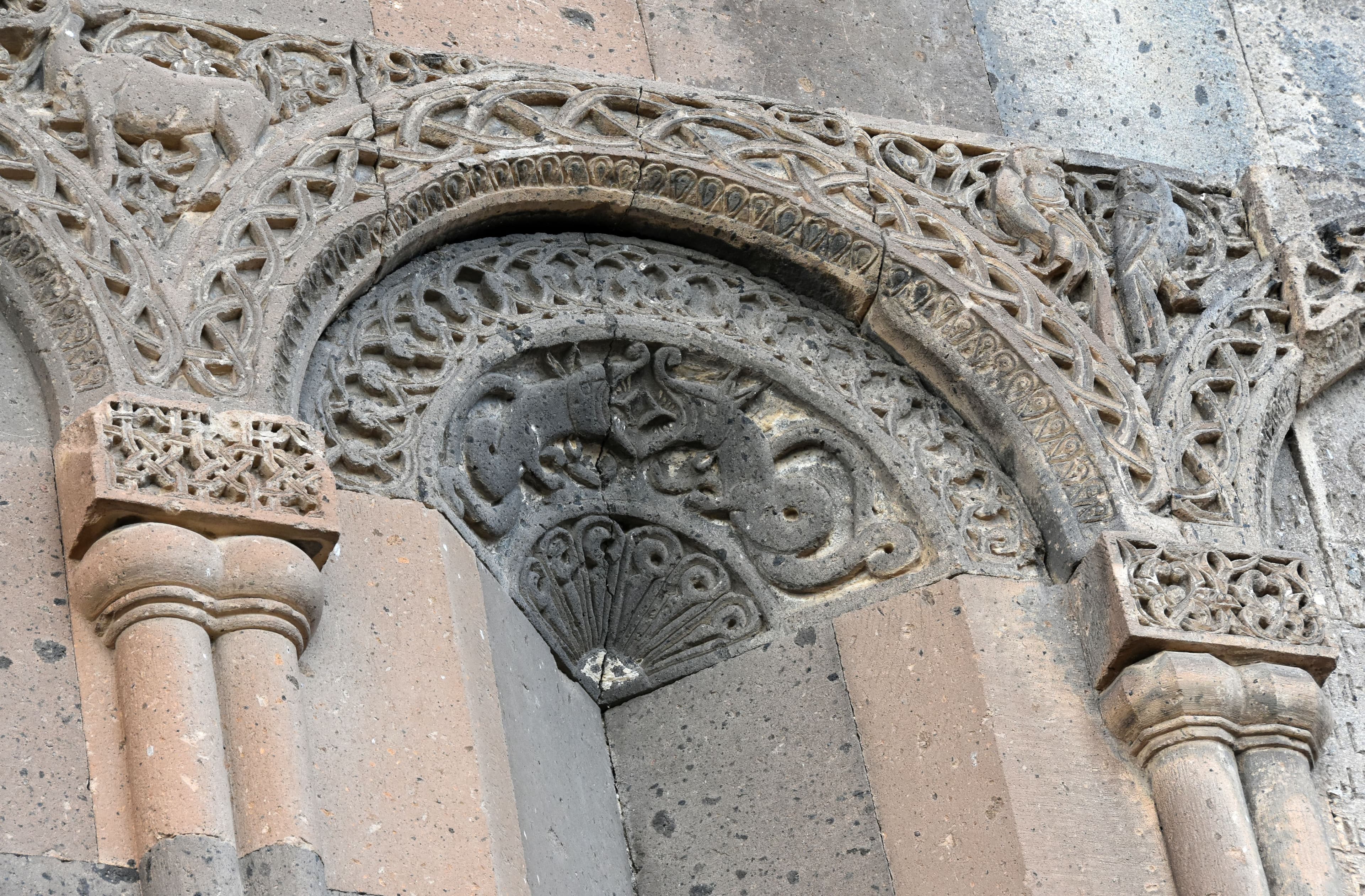
This is the one building at Ani that lets you stop imagining and start looking. Everything else on this list survives as structure — walls, a dome scar, a footprint. Tigran Honents survives as decoration, and that changes what a visit here can be. It was finished in 1215, according to an inscription still legible on the south façade, paid for by a wealthy Armenian merchant named for the church itself, who had already put money into restoring the cathedral — a donor buying his way into the city's two most important buildings within a generation. Outside, look for the carved band of interlaced dragons on the south wall, an unusually secular, almost playful motif for a church exterior. Inside is the reason to come: a cycle of frescoes that is among the best-preserved painted interiors anywhere in the medieval Armenian world, executed, most accounts believe, by Georgian artists working for an Armenian patron in a building consecrated to the Armenian church — a small, physical piece of evidence for how genuinely mixed this city's culture was. The scenes read across the walls in bands: the great liturgical feasts of the church calendar, a narrative cycle of Gregory the Illuminator's own conversion of Armenia to Christianity in the fourth century, and — more surprising — an episode from the life of Saint Nino, the woman credited with converting Georgia, painted here on Armenian soil. Near the apse the plasterwork imitates hanging silk, a trompe-l'oeil reference to the textiles this city grew rich trading in. None of it is behind glass. There is no controlled lighting and no climate system — you are looking at eight-hundred-year-old pigment in the same daylight that has been fading it for eight hundred years, a real tension between access and preservation that Ani has not resolved and probably cannot. Bring a torch, or use your phone's light angled low across the plaster; it brings up detail flat daylight flattens out. The ruined gallery in front of the church is in worse condition than the church itself and adds little — spend your time inside instead.