Cathedral of Ani
Trdat built this and, in the same years, rebuilt Hagia Sophia's dome for Constantinople. Only one of the two still stands with its dome on.
Enough context, no spoilers
Why it matters
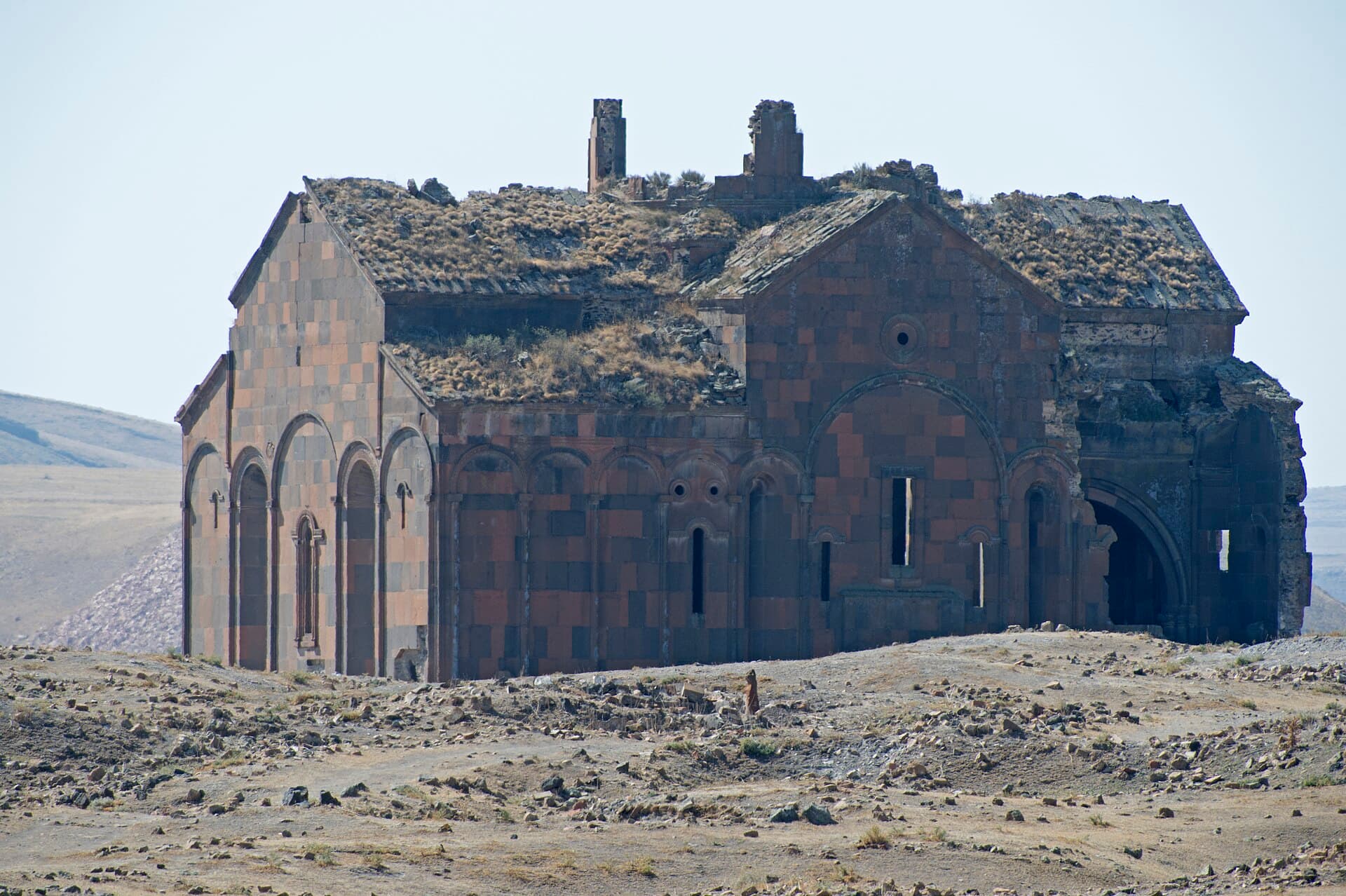
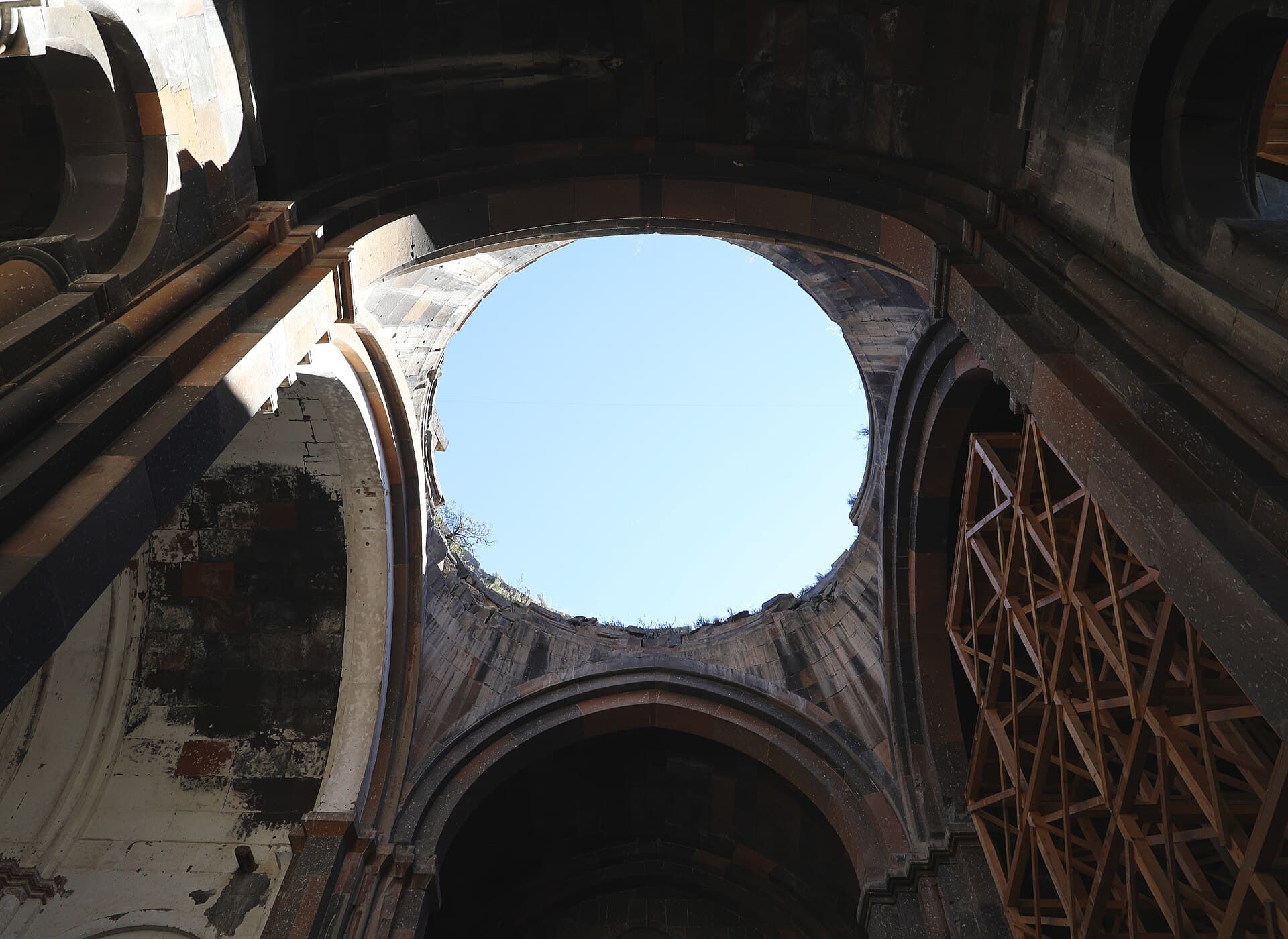
Begun 989 under King Smbat II, completed by about 1001, designed by Trdat — the architect Byzantine officials summoned to Constantinople after 989's earthquake to rebuild Hagia Sophia's dome. Its pointed arches and clustered piers predate Western Gothic architecture by two centuries. Became a mosque (Fethiye Camii) after the 1064 Seljuk conquest; reconsecrated in 1124. The dome collapsed in the 1319 earthquake.
What to know before you go
Start here, because everything else at Ani makes more sense once you have stood inside it. The cathedral was begun in 989 under King Smbat II and finished by about 1001, designed by Trdat, the most sought-after architect of the age — the same man Byzantine officials summoned to Constantinople after the earthquake of 989 to rebuild the dome of Hagia Sophia itself. He was doing both jobs at once. What he built at Ani is a domed basilica whose pointed arches and clustered piers appear roughly two centuries before anything resembling them shows up in Western European Gothic architecture — not a claim of direct influence, simply a fact about who got there first. The dome itself is long gone, brought down by the earthquake of 1319 that also marks the start of Ani's terminal decline. What you are looking at is the shell: four walls, the springing points where the dome once sat, and inside, a plain, echoing volume that photographs badly and feels enormous in person. The building had a second life. After the Seljuk conquest of 1064 it became a mosque — Fethiye Camii — and stayed one until Georgian forces retook the city in 1124 and reconsecrated it. A later earthquake, in 1988, tore open the northwest corner; the gap is still there, fenced, and worth noticing rather than stepping around. Come here first, before the rest of the site pulls your attention outward toward the walls and the gorge. Stand at the west end and look down the nave toward where the altar was — the proportions are the whole argument, and they only work if you give the empty room a few minutes rather than a photo and a walk-through. There is no dome to look up at any more, which is exactly why the walls matter: they are doing on their own what the whole building used to do together. Nothing here is reconstructed or filled in for visitors, unlike some of what you will see elsewhere in Türkiye — this is worn stone, standing on its own, and it reads as genuinely old because it is. Twenty to thirty minutes is enough for a first pass; longer if you want to sit with it.