Church of the Holy Redeemer
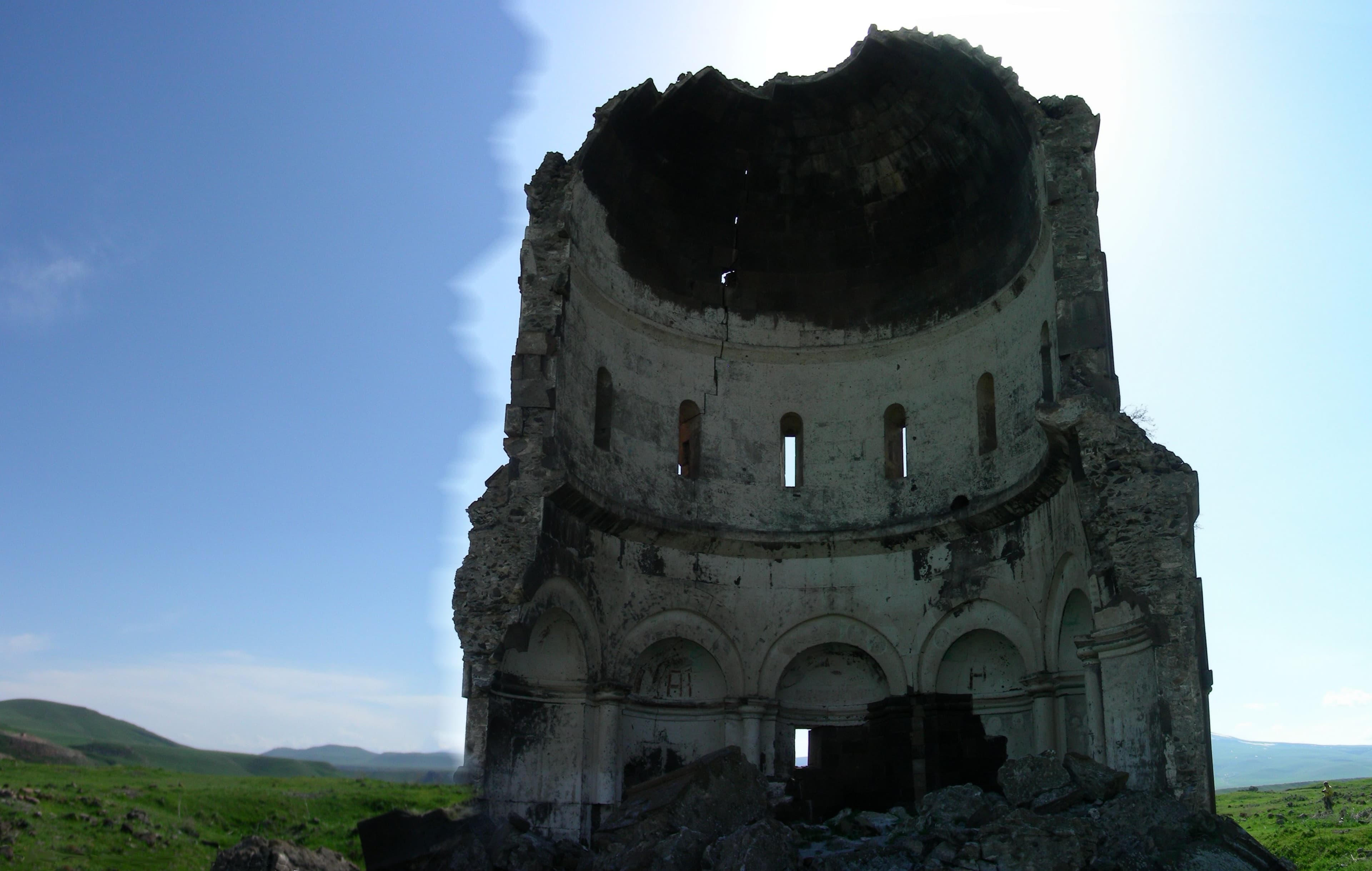
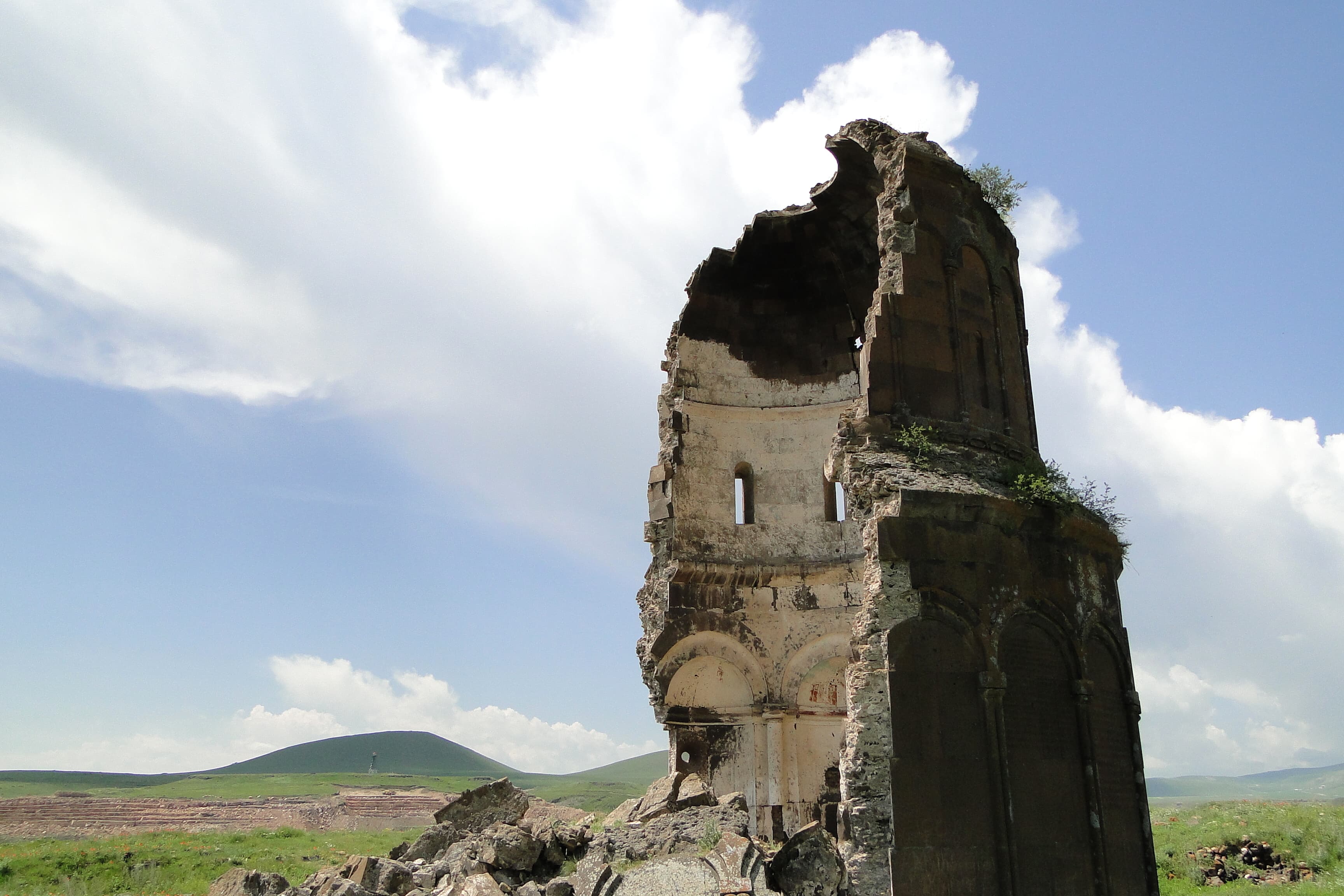
Half a dome, sliced clean through, still standing since a storm brought the other half down.
Enough context, no spoilers
Why it matters
Consecrated in 1036, funded by the governor Ablgharib, said to have installed a fragment of the True Cross inside; restored again in 1193 and 1342. Built on an unusual plan — nineteen sides externally, eight apses internally, a tall drum under a dome. Its eastern half collapsed in a storm most accounts date to 1955; one source instead attributes the damage to an earlier, 1930s earthquake.
What to know before you go
Of all the ruins at Ani, this is the one that looks most like a diagram — a cutaway drawing of a Byzantine-Armenian church rather than a building, because that is essentially what a storm turned it into. It was consecrated in 1036, funded by a local governor named Ablgharib who is said to have installed a fragment of the True Cross inside it, and it was restored twice more by later patrons before the city's decline. What makes it worth the walk is the design: nineteen sides on the outside, eight apses on the inside, rising to a tall drum under a dome that was, by every account, one of the more sophisticated pieces of engineering anywhere in the city. Then, most accounts agree, a storm brought down the entire eastern half in a single event — accounts differ on the year and the exact mechanism, with 1955 and a lightning strike the most commonly cited version, and at least one academic source instead pointing to a 1930s earthquake, so treat the story as well-supported and the precise date and cause as slightly less certain. What is not in doubt is what you see now: an almost surgical cross-section, half a drum and half a dome still standing, the missing half simply gone, so that the building explains its own construction better collapsed than most churches do intact. You can read the wall thickness, the apse structure, the way the dome's weight was meant to come down through the drum to the piers — all of it visible in a way it would not be if the roof had survived. Do not climb on the break itself; the exposed edge is unstable rubble, not a viewing platform, whatever the worn path up to it suggests other visitors have decided. Give it ten to fifteen minutes on your way between the cathedral and the gorge-side churches — it sits conveniently on that line and needs no detour to reach.