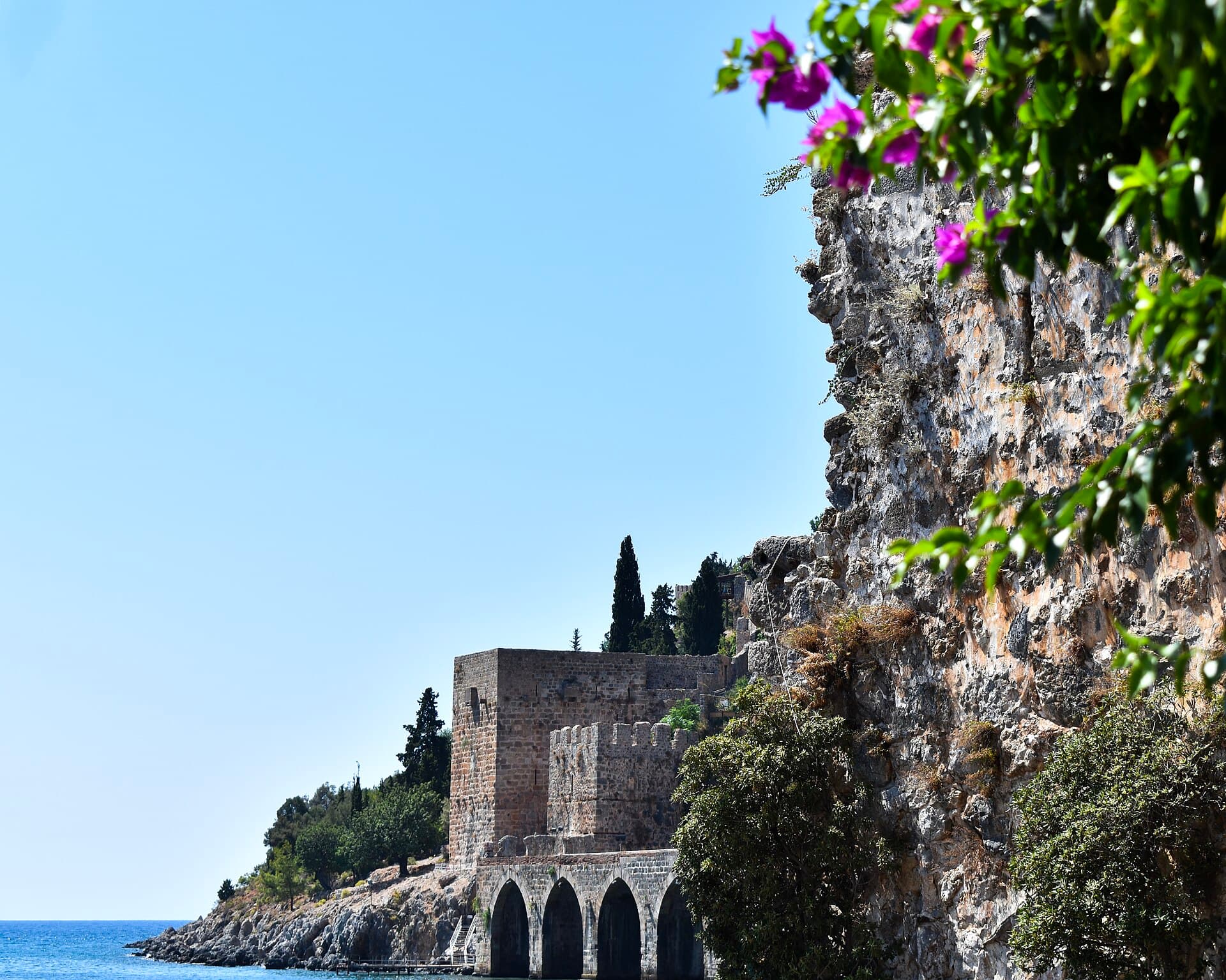
Alanya's real reason to visit is one compact loop: a Seljuk hilltop fortress, the harbour-guarding Red Tower, and the only surviving medieval Seljuk shipyard in Türkiye, all built in a single decade under Sultan Alaeddin Keykubad I. Beyond that core and Cleopatra Beach below it, most of what surrounds Alanya is package-resort coastline built for charter tourism, not independent exploration.
Start with the essentials, add what genuinely interests you, and leave the rest for another visit. Every place includes a concise story, practical timing, a Maps link, and a one-tap route planner action.
Make the route work
Anticipate the practical details.
Getting there
Most travellers, package and independent alike, fly into Antalya (AYT) — far more routes and airlines, roughly 90 minutes to 2.5 hours by road depending on traffic and transfer type. Gazipaşa-Alanya (GZP) is closer, about 35-50 minutes, but has far fewer routes and mostly seasonal service — only worth it if a suitable direct flight exists.
Getting around
The D400 coastal highway runs directly through Alanya; a local dolmuş network covers the town and nearby resort suburbs cheaply. Rent a car for day trips to Dim Cave or Sapadere Canyon — public transport to both is limited, and most tour operators run them as organised excursions rather than scheduled routes.
Money
Turkish lira is standard, and cards are widely accepted in the tourist core. Alanya's large German, Russian and Scandinavian long-stay community means euros are sometimes quoted informally, but pay in lira for the best rate.
Connectivity
Mobile coverage is reliable throughout the town and resort strip; it can thin out on the drive to Dim Cave or Sapadere Canyon in the Taurus foothills.
Etiquette
Alanya's tourism economy runs heavily on European package and charter markets — a more resort-casual atmosphere than most of this project's other destinations, but the historic core (castle, mosque, old town) still deserves the same modest dress and quiet respect as any other heritage site.
Safety and comfort
Low violent-crime risk against tourists; petty theft of unattended beach items is the main practical risk. Check your government's current travel advisory for Turkey before booking, as with any trip.
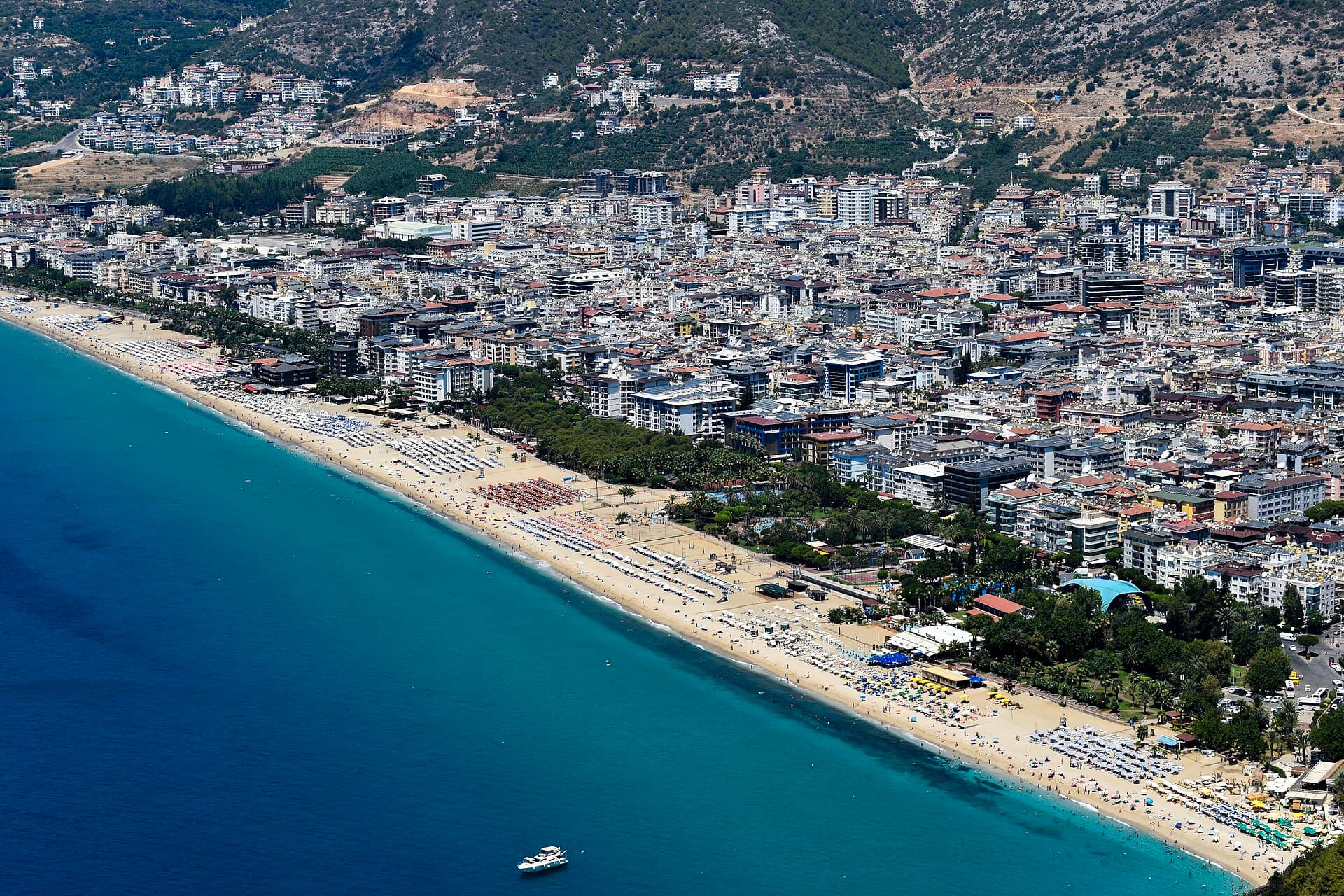
Alanya's signature in-town beach, directly below the castle - a real independent-travel anchor, legend aside.
Local legend holds Mark Antony gifted the region to Cleopatra and that she bathed on this beach, sand supposedly imported from the Nile - historians treat this as myth, not documented fact. The roughly 2km beach draws an estimated two million visitors a year and is cleaned daily.
Free public beach; sunbed and umbrella hire from beachfront cafés, paid in lira.
150 min
Look for: The castle walls rising directly above the sand; calmer water and fewer crowds toward the southern end near the castle base; watersports operators clustered at the northern end.
Verified · · 29 min to Damlataş Cave · 38 min to Alanya Castle
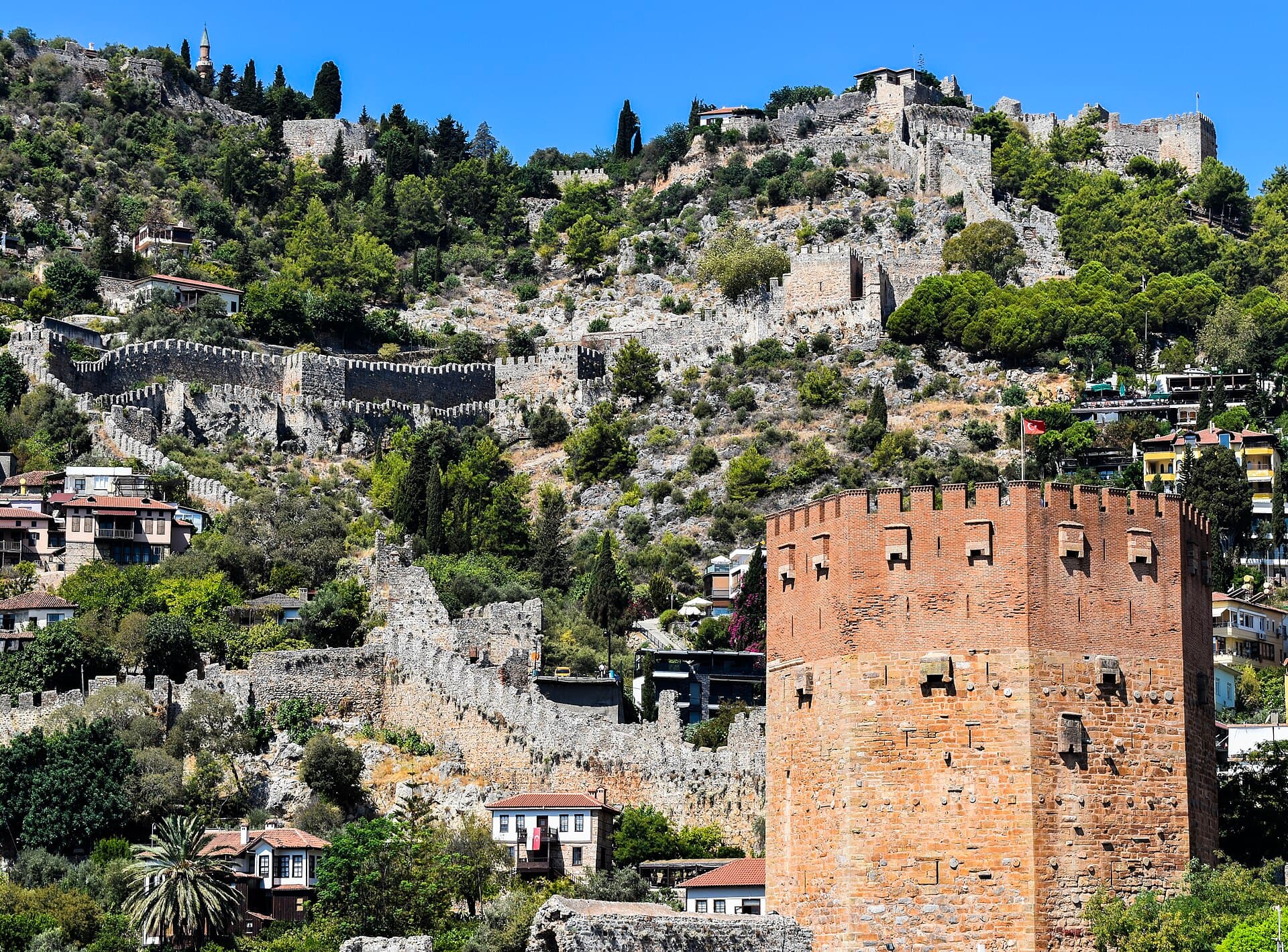
An octagonal red-brick tower guarding the harbour since 1226 - Alanya's most recognisable symbol, now a small museum.
Completed in 1226 under architect Ebu Ali Reha el-Kettani on Sultan Alaeddin Keykubad I's order, the five-storey, 33m octagonal tower was built to defend the harbour and the adjacent shipyard from seaborne attack. Restored 1951-53, it opened as an ethnographic museum in 1979.
Ticketed; confirm current admission locally. MüzeKart valid for Turkish residents.
45 min
Look for: The octagonal plan, each floor arranged differently around a central stone stair; the interior cistern; the view down over the harbour and shipyard the tower was built to defend.
Verified · · 6 min to Tersane (Seljuk Shipyard) · 18 min to Alanya Castle
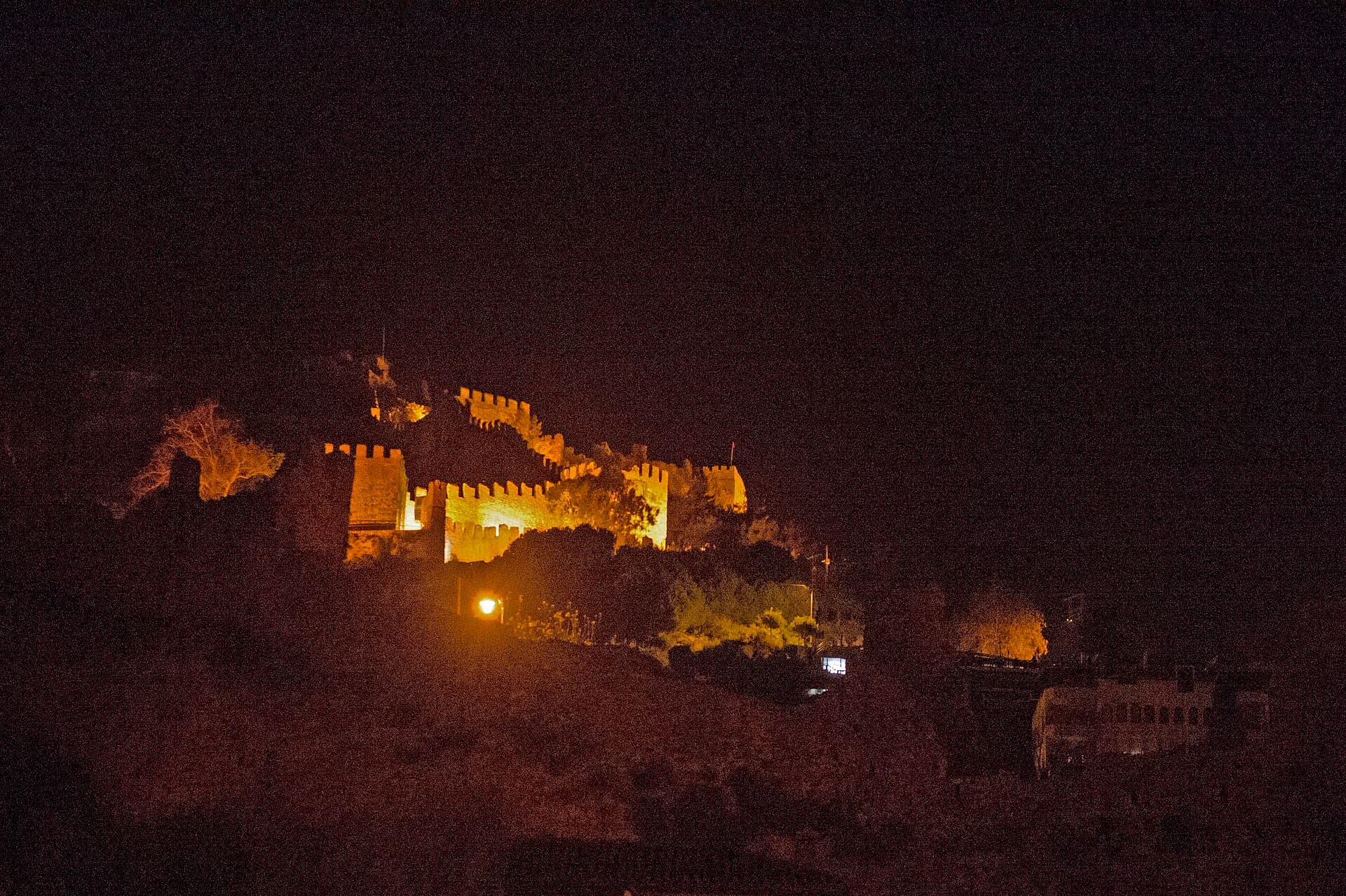
A full Seljuk hilltop fortress with 6.5km of walls, built in the 1220s to guard the Mediterranean's busiest medieval naval base.
Sultan Alaeddin Keykubad I took the city (then Kalonoros) in 1221 and built the fortress atop existing Byzantine defences, renaming it Alaiye and making it the Seljuks' Mediterranean winter capital and naval base. Roughly 6.5km of walls survive, enclosing cisterns, a Byzantine church, a mosque, and a sultan's palace ruins.
Ticketed; confirm current admission locally. MüzeKart valid for Turkish residents.
120 minExposed, largely shadeless walk — carry water in summer.
Look for: The walls following the cliff edge with sea views on three sides; the Byzantine-era Aya Yorgi church inside the walls; the palace ruins near the summit; best visited toward sunset.
Verified · · 16 min to Damlataş Cave · 18 min to Kızıl Kule (Red Tower)
The walkable core linking castle, tower and shipyard - Alanya's best photo angle sits out on the water, not on land.
The old town climbs the castle hill above the harbour in narrow Ottoman-era streets. The harbour itself, developed as the Seljuks' naval base, now functions as a working marina and the departure point for boat tours around the peninsula's sea caves.
Free to walk; boat tours priced per operator, compare a few before booking.
90 min
Look for: Narrow streets climbing toward the castle; the harbour-side view of the Red Tower and castle walls together, best seen from a boat tour.
The region's largest limestone cave, paired with a rare freshwater river valley for swimming and rafting.
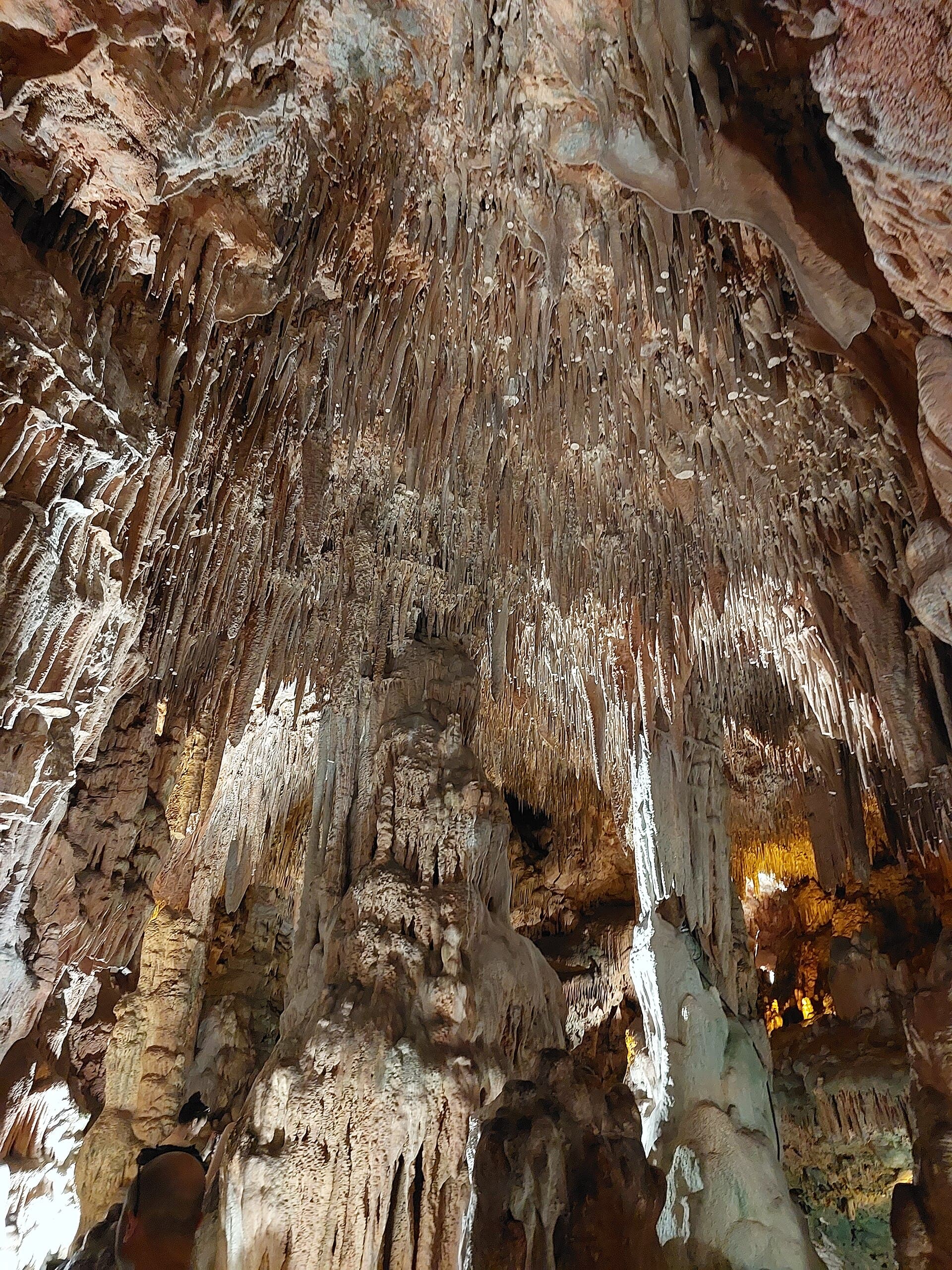
Located on the slope of Cebeli Reis mountain roughly 11-15km from central Alanya, Dim Cave holds extensive stalactite and stalagmite formations. The adjacent Dim Çayı (Dim River) valley is one of the few freshwater swimming and rafting spots on this stretch of coast.
Ticketed; confirm current admission locally.
90 min11-15km from central Alanya (sources vary) — a car or taxi is needed, public transport is limited.
Look for: Cave formations on a marked walkway; the adjoining river valley's cold, clear water; best combined as a half-day trip with a car or taxi.
Türkiye's first cave opened to tourism, discovered by accident in 1948 - still used today for a structured asthma-therapy program.
Discovered accidentally during harbour-construction quarrying in 1948, the cave's formations began roughly 15,000 years ago. Its interior holds unusually high humidity and elevated CO2 levels, underlying a structured respiratory-therapy program still run today alongside regular tourist visits.
Ticketed; confirm current admission locally.
30 minCoordinates are a corrected estimate — this project found the commonly published Wikipedia/Wikidata coordinate for this cave to be internally inconsistent (it would place the cave in the sea) and could not locate an independently verified correction.
Look for: Stalactite and stalagmite formations built over 15,000 years; the difference between early-morning therapy-session hours and regular tourist hours; a short walk from Cleopatra Beach.
Verified · · 16 min to Alanya Castle · 19 min to Kızıl Kule (Red Tower)
The only surviving medieval Seljuk shipyard in Türkiye - five vaulted docks built in 1227 to open the Seljuks' era as a naval power.
Built in 1227 on Sultan Alaeddin Keykubad I's order, immediately after the castle and Red Tower, the shipyard's five vaulted, arched docks opened directly to the sea, each a separate shipbuilding bay. It is the only intact medieval Seljuk shipyard known to survive.
Free to walk in; a short stop combined with the Red Tower and old town.
30 min
Look for: The five vaulted docks at water level, still open to the sea; the arched stonework overhead in each bay; the adjacent Tophane watchtower that once guarded the yard.
Verified · · 6 min to Kızıl Kule (Red Tower) · 20 min to Damlataş Cave
A roughly 750m boardwalk trail through a narrow limestone gorge near Sapadere village, about 40km/an hour's drive from Alanya, with cascading waterfalls and cold pools fed by mountain springs. Often combined with the nearby Güceler cave.
Ticketed entry; confirm current admission locally.
About 40km / roughly 1 hour from Alanya — a car or organised tour is needed, no useful public transport.
Ehmedek is a walled sub-fortress within the wider castle hill complex, historically the Turkish quarter under Seljuk-Ottoman rule, reachable via a short hike or the Damlataş cable car. Scattered wall remains, a cistern, and a small mosque site survive.
Usually covered by the main castle ticket; confirm locally.
Precise coordinates are approximate — not independently pin-verified.
Built in 1227, the same year as the adjacent Tersane, on a 10m rock outcrop, the Tophane is a three-storey rectangular tower that also served to cast cannon and warships in later use, guarding the dockyard from the sea.
Free to view from outside; combine with the adjacent Tersane.
Coordinates mark the adjacent Tersane area — the Tophane itself sits on a small outcrop within it, not independently pin-verified.