West Terrace
Sunset on the same fallen gods, plus the Lion Horoscope — a carved star chart that may date construction to 7 July 62 BCE.
Enough context, no spoilers
Why it matters
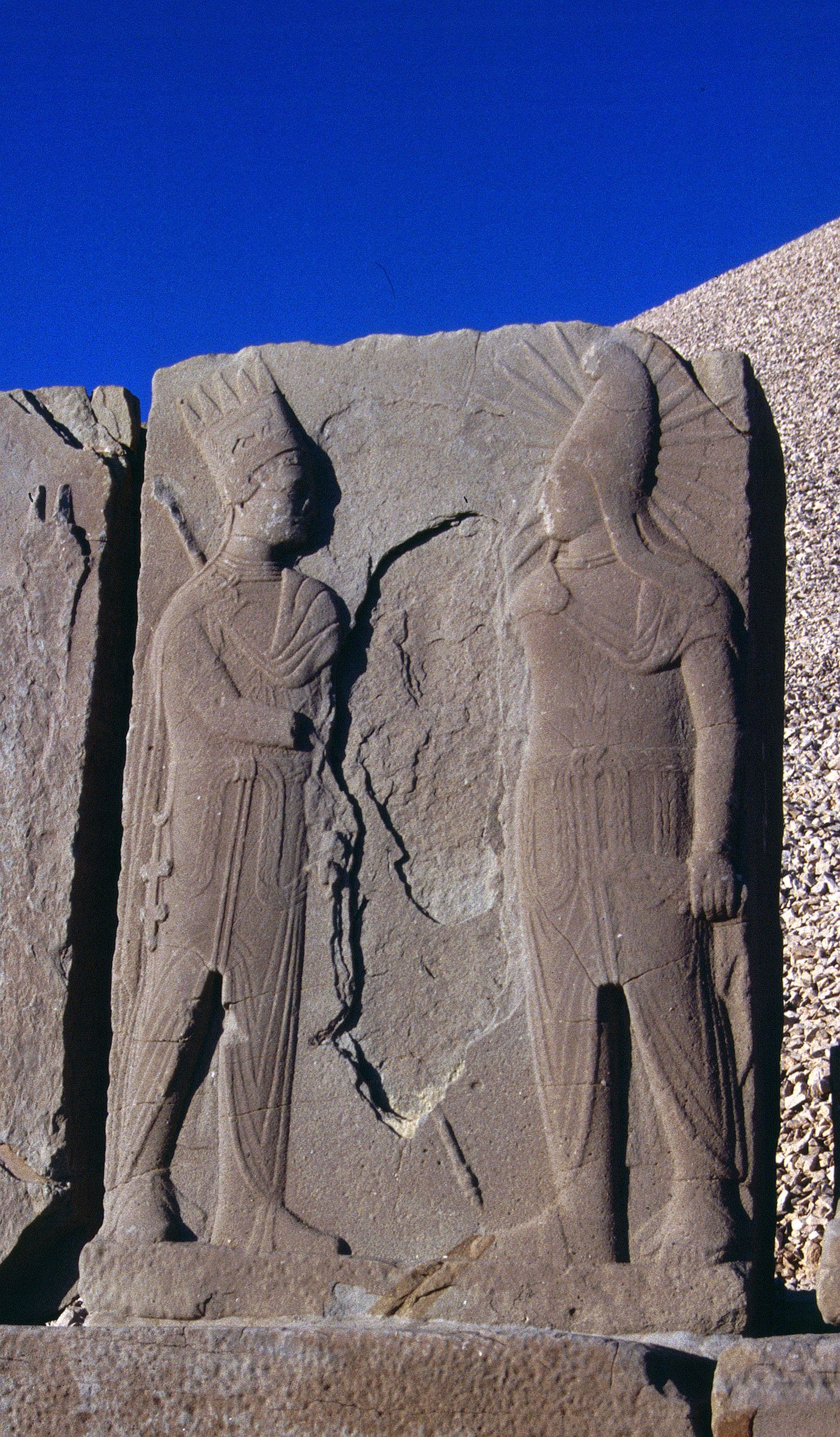
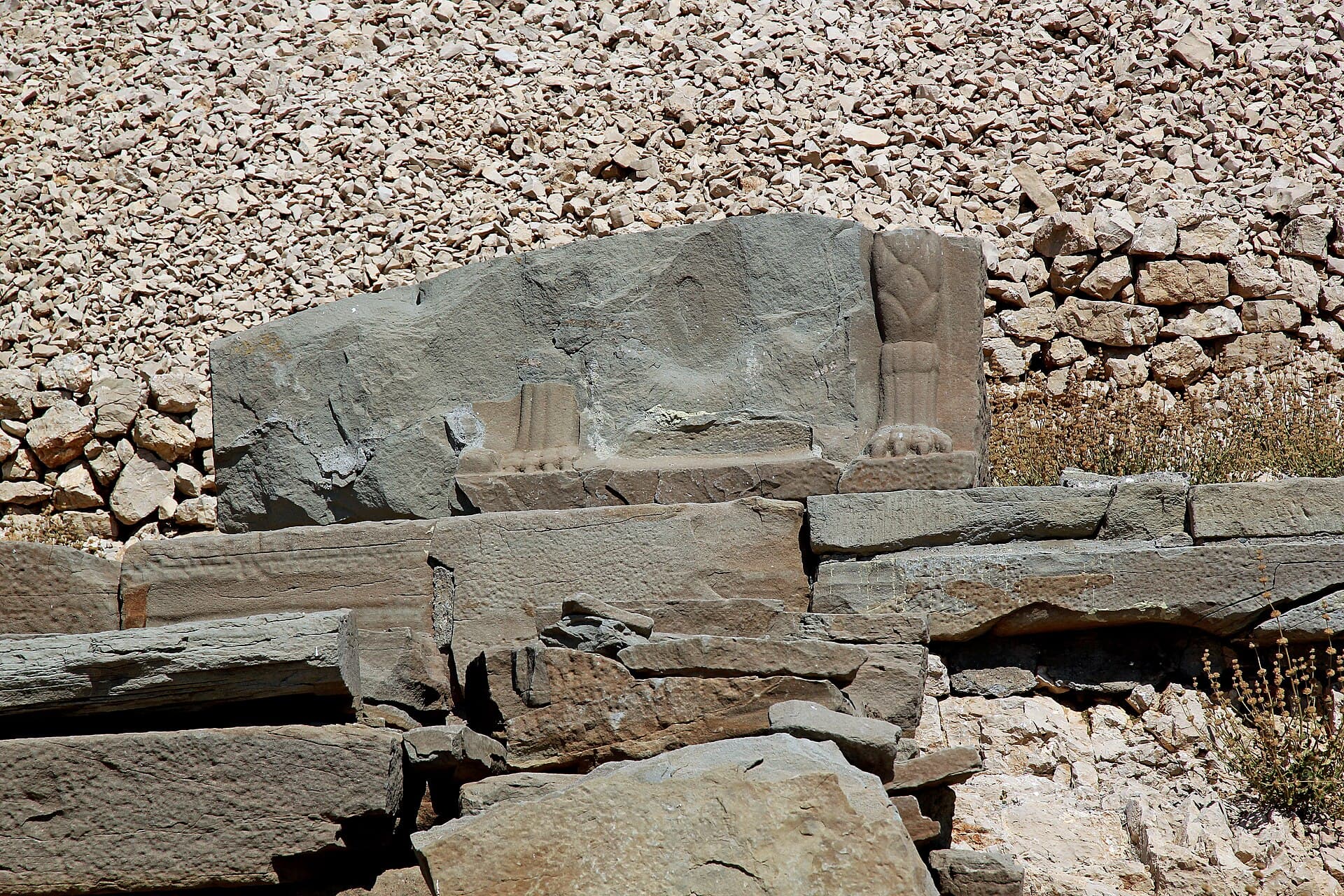
Narrower and more damaged than its eastern twin, though the individual heads survived in better condition. Five statues stand only about 2m up, facing the sunset; there is no altar. Three dexiosis reliefs show Antiochus clasping hands with Apollo, Zeus and Herakles. The Lion Horoscope slab reads as a sky chart — Jupiter, Mercury and Mars beside a crescent moon and stars — fixed to 7 July 62 BCE.
What to know before you go
Come here instead of the East Terrace, or come here as well — don't treat it as the consolation prize, because it isn't one. The West Terrace is narrower than its counterpart, the statues sit lower on their platform, and there's no altar, which is most of why guidebooks default to calling the East Terrace the "main" one. What the West Terrace has instead is the single most unusual carving on the mountain: the Lion Horoscope, a slab showing a lion's body scattered with stars and, above it, Jupiter, Mercury and Mars lined up with a crescent moon. Read as a sky chart, it fixes a date — 7 July 62 BCE — almost certainly when construction of the whole sanctuary began, and it's counted among the oldest surviving horoscopes anywhere. Beside it are the terrace's three dexiosis reliefs: Antiochus, hand extended, clasping hands with a god as an equal rather than a supplicant — first Apollo, then Zeus, then Herakles. The overall structure here is rougher than the East Terrace — this is genuinely the more broken-up of the two ruins — but the trade runs in both directions rather than one terrace simply winning: statue for statue, the surviving heads on this side are in better shape. West means sunset, for the plain reason Antiochus built it to catch the evening light on the same run of enthroned gods and fallen heads you already know from the postcards. Here's the honest crowd math. Sunrise gets the mythology and the harder journey — up in the dark, a real chance of cloud — so it draws the diehards. Sunset asks less of you, arrives warmer, and by most current accounts pulls a calmer terrace even in high season, which makes it the better bet if you've only got one golden hour in you on this trip. The two terraces are joined by a short walk around the north side of the tumulus, past a row of unfinished stelae that most people miss completely because they're already looking ahead to the next viewpoint. Give it a minute on your way across — it's the only part of the summit that shows the sanctuary mid-construction rather than finished, which is a strange thing to be able to say about a 2,000-year-old ruin.