East Terrace
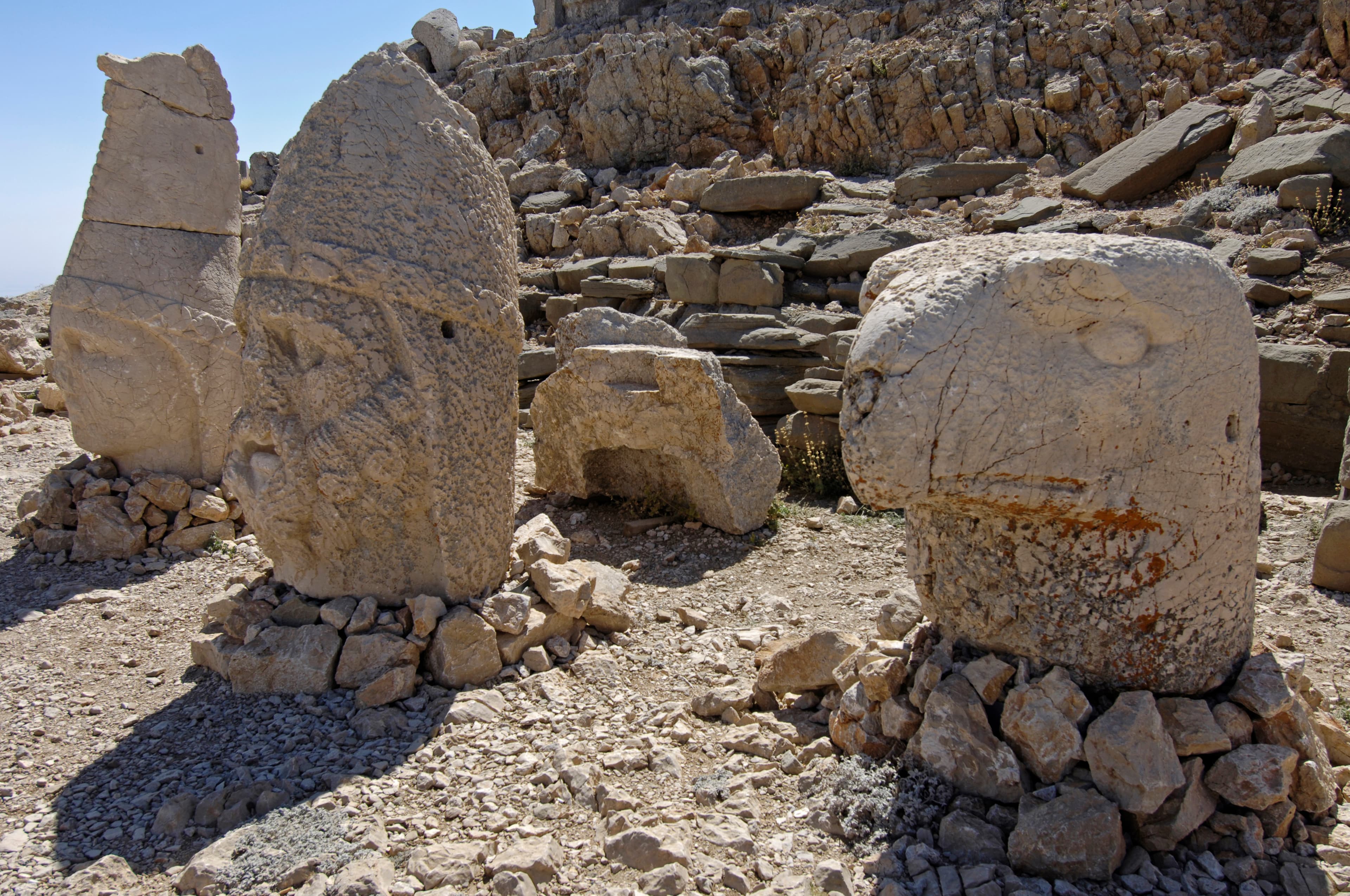
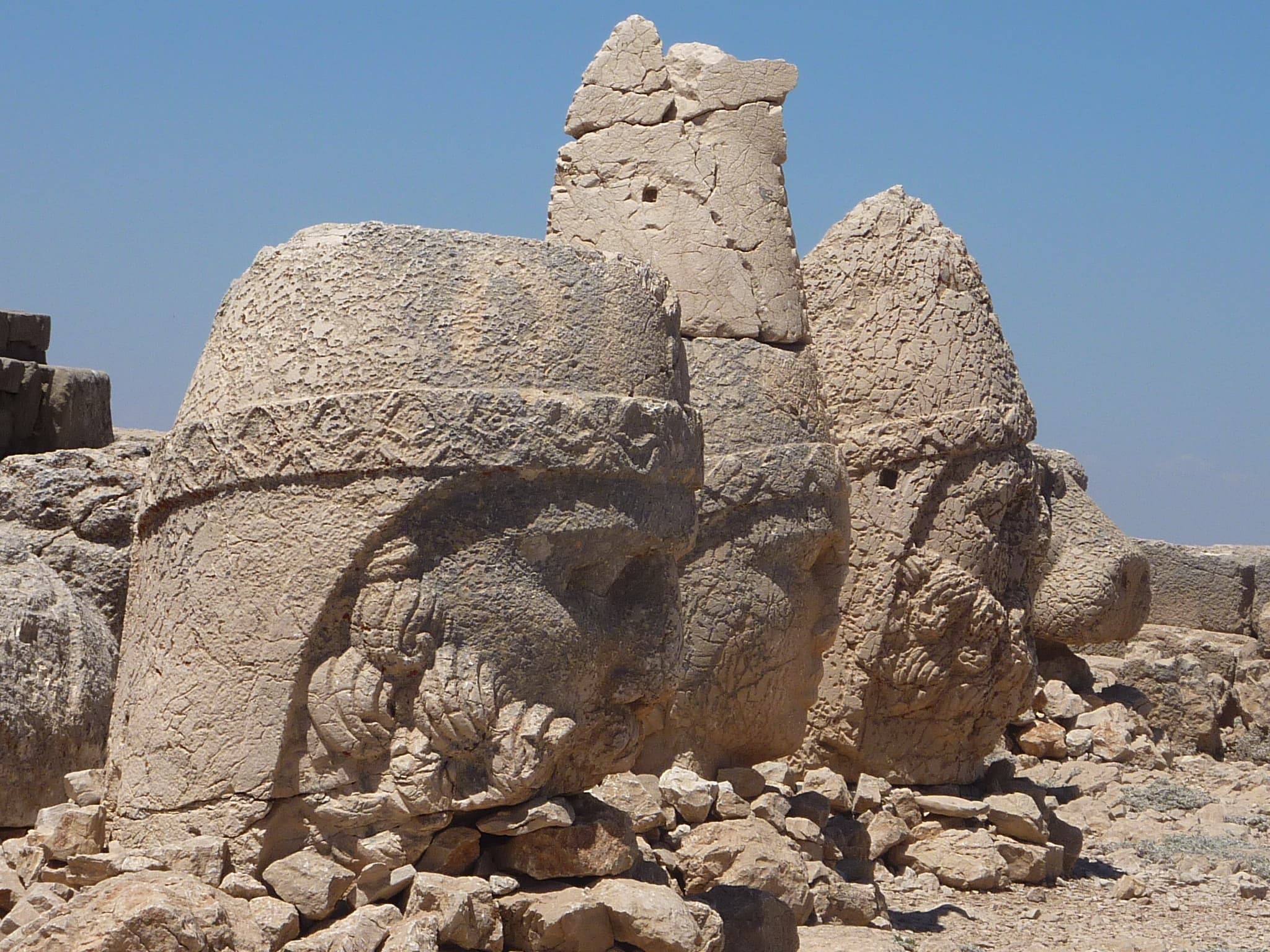
Five colossal gods, heads knocked to the ground by earthquakes, still seated to greet the one sunrise this mountain was built to frame.
Enough context, no spoilers
Why it matters
Antiochus I of Commagene raised this, the more sacred of his mountain's two terraces, around 62 BCE. Five seated figures — himself, Zeus-Oromasdes, Apollo-Mithras, Herakles-Artagnes, and the goddess Commagene — stood 8–10m tall, flanked by a lion and an eagle. Only the heads have fallen. Karl Sester found the site in 1881; Theresa Goell led the first dig from 1954. The tomb itself has never been found.
What to know before you go
Everyone comes for one image: a row of stone heads sitting on the ground, one to two metres each, looking out at nothing while their bodies sit enthroned a few feet behind them. It's the single photograph that sells Nemrut, and it's real — but it helps to know what you're looking at before the light comes up and the crowd around you triples. Antiochus I built this terrace as the more sacred of his mountain's two, around 62 BCE, and wrote himself into the row of gods on purpose: Zeus-Oromasdes on one side, Apollo-Mithras-Helios-Hermes and Herakles-Artagnes-Ares on the other, and the goddess Commagene — the kingdom personified — completing the five. A lion and an eagle stood guard at each end. The bodies still sit on their platform, facing east. Only the heads have come down, worked loose by roughly two thousand years of earthquake and frost, and nobody has set them back on their shoulders — what's happened here since the 1950s has been conservation, not reconstruction, which is why the terrace reads as an excavation still in progress rather than a monument someone has finished tidying up. That's the right call, and it's also why the ground-level row of heads looks so different from anything reassembled, like Ephesus's library facade: this is closer to how Karl Sester actually found it in 1881 than to anyone's idea of how it should look. The terrace faces sunrise because Antiochus built it to, and the classic plan is to be here before first light. Be honest with yourself about the cost: a pre-dawn departure from Kahta, the better part of an hour on a mountain road in the dark, and a real chance the summit is sitting in cloud when the sun comes up — often enough that people who've done it more than once treat a clear sunrise as a bonus, not something to build a whole trip around. If it clears, very little else in the country looks like this at first light. If you'd rather not gamble a 2am wake-up on the weather, the same statues and the same view are sitting here at every other hour too, without the crowd or the coin flip — you lose the specific drama of dawn light and gain a calmer terrace. Either way, give it half an hour, and look past the postcard row of heads to the inscription cut into the backs of the thrones.