TurQuosian

Central Anatolia

Cappadocia

Refuge cut from volcanic rock

Cappadocia is a region of valleys and underground cities carved from soft volcanic rock, not a single town — most visitors base themselves in Göreme. Balloons are the famous image, but the real substance is walking the valleys, descending into Derinkuyu, and finding the painted churches nobody staffs. Four days lets you do more than photograph the sunrise.

Stay
4 days
Best months
Apr–Jun, Sep–Nov
Airport
NAV

Every published place in one city guide

What to see in Cappadocia.

Start with the essentials, add what genuinely interests you, and leave the rest for another visit. Every place includes a concise story, practical timing, a Maps link, and a one-tap route planner action.

Make the route work

Anticipate the practical details.

Getting there

Nevşehir Kapadokya Airport (NAV) is the closest gateway, with domestic connections mainly from Istanbul; Kayseri Airport (ASR) is a longer transfer but has more routes. Most visitors arrange an airport transfer or shuttle in advance.

Getting around

Göreme, Uçhisar, Ürgüp and Avanos are connected by dolmuş minibuses by day, but services thin out in the evening. A rental car or private transfer gives real flexibility for the underground cities and Ihlara Valley, which sit well outside the main cluster.

Money

Carry a payment card and some Turkish lira, especially for pottery workshops, small cafés, and valley entrance points. Balloon and tour prices vary widely between operators — compare rather than booking the first offer.

Connectivity

Mobile coverage is generally reliable around Göreme, Uçhisar and Ürgüp. It weakens noticeably in the valleys and gullies and around Ihlara and Soğanlı, so download offline maps before walking.

Etiquette

Respect fenced or barred cave dwellings and churches — many are closed for genuine safety or conservation reasons, not bureaucracy. Ask before photographing pottery workers or people at their homes in villages like Çavuşin and Ortahisar.

Safety and comfort

Valley trails are largely unmarked and it is genuinely easy to get lost, especially in Red/Rose Valley and Pigeon Valley — carry a downloaded map and a torch if walking toward evening. Hot-air ballooning carries real, if low, risk, concentrated in landing; choose a licensed operator.

Where to stay

Pick the area first.

The property is your call — the area decides how the trip feels. Each card says why, who it suits, and the thing a booking site won't tell you.

Göreme

First visit

The valley-floor hub where balloons inflate over the rooftops; most tours and balloon companies pick up here first, and restaurants are walkable.

First visit, balloon morning, everything on foot

Worth knowing: It is the busiest and most commercial of the villages — sunrise terraces fill with photo crowds and quad bikes buzz the valleys by afternoon.

Uçhisar

The region's highest village, built around a rock castle, with wide panoramas over Pigeon Valley and a much calmer evening scene than Göreme.

Couples, views, quiet evenings

Worth knowing: Dining choice is thin and you are about 5 km from Göreme, so balloon pickups come earlier and valleys and dinner usually mean a taxi or a car.

Ürgüp

A real Turkish town rather than a tourist village — proper restaurants, wine producers and cave hotels about 10 km east of Göreme.

Food and wine, second visits, fewer crowds

Worth knowing: Balloons launch nearer Göreme, so pickups run earlier and most flights are watched from a transfer point, not from your terrace.

Ortahisar

The quietest of the central villages, wrapped around its own castle rock, with everyday Cappadocian life still visible on its streets.

Slow travellers, photographers, low-key stays

Worth knowing: Only a handful of restaurants, very sleepy evenings, and balloon or tour pickups add transfer time compared with Göreme.

Essential

Don’t leave without

If you only have one day, this is the day.
Rank1
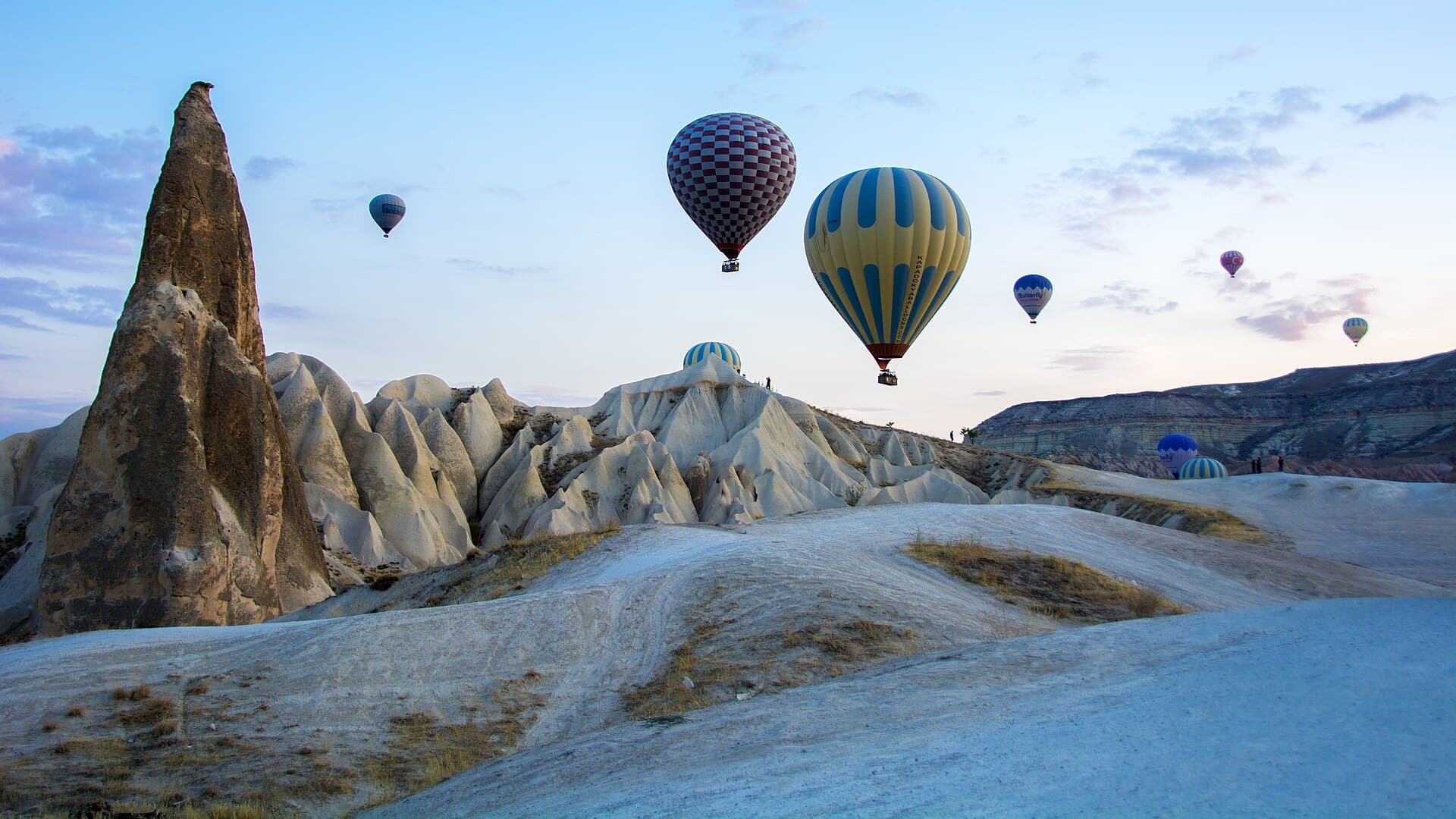
Hot air balloons rise beside a tall fairy chimney rock spire as more balloons drift across the dawn sky over Cappadocia

Balloons fly on 220–240 days a year, not the 250–300 operators advertise. Book your first morning, not your last.

Commercial ballooning here grew into the busiest operation of its kind anywhere. The civil aviation authority runs a slot system over the Nevşehir flight zone, dividing it into weather sectors and issuing a colour-coded ruling for each before dawn. Passenger numbers rose from 585,582 in 2019 to 754,098 in 2025. A separate, smaller flight zone operates over Ihlara in Aksaray province.

Shared sunrise flight roughly €150–250 per person; deluxe/VIP €250–450; private basket €800+. Winter is materially cheaper, May–June and Sept–Oct dearest. Full refund or free rebooking if the flight is cancelled for weather.
180 minBalloons flew on 216 to 237 days a year across 2022–2025. Winter and shoulder-season cancellation rates are far higher than operator marketing implies.The authority flags each of the zone's three weather sectors separately before dawn. A red flag closes that sector outright; a green one leaves the call to your operator and pilot, so one company flying while yours cancels is not always a difference in caution.Almost every accident here happens on landing, not in flight. A pilot died in a hard landing near Güzelyurt on 15 June 2025 after a sudden wind shift.
+5 more to know
After a cancelled morning the next flyable day is oversubscribed, because grounded passengers get rebooking priority. A one-night stay often means no flight at all.Weather cancellation by the operator means a full refund. Cancelling yourself inside 24–72 hours usually does not, and terms vary sharply between companies.Some flights sold as "Cappadocia" launch from the separate Ihlara zone in Aksaray, over a river gorge with no fairy chimneys. Confirm the launch zone in writing before paying.Baskets carry roughly 8 to 28 passengers; the cheapest seats are in the largest baskets, where you may be several rows from the edge.Pickup is around 04:30–05:00 and the whole thing runs about 3 hours door to door, most of it waiting in the dark.
Look for: Chase trucks tracking you along the dirt roads below — they tell you where the pilot expects to land, and landing is where nearly every accident here happens.
Verified · · 23 min to Göreme · 28 min to Göreme Open Air Museum
Rank2
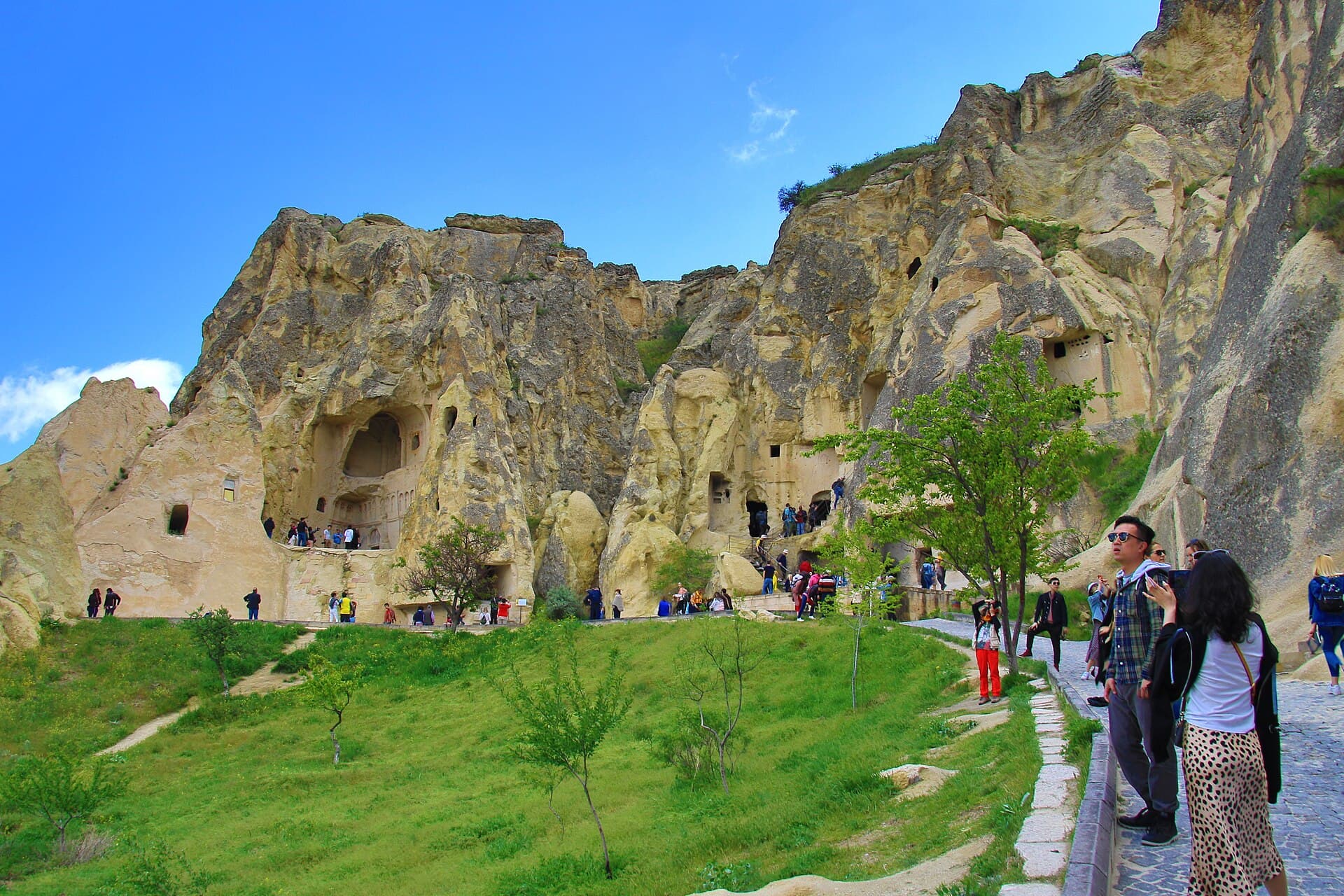
Rock-cut Byzantine chapels with carved facades and doorways set into the tuff cliffs of Göreme Open Air Museum, with visitors on the path below

1,186,332 visitors in 2025, funnelled through ten small churches. Be at the gate when it opens or accept the queue.

A monastic valley cut into tuff from roughly the 4th century, densest in the 10th and 11th. Its churches were painted after the iconoclast era, which is why figures survive here and rarely elsewhere in Byzantine Anatolia. The monks' successors left in the 1923 population exchange; the valley opened as a museum in 1967 and was inscribed by UNESCO in 1985.

€20 (approx. 1,000₺). The Dark Church (Karanlık Kilise) is a separate supplement of about €5–6 and is NOT covered by the pass. Museum Pass Cappadocia (€65 / 3 days) covers the main entry.
120 minThe Dark Church (Karanlık Kilise) requires a second ticket on top of museum admission and caps how many people are inside at once to protect the frescoes.Photography is prohibited inside the painted churches and guards enforce it.1,186,332 visitors in 2025. Mid-morning coach waves turn the Dark Church and Elmalı into 20–30 minute queues; the site is calm at opening and in the last hour.
+3 more to know
Tokalı Church is across the road outside the enclosure and included in your ticket. Most visitors leave without seeing it.Rock-cut steps and thresholds are worn slick and there is no step-free route through the site.Individual churches close for conservation without notice; the list visible at the gate is not always current.
Look for: The Dark Church's deep blue ground, preserved by soot and one small window. Then cross the road to Tokalı — the largest church here, outside the fence, included in your ticket, and missed by most.
Verified · · 24 min to Göreme · 28 min to Hot-Air Balloon Flight over Cappadocia
Rank3
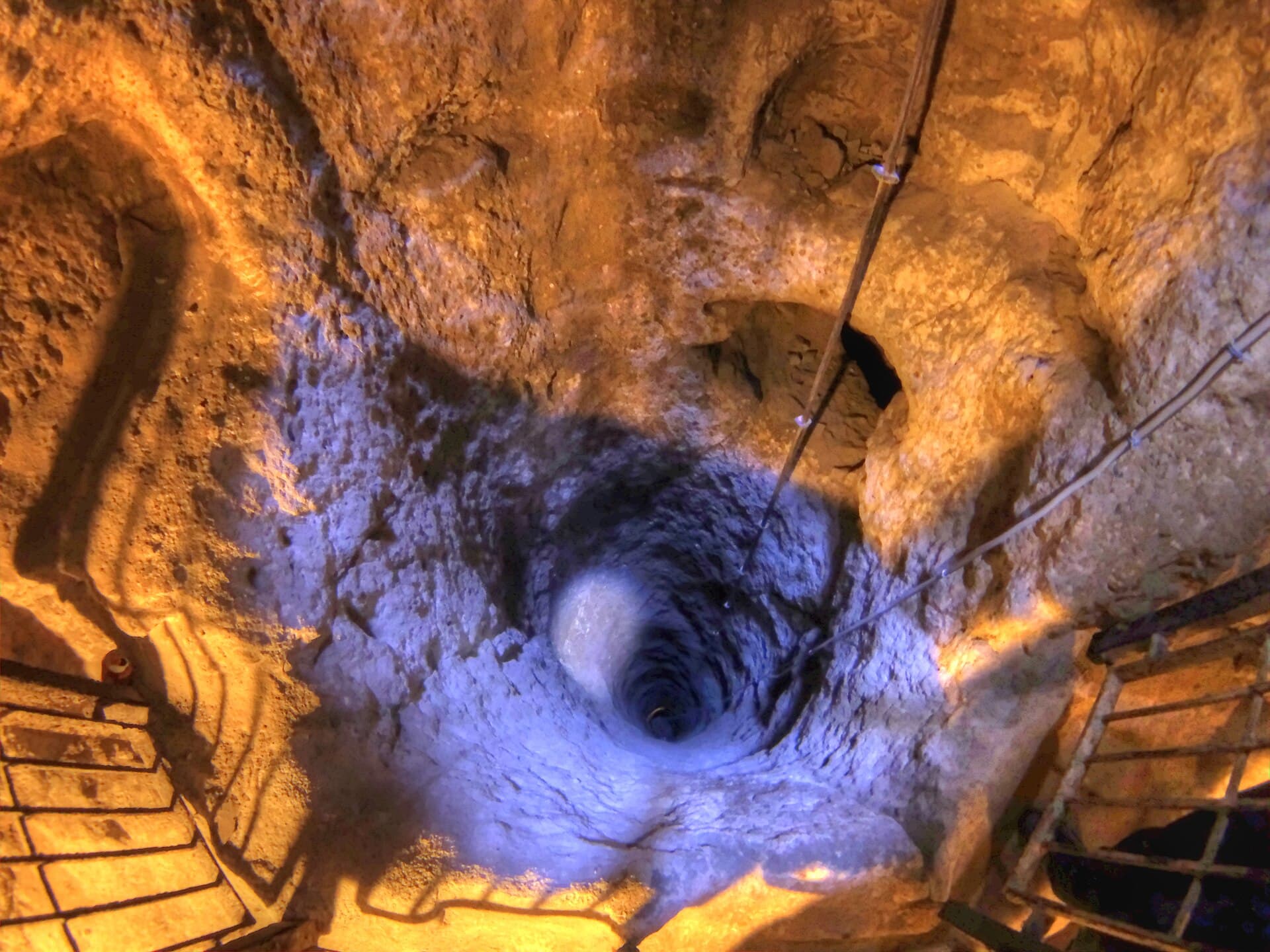
Looking down a deep ventilation shaft cut through volcanic rock at Derinkuyu Underground City

Derinkuyu Underground City

Archaeological site

The deeper, better underground city — and the one that will tell you honestly whether you are claustrophobic.

Cut into soft tuff over centuries and expanded by Byzantine Christian communities sheltering from raids. A villager broke through a wall of his house into it in 1963; it opened to visitors in 1967. The Ministry describes eight levels cleared out of a complex still largely unexcavated, with ventilation shafts and rolling stone doors that let a large population seal itself in.

€13. Museum Pass Cappadocia valid. Last entry is early — around 16:15 in winter.
60 minConnecting tunnels between levels are low and steeply sloped; you walk long stretches bent double.Air is cool and damp year-round and the worn floors are slippery.Genuinely difficult for anyone claustrophobic, and parts of the route are one-way with groups behind you — backing out is not easy.
+5 more to know
Depth figures conflict: the Ministry cites eight cleared levels; guides commonly say 85 m for the wider complex, while the publicly walkable bottom is usually given as about 54 m.Only a fraction of the complex is open; the rest is barred off.547,417 visitors in 2025, arriving in mid-morning coach waves that jam the two-way sections.In the Ministry's night-visit programme from 19:00, 1 June to 1 October 2026 — far quieter, but hours are set locally and change.About 35 km south of Göreme; there is nothing else in Derinkuyu town worth the trip.
Look for: The round stone doors set into wall recesses, movable only from the inside, and the ventilation shafts dropping the full height of the city and still pulling cool air.
Rank4
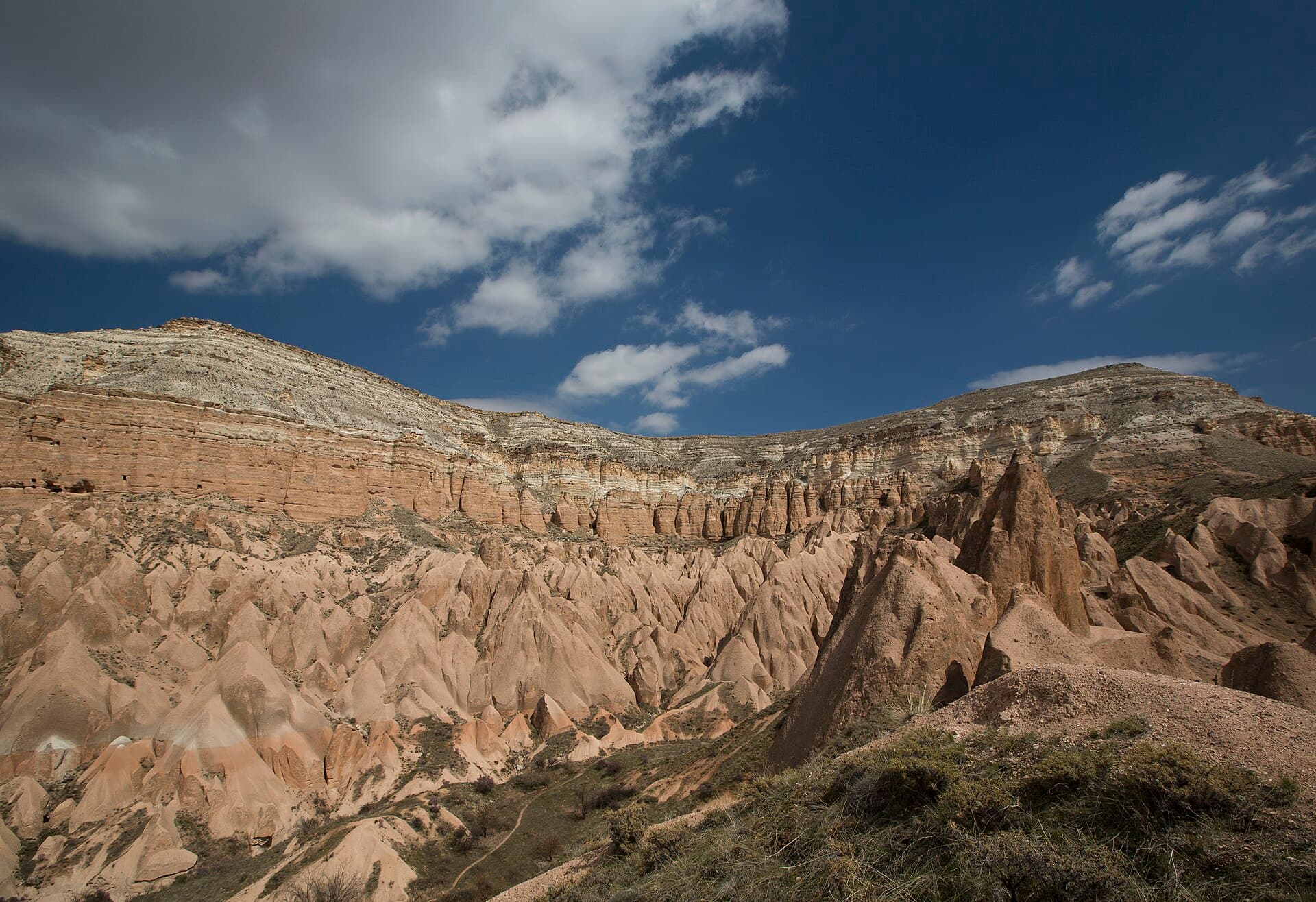
Panoramic view of the red and orange tuff rock formations of Red Valley (Kızılçukur) in Cappadocia

The best walk in Cappadocia and its best sunset, in two adjoining valleys. Walking in is free; driving to the sunset terrace is not.

Two valleys cut into iron-rich tuff that reddens at low sun, farmed and quarried for centuries by Ortahisar and Çavuşin. They hold rock-cut churches from the same Byzantine monastic culture as Göreme — unstaffed, unlit and unticketed, several still carrying painted crosses and vine scrolls on their ceilings.

Rose Valley: Free for the hiking trails; the cafés along the route charge separately. Red Valley: Free for daytime hiking. The Kızılçukur sunset panorama point charges a small fee at the barrier; one 2026 listing quotes a €25 "Red Valley Park" — that is a specific commercial viewpoint, not the trail.

180 minSections run along unfenced drop-offs and the tuff crumbles underfoot.The rock-cut churches are unstaffed and unlit, with collapsed sections and heavy scratched graffiti.Walking into the valleys is free; vehicle access to the Kızılçukur sunset terrace is separately run and charged.
+4 more to know
The sunset terrace fills solid with minibus tours; the ridge a few hundred metres either side stays nearly empty.Trails are unmarked, braided and cross private orchards. Getting lost here is routine and phone signal is patchy in the gullies.No lighting anywhere. Leaving after sunset without a torch means descending loose tuff in the dark.ATV convoys use the connecting tracks heavily from late afternoon; expect dust and engine noise.
Look for: How the tuff shifts from cream through pink to red in the last half hour of light, and the cut crosses on the church ceilings you pass on the way in.
Verified · · 33 min to Hot-Air Balloon Flight over Cappadocia

Worth your time

Worth your time

A second day earns you these.
Rank1
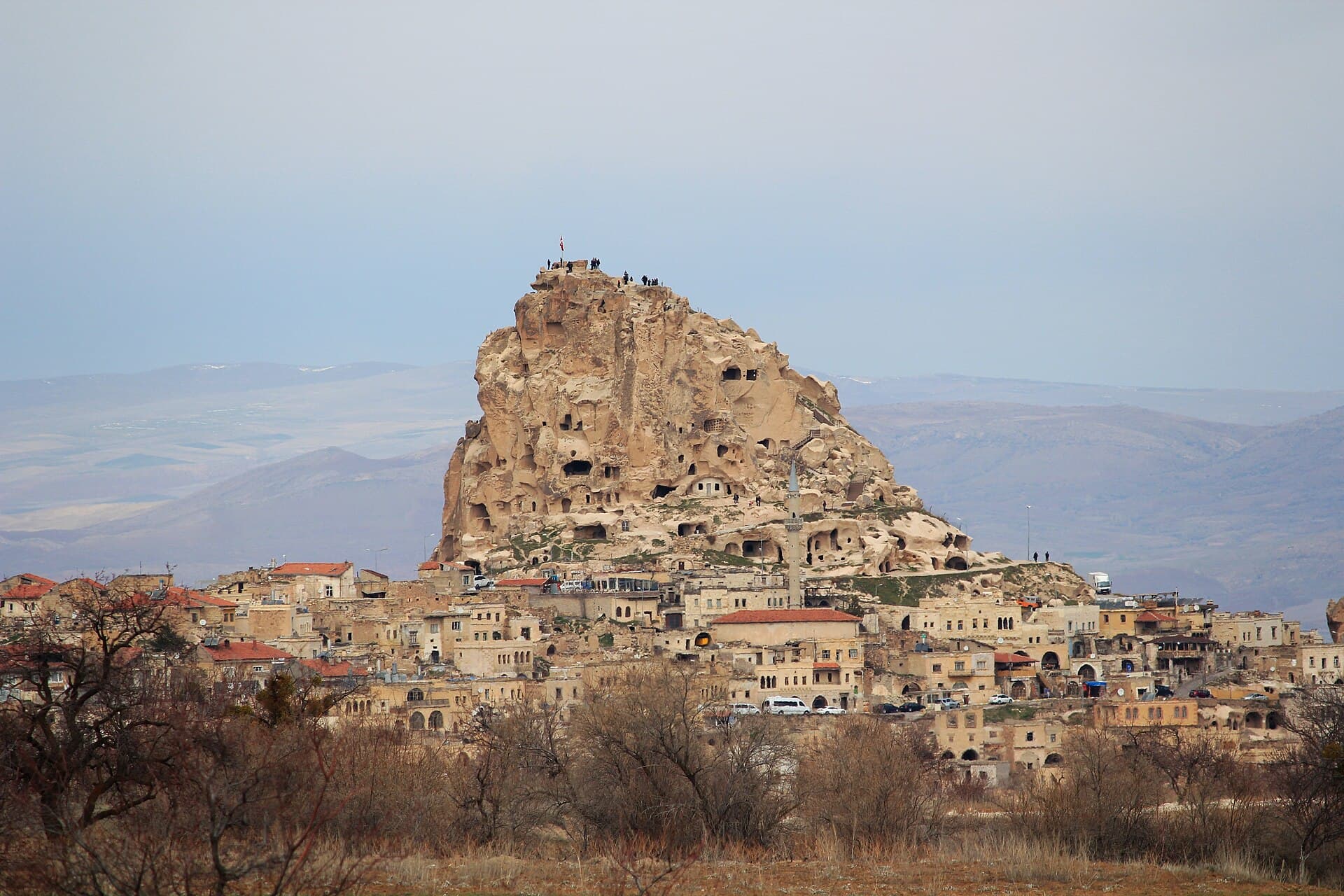
Uçhisar Castle's rock outcrop seen from a distance, its slopes honeycombed with carved rooms and windows

Uçhisar Castle

Historic site

Cappadocia's highest point, and the one view that makes the whole region legible in about five minutes.

A natural tuff outcrop honeycombed with rooms, tunnels and rock-cut tombs, used as a fortified refuge and lookout over the routes between Göreme, Nevşehir and the plain. Families lived inside it until rockfall risk forced them out in the twentieth century. It is run by Uçhisar municipality rather than the Ministry; recent works cleared debris and added retaining walls and railings.

Approx. €9 (400₺). Municipally run — Museum Pass Cappadocia is NOT valid.
60 minAbout 275 steps to the summit, part cut rock and part metal stair. Steep, narrow, and impossible with a pushchair or reduced mobility.The summit platform is small and packs out completely at sunset in season.Ticketed and operated by Uçhisar municipality rather than the Ministry of Culture, so it sits outside the national museum-site system.
+2 more to know
Fully exposed at the top with no shade and consistent wind; loose grit on the rock-cut steps.The lower village terraces give most of the same panorama without the climb, if the stairs are not for you.
Look for: From the summit: Mount Erciyes east, Göreme's chimneys below, Pigeon Valley falling away south — and the pigeon-loft openings drilled across the rock's lower faces.
Rank2
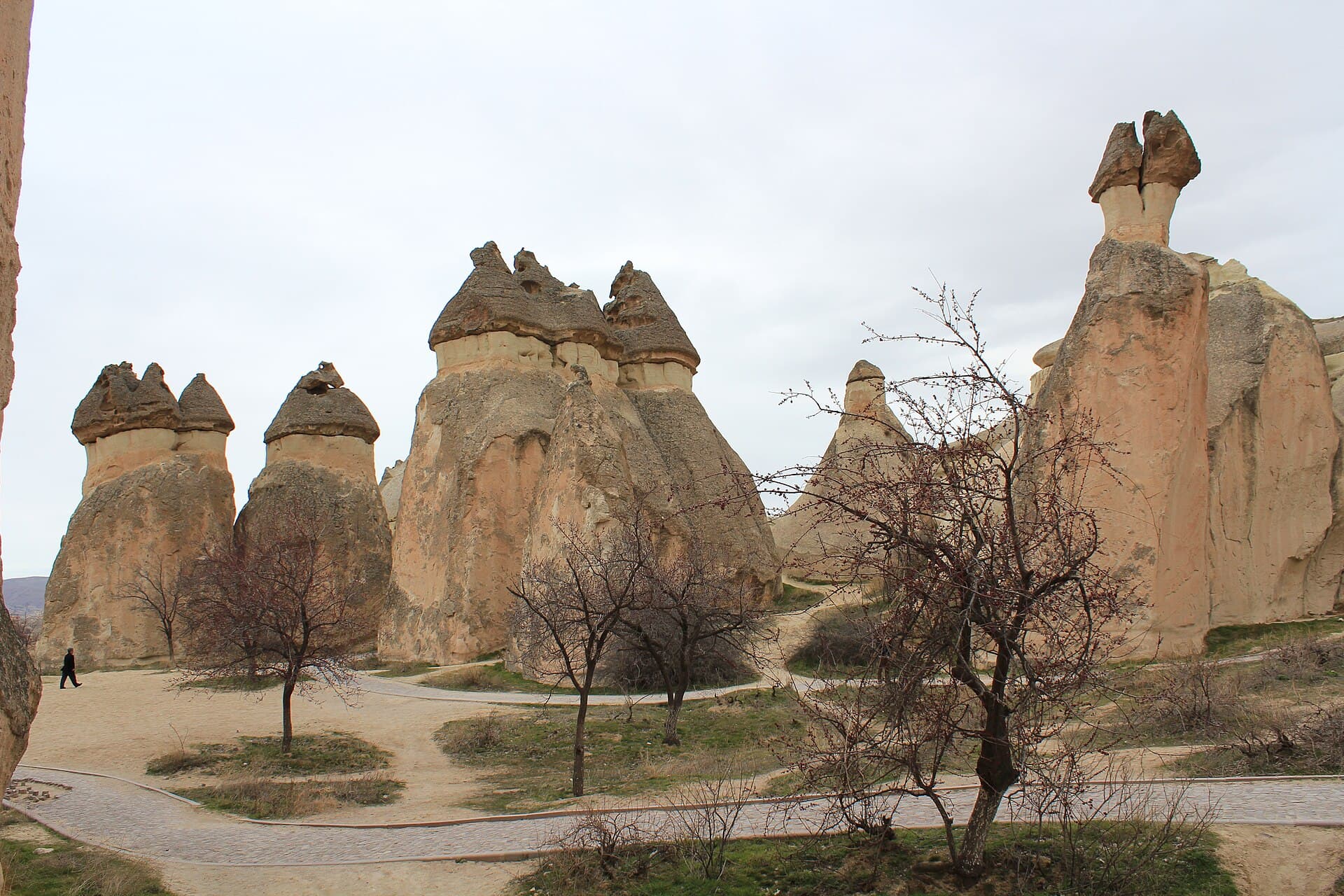
Multi-headed "mushroom" fairy chimneys lining a path at Paşabağ, Cappadocia

Zelve–Paşabağ

Archaeological site

A cave village lived in until 1952, plus the mushroom chimneys everyone photographs. One ticket, two places, 2 km apart.

Three valleys of rock-cut houses, churches, tunnels, a mill and a mosque, inhabited without a break into the twentieth century. Rockfalls emptied Zelve by 1952 and the villagers moved to Aktepe; the valley opened as a museum in 1967. Paşabağ, on the same ticket, holds the multi-headed chimneys, one with a chapel to St Simeon and a hermit's cell cut into it.

604₺ / €12 / $14, a combined ticket covering both Zelve and Paşabağ (Monks Valley). Museum Pass Cappadocia valid. Some 2026 sources still describe Paşabağ as free on its own — it is not; verify at the booth.
120 minMany of Zelve's cave dwellings are barred or fenced. The valley was evacuated in 1952 precisely because the cliffs were collapsing.Zelve's paths are unpaved, uneven and steeply stepped, with poor footing after rain.Zelve and Paşabağ share one ticket but sit about 2 km apart on different roads; you need a vehicle between them.
+3 more to know
Paşabağ took 907,345 visitors in 2025 into a very small fenced area. It is thoroughly crowded from mid-morning.No lighting in any of the open chambers; bring a torch if you intend to go inside.Little shade and no water source across either site.
Look for: Zelve's rock-cut mosque with its carved mihrab and stub minaret — Christians and Muslims occupied these same cliffs in sequence — and the hermit cells inside Paşabağ's chimney stalks.
Rank3
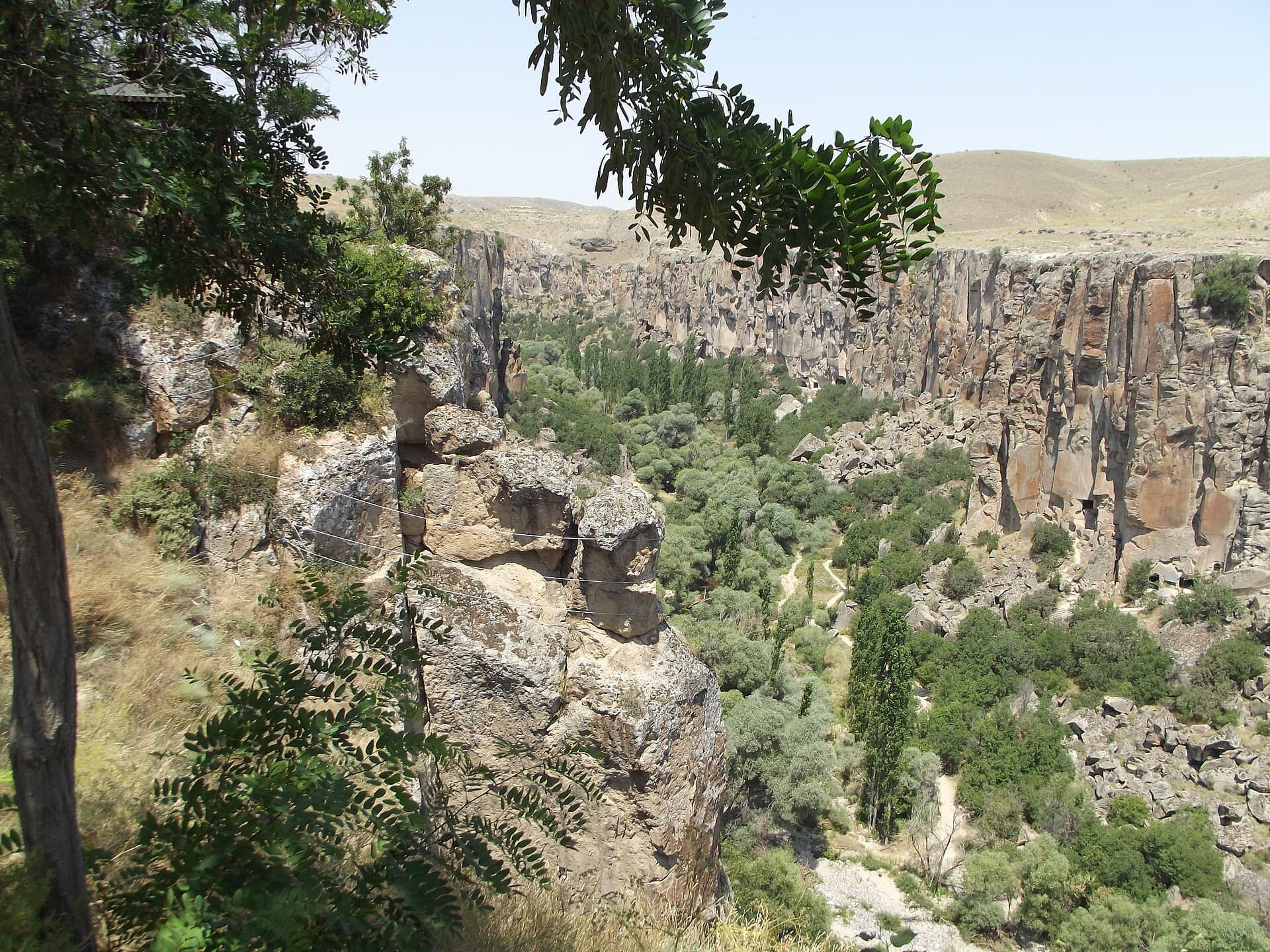
Aerial view down Ihlara Valley's deep green canyon in Cappadocia, with poplar trees lining the gorge floor between steep rock walls

Ihlara Valley

Natural site

A green river gorge with painted churches in its walls — the antidote to three days of dry moonscape, and a full day away.

A 14 km canyon cut by the Melendiz river through volcanic rock, and one of Byzantine Anatolia's densest monastic landscapes: dozens of rock-cut churches line the walls, some in Cappadocian style, some flatter and more Syrian-influenced than anything at Göreme. It lies in Aksaray province, outside the Nevşehir sites, which is why it needs its own day.

€15, which also covers Selime. Sources conflict on whether Museum Pass Cappadocia applies — assume it does not and carry cash. Entry points at Ihlara village, Belisırma and Selime; you pay at whichever you use.
240 minThe riverside path is muddy and slick after rain or snowmelt and partly floods in spring.The main entrance is a staircase of roughly 397 steps down into the gorge, and the same climb back out unless you arrange a pickup at Belisırma.About 1.5 hours' drive from Göreme, in Aksaray province. This is a full day, not an afternoon.
+4 more to know
Several separate ticket gates along the 14 km; entering at the wrong one can add hours of walking.Most churches are unlit, unsigned, and reached by short scrambles off the main path.Balloons launch over this valley too, from a separate flight zone. A hard landing near Güzelyurt on 15 June 2025 killed the pilot.Aksaray is not covered by Nevşehir's visitor statistics, so nothing here is measured — crowding varies unpredictably with tour scheduling.
Look for: The painting styles changing as you walk downstream, and the churches at the foot of the main staircase, where the ceilings keep the most colour.
Rank4
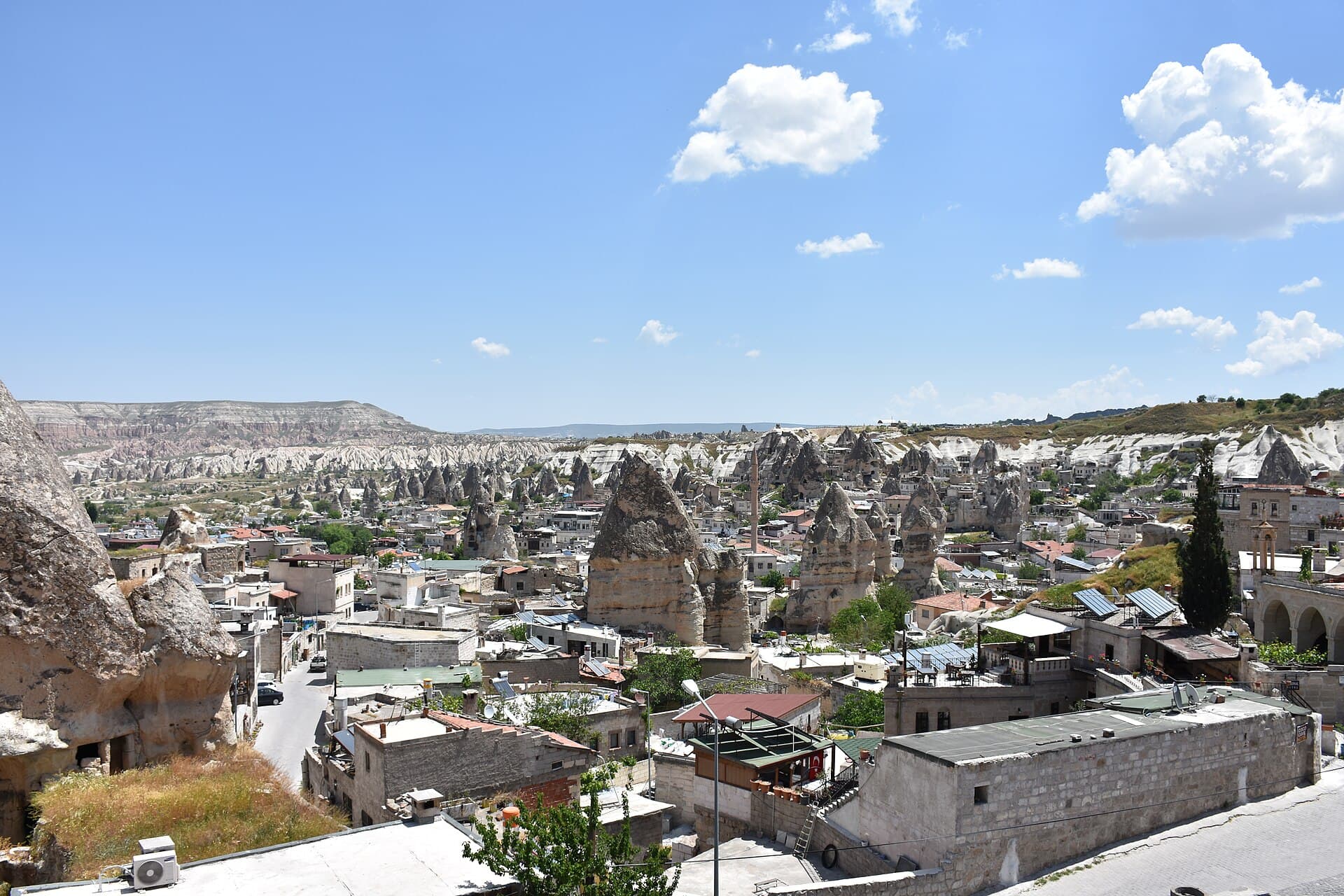
View over Göreme, where cone-shaped fairy chimney rock formations rise among stone houses and rooftops in the valley

Göreme

Neighbourhood

The right base for almost everyone, and the loudest. Balloon crews start around 04:30 and the launch fields are minutes away.

A village grown into the tuff itself: houses, stables and pigeon lofts cut straight into rock, with masonry fronts added later. It became the region's tourist centre because it sits between the open-air museum, the balloon launch fields and the valley trailheads. The same rock rooms that were once stores and stables are now the cave hotels.
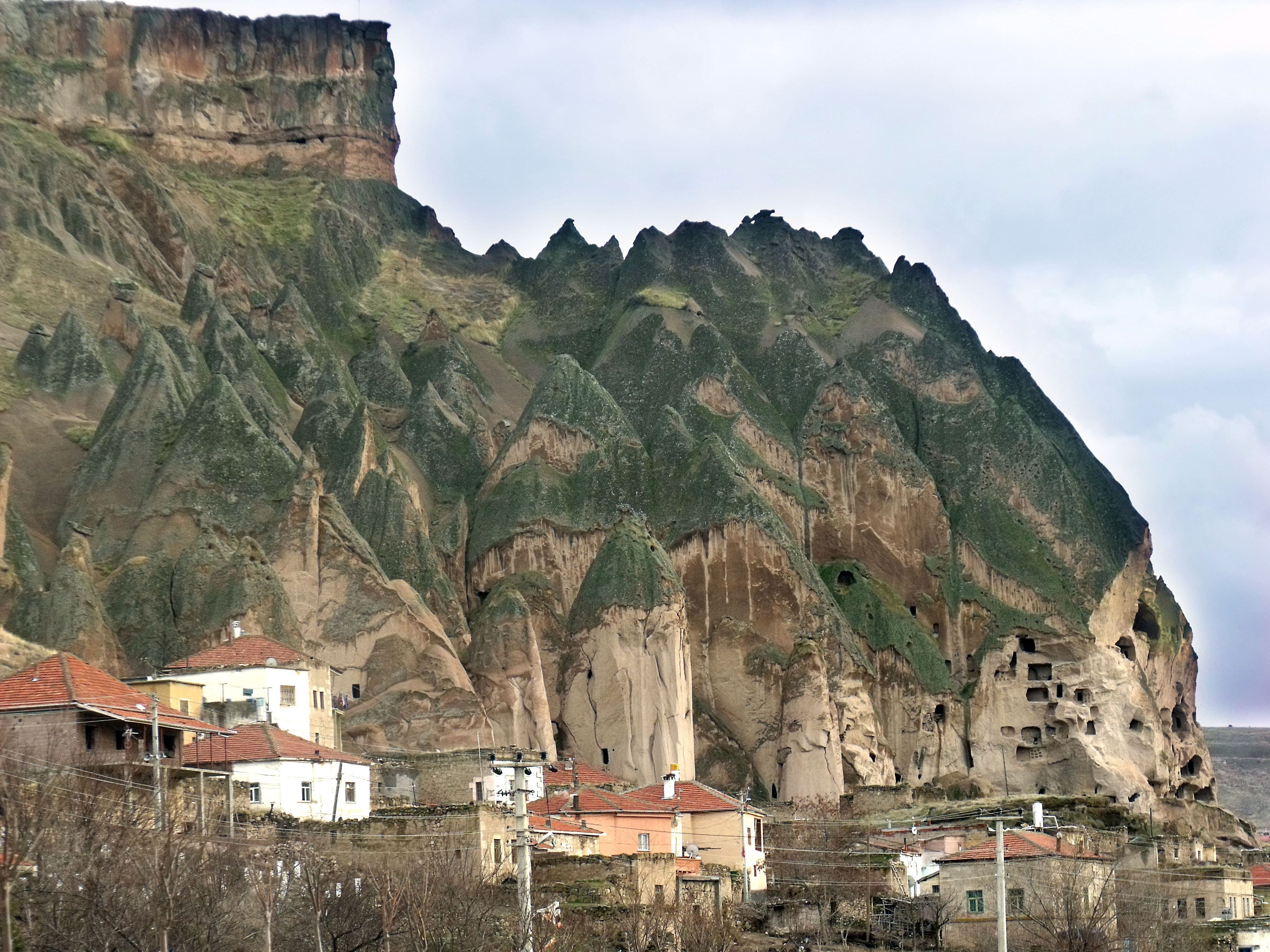
180 minSteep, unlit lanes and rock-cut steps between the upper hotels; hard with luggage.Peak-season rooms sell out months ahead, which leaves no slack if a cancelled balloon means an extra night.Balloon operations start around 04:30 and the town is noisy from then: transfer vans, crew radios, burner tests. Request a room away from the launch-field side.
+3 more to know
Cappadocia's heritage authority has demolished more than 1,000 unauthorised buildings since 2019 and hundreds of demolition orders remain outstanding. A platform listing is not proof of a licence.The main street is wall-to-wall tour agencies reselling each other's products; the same balloon seat is brokered several times over, which is why identical flights are quoted at wildly different prices.Dolmuş links to Nevşehir, Ürgüp and Avanos are good by day but thin out early in the evening.
Look for: Pigeon houses cut high into the cliffs above town with painted surrounds — kept for guano, which fertilised the vineyards this landscape used to run on.
Verified · · 23 min to Hot-Air Balloon Flight over Cappadocia · 24 min to Göreme Open Air Museum
Rank5
Selime Monastery's rock-cut complex at the northern end of the Ihlara Valley, Cappadocia.

Selime Monastery

Religious site

The largest rock-cut monastery in Cappadocia, towering over the northern end of the Ihlara Valley canyon.

Carved into the cliffs at Selime village, at the northern end of the 14 km Ihlara Valley canyon, this monastery complex dates to roughly the 8th–9th centuries. Its scale — a cathedral-sized main church, kitchens, stables, and monks' cells cut deep into the rock — makes it one of the largest surviving rock-cut religious complexes in the region.

Small entry fee payable on site

60 minUneven, unlit passages inside — bring a light and wear sturdy shoesNo filming of Star Wars actually took place here despite local claims
Look for: The barrel-vaulted 'cathedral' hall with its rock-cut columns, blackened kitchen ceilings from monastic-era cooking fires, and the maze of stairs and tunnels connecting cells across several levels.

If you have longer

If you have longer

Keep these compact stops in mind when you build your trip.

Kaymaklı Underground City

Archaeological site

A wide, low warren under the village once called Enegüp, dug into tuff and expanded by Byzantine Christians as a refuge. Villagers above still use some upper chambers as cellars and stores. Four of its eight levels are open to visitors.

€13. Museum Pass Cappadocia valid.

Cool and damp year-round with slippery worn floors.688,417 visitors in 2025 — the most crowded of the underground cities.Passages are narrower and lower than Derinkuyu's; the connecting tunnels force a sustained crouch that is hard on backs and knees.
+3 more to know
Four of eight levels are open.Largely a one-way loop; turning back against the flow is difficult.In the Ministry's night-visit programme from 19:00, 1 June to 1 October 2026, which is far quieter than the coach hours.
45 minOpen in Maps

Cave Hotel Stay

Experience

Cappadocians cut rooms into tuff for a thousand years because it is soft enough to carve and firm enough to hold. Villages emptied out of those rooms in the twentieth century after rockfalls at Zelve and Çavuşin; from the 1990s the same chambers were converted into hotels. It is now the region's largest tourism business and its most contested.

Real cave rooms are damp. Bedding can feel cold and mould is a genuine problem for asthma and allergy sufferers.Many cave rooms have no exterior window at all, or one facing a courtyard wall a metre away.Confirm heating and air conditioning in writing — plenty of rooms have neither and the rock stays cold.
+4 more to know
"Cave" is not a regulated term. Masonry rooms dressed to look carved are routinely sold as caves.Hundreds of demolition orders against unlicensed buildings in the protected area remain unexecuted; a booking is not proof of a licence.Terrace rooms sold on "balloon views" also get the launch noise from around 04:30.Hot water can take several minutes to arrive through long runs in cold rock.
720 minOpen in Maps

Pigeon Valley

Natural site

Not a picturesque name: the cliffs are drilled with pigeon houses, cut and whitewashed by farmers who harvested the guano to fertilise vineyards and orchards. Many entrances carry painted borders and geometric motifs meant to draw birds in. Chemical fertiliser killed the practice in the twentieth century and left the lofts empty.

Free.

The Uçhisar end is a steep, loose climb — walk Uçhisar to Göreme downhill rather than the reverse.Sections of the floor flood and stay muddy for days after rain.The trail is braided and unsigned; several apparent paths dead-end at drop-offs.
+2 more to know
The evil-eye tree viewpoint at the Uçhisar end is a car-park stop with cafés, not the valley itself.Almost no shade for the full length and no water anywhere on the route.
120 minOpen in Maps

Love Valley

Viewpoint

A soft tuff layer eroding beneath a harder basalt cap produced unusually tall, slender columns here — ordinary Cappadocian geology at exaggerated scale. The floor is still farmed, with vineyards and orchards worked from Göreme.

Free.

The roadside viewpoint is a paid car park with cafés that expect a purchase for the seating and photo props; the valley itself is free to walk.Balloons pass low here at dawn, so the viewpoint is crowded with photographers well before sunrise.ATV convoys use this valley heavily from late afternoon; expect dust and engine noise.
+2 more to know
The floor trail is loose sand, fully exposed, with no water or shade.Little to no phone signal down on the valley floor.
60 minOpen in Maps

Ürgüp

Neighbourhood

A market town of Byzantine and then Ottoman standing, with a substantial Greek Orthodox population until the 1923 exchange; its cut-stone townhouses largely date from that era. Ürgüp anchors Cappadocia's viticulture, working local grapes on volcanic soils, and remains the commercial centre of the region's eastern half.

Free; a town, not a ticketed site.

Not walkable to the major sites; you need a car, taxi or tour for Göreme, Zelve or the underground cities.Balloons are visible at dawn but distant — this is not the base for close balloon views.The Three Beauties (Üç Güzeller) chimneys on the Ürgüp–Nevşehir road are a roadside car-park photo stop and nothing more.
+1 more to know
Wine tastings sold through tour desks are often commission stops at a single producer rather than a survey of the region.
180 minOpen in Maps

Uçhisar Village

Neighbourhood

A village built around and into the largest freestanding tuff outcrop in the region, at the highest point of the Göreme basin. Its rock houses emptied through the twentieth century as the cliffs became unsafe; French buyers restored many from the 1960s onward, which gave Uçhisar an unusually early and design-led hotel scene.

Built on a gradient — everything is steep, and cave hotels here mean stairs with luggage.Very little open after dark and few independent restaurants; most guests end up eating in their hotel at hotel prices.You will need taxis or a car. The walk down to Göreme is easy; the walk back up is not.
+1 more to know
Room rates run consistently above Göreme for equivalent quality.
120 minOpen in Maps

Avanos

Neighbourhood

Ancient Venessa, on the Kızılırmak — the longest river running entirely within Türkiye. The river's red silt gives the clay Avanos has thrown since Hittite times, and the trade has never stopped. The riverfront and the old stone quarter above it are Ottoman-era; the town is now the region's ceramics and handicraft centre.

Free; a town, not a ticketed site. Pottery workshops charge for their own sessions.

Most group tours deliver you to one large workshop where the free demonstration exists to open the sales floor; the independent workshops are on the back streets.Onyx and carpet "factory visits" bundled with the pottery stop are commission stops, not craft.Chez Galip's hair museum is a genuine curiosity attached to a shop, not an institution.
+2 more to know
Beyond the workshops and the riverbank the town is thin — ninety minutes covers it.Not a good base: it empties after dark and is 15 km from Göreme.
120 minOpen in Maps

Ortahisar Castle

Historic site

A tall tuff outcrop honeycombed into a fortified refuge, at the centre of a village whose cold rock chambers stored citrus and potatoes for much of the country well into the twentieth century. The castle closed to visitors in 2004 for consolidation work and reopened in 2013.

Approx. €3 (100₺). Museum Pass NOT valid. Has been shut for restoration in past seasons — confirm it is open before routing a day around it.

Reported in early 2025 as closed to visitors above the second floor. Verify at the gate before paying — this may still be in force.The ascent is a narrow, steep external iron stair; bad for vertigo and harder on the way down than up.No railings on parts of the upper terraces.
+2 more to know
Sources give the rock's height as anything from about 60 m to 110 m depending on which face is measured.The village has few facilities and empties in the evening.
45 minOpen in Maps

Çavuşin

Historic site

Villagers lived in this cliff face until the 1960s, when rockfall killed two people and the state rehoused everyone below. The Church of St John the Baptist, cut high into the cliff, is among the oldest surviving churches in the region and keeps a basilica plan; its narthex has since collapsed, taking part of the facade with it.

The village is free. Çavuşin Church is a small separate ticket, reportedly covered by Museum Pass Cappadocia. Parts of the old cliff church have collapsed and access can be restricted.

The old village is an active rockfall site — that is precisely why it was evacuated. Do not climb into the abandoned dwellings.Access up to the Church of St John the Baptist depends on a stair and footbridge that visitors have repeatedly reported missing or closed. Assume it may not be passable.No lighting, no railings and loose rubble underfoot throughout the old village.
+2 more to know
A second, separately ticketed church stands beside the main road below; the two are routinely confused by guides and signage.No facilities beyond a couple of seasonal cafés on the road.
60 minOpen in Maps

Devrent Valley

Natural site

A small dry valley of isolated tuff cones with no rock-cut churches, houses or monastic use at all — unusual in Cappadocia, and the reason it reads as pure geology. Guides have long sold it on the animal shapes visitors read into the formations.

Free.

No ticket, no facilities, no water and no shade.Every red-tour minibus stops here; it is empty for ten minutes at a time and packed the rest.Paths are loose sand over tuff and several cones are fenced to stop people climbing them.
+1 more to know
Thirty minutes is genuinely enough. Tours allocating an hour here are padding the itinerary.
30 minOpen in Maps

Sinasos was a prosperous Greek Orthodox town whose merchants traded in Istanbul and paid for elaborately carved mansions, a large church and a school. Its Christian population was deported to Greece in the 1923 exchange and replaced by Muslims arriving from Greece. The stonework, the churches and Greek inscriptions above doorways all survive.

Free; a village, not a ticketed site.

The main churches are frequently locked; opening depends on a keyholder being findable.Very quiet out of season, with little or no food available.About 6 km beyond Ürgüp with no useful public transport for a short visit.
+1 more to know
Several of the carved mansions are in poor repair and fenced off.
90 minOpen in Maps

Avanos potters work Kızılırmak clay on a foot-driven kick wheel, seated in a pit with the wheel at floor level: a tool and a posture largely unchanged for centuries and now rare anywhere else. Workshops added hands-on sessions as the tourist trade grew, but the wheel and the demonstration long predate them.

Firing takes days, so almost nobody keeps what they make. Shipping is quoted separately and is expensive.The free "demonstration" bundled into group tours is a sales presentation with a commission attached — a booked hands-on session is a different product entirely.Messy work; clay ruins clothes and rings.
+1 more to know
Quality varies enormously between workshops, and the large tour-facing showrooms are not where the best potters are.
90 minOpen in Maps

Soğanlı Valley

Archaeological site

Two valleys in Kayseri province lined with rock-cut churches and pigeon houses, monastic from roughly the 9th to the 13th centuries. Several churches keep substantial painting and dated inscriptions. The valley belongs to the same Cappadocian rock-site landscape but sits well outside the region's tour circuit.

Approx. €4. Remote — about an hour from Göreme, no public transport. Some sources still quote 5₺, which is badly out of date.

About 1.5 hours from Göreme in Kayseri province on minor roads; no public transport worth using.Churches are scattered across two valleys and involve real walking plus some scrambling.Unstaffed and unlit; the paintings have suffered heavy scratched graffiti and smoke damage.
+2 more to know
Essentially no food or facilities beyond the village entrance.No measured visitor data exists for this site, and it can be completely deserted — go with a companion.
120 minOpen in Maps

Türkiye, for scale

Where it sits

See this city in the wider shape of Türkiye.

The map will load as it approaches the viewport.