Zelve–Paşabağ
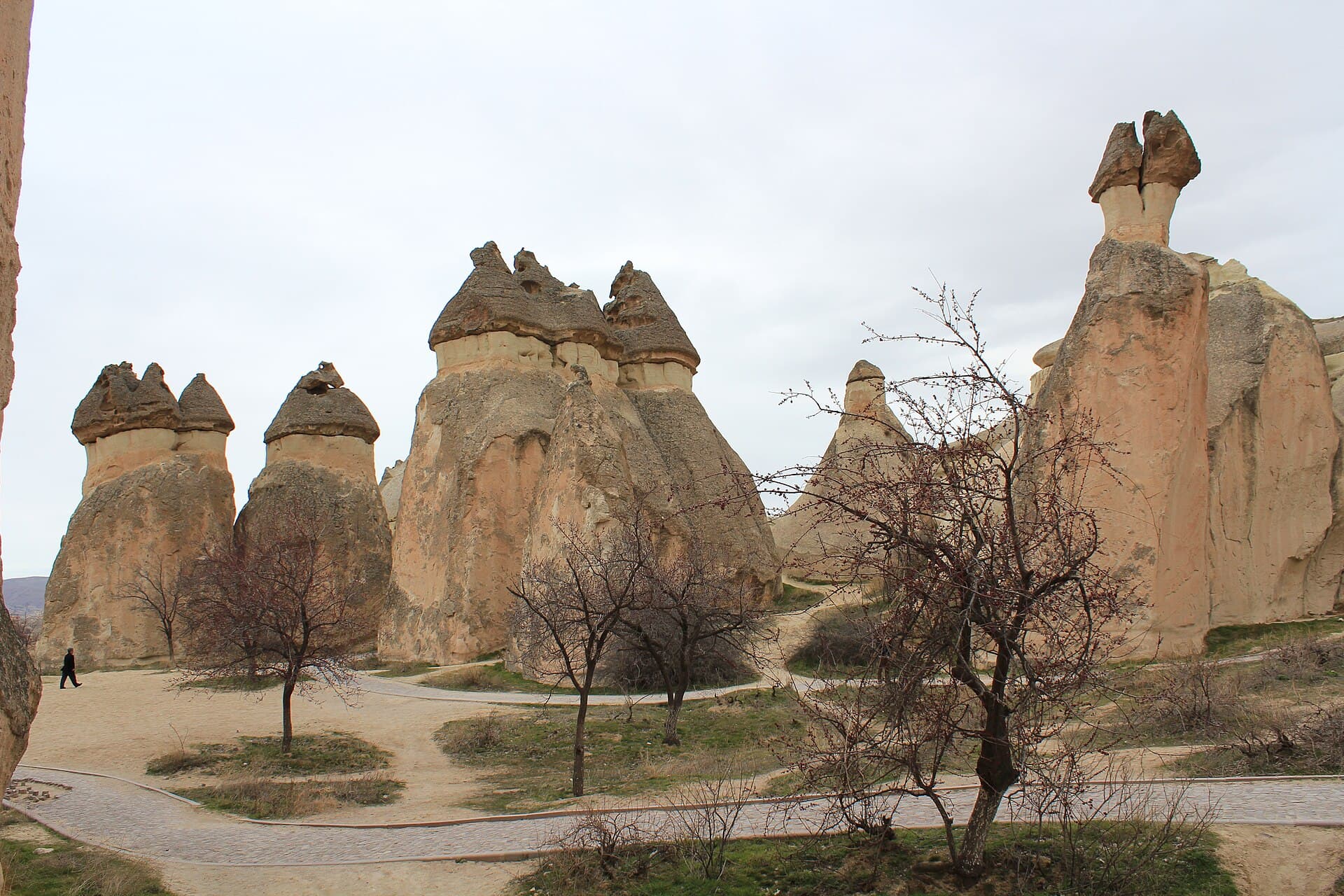
A cave village lived in until 1952, plus the mushroom chimneys everyone photographs. One ticket, two places, 2 km apart.
Enough context, no spoilers
Why it matters
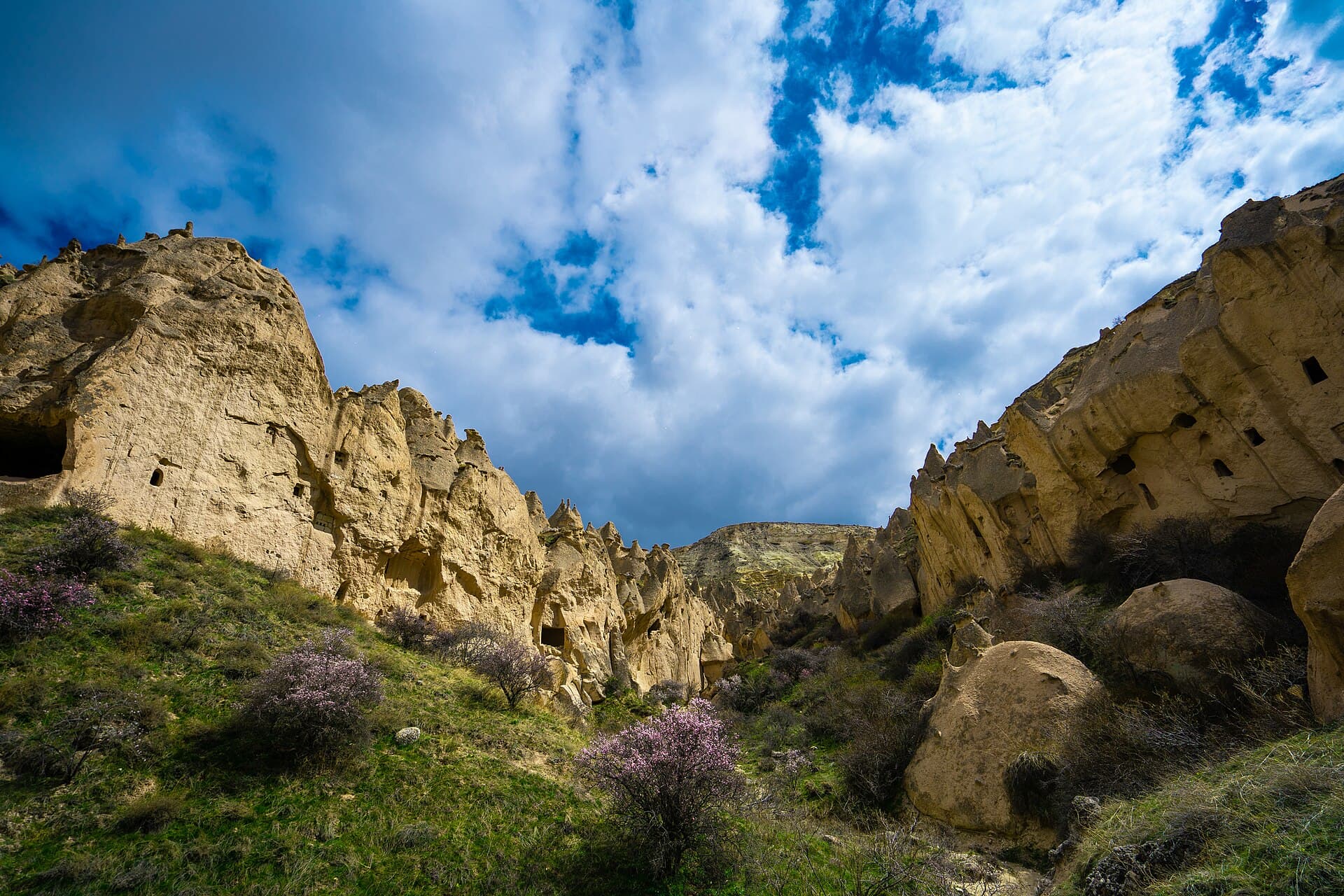
Three valleys of rock-cut houses, churches, tunnels, a mill and a mosque, inhabited without a break into the twentieth century. Rockfalls emptied Zelve by 1952 and the villagers moved to Aktepe; the valley opened as a museum in 1967. Paşabağ, on the same ticket, holds the multi-headed chimneys, one with a chapel to St Simeon and a hermit's cell cut into it.
What to know before you go
One ticket, two sites, two completely different experiences, and most visitors only do half of it. Paşabağ is the half everyone does. It is the cluster of multi-headed "mushroom" chimneys that appears in every Cappadocia photo set — genuinely extraordinary geology, entirely fenced, and about fifteen minutes of walking end to end. It took 907,345 visitors in 2025, which for a site that size is a crush. Go at opening or in the last hour. Zelve is the half worth your time. This was a working village inside the rock — not a monastery, not a shrine, but houses, stables, storage, a mill, churches, and a mosque, occupied continuously for centuries and abandoned only in 1952 when the cliffs started failing and the state moved everyone two kilometres north to Aktepe. Three valleys of it. You walk through somebody's kitchen. The mosque, cut from the same rock as the churches with a carved mihrab and a stubby minaret, is the clearest single object in Cappadocia for the point that these cliffs changed religion without changing tenants. Two practical things people get wrong. First, they are on the same ticket but not walkable from one another — about 2 km on different roads, so you need the car or the tour bus for both. Second, Zelve is the one place in the region where "the cliffs are unsafe" is not a liability disclaimer but the literal historical reason the site exists as a museum. Barred chambers are barred for a reason. Do not duck under.