TurQuosian

Central Anatolia

Boğazkale

The Hittite Empire's fortified capital

Boğazkale is a small farming town beside the ruins of Hattuşa, capital of the Hittite Empire from roughly 1650 to 1180 BCE. The site — a UNESCO World Heritage Site since 1986 — covers 268 hectares of walls, temples, and gates on a hillside, with the Yazılıkaya rock sanctuary 2.5 km away. Most visitors come as a day trip from Ankara or Cappadocia; the town itself has few services.

UNESCO status
World Heritage Site since 1986
Hittite capital
c. 1650–1180 BCE
Site size
268 hectares
Distance from Ankara
~195 km

Every published place in one city guide

What to see in Boğazkale.

Start with the essentials, add what genuinely interests you, and leave the rest for another visit. Every place includes a concise story, practical timing, a Maps link, and a one-tap route planner action.

Make the route work

Anticipate the practical details.

Getting there

No direct public transport from Ankara. Take an intercity bus from Ankara's AŞTİ terminal to Sungurlu (about 2 hours), then a weekday-only dolmuş or taxi for the final 30 km to Boğazkale (about 35 minutes) — no weekend dolmuş service. Driving from Ankara takes roughly 2.5–3 hours. Most independent travellers rent a car or join an organised day tour from Ankara or Cappadocia.

Getting around

Hattuşa's ruins are spread across a large hillside loop road connecting the Great Temple and the Lion, King's, and Sphinx Gates — a one-way circuit of several kilometres, not a compact walk. Yazılıkaya is a separate 2.5 km drive from the main site. A car is the practical way to see both in one day.

Money

Small town with limited card acceptance; carry Turkish lira cash for the museum, site entrance, and local pensions.

Connectivity

Basic mobile coverage in the town; expect weak or no signal across parts of the open Hattuşa site.

Etiquette

Standard site etiquette: do not climb on wall remnants or reliefs.

Safety and comfort

No specific safety concerns; the main risks are heat exposure on the long walking loop and uneven ancient stonework underfoot.

Essential

Don’t leave without

If you only have one day, this is the day.

Rank1
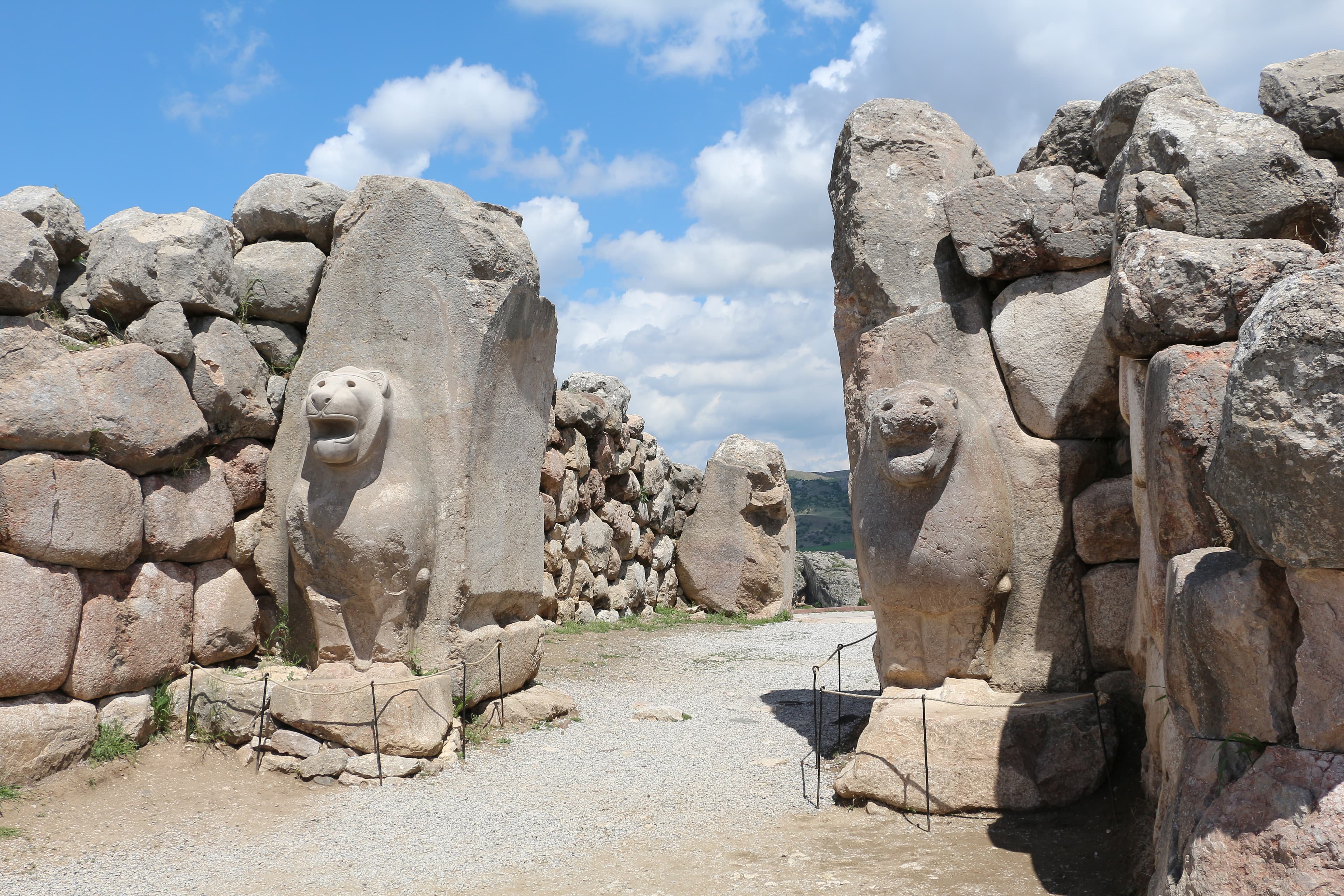
The basalt lions of the Lion Gate at Hattuşa, capital of the Hittite Empire.

Hattuşa

Archaeological site

The fortified capital of the Hittite Empire, 268 hectares of walls, temples, and monumental gates on a hillside.

Capital of the Hittite Empire from around 1650 to 1180 BCE, Hattuşa held the Great Temple, royal residences, and fortifications enclosing 268 hectares. Its archive of roughly 30,000 cuneiform tablets included the Egyptian-Hittite peace treaty after the Battle of Kadesh. The Lion Gate, King's Gate, and Sphinx Gate mark the city's monumental entrances. UNESCO World Heritage Site since 1986.

Separate ticketed entrance to the archaeological site; confirm the current fee locally, as pricing changes year to year.

150 minLittle shade across most of the site; summer afternoons are hotSite is large and requires a driving or long walking loop, not a short visit
Look for: The basalt lions flanking the Lion Gate, the royal relief at the King's Gate, the reconstructed casemate wall, and the underground postern tunnel (Yerkapı).
Rank2
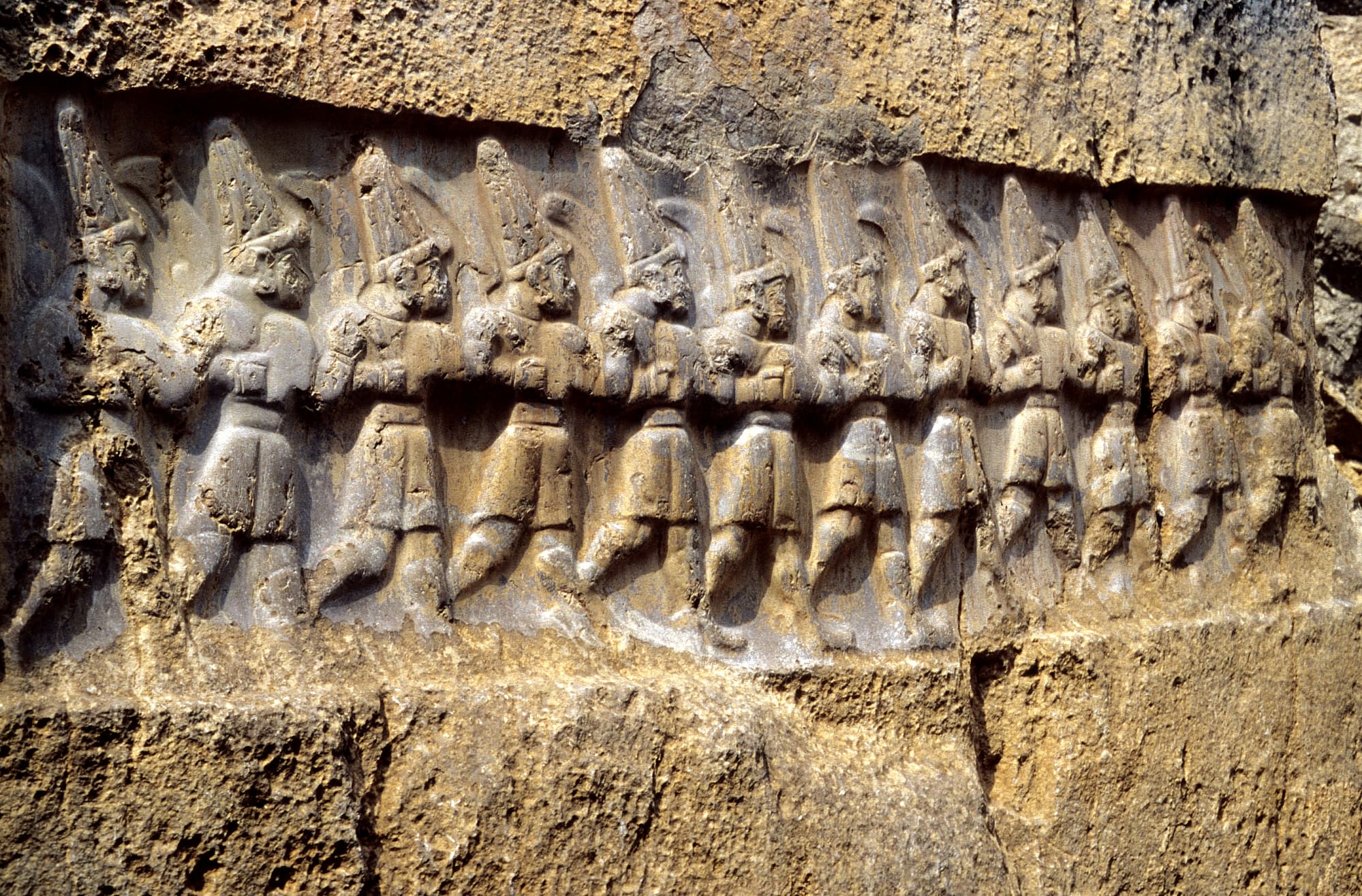
The procession of the twelve underworld gods carved in Chamber B of the Yazılıkaya sanctuary.

Yazılıkaya

Religious site

An open-air Hittite rock sanctuary carved with processions of gods, including the twelve gods of the underworld.

Yazılıkaya is a Hittite open-air rock sanctuary about 2.5 km from Hattuşa, in use from at least the late 16th century BCE. Its two rock chambers were carved with reliefs mostly dating to the reigns of Tudhaliya IV and Suppiluliuma II in the late 13th century BCE. Chamber A shows 64 deities in procession; Chamber B holds the twelve gods of the underworld and King Tudhaliya IV embraced by the god Sharruma.

Ticketed separately or combined with Hattuşa; confirm the current fee locally.

45 minReliefs are weathered; harsh midday light makes them harder to see
Look for: The procession of gods along Chamber A's walls, the twelve identical sworded gods of the underworld in Chamber B, and the Tudhaliya IV–Sharruma relief.

Getting there and away

Verified routes from Boğazkale.

Door-to-door times and fare ranges, checked leg by leg. Only routes where every leg verified are listed.

Getting around

Türkiye, for scale

Where it sits

See this city in the wider shape of Türkiye.

The map will load as it approaches the viewport.