Hattuşa
The fortified capital of the Hittite Empire, 268 hectares of walls, temples, and monumental gates on a hillside.
Enough context, no spoilers
Why it matters
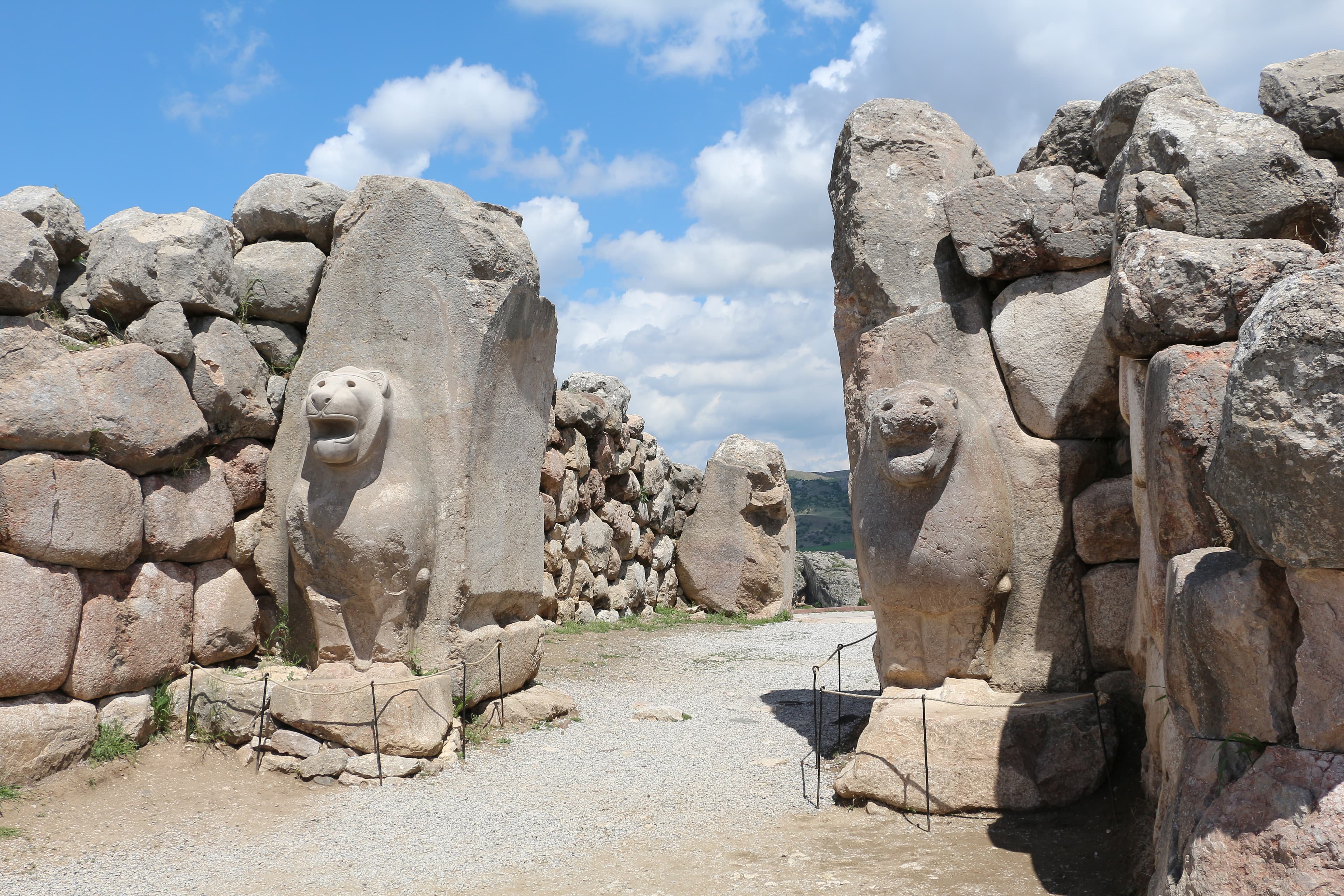
Capital of the Hittite Empire from around 1650 to 1180 BCE, Hattuşa held the Great Temple, royal residences, and fortifications enclosing 268 hectares. Its archive of roughly 30,000 cuneiform tablets included the Egyptian-Hittite peace treaty after the Battle of Kadesh. The Lion Gate, King's Gate, and Sphinx Gate mark the city's monumental entrances. UNESCO World Heritage Site since 1986.
What to know before you go
Hattuşa was the seat of the Hittite Empire for roughly 470 years, one of the dominant powers of the Late Bronze Age Near East alongside Egypt and Assyria. The site's royal archive, some 30,000 clay tablets in cuneiform script, included the terms of a peace treaty with Egypt reached after the Battle of Kadesh — a copy of it now sits at the United Nations. The Great Temple in the lower city and the upper city's cluster of smaller temples give a sense of the scale of Hittite state religion.
Visiting means driving or walking a long one-way loop road that climbs through the upper city, past temple foundations, to the Sphinx Gate and Yerkapı postern tunnel at the site's high point, then down to the Lion Gate and King's Gate before returning past the Great Temple near the entrance. The distances between features are real — this is not a compact archaeological park.
Budget at least two to three hours for the loop, more if visiting the small Boğazköy Museum in town, which holds original finds. Go early or late in the day in summer — the site has little shade and central Anatolian summer afternoons run hot.