Yazılıkaya
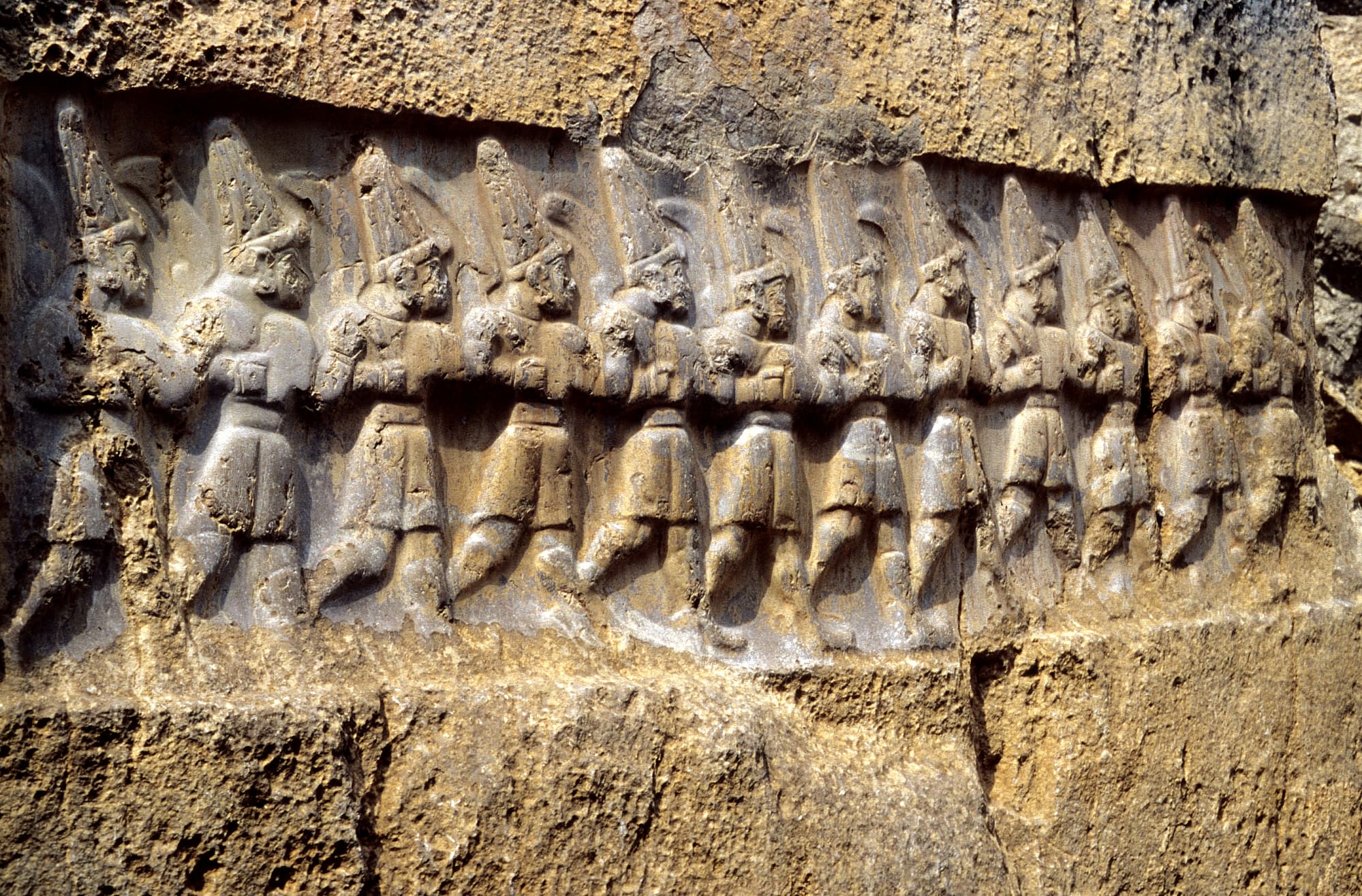
An open-air Hittite rock sanctuary carved with processions of gods, including the twelve gods of the underworld.
Enough context, no spoilers
Why it matters
Yazılıkaya is a Hittite open-air rock sanctuary about 2.5 km from Hattuşa, in use from at least the late 16th century BCE. Its two rock chambers were carved with reliefs mostly dating to the reigns of Tudhaliya IV and Suppiluliuma II in the late 13th century BCE. Chamber A shows 64 deities in procession; Chamber B holds the twelve gods of the underworld and King Tudhaliya IV embraced by the god Sharruma.
What to know before you go
Yazılıkaya served as the Hittite capital's principal open-air religious sanctuary, its two rock chambers carved with the richest surviving collection of Hittite relief art. Chamber A's long procession of deities converging on the storm-god and sun-goddess reflects the structure of the Hittite state pantheon; Chamber B, smaller and more enclosed, appears tied to the cult of the king. The sanctuary reached its final monumental form under Tudhaliya IV at the end of the 13th century BCE, shortly before the empire's collapse.
The site sits a short drive from Hattuşa's main entrance and is walked in under an hour — a compact visit compared to the sprawling walk around Hattuşa itself. Reliefs are weathered by 3,000 years of exposure, so early morning or late afternoon light brings out the carving better than midday sun.
Most visitors combine Yazılıkaya with Hattuşa on the same day, before or after the main loop.