Arsameia
The kingdom's clearest carved handshake between king and god, one generation older than the summit — most people driving past skip it.
Enough context, no spoilers
Why it matters
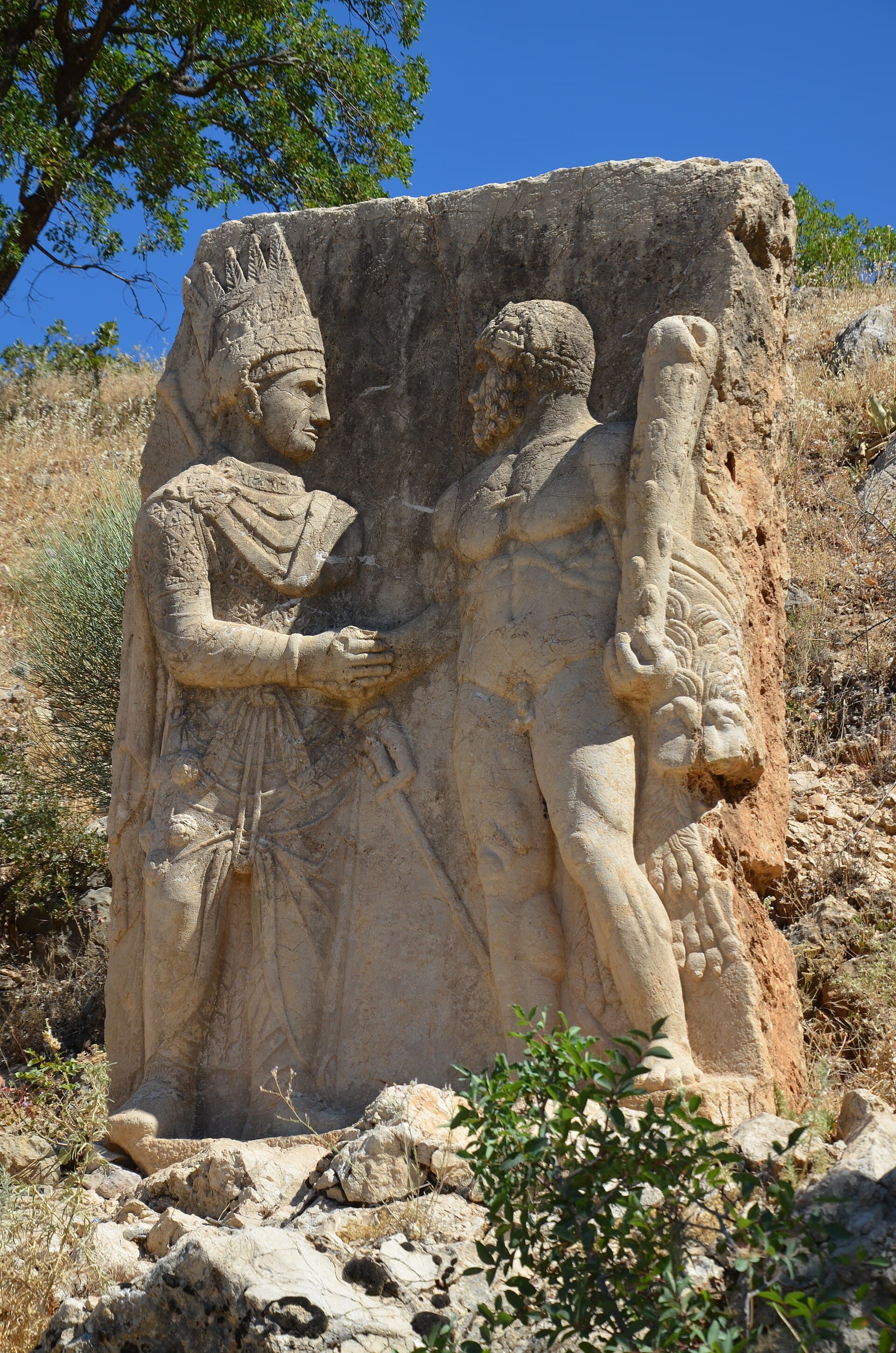
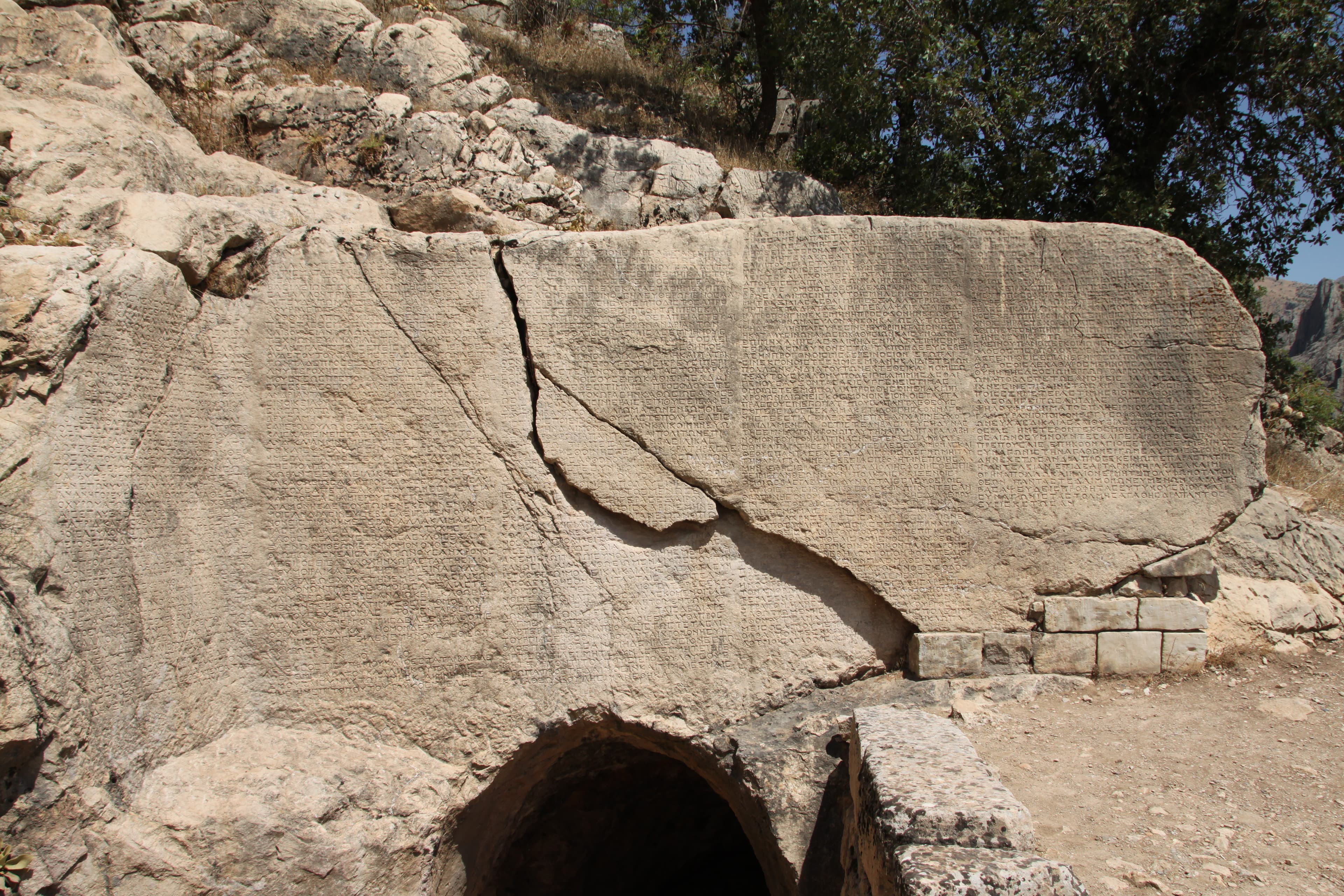
Antiochus I built this hierothesion for his father, Mithridates I Callinicus — a smaller, earlier echo of the sanctuary he later raised on the summit. A rock-cut relief shows a king clasping hands with a naked Herakles. Beside it runs a Greek inscription, among the longest to survive from antiquity. A tunnel cut into the rock descends roughly 150m for a purpose nobody has explained.
What to know before you go
Almost everyone who drives up to Nemrut passes within a few minutes of Arsameia and skips it, and that's a genuine mistake rather than a defensible shortcut. This was Mithridates I Callinicus's own royal city, and his son Antiochus — the same king who built the summit sanctuary — built him a hierothesion here too, one generation earlier and one size smaller. The reason to stop is straightforward: this hillside carries one of the clearest dexiosis reliefs anywhere in the kingdom, cut into a sheltered rock face rather than standing exposed on a 2,150m summit, and it shows in the condition. Where the equivalent handshake scenes on the mountain have been weathered by two thousand years of wind and frost, Arsameia's is still legible enough to read as a composition rather than reconstruct from fragments: a king, bare-chested, clasping hands with a naked Herakles, ruler and god meeting as equals rather than one kneeling to the other. It's the clearest single illustration anywhere of what Commagene's entire royal cult was actually claiming about itself. Below the relief runs a carved Greek inscription, among the longest to survive from the ancient world, cut into rock and still largely readable where it's protected from weather — a founding text in the king's own words, explaining why the site exists and how its rites were meant to run forever, rather than a later summary of them. Climb past it and the site turns strange: a tunnel cut straight into the rock, roughly 150 metres of it, descending into the dark for no purpose anyone has convincingly explained. It just stops. Bring a light if you want to go beyond the entrance; most visitors don't, and that's a reasonable call rather than a missed highlight. Arsameia sits above Eski Kahta, on the same road that eventually climbs to the Nemrut summit car park, which makes it close to a free addition to the day rather than a detour that costs you anything beyond the twenty minutes people assume they don't have. Go on the way up rather than the way down, while you're still fresh for the short climb between the marked points — it also sets up the summit's own handshake scenes by showing you, close and intact, what they looked like before two thousand years on an exposed mountaintop wore them down.