Knidos
The tip of the Datça peninsula, where a lost Praxiteles nude once stood — remote, and one of the longest hauls to any ruin on this coast.
Enough context, no spoilers
Why it matters
A city of the Dorian Hexapolis positioned where the Aegean meets the Mediterranean, Knidos commissioned Praxiteles to sculpt the Aphrodite of Knidos around the mid-4th century BC — the first life-size nude female statue in Greek art, famous enough that ancient writers describe people sailing here just to see it. The original is lost; the best surviving Roman copy stands in the Vatican Museums.
What to know before you go
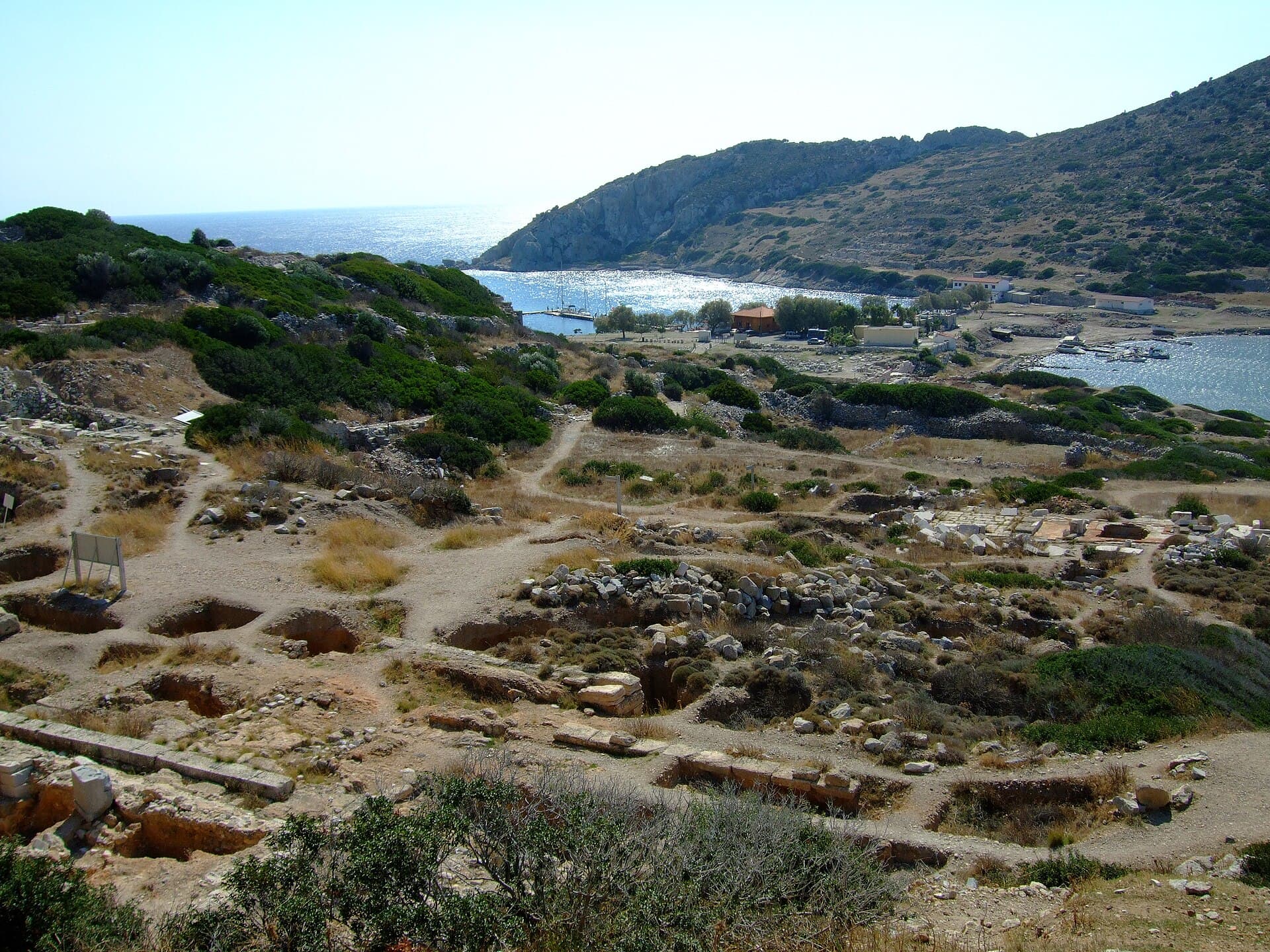
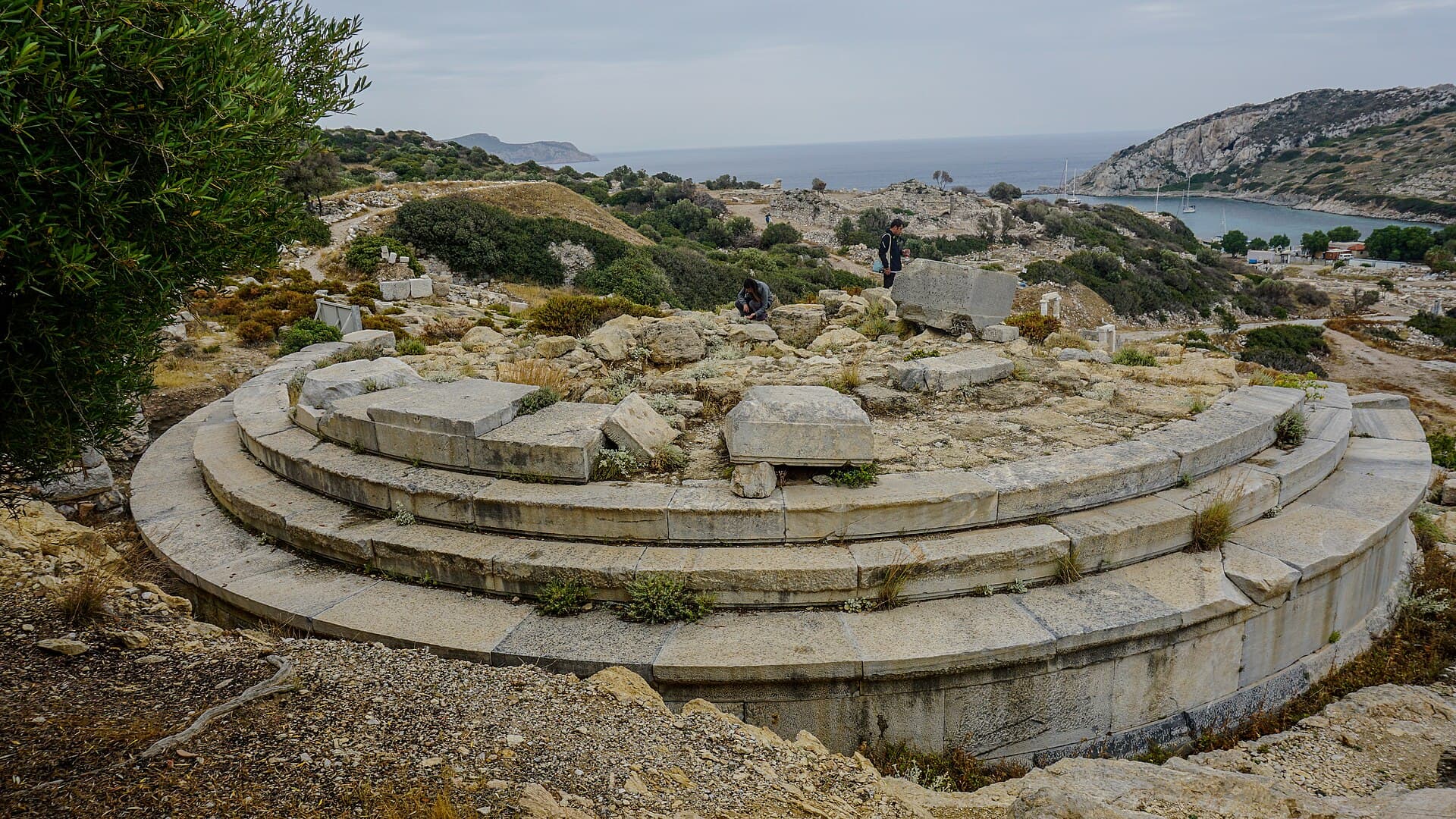
Knidos sits at the literal end of the road — the westernmost point of a peninsula that already takes an hour to drive the length of from Datça — and that remoteness is both the whole logistical problem and most of the reason to go. This was one of the six cities of the Dorian Hexapolis, positioned exactly where the Aegean meets the Mediterranean, rich enough on shipping and trade to commission Praxiteles for a statue that made it famous across the ancient world. The Aphrodite of Knidos, carved around the middle of the 4th century BC, was the first life-sized nude female figure in Greek sculpture, displayed in a small round temple built so visitors could walk all the way around her. Ancient writers describe people making the trip purely to see it — Knidos as a destination built around a single artwork, two thousand years before that became a normal thing to do. The statue itself is gone; the best Roman copy is in the Vatican. What's left is the foundation of the round temple, sized and shaped for exactly that viewing experience, on a terrace above the sea. The rest of the site rewards slow walking rather than one photograph: two harbours divide the peninsula's tip, historically one for warships and one for merchant trade, joined by a causeway to what was once the small island of Triopion. There's a theatre, temples to Apollo and Dionysus, an agora, and a stone sundial linked to the astronomer and mathematician Eudoxus, thought to have worked here. Recent restoration has added protected walking routes and a larger car park, reaching only "provisional acceptance" in 2026 — a sign the site is being taken seriously, and also a reason to expect some areas still settling into their new form. Here's the honest planning problem: Datça town is already about an hour from Marmaris, and Knidos is another 35km beyond that, the final stretch narrowing as it hugs the peninsula's ridge. Doing Marmaris–Knidos–Marmaris in a single day means four-plus hours of driving for a site that deserves unhurried time. The better version is a night in Datça, treating Knidos as that trip's payoff and arriving with time to spare — the site stays open until 21:00, late enough to watch the light change over both harbours before the drive back.