Kaunos
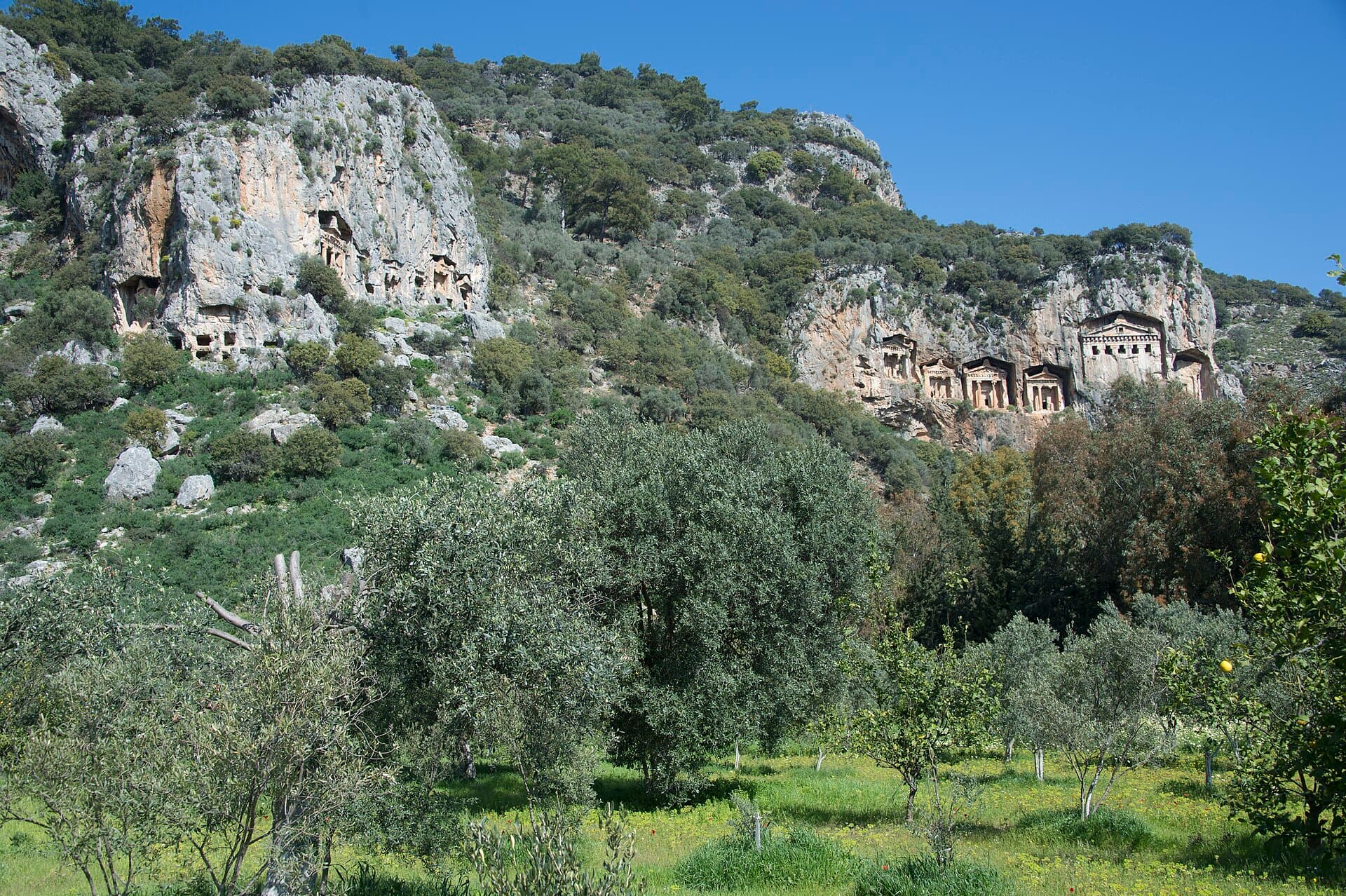
Six Lycian tomb facades cut into a cliff above the Dalyan river — genuinely spectacular, and not actually inside the ruins you pay to enter.
Enough context, no spoilers
Why it matters
Possibly founded as early as the 10th century BC, Kaunos was fought over in turn by Caria, Lycia, Persia and Rome as a working Aegean port. Silt from the Dalyan river pushed the coastline out over centuries until the harbour stranded roughly 8km inland; malaria and depopulation followed, and the city was abandoned by the Ottoman period. Excavation began in 1966 under Baki Öğün and continues today.
What to know before you go
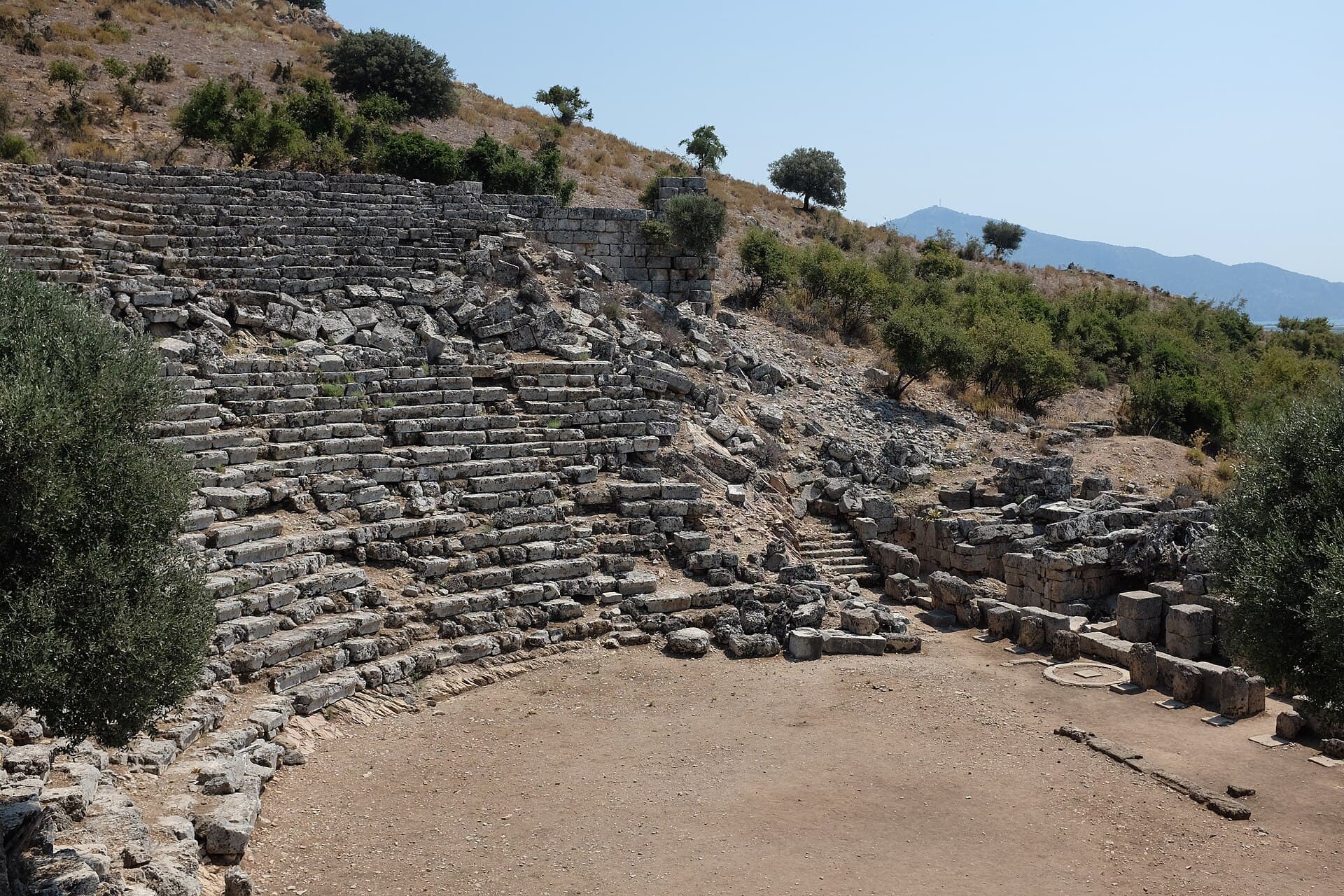
Kaunos has one image that does all its marketing — the row of temple-fronted tombs cut into the cliff face, floodlit gold at dusk, looking down on every boat that passes below — and the honest thing to say up front is that the image is better than the site visit. The tombs are not inside the archaeological enclosure you buy a ticket for. They're carved into a separate rock face across and above the river, viewed from the water or from Dalyan's own promenade, and the approach path on the ruins side has at times been closed off with a guard posted at the barrier. Know that going in, and the rest of Kaunos stops being a disappointment and starts being what it actually is: a genuinely substantial ancient city, just one whose best feature you photograph rather than climb into. The ruins themselves earn the ticket. A Hellenistic theatre cut into the hillside, Roman baths, a basilica, an acropolis with fortification walls — and, the detail that explains everything else here, a harbour temple now sitting in reed marsh a solid walk from any open water. Kaunos was a working port for well over a thousand years, fought over by Carians, Lycians, Persians and Rome precisely because ships could dock here. Then the Dalyan river did to Kaunos roughly what it did to Ephesus: silt pushed the coastline out until the harbour stranded some eight kilometres inland, malaria moved into the resulting marsh, and by the Ottoman period the city was simply left. What you're walking through is a full-sized abandoned port with the water removed. The most honest way to see Kaunos is on the water first, not against it: take it as the first stop on the standard Dalyan river-boat loop, looking up at the tombs from the boat before you land, then walk the excavated city on foot with that image already in hand. Arrive in the morning — there's very little shade across the site, and by early afternoon in summer the surrounding marsh air adds humidity to the heat. Give it seventy-five to ninety minutes, longer if the theatre and baths interest you specifically.