İztuzu Beach
A 4.5km dune beach split between sunbathers and nesting loggerhead turtles — one of Turkey's best swims, with the access rules to prove it.
Enough context, no spoilers
Why it matters
Formed as the Dalyan delta silted up ancient Kaunos's harbour. In 1987, construction began on a beach hotel here; a campaign led by conservationist June Haimoff, joined by David Bellamy and Nergis Yazgan, drew in the IUCN and WWF. In July 1988, after WWF president Prince Philip appealed to PM Turgut Özal, Turkey blocked the hotel and made İztuzu a Special Environmental Protection Area.
What to know before you go
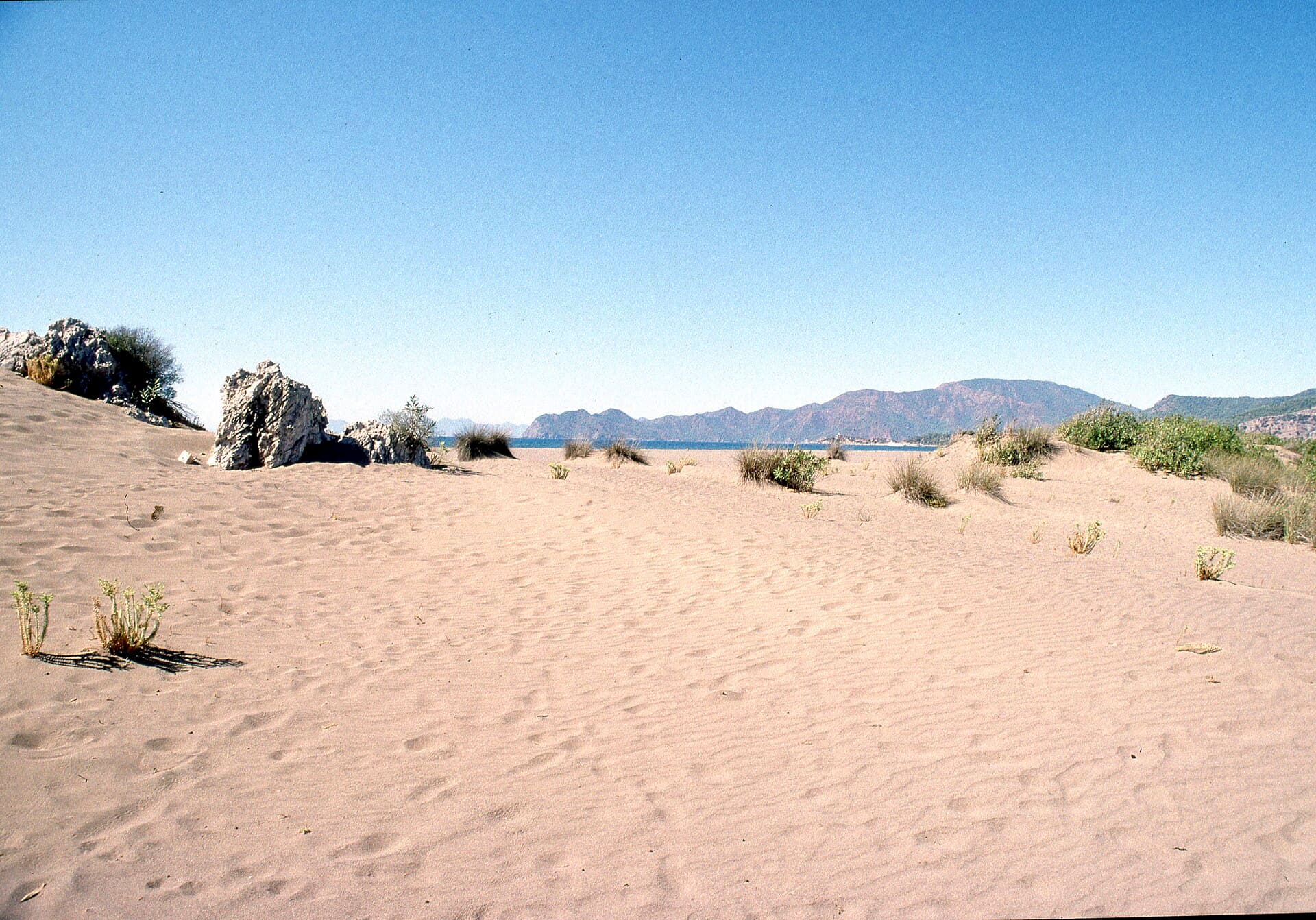
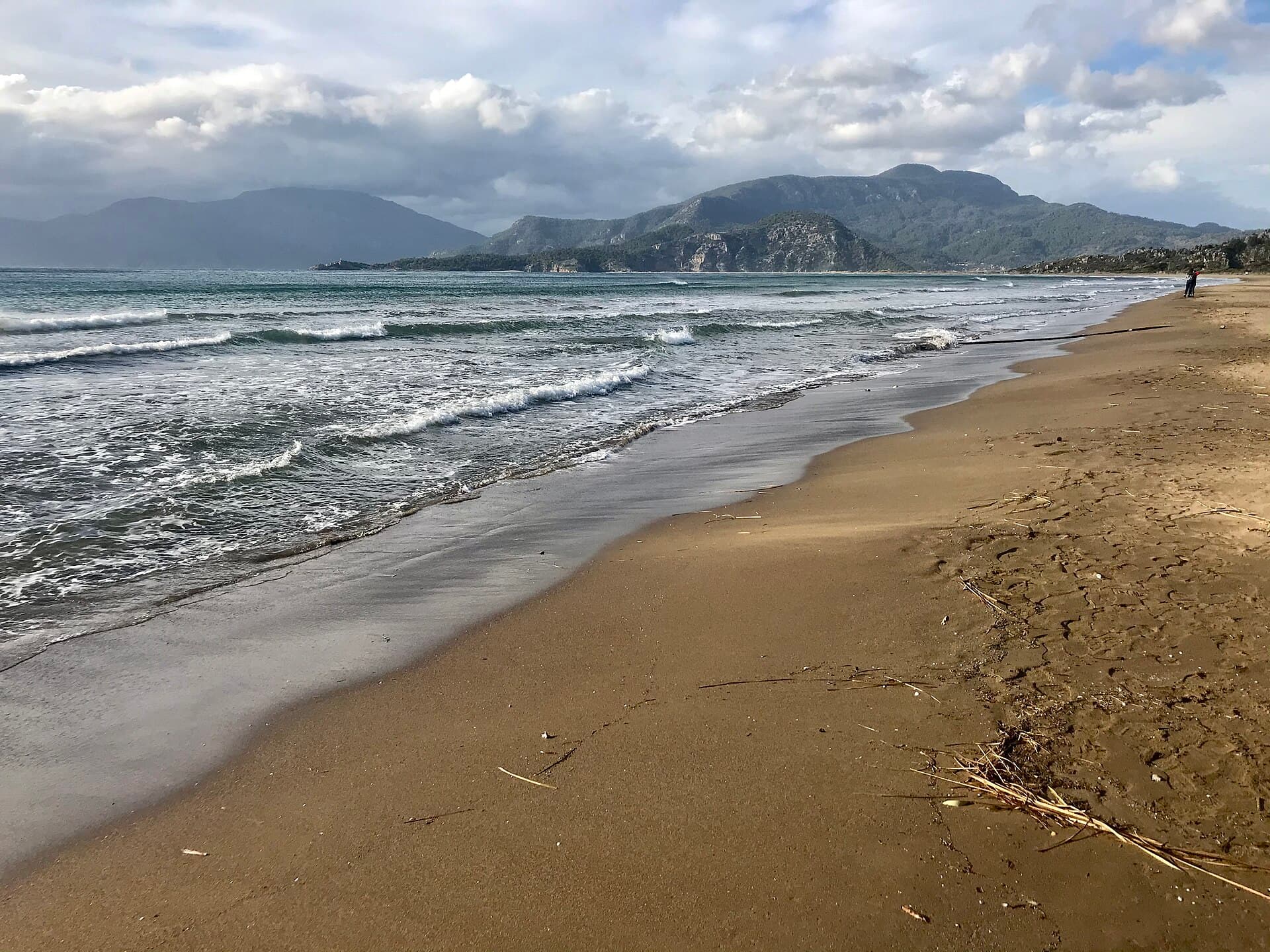
İztuzu earns its reputation before you even see it, because the reputation is the reason it still exists. In 1987, construction began on a hotel on this exact sand; a campaign led by the conservationist June Haimoff, joined by David Bellamy, Nergis Yazgan and others, pulled in the IUCN and the WWF, and reached the top of international diplomacy when WWF president Prince Philip personally appealed to Turkish prime minister Turgut Özal. In July 1988 Turkey blocked the hotel and declared İztuzu a Special Environmental Protection Area. That's the rare kind of conservation story where the developers lost, and the loggerhead turtles that nest here every summer are the reason. Judged purely as a beach, it doesn't need the backstory: four and a half kilometres of pale dune sand backed by low hills and pine rather than concrete, with the Dalyan river's cool outflow at one end and open, warm Mediterranean sea at the other. It's one of the best swimming beaches on this coast, and it's protected precisely because nobody was allowed to build a hotel on top of it. The turtle rules are simple and worth knowing before you go. Nesting and hatching run roughly May to October, peaking in June and July, and for that whole stretch the beach closes to everyone from 20:00 to 08:00 — no evening walks, no sunset lingering on the sand. Wooden stakes mark real nest sites on the upper beach; sunbeds and parasols are banned inside the marked zones, and visitors are asked to keep well back. None of it stops a completely normal beach day between 08:00 and 20:00 — it just means this isn't the spot for a romantic summer sunset. Getting here is part of the experience: no road runs directly along this stretch of coast, so most visitors arrive by the river dolmuş boats that leave Dalyan through the reed channels, or by minibus on a longer inland route. Either way, build it into a full Dalyan day rather than a quick stop — pair it with Kaunos on the way down and the mud baths on the way back, which is how the local boat cooperative already runs the standard loop. Go before the school-holiday crush if you can manage May or early June: the turtles are already back, the sea has warmed enough to swim properly, and the beach is nothing like the July–August version.