Lake Çıldır (Çıldır Gölü)
Eastern Anatolia's second-largest lake, solid enough by midwinter to skate, sled and picnic on.
Enough context, no spoilers
Why it matters
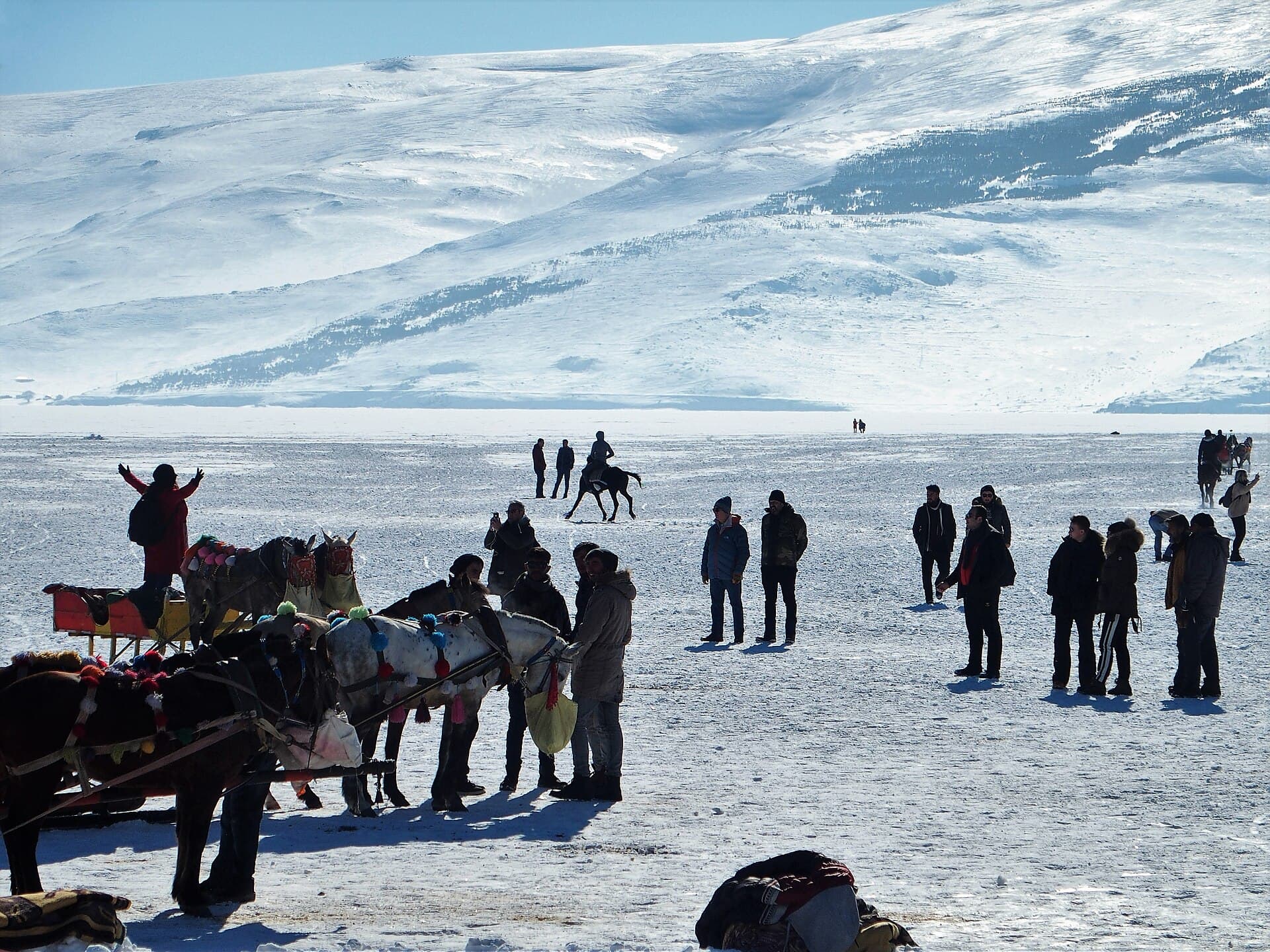
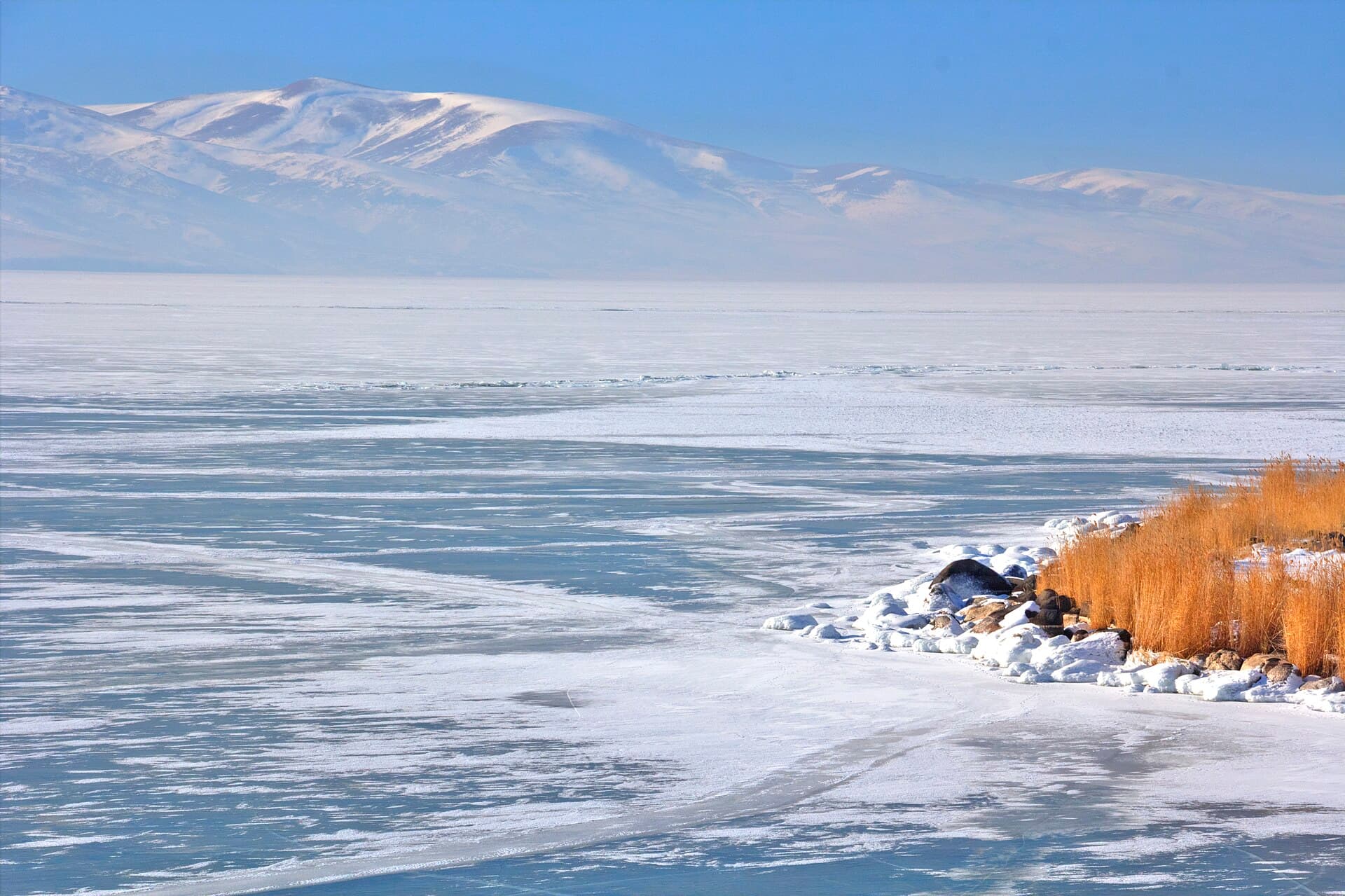
Straddling the Kars-Ardahan provincial border, the 123km2 lake freezes hard enough by December-February for horse-drawn sleds and skating; an annual February ice festival adds horse archery, wrestling and folk dancing on the ice itself.
What to know before you go
Lake Çıldır is Eastern Anatolia's second-largest lake after Van, spread across 123 square kilometres straddling the Kars-Ardahan provincial border - a detail worth knowing since it's often described as simply 'in Kars' when the lake itself sits partly in the neighbouring province. What draws visitors specifically to this side of it is winter: as temperatures drop below minus ten degrees at night, the lake's surface freezes solid enough, roughly fifteen centimetres thick in the main tourist area near Taşbaşı, to safely support foot traffic, skating, and horse-drawn sleds - a genuinely unusual experience in Türkiye, where solid lake-ice tourism barely exists anywhere else. Local operators run organised 'ice safaris' by horse-sled across the frozen surface, and an annual February ice festival adds horse-drawn sleigh races, horse archery (cirit), wrestling and folk dancing performed directly on the ice, drawing crowds from well beyond the region. The season is real but narrow - the lake is reliably safe to walk on roughly from December through February or into early March, and outside that window this is simply a large, scenic, fairly ordinary lake, worth a stop if you're already in the area but not a dedicated reason to visit in summer. If you're coming specifically for the ice, build real cold-weather margin into the trip: this is exposed, wind-scoured terrain even by Kars standards, and the operators running sled rides work to their own weather-dependent schedule, not a fixed timetable. Most visitors combine it with Boğatepe on the same day out, since both sit in roughly the same direction from Kars city and neither takes a full day on its own - a sensible pairing rather than two separate trips into the same stretch of plateau.