Tomb of Amyntas
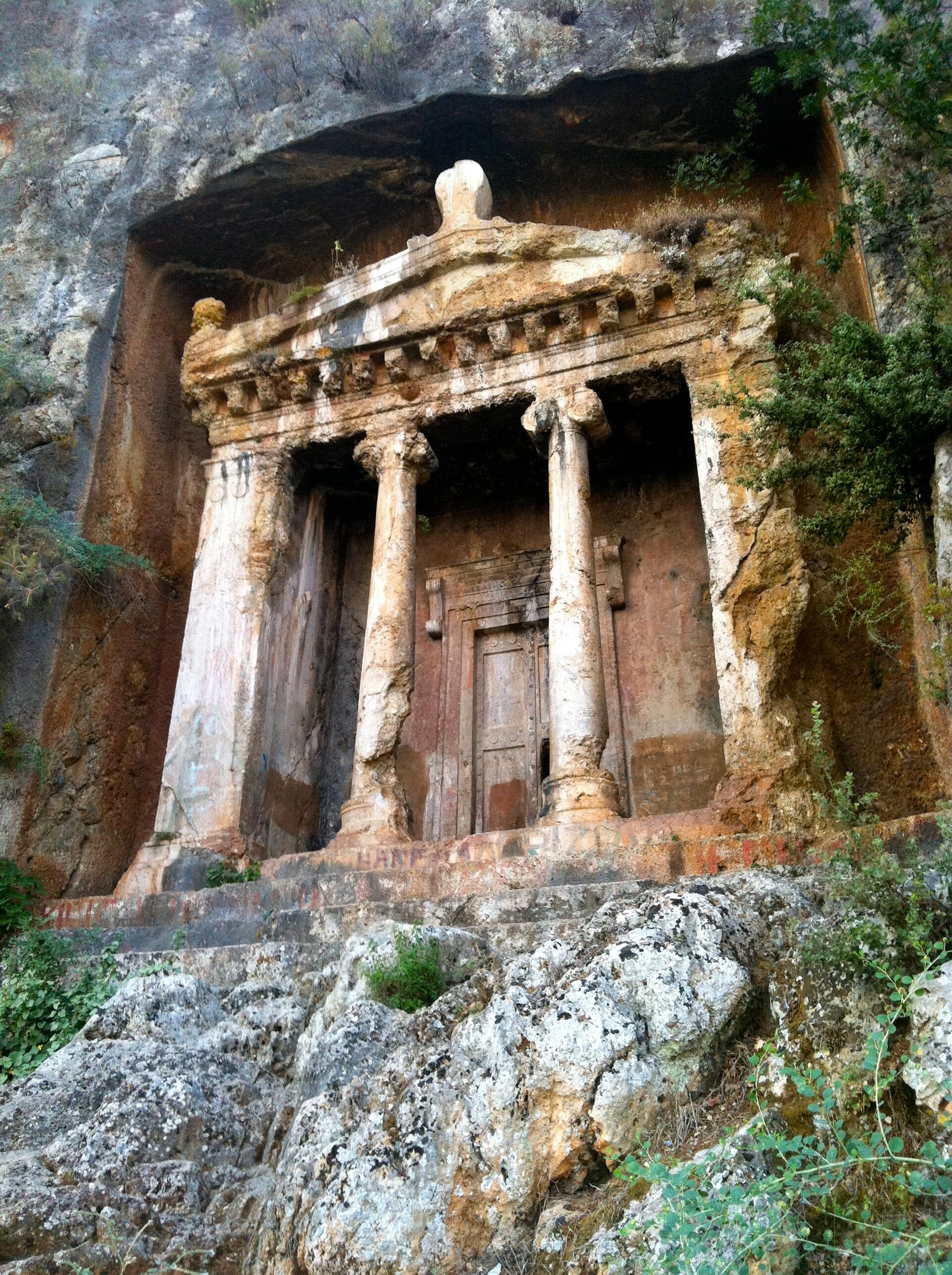
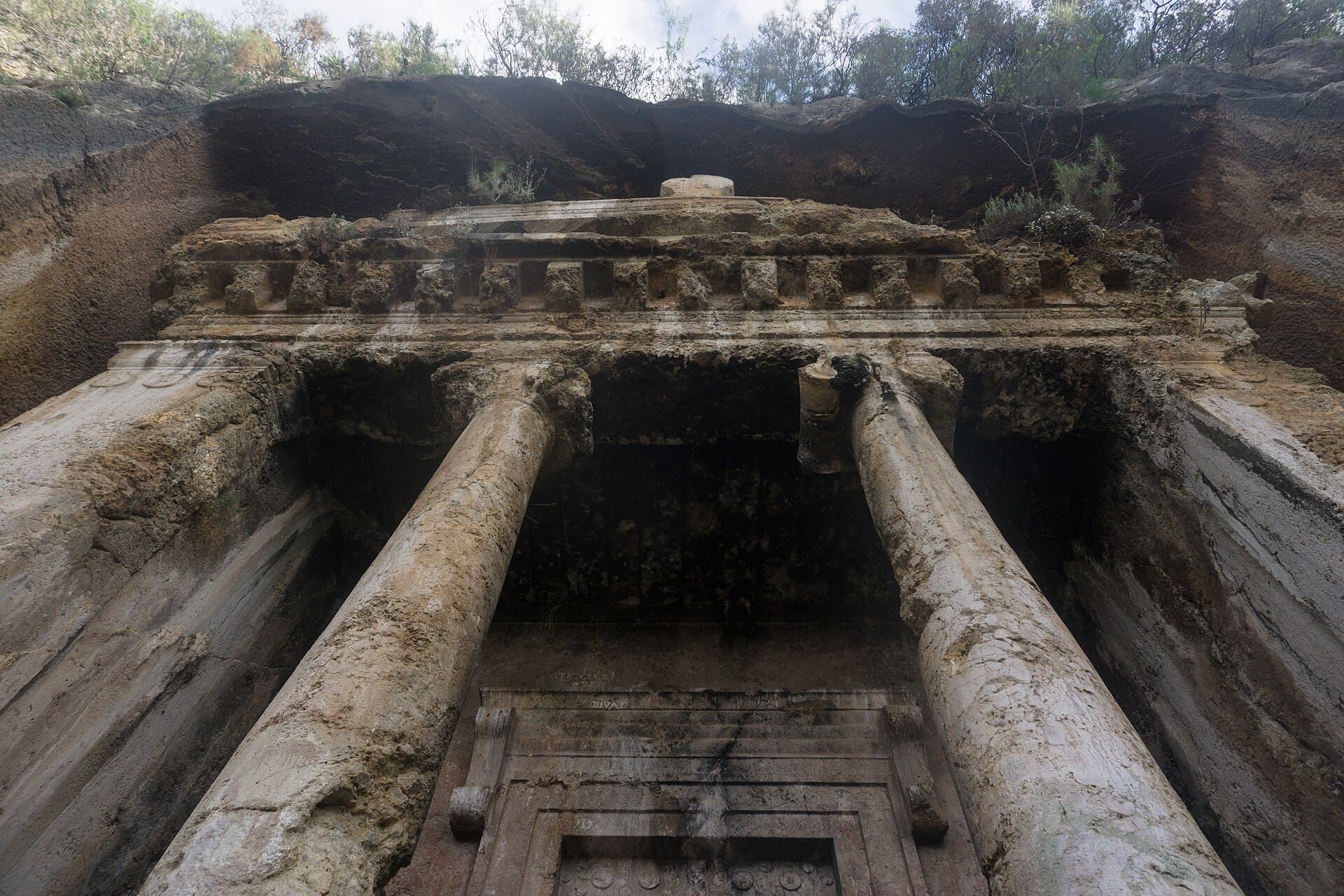
The largest, best-preserved Lycian rock tomb on this coast — a temple front cut into the cliff, named by the inscription beside its door.
Enough context, no spoilers
Why it matters
Cut around 350 BC into the hillside above ancient Telmessos as an Ionic temple facade, with a Greek inscription naming "Amyntas, son of Hermagios" beside the doorway. It is one of several rock tombs on the same slope, the only one built to full temple scale rather than a plain house-front.
What to know before you go
Every Lycian rock tomb on this coast is trying to do the same trick — carve a house or temple facade into a cliff face, flat and false-fronted, with nothing structural behind the columns — and the Tomb of Amyntas is where the trick works best. It is the largest and best preserved of the group cut into the hillside above Fethiye's harbour, an Ionic temple front with two columns, a pediment and a carved door, cut around 350 BC directly into the rock rather than built up from it. The name comes from a Greek inscription beside the doorway, "Amyntou tou Ermagiou" — "of Amyntas, son of Hermagios" — which tells you whose name was carved there, though not with certainty whose burial it originally marked; treat it as a label the tomb carries rather than a fully solved identity. Getting to it means a genuine climb: a signed path and stone steps switchback up from the old town, steep and exposed enough to the sun that it's worth timing rather than just attempting whenever you're passing. Late afternoon is the better call on every count — the light comes low and warm across the facade for photographs, the heat of the climb is lower, and from the small platform in front of the tomb you get the single best framed view of Fethiye harbour and the islands scattered across the bay, worth the walk on its own even before you look at the carving. It is one stop among several rock tombs visible on the same hillside, most of them plainer house-type cuts rather than temple fronts, so don't mistake a smaller opening in the cliff nearby for the main tomb — Amyntas is the one with the columns. Bring water; there is no shade on the ascent and none at the top.