Tlos
A Lycian and Roman acropolis with an Ottoman warlord's fortress built on top of it, and Bellerophon's tomb cut into the cliff below.
Enough context, no spoilers
Why it matters
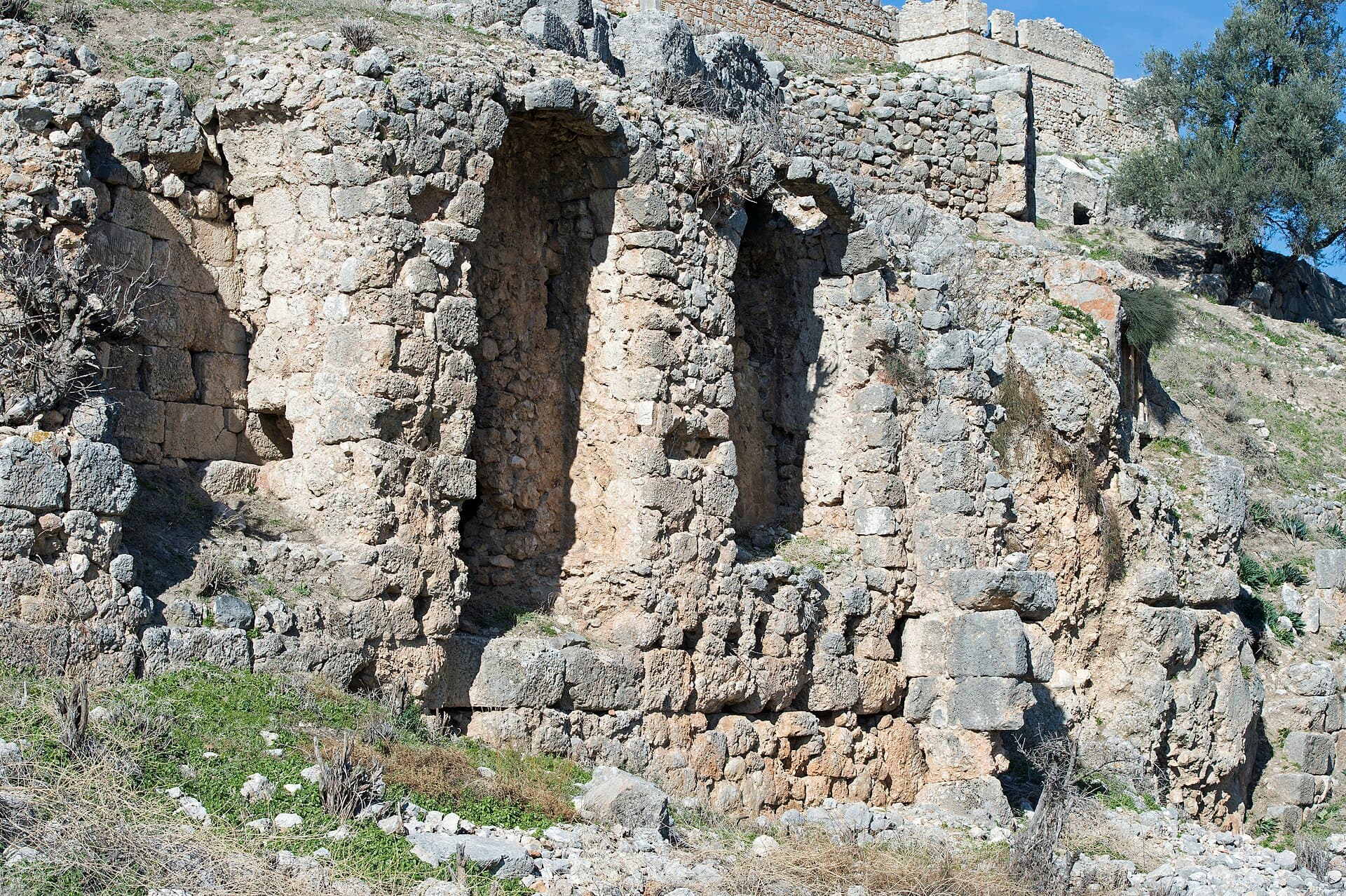
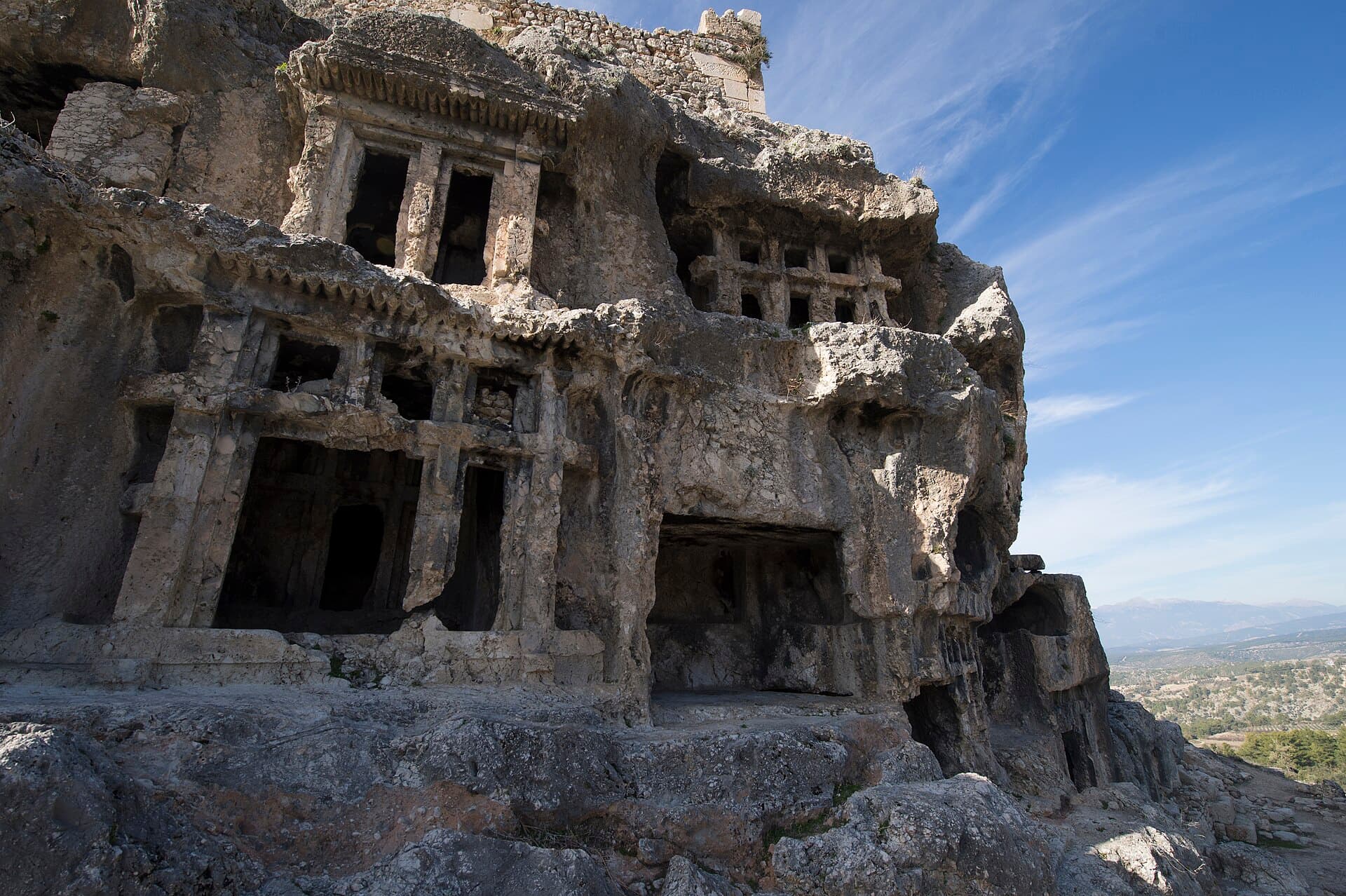
One of six cities with three votes in the Lycian Federation's assembly. In the early 19th century, regional strongman Kanlı Ali Ağa ("Bloody Ali") built a fortress on the acropolis using the Lycian and Roman walls as its base. Below it, a temple-tomb carries a relief of Bellerophon riding Pegasus, the city's legendary founder.
What to know before you go
Tlos does the thing this coastline does best, which is stack unrelated histories directly on top of each other and leave the seams showing. The acropolis at the summit was a Lycian citadel and later a Roman administrative centre — one of six cities that held three votes each in the Lycian Federation's assembly, the largest share going. Sometime in the early 19th century a regional strongman named Kanlı Ali Ağa, "Bloody Ali," built his own fortress directly on top of it using the standing walls as a foundation, and what you climb through today is a genuine hybrid: Lycian and Roman stonework at the base, Ottoman-era battlements finishing it off, with nobody at the time making any attempt to keep the periods separate. The single best-known thing at Tlos predates all of that. Cut into the cliff face below the acropolis is a temple-fronted rock tomb with an unfinished four-column facade, carved in relief on its porch with a rider on a winged horse — Bellerophon on Pegasus, in the local telling the city's own mythical founder, which is either a genuine claim to the hero or a good story that outlived any way of checking it; either reading is worth knowing before you look up at it. Below the acropolis, spread across the lower slopes, the rest of the ancient city is more conventionally legible: a theatre with capacity for a substantial audience and a three-storey stage building, a 150-metre stadium, and a scatter of house-type and temple-type tombs cut into the rock face wherever the cliff allowed it. It's 42 kilometres east of Fethiye, about an hour's drive, with no useful public transport — this is a car, taxi or organised-tour day, and it pairs naturally with Saklıkent Gorge on the same road, most visitors doing both in one day rather than either alone. Go in the morning if combining the two: Tlos is exposed and hot by midday, while Saklıkent's canyon stays cool into the afternoon.