House of the Virgin Mary
A small stone chapel on Bülbül Dağı that three popes have visited and that Muslims and Christians venerate together.
Enough context, no spoilers
Why it matters
Found in 1881 by the French priest Julien Gouyet, working from the visions of Anne Catherine Emmerich, a bedridden German nun who had never been to Anatolia and whose descriptions were published in 1852. Rome declared it a Holy Place in 1951 but has never ruled on whether Mary lived here. Paul VI came in 1967, John Paul II in 1979, Benedict XVI in 2006.
What to know before you go
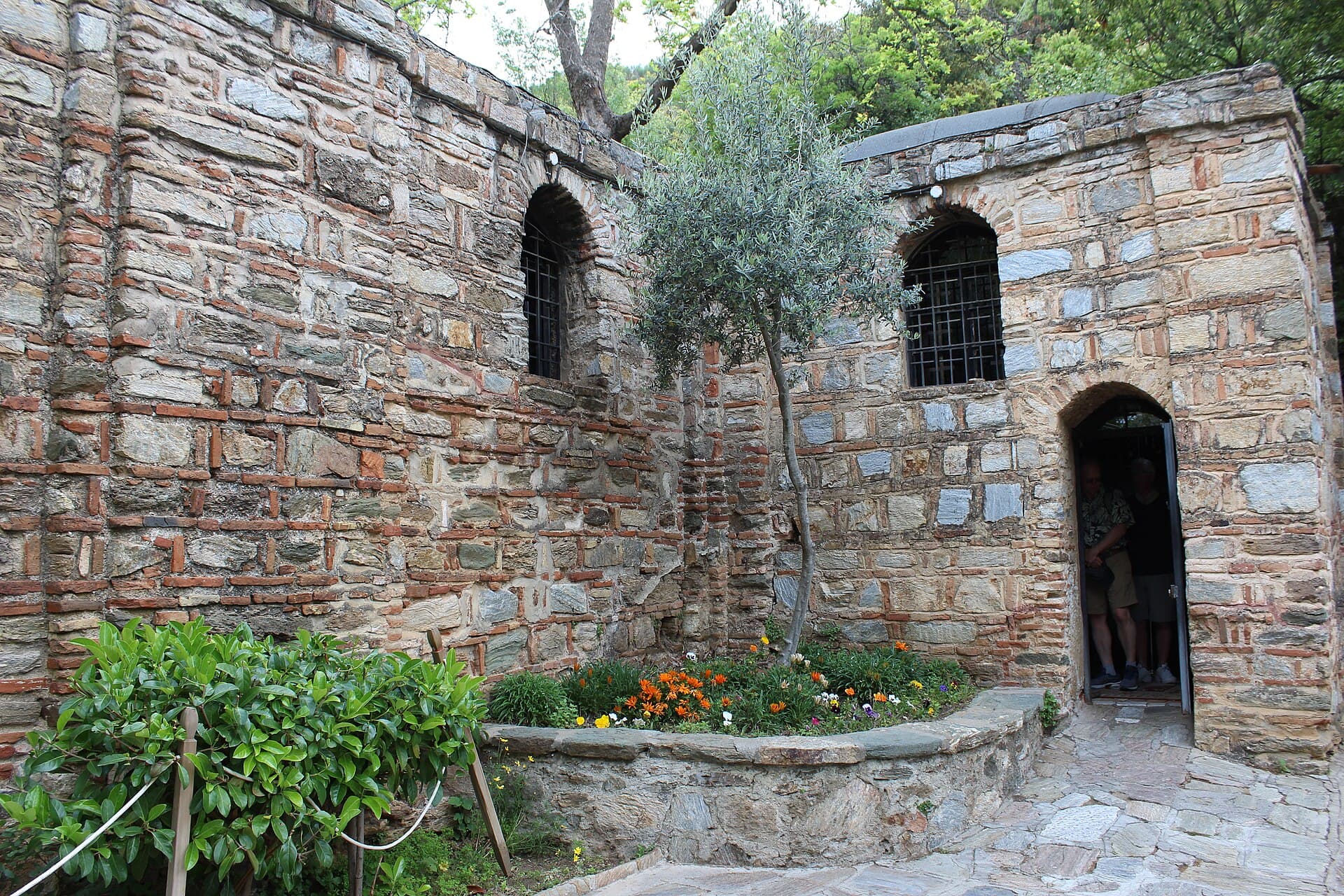
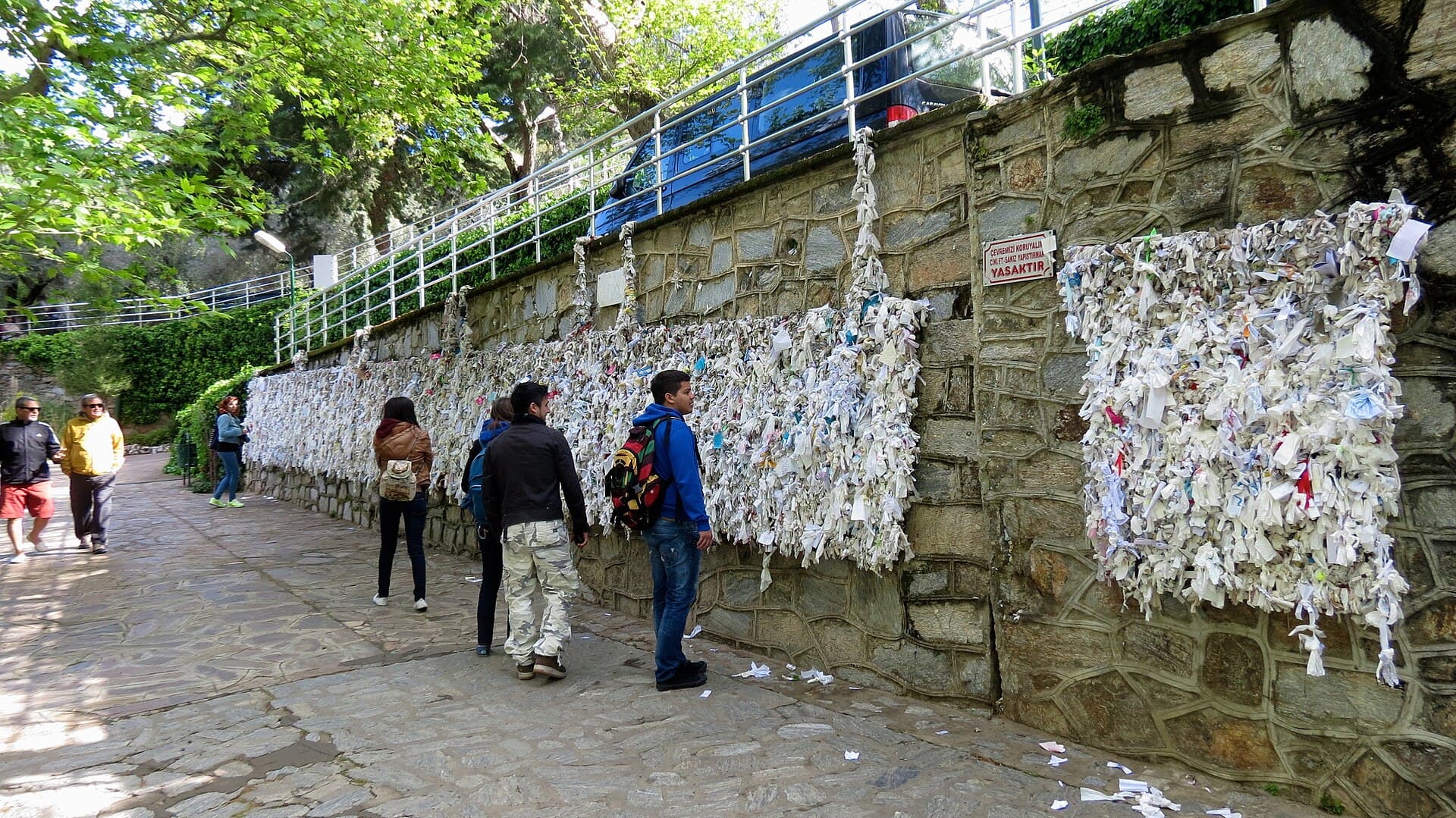
The chain of evidence here is genuinely strange, and the site is more interesting if you follow it rather than skip it. In the early nineteenth century a bedridden Augustinian nun in Germany, Anne Catherine Emmerich, described in visions a small stone house on a hill near Ephesus where the apostle John had settled Mary. She had never been to Anatolia. Clemens Brentano published her descriptions in 1852. In 1881 a French priest, Julien Gouyet, went looking with the book in hand and found a ruined building on Bülbül Dağı that matched. Local Orthodox Christians from Şirince, it turned out, had been walking up to the same spot for generations. The Catholic Church has never ruled on whether Mary lived here. It says, in effect, that the evidence is not of a kind it can pronounce on. What it did do was declare the place a Holy Place in 1951, and three popes have come: Paul VI in 1967, John Paul II in 1979, Benedict XVI in 2006. What you actually visit is small — a single-room stone chapel, a few minutes inside, moving slowly with everyone else. The atmosphere is the point rather than the architecture. Below the chapel is a wall thick with folded paper and knotted cloth, and a row of spring taps. Both are used by Muslim visitors as much as Christian ones; Mary is honoured in the Qur'an, and this is one of the few places where that shared reverence is visible rather than theoretical. Getting here is the practical catch. No dolmuş reaches the gate, private cars stop at the entrance and a shuttle takes you the last stretch up. It sits on the same back road as the Ephesus upper gate, which makes the sensible plan obvious: shrine first thing, then straight to the upper gate and walk down through the city.