Uludağ
Ancient Olympos, a mountain the Byzantines covered in monasteries — now Turkey's oldest cable car and its most accessible ski slope.
Enough context, no spoilers
Why it matters
Known to Strabo as Mysian Olympos, the mountain held as many as 28 Byzantine monasteries in its ravines by the 11th century, a concentration a 19th-century French traveller compared to Mount Athos. Ottomans called it Keşiş Dağı, Monk Mountain, after the conquest; monks gave way to wandering dervishes. It was renamed Uludağ, "Great Mountain," in 1925. Turkey's first cable car opened here in 1963.
What to know before you go
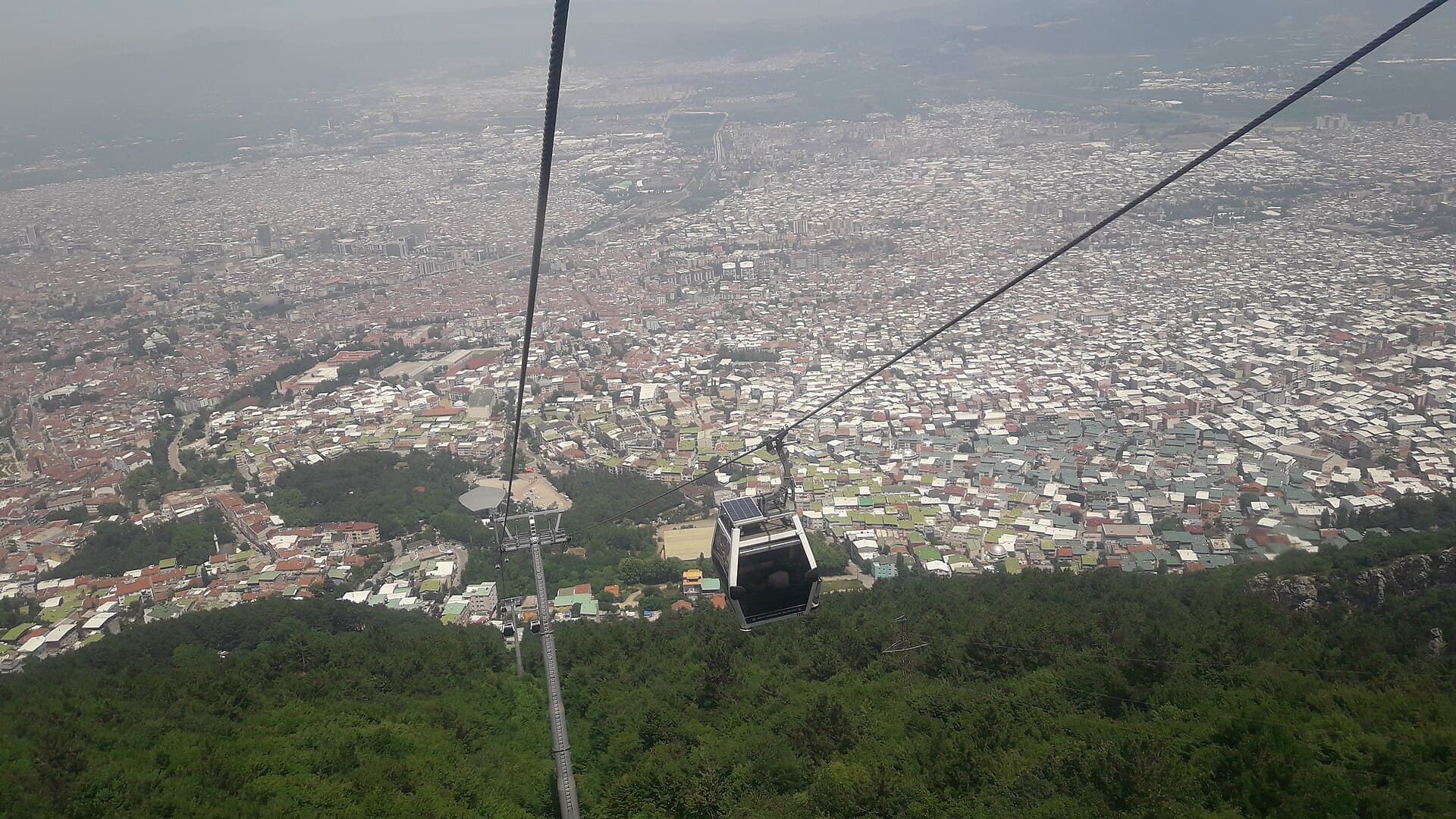
Uludağ has been a retreat from the city below for longer than there's been a city called Bursa to retreat from. The geographer Strabo, writing two thousand years ago, called it Mysian Olympos, and by the height of Byzantine monasticism the mountain's ravines held something like twenty-eight monasteries — a density a nineteenth-century French traveller compared directly to Mount Athos. After Orhan Gazi took Bursa in 1326, the Ottomans renamed it Keşiş Dağı, Monk Mountain, and the Christian hermits who'd lived up here for a thousand years were gradually replaced by Muslim dervishes doing much the same thing in the same caves and clearings. It only became Uludağ, the "Great Mountain," in 1925, part of the young Republic's push to rename Anatolia's geography in Turkish. None of that history is why most visitors come today, and that's fine — it's still worth knowing as you ride the cable car up, because the modern gondola is its own piece of this story. It opened on 29 October 1963, the Republic's fortieth anniversary, Turkey's first cable car line anywhere, and after a 2014 rebuild by the Italian firm Leitner it now runs roughly nine kilometres from Teferrüç station in the city, through Kadıyayla and the Sarıalan plateau, up to the hotel and ski area near Kurbağakaya — widely described as one of the longest cable car lines of its kind anywhere, a claim repeated often enough to be worth stating plainly rather than as settled fact. It gains nearly 1,700 metres without a mountain drive, and on a clear day the view back over Bursa and the Marmara plain justifies the ride on its own. Be honest with yourself about the season, because Uludağ is really two different destinations. From roughly mid-December to mid-March this is a working ski resort, busiest and best in January and February, lifts and hotels clustered above 1,800 metres. In summer the same slopes turn into picnic meadows — Sarıalan especially fills with Bursa families grilling and camping on weekends — with short, well-marked walks rather than serious ski infrastructure. Check the cable car's current status before you commit to it as your only route up: it's a well-built, regularly inspected system rated for winds to 70 km/h, but it does get suspended in serious wind several times most years, and a mechanical fault stranded passengers for a few hours as recently as January 2026, resolved without injury. None of that should keep you off it — treat it as you would any mountain cable car, something to build a flexible morning around rather than a fixed appointment.