Cumalıkızık
A working Ottoman village, not a recreation of one — houses people still live in, on a UNESCO list since 2014.
Enough context, no spoilers
Why it matters
Founded around 1300 as a vakıf, an endowment village, settled under Orhan Gazi's policy of planting communities to feed and support the new capital. Its roughly 270 timber-framed houses on stone footings are among the best-preserved examples of early Ottoman rural architecture anywhere. Around 60 percent are still lived in. Listed with Bursa in 2014 as part of "Bursa and Cumalıkızık: the Birth of the Ottoman Empire."
What to know before you go
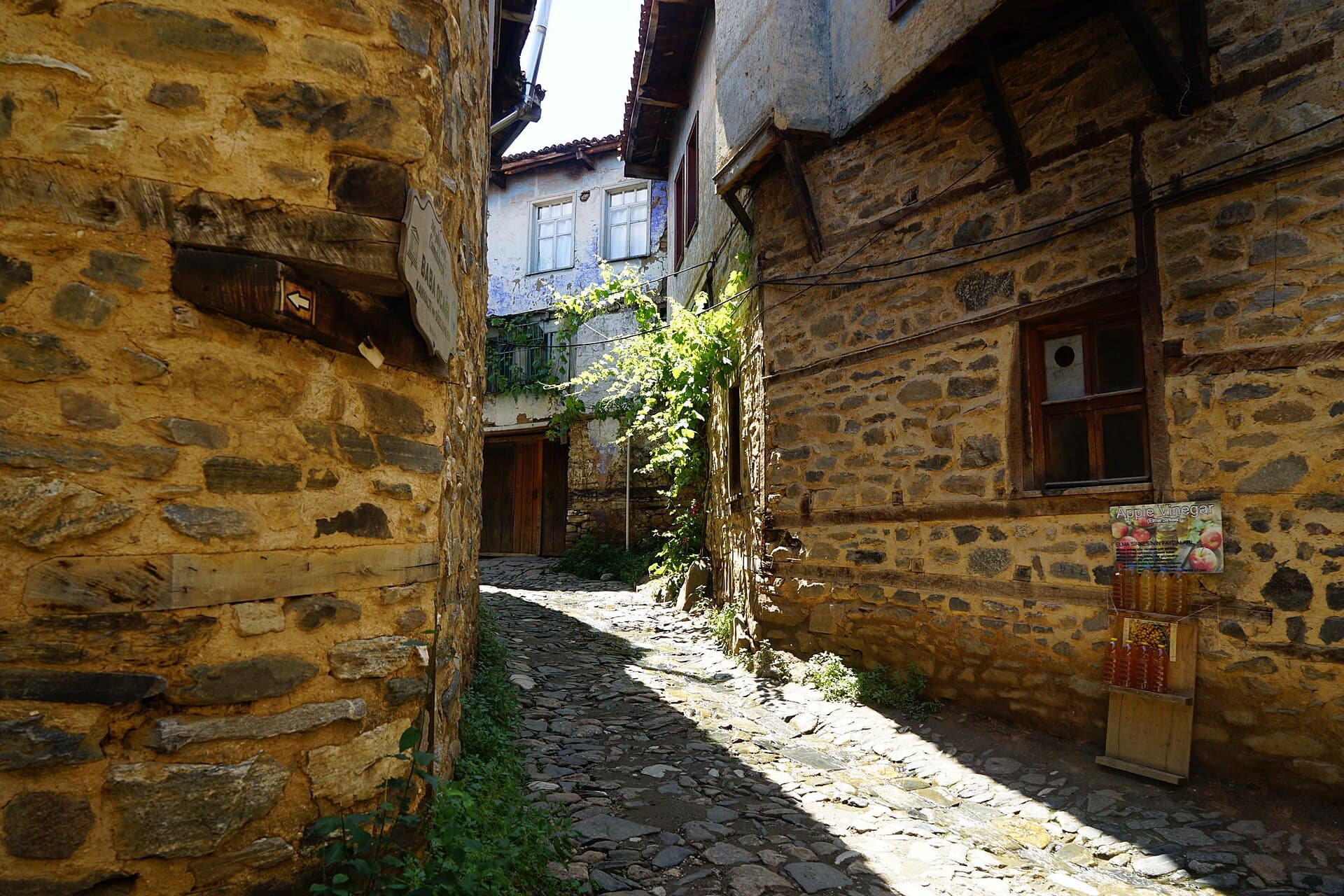
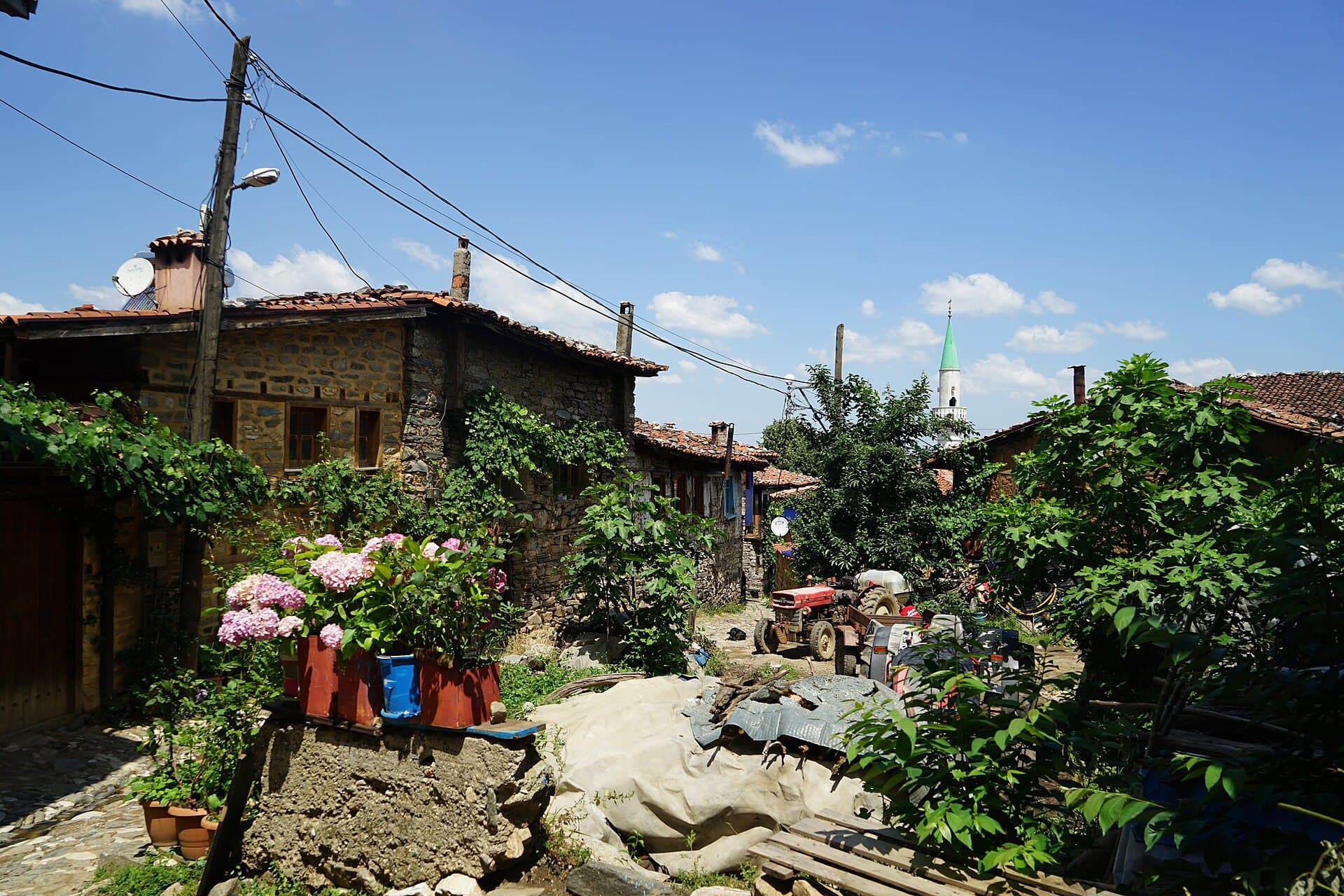
The first thing to understand about Cumalıkızık is that it is not a museum village, whatever the coach parties and the UNESCO plaque might suggest. About 700–800 people live here, in roughly 270 timber and stone houses, many lived in by the same families for generations. It was founded around 1300 as a vakıf village — an endowment settlement, one of several planted around Bursa under Orhan Gazi's policy of building a support network for his new capital, growing the food and providing the labour a real city needs. What survives is remarkable mostly for having survived at all: narrow cobbled lanes, houses with upper floors jutting out over the street on wooden brackets, stone ground floors and timber-framed upper ones, built in a style kept intact almost nowhere else in Turkey. It became part of Bursa's UNESCO inscription in 2014, one of eight component sites and the only rural one, specifically because it shows the hinterland side of an imperial capital that the city centre's mosques and tombs don't. The honest local secret about Cumalıkızık is that most Turkish visitors don't come for the history at all. This is one of Bursa's favourite weekend breakfast destinations — kahvaltı culture runs deep in Turkey, and a village with courtyard cafés serving village bread, local honey and clotted cream against Ottoman stonework is exactly what a Bursa family wants for a Saturday morning. Which means the crowd pattern here is the opposite of what you'd expect: come early on a weekend and you'll be competing with breakfast traffic for the limited parking at the village entrance, while an afternoon visit after the kahvaltı crowd clears is often calmer, even though conventional wisdom says arrive early everywhere else. Walk the lanes slowly rather than making straight for a single sight — there isn't one. The closest thing to it is the small ethnography museum in a restored house near the entrance, free, closed Mondays, worth twenty minutes for a sense of how these interiors were actually furnished and used. Beyond that, the village itself is the attraction: working households behind half-open doors, an occasional resident selling dried fruit or handmade textiles from a front room, laundry on lines above the cobbles. Treat it the way you'd want a stranger to treat your own street — look, don't wander into open doorways, and remember that the family a few metres away is not part of the exhibit.