Asklepion of Pergamon
One of the ancient world's leading medical centres, where patients slept hoping the god Asclepius would prescribe their cure in a dream.
Enough context, no spoilers
Why it matters
The Asklepion was a healing sanctuary dedicated to Asclepius, active from around the 4th century BCE and reaching its monumental Roman-era form under Hadrian (117-138 CE). The physician Galen trained here. Treatment combined cult ritual — dream incubation in the sleeping hall — with mud baths, controlled diet, exercise, and theatre.
What to know before you go
The Asklepion sits about a kilometre southwest of the acropolis hill, connected in antiquity to the lower city by a colonnaded processional way, the Via Tecta, part of which still stands. Patients arriving here were not just visiting a shrine — they were entering one of the ancient world's most respected medical centres, where cult practice and clinical treatment ran side by side under trained physicians.
The signature ritual was incubation: patients slept in a dedicated hall hoping Asclepius would appear in a dream and prescribe a cure, which resident priest-physicians then interpreted and carried out. Around that ritual core sat genuinely practical medicine — mud and mineral-water baths, controlled diet, supervised exercise in the sanctuary's colonnades, and theatrical or musical performances thought to aid recovery. The physician Galen, later personal doctor to Roman emperors and one of history's most influential medical writers, trained here in the 2nd century CE, a link that gives the site real weight beyond myth.
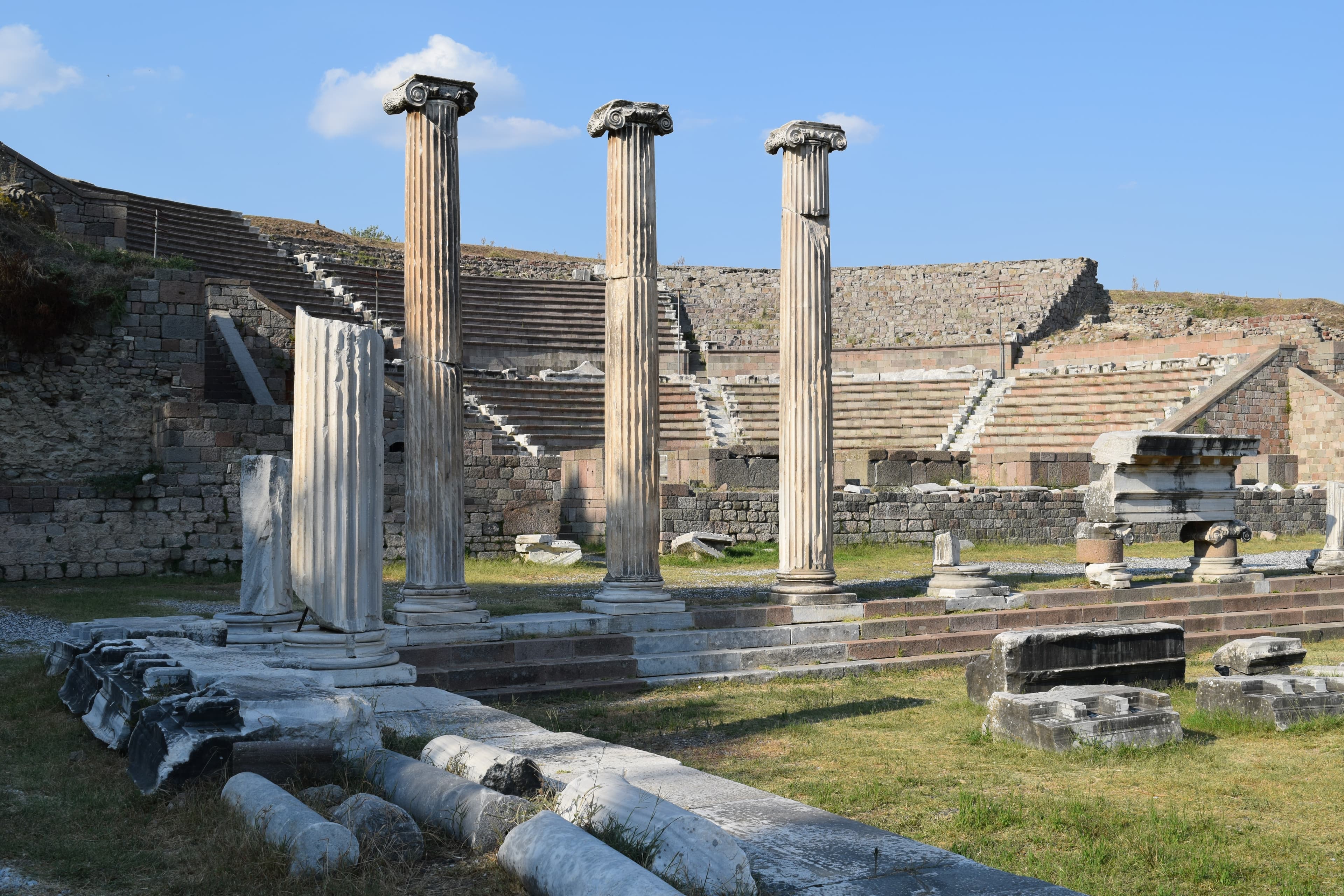
On the ground, the site centres on a circular temple of Asclepius modelled loosely on Rome's Pantheon, a small theatre for therapeutic performances, and an underground tunnel connecting treatment rooms — walkable today, atmospheric rather than dramatic. Budget 60-90 minutes; it pairs easily with the acropolis or Red Basilica on the same Bergama day.