Pergamon Acropolis
A cable car lifts you 300 metres above Bergama to the Attalid kings' hilltop capital, its steeply raked ancient theatre cut into the slope.
Enough context, no spoilers
Why it matters
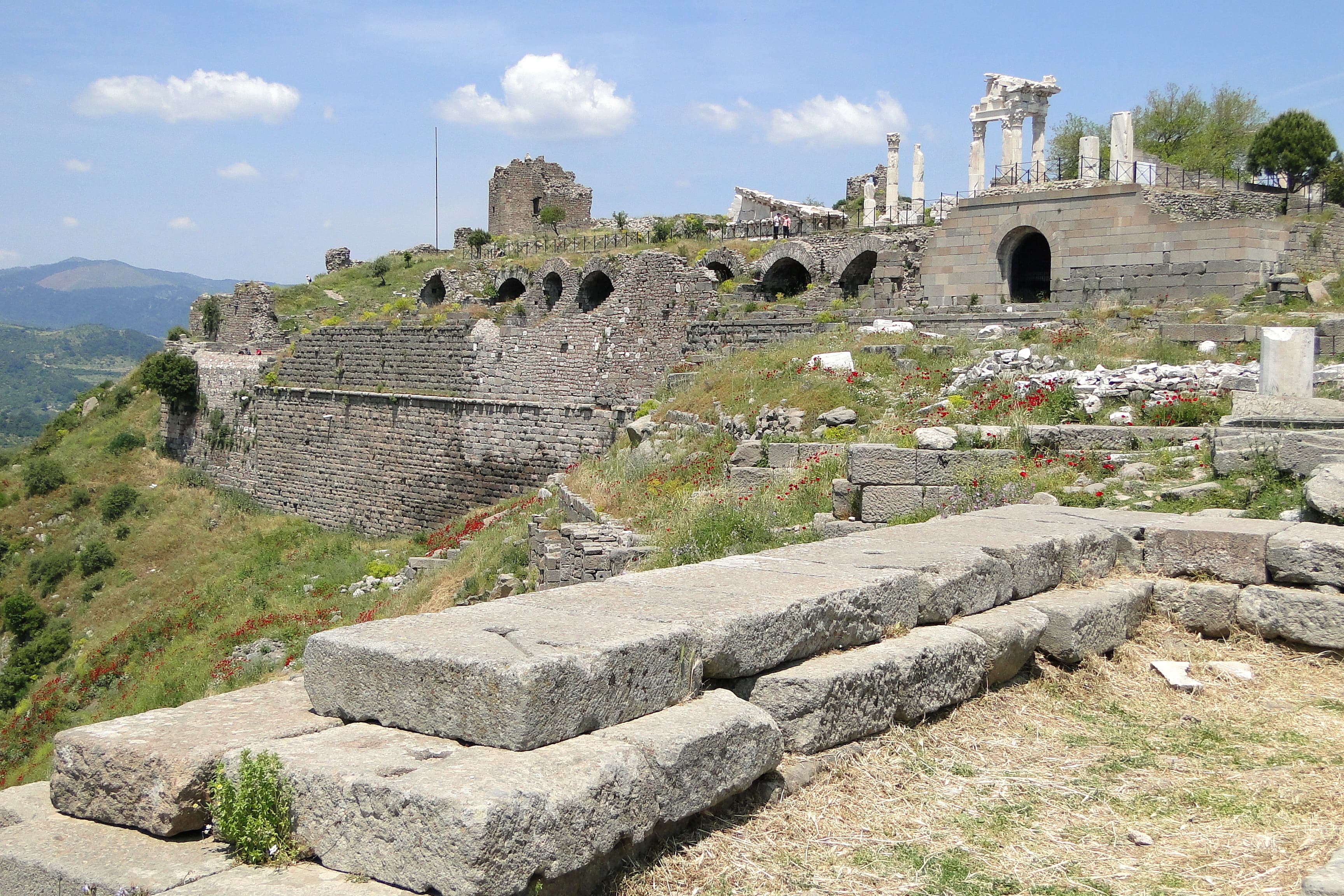
Pergamon was capital of the Attalid dynasty (282-133 BCE), a Hellenistic kingdom that rivalled Alexandria for scholarship and art. The acropolis held the royal palace, the Library of Pergamon, the Temple of Trajan, and a steeply raked theatre seating around 10,000. Pergamon is named in Revelation 2:12-13 as one of the seven churches of Asia, called the city "where Satan's throne is."
What to know before you go
The acropolis is reached by a modern cable car from a base station at the edge of town — a fast, dramatic approach that swaps a long uphill hike for a few minutes gliding over pine slopes, arriving close to the upper terraces. From the cable car station, a signed loop covers the Temple of Trajan, the sanctuary of Athena, the site of the famous Library of Pergamon (its books reputedly numbered in the hundreds of thousands before much of the collection was later given to Cleopatra), and the theatre itself.
The theatre is the site's single most striking structure: built into the natural slope at a rake steeper than almost any other ancient theatre, it held roughly 10,000 spectators with a narrow stage building that could be dismantled for festivals. Below the main terraces, the site continues downhill toward the lower agora and gymnasium complex, though most visitors stop at the upper acropolis given the terrain.
Pergamon's status as one of the seven churches addressed in the Book of Revelation adds a further layer for visitors tracing early Christian sites in Asia Minor — though the physical remains on the acropolis itself are pagan Hellenistic and Roman monuments, not a church building. Budget at least 90 minutes to two hours for the acropolis loop, more if combining with a full circuit down to the lower city. Little shade exists on the exposed hilltop, so a morning visit beats midday summer heat.