İshak Paşa Palace
Ninety-nine years and two generations to build, half destroyed within a century — Türkiye's most theatrical Ottoman-era ruin.
Enough context, no spoilers
Why it matters
Begun in 1685 by the regional beg Çolak Abdi Paşa, finished 99 years later in 1784 by his descendant İshak Paşa, who named it for himself. Ottoman patronage, Persian and Armenian craftsmanship, Seljuk stonework. An 1840 earthquake — the same one that killed some ten thousand people on the mountain's slopes and buried the monastery of St Jacob — began its ruin; the 1877–78 war and WWI finished it.
What to know before you go
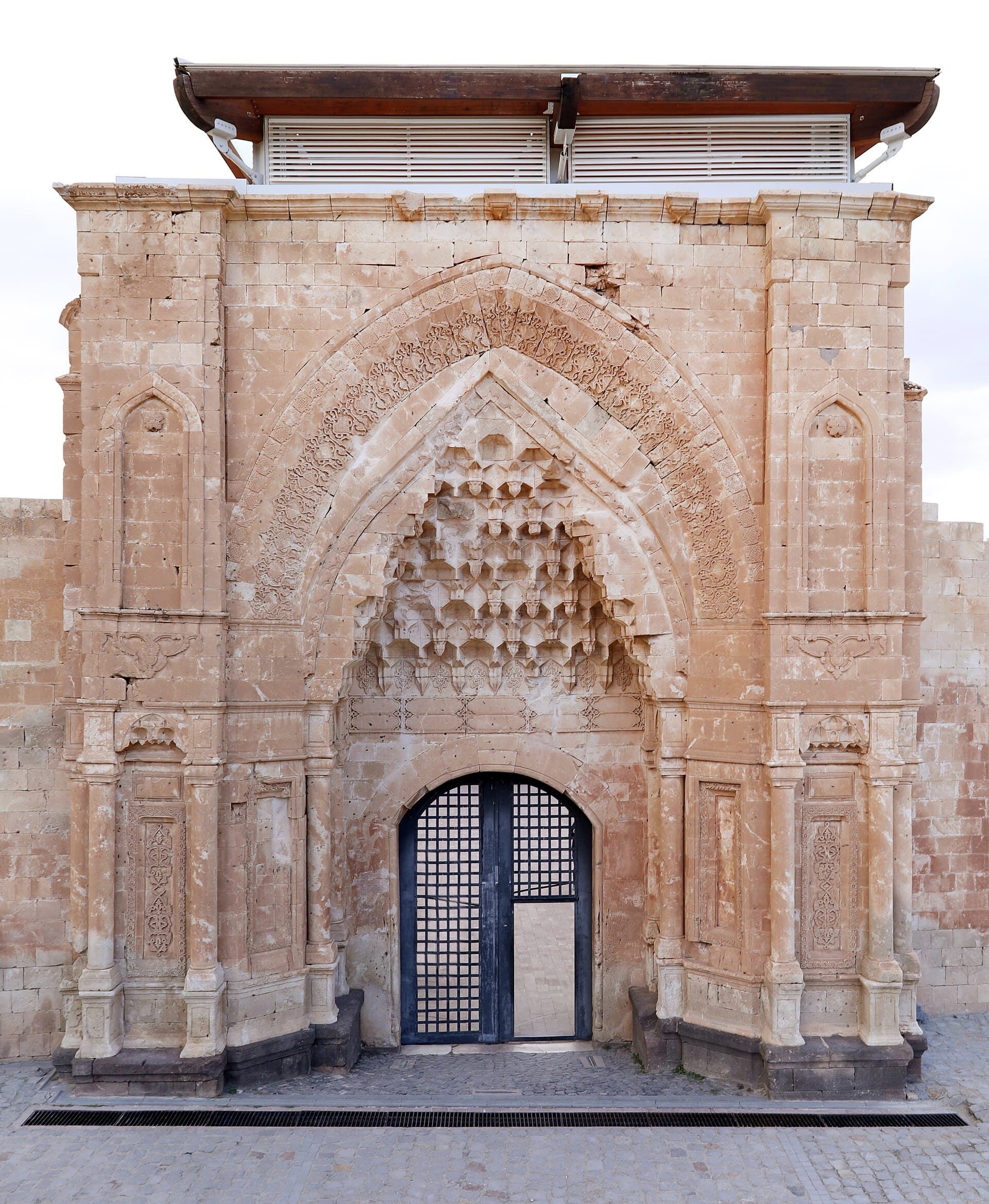
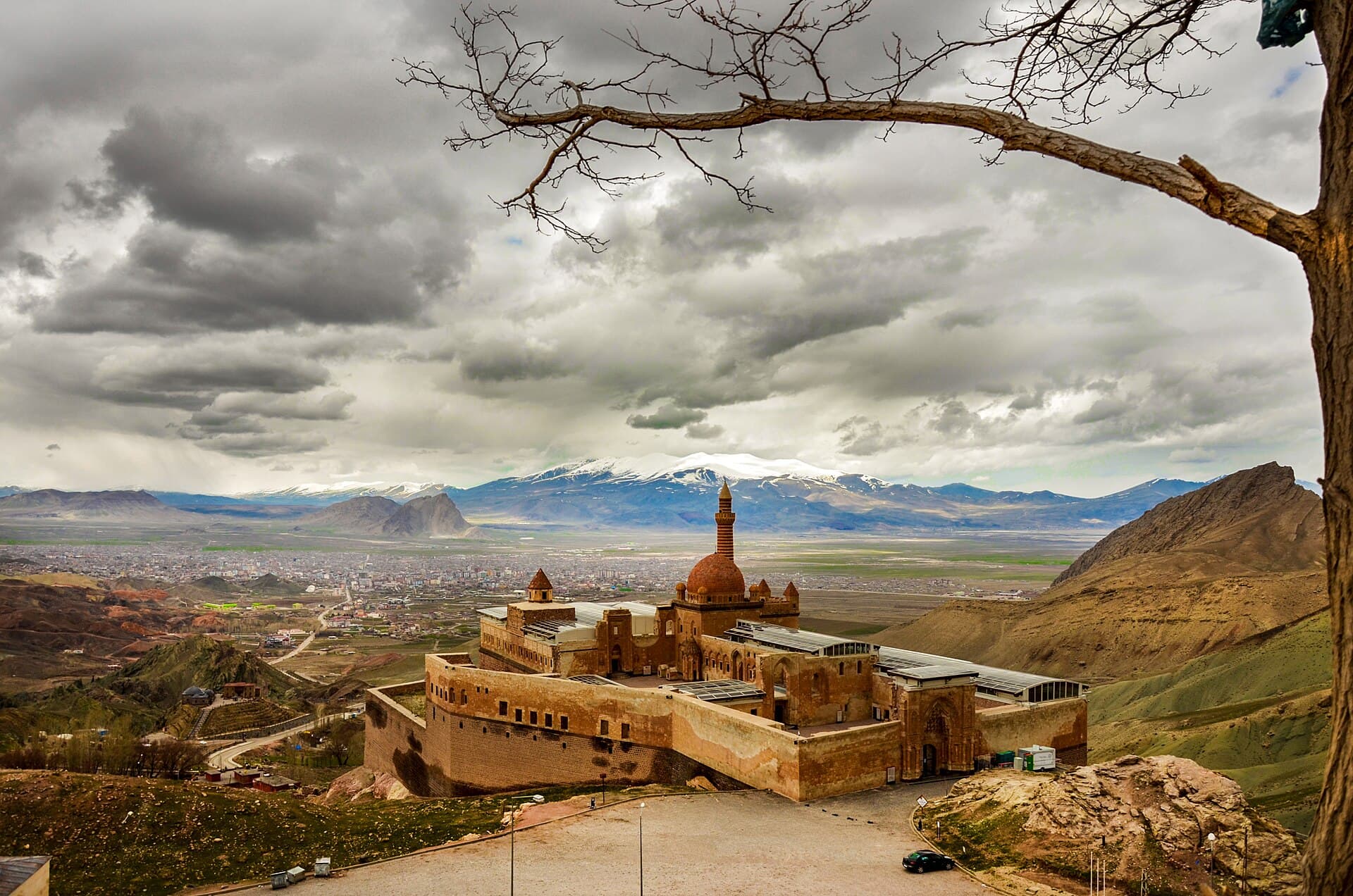
Almost everyone who comes to Doğubayazıt for the mountain ends up here instead, and that is not a consolation prize — this is what the trip actually promises most people: something you can walk into, in an afternoon, without a permit, a guide or a glacier. Çolak Abdi Paşa started it in 1685; his descendant İshak Paşa finished it ninety-nine years later, in 1784, and put his own name on the result rather than his ancestor's. What they built is not really Ottoman in style at all — Persian and Armenian craftsmen worked alongside masters from Ahıska, and the palace reads like something built by a court sitting at the hinge of three empires and borrowing from all of them: Seljuk stonework, Persian ornament, and, by the time the harem section was finished, a Baroque flourish that had travelled a very long way from Istanbul to arrive here. It did not stay whole. An 1840 earthquake — the same one that tore the landslide scar still visible on Ararat's north flank, killed roughly ten thousand people on the mountain's slopes, and buried the ancient monastery of St Jacob entirely — started the palace's collapse. The 1877–78 Russo-Turkish war and then the First World War finished the job, and what locals didn't strip for building stone afterward, a century of weather did. What you walk through now is genuinely semi-ruined: roofless halls, courtyards open to the sky, and — controversially — modern glass-and-wood shelters over some of the worst-damaged rooms, a restoration choice that protects the stone but changes how the building reads. Go anyway, and go for the stonework specifically: the carved portals mixing three traditions are the actual reason this sits on Türkiye's UNESCO tentative list, not the ruin as a whole. Walk the second courtyard's harem–selamlık split to see how the household was actually organised, then look north. On a clear morning the palace's hilltop position does something no photograph of the building alone can: it puts Ararat directly behind the ruin, so the two halves of this trip — the palace almost anyone can walk into, and the mountain almost nobody climbs — sit in the same frame. Across the ravine is another ruin, the older citadel the town takes its name from. Most visitors never cross to it, and this page can't send you there with any confidence either — which is itself worth knowing before you go looking.