Karakuş Tumulus
A royal Commagene burial mound whose famous handshake relief collapsed in the 2023 earthquake and was rebuilt within months.
Enough context, no spoilers
Why it matters
Built 30-20 BCE by Mithridates II of Commagene as a hierothesion (royal mausoleum) for Queen Isias and princesses Antiochis and Aka I - one of only three sanctioned Commagene royal tombs, alongside Nemrut and Arsameia. The column bearing its famous dexiosis (handshake) relief collapsed in the February 2023 earthquake and was restored by May 2023.
What to know before you go
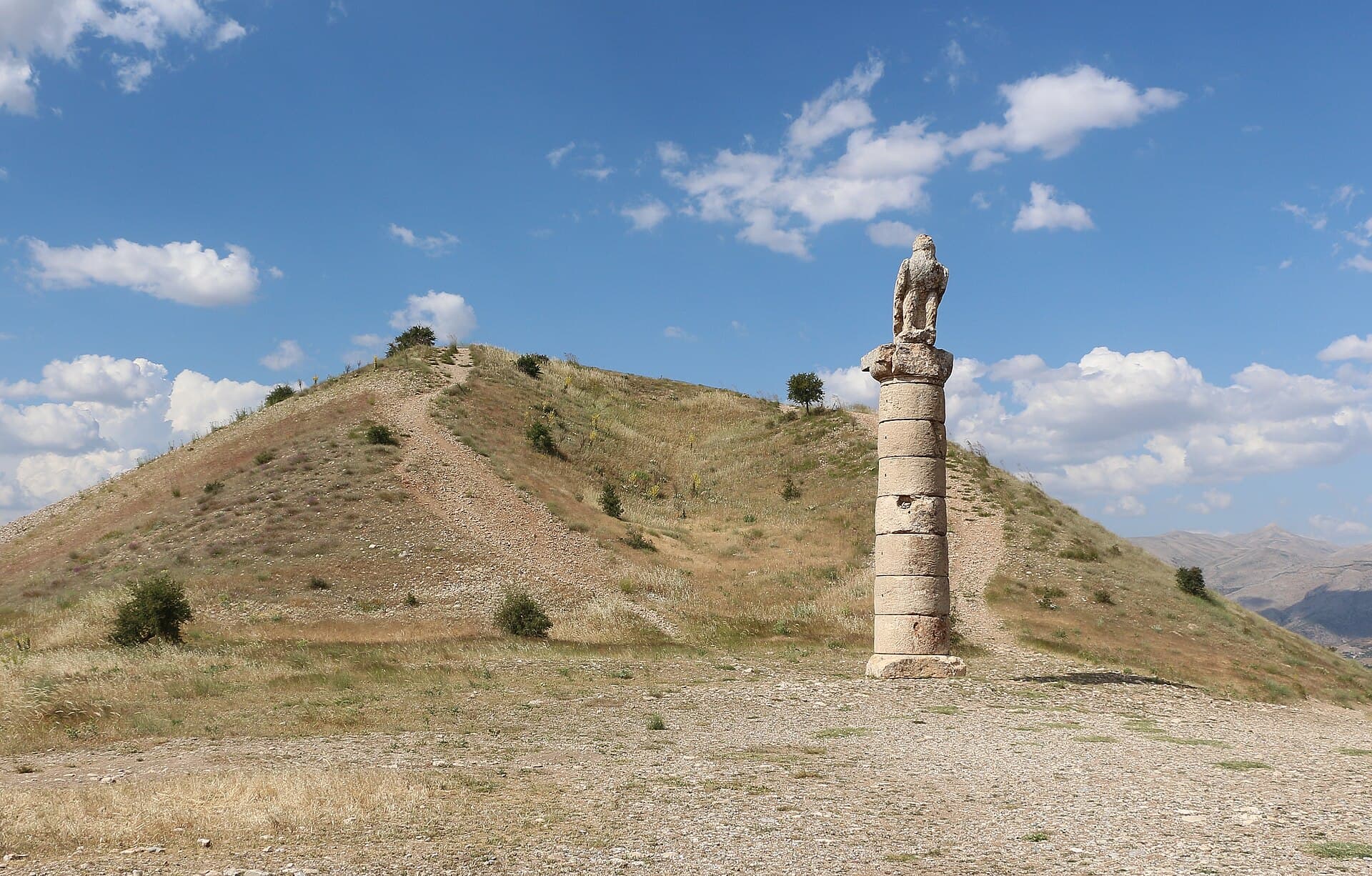
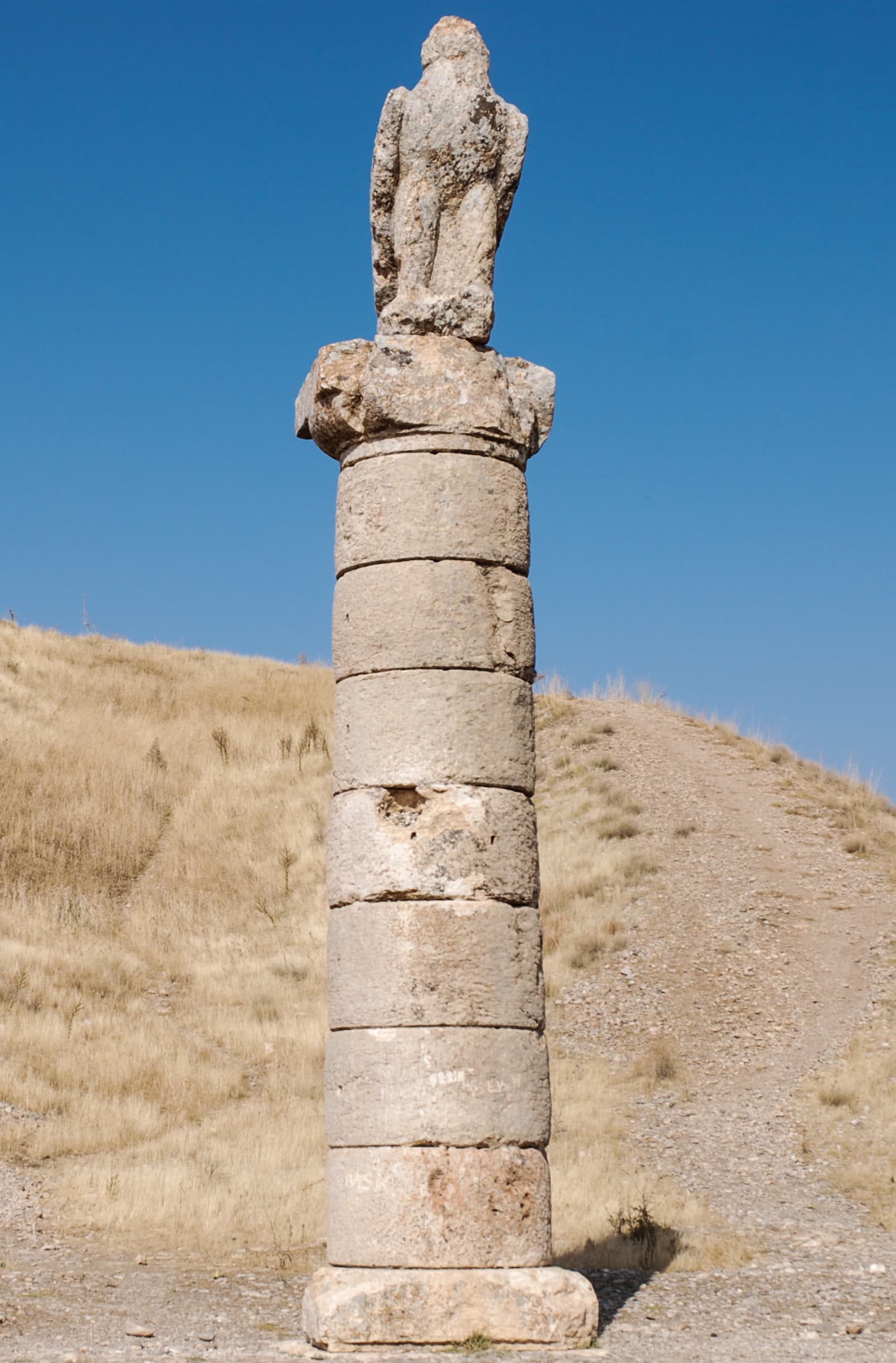
Karakuş means 'black bird' in Turkish, a name that comes directly from the eagle statue that once topped one of its columns, and the site is a genuine window into how the Commagene kingdom buried its royal women. Built between 30 and 20 BCE by Mithridates II - son of the same Antiochus I who built Nemrut's colossal heads - as a hierothesion for Queen Isias and princesses Antiochis and Aka I, it's one of only three officially sanctioned Commagene royal tombs, alongside Nemrut itself and Arsameia. The structure is a roughly 25-metre earthen mound originally ringed by three separate groups of Doric columns, each about 9 metres tall, positioned northeast, northwest and south of the tumulus, topped respectively with statues of a bull, a lion and an eagle. The most historically important detail sits on one of these columns: a dexiosis, or handshake relief, showing Mithridates II clasping hands with his sister Laodike - a standard Commagene motif for signalling dynastic legitimacy through both bloodlines. That column collapsed in the February 2023 earthquake, and its loss was reported alongside Nemrut's own damage as one of the region's real cultural losses - but unlike much of Adıyaman, this one has an honest recovery story: Turkish Ministry of Culture conservation teams, working with Hacı Bayram Veli University, restored the column and repaired the relief by May 2023, and the site has since had new lighting installed and drawn some 21,000 visitors in its first five months back. It's a roadside stop on the standard Kahta-to-Nemrut route, fifteen to thirty minutes, free or museum-card accessible - worth treating as a resilience story rather than a casualty when you write or think about it.