Galata
For 186 years this hillside was not Constantinople at all, but a walled Genoese city-state facing it across the water.
Enough context, no spoilers
Why it matters
After the Treaty of Nymphaeum, Michael VIII Palaiologos granted the hillside across the Golden Horn to Genoa, and from 1267 until 1453 Galata was a semi-autonomous Genoese colony. Forbidden to fortify it, the Genoese fortified it anyway, completing the tower at the citadel's high point in 1348. The walls came down in the nineteenth century, by which time Bankalar Caddesi carried the empire's banking houses.
What to know before you go
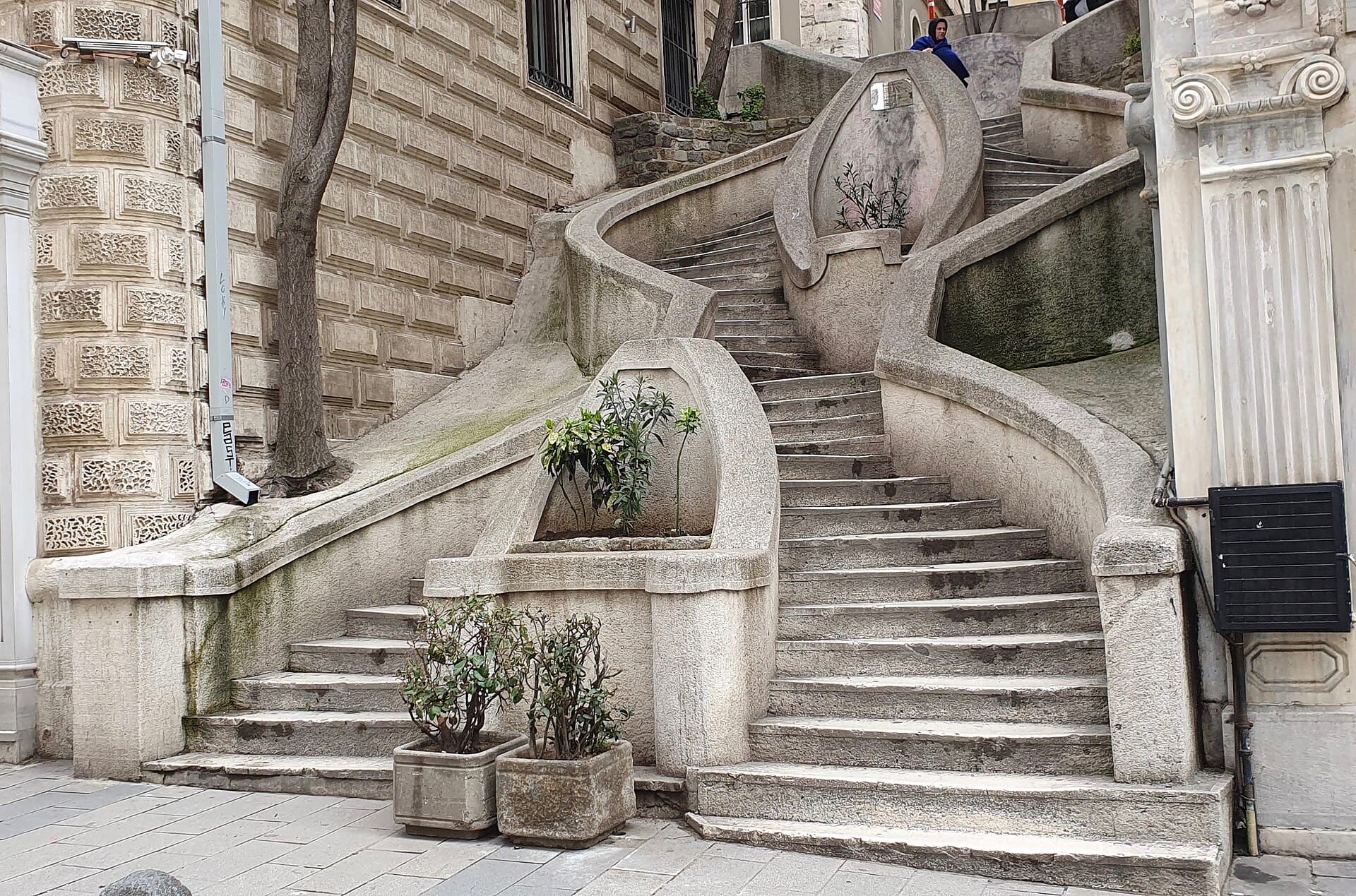
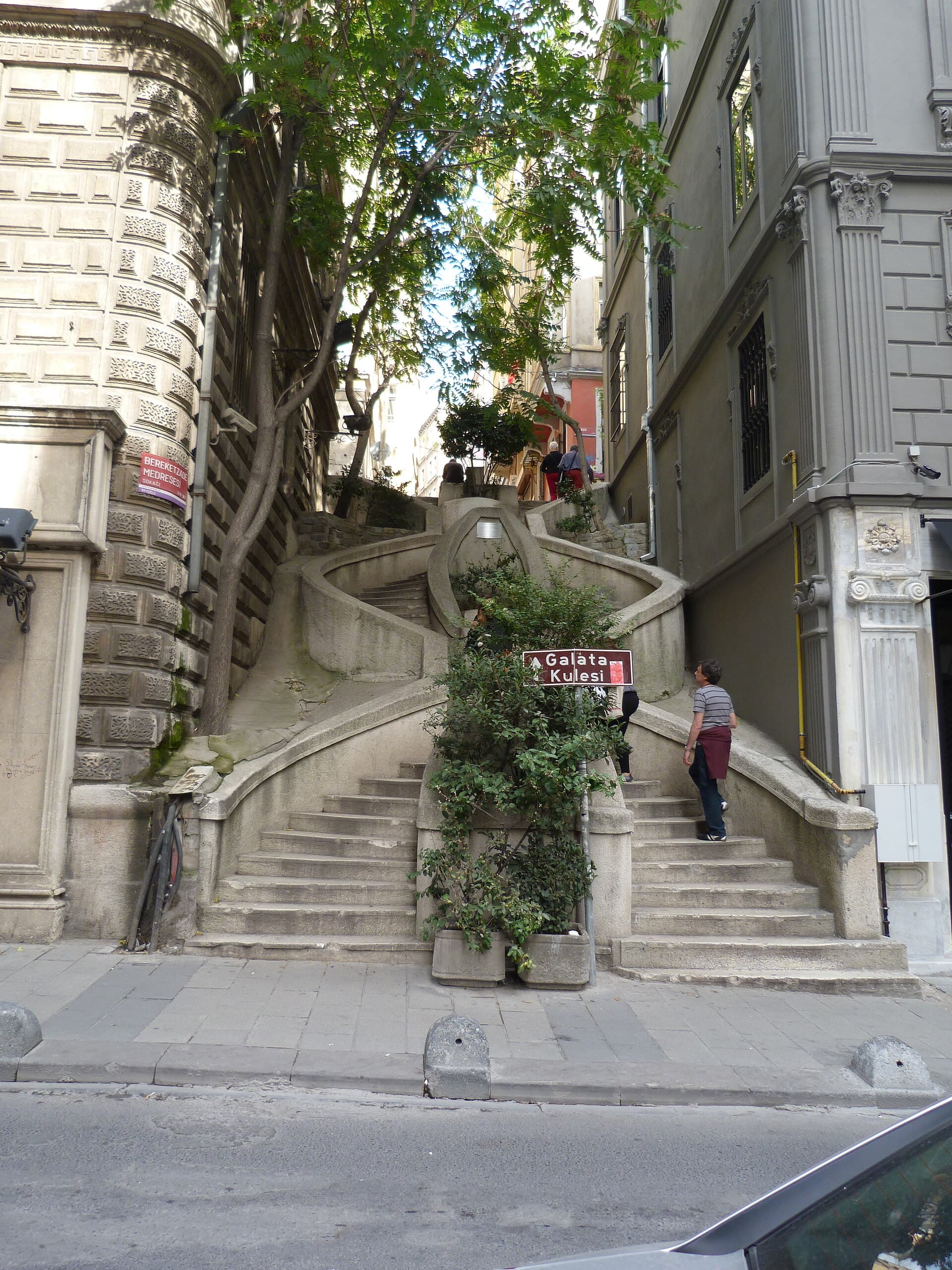
Walk it downhill, not up. Start at Tünel and give twenty minutes to Galip Dede Caddesi, where the shopfronts are still largely instrument makers selling saz, oud and darbuka rather than souvenirs, then turn into Serdar-ı Ekrem for the restored apartment blocks — the Doğan Apartmanı, begun in 1892 and arranged as four blocks around a courtyard, is the one to stop at. From the tower keep descending west toward Bankalar Caddesi and take the Kamondo Steps last. Doing the route in reverse means a continuous cobbled climb with no shortcut. Two hours is comfortable, and mornings are better, before the tower queue backs up into the street.