Basilica Cistern
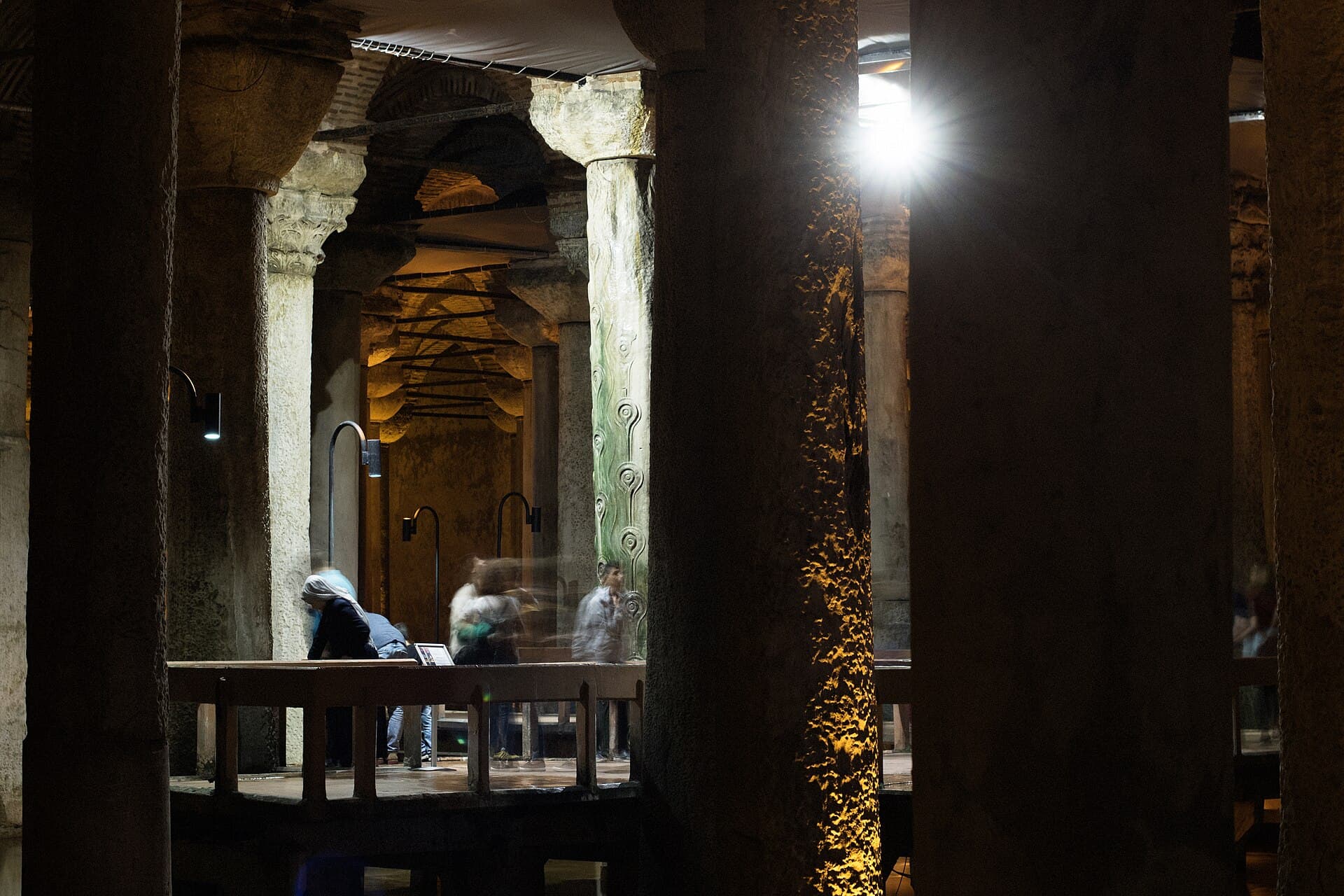
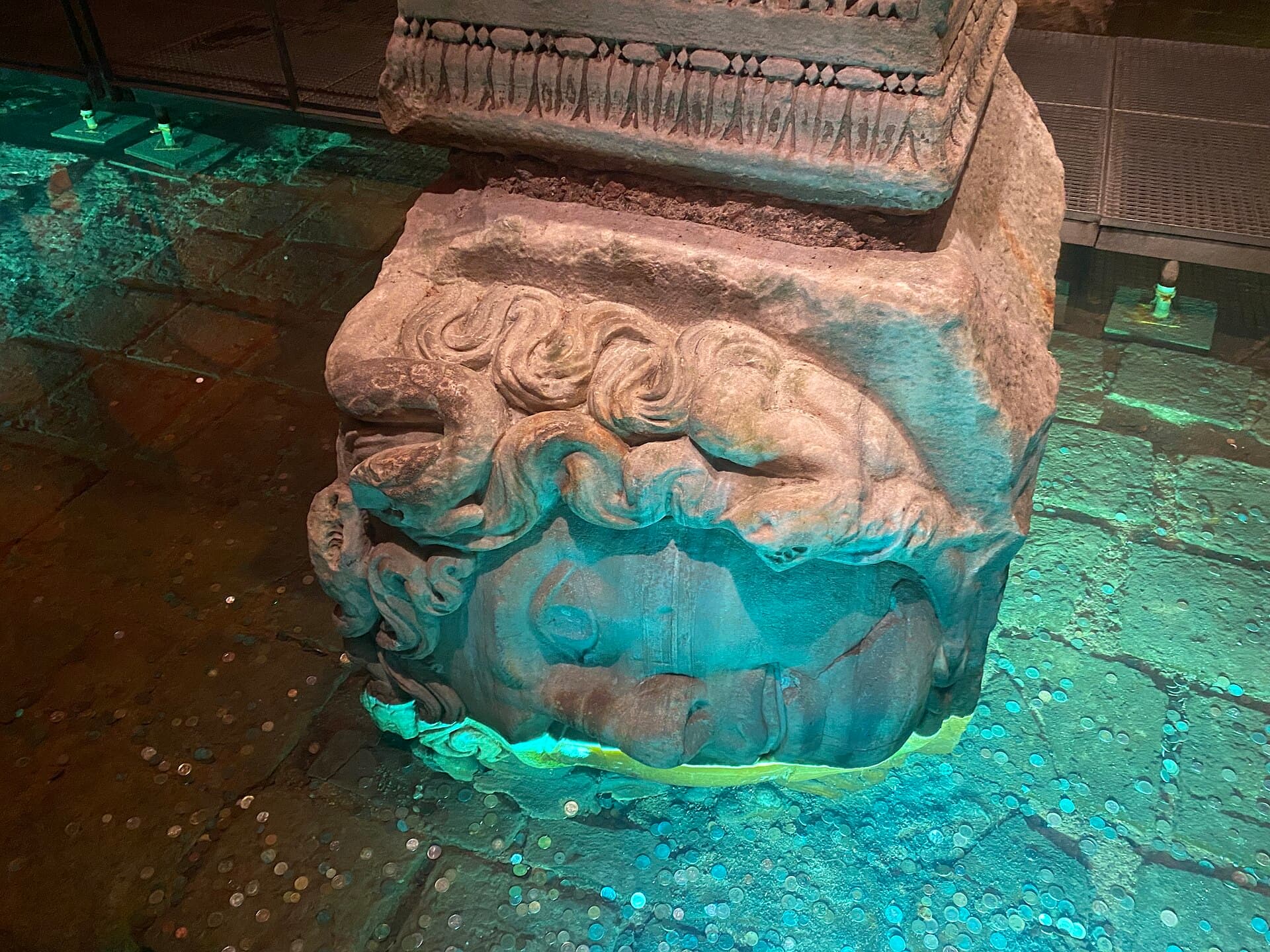
Descend into a sixth-century reservoir where 336 columns rise out of shallow water, two of them standing on the carved heads of Medusa.
Enough context, no spoilers
Why it matters
Justinian I had it built in the 530s to supply the Great Palace, using columns salvaged from older Roman buildings, which is why the 336 shafts carry mismatched Ionic and Corinthian capitals. It once held 80,000 cubic metres of water. The two Medusa head blocks in the northwest corner were reused as column bases; their origin is unknown. A restoration between 2020 and 2022 exposed the Byzantine brick floor.
What to know before you go
This is a short, entirely underground visit on a raised walkway, which makes it the ideal thing to slot between the Blue Mosque and Topkapı — the entrance is two minutes from Hagia Sophia. Entry runs on timed sessions with tickets sold online, so check availability rather than assuming you can walk up. The space is also used for contemporary art installations and evening light programmes, so what you see changes through the year. One caveat worth taking seriously: control of the cistern was the subject of a live legal dispute through 2026 between the Istanbul Metropolitan Municipality and the General Directorate of Foundations, and it closed for several days that June during a contested handover — confirm it is open on the day.